
















Displaying items by tag: Titus Brandsma
Third Volume of St. Titus Collected Works Published
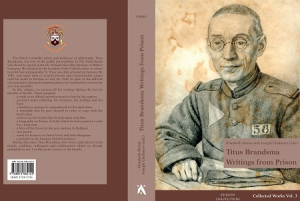
Writings of St. Titus Brandsma during his imprisonment have been translated into English and gathered together in the third volume of the multi-volume series The Collected Works of Titus Brandsma. (Eight letter written to family, confrères, colleagues, and collaborators were already published in vol 2 of the series.) This attractively printed volume is now available for purchase at Edizioni Carmelitane and other webstores on the internet.
Included in this volume:
A reply to an official question posed to St. Titus by his captors;
Consolatory sayings he remembered in this dark time;
A timetable that he gave himself in order to cope with the lonely days;
Reviews on two books that he had taken with him;
The biography of Teresa of Avila which he had wanted to write for many years;
A Way of the Cross for the new Stations of the Cross in Dokkum;
Two poems;
Notes for lectures on Geert Grote and John Brugman;
A petition to the German Sicherheitsdienst (Nazi Security Service);
Also included are short biographies of other Carmelites who were in Dachau with Titus and information about other religious or diocesans who were martyrs. There is also an exposition of how World War II affected Carmelite life around the world.
Finally there are various articles on aspects of St. Teresa of Avila’s life, a woman who greatly influenced Fr. Titus.
This 485 page book is available for 47.00 euro from Edizioni Carmelitane. It will be available as an ebook soon.
St. Titus Brandsma, a Patron of Journalists?

According to the latest issue of America, a monthly magazine published by the American Jesuits, Pope Francis has expressed “full support” for naming St. Titus Brandsma “a patron of journalists.” The pope’s statement came in response to a request by Mr. Van Lierde and three Dutch journalists during an interview. On May 15, 2023, the Church will be celebrating the 1st anniversary of Titus’ canonization by Pope Francis at St. Peter’s Square in Rome.
During a press conference organized by the Order’s Communications Office and held days prior to the canonization of St. Titus, a Dutch journalist asked Míceál O’Neill, the prior general, for his support in the efforts to have Brandsma named patron of journalists. He presented the prior general with a letter to Pope Francis from Catholic journalists accredited to the Vatican.
The letter outlined reasons why the newly canonized St. Titus should be designated as patron of journalists. Part of the letter says “you will canonize a man who embodied these crucial journalistic values until his dying day ...” The journalists recall the 2018 admonition of Pope Francis for journalists “to promote a journalism of peace,” a “journalism that is truthful and opposed to falsehoods, rhetorical slogans, and sensational headlines. A journalism created by people for people, one that is at the service of all, (…) a journalism committed to pointing out alternatives to the escalation of shouting matches and verbal violence.”
Later in the letter the journalists write that they see St. Titus as a friend and advocate for the entire profession, indeed a patron saint of journalism.
Emmanuel Van Lierde is the former editor in chief of Tertio, a Belgian Christian weekly. The pope gave the interview on Dec. 19, 2022, two days after he celebrated his 86th birthday and a day after Argentina won the World Cup. The text of the interview now appears in Dutch in a book reviewing the 10-year pontificate of the pope written by Mr. Van Lierde. The book is entitled Paus Franciscus: De conservatieve revolutionair (Pope Francis: The conservative revolutionary) as well as in the weekly Tertio.
Carmel Catholic High School Celebrates St. Titus

For all of its 60-year history Carmel Catholic High School in Mundelein, Illinois, has been inspired by the heroic witness of St. Titus Brandsma. The Carmelite monastery, which was home to members of the Carmelite Order who taught at the high school and is now converted into classroom space for the students, was dedicated to Titus Brandsma during the early days of his canonization process. The school chapel at the main entrance to the school also carries his name.
To celebrate the canonization of St. Titus on May 15, the school held events on May 19, including a special all-school Mass of Thanksgiving. There was also an evening reception at the school with a viewing of the canonization Mass. During the nine days prior to the Mass, the school focused on a different aspect of St. Titus’ life. These reflections, as well as the school Mass celebrating the canonization, can be found on the school’s Facebook page.
On Saturday, September 10, members of the school community and guests joined together in the school chapel to “rededicate” the chapel to St. Titus Brandsma. Previously commonly referred to as “the Brandsma Chapel,” its name reflected that the Church had not officially recognized the martyrdom of Brandsma in any capacity when it was built.
Among the guests at the renaming of the chapel were members of the Brandsma family. Some of them had attended the canonization events in Rome. They also spent an evening with retreatants at the Carmelite Spiritual Center in July to speak about how their family has continued to live out their cousin Titus’ Catholic faith in the Chicago area. It was at this gathering that they met Michael Poulos from Carmel Catholic who invited them to the chapel rededication.
Two relics from St. Titus were also displayed at the Darien gathering: a large piece of his Carmelite habit and an entire sleeve of his shirt. These were retrieved from the Dachau Concentration camp, along with other items belonging to St. Titus, following his martyrdom in July 1942.
Picture Captions: Top: Members of the family of St. Titus Brandsma stand with Carmel Catholic High School president Dr. Brad Bonham following the rededication of the school’s chapel to St. Titus Brandsma.Bottom: Members of the school community, past and present, as well as invited guests join in the rededication of the Brandsma chapel to honor the new Carmelite saint.
Available in Spanish the book 'The Price of Truth' on St. Titus

The Price of Truth: Titus Brandsma, Carmelite (in Spanish)
by Miguel Maria Arribas, O. Carm.
The biography of the Church's most recent martyr--a dangerous friar according to the Nazis--Fr. Arribas succeeds in capturing the heart and soul of St. Titus Brandsma's lessons for us today. We all know the life of Titus, but in this book Fr. Arribas explores the documentation behind the canonization process to show why Titus is so important for today.
A simple and cordial Carmelite, a multi-faceted priest who was at times a mystic, a passionate journalist, a university rector and, throughout his life, a driven witness for Christ to the point of giving his own life for the truth.
The author, now deceased, traveled to the Netherlands and Germany, to the places of birth, life and death of St. Titus, to better understand this "martyr of freedom of expression".
Jerez Museum Shows Life of St. Titus Brandsma

Recently the Provincial Council of the Betica Province (Southern Spain) inaugurated a temporary exhibition hall dedicated to St. Titus Brandsma, the Dutch Carmelite and recognized journalist in a provincial museum located in Jerez de la Frontiera. Brandsma's martyrdom in the Dachau Concentration camp in July 1942 resulted in his canonization on May 15, 2020 by Pope Francis at St. Peter's Square.
The exhibit contains sculptures, writings, and paintings by various European artists. It is a unique opportunity to learn more about the life and the gift of St. Titus to the Church.
The exhibit is located on the first floor of the Carmelite Museum. The museum is open to the public Thursday through Saturdays from 11 am until 6 pm and Sundays from 10 am until 2 pm. The display is open until November 26.
Relic of St. Titus Placed in Sanctuary of New Martyrs

The General Congregation of the Order of Carmelites, meeting in Rome since Sept. 5, traveled to the Basilica of St. Bartholomew on the Island (San Bartolomeo all’Isola) on Friday, September 16, the final day of the meeting, to deliver an autographed letter from St. Titus Brandsma. The relic from the new saint was placed in the Sanctuary of New Martyrs in the church.
The Sanctuary of New Martyrs (Santuario dei Nuovi Martiri), was established following the Jubilee Year of 2000. The year before the jubilee, St. John Paul II established a "Commission of the New Martyrs" to investigate Christian martyrdom in the 20th century. The commission worked for two years on the premises of St. Bartholomew's Basilica, collecting some 12,000 files.
Andrea Riccardi, founder of the Community of Sant'Egidio, says, "I entered the great archive of the New Martyrs Commission, where letters, reports, memoirs are collected that, in recent years, have arrived in Rome from all over the world. I began to leaf through them. They were official letters from bishops' conferences around the world. But also memoirs from simple groups of religious. I read and got hooked. There were thousands of stories of contemporary men and women: Christians who had been killed as such."
The pope wanted the basilica to become the Memorial Site of the New Martyrs. The proclamation was solemnly celebrated on Oct. 12, 2002. The Orthodox Patriarch of Romania, Teoctist, witnessed the placement large icon dedicated to the Witnesses of the Faith of the 20th century was placed on the high altar.
On April 7, 2008, Pope Benedict XVI honored the memory of the Witnesses of the Faith of the 20th and 21st centuries with a visit to the Community of Sant'Egidio on its 40th anniversary. The six altars, the pope explained, "Remember the Christians who fell under the totalitarian violence of Communism, Nazism, those killed in America, in Asia and Oceania, in Spain and Mexico, in Africa. We ideally retrace many painful events of the past century. So many fell while fulfilling the Church's evangelizing mission: their blood mingled with that of native Christians to whom the faith had been communicated."
In his role as spiritual director of the National Union of Catholic Journalists, Brandsma encouraged publishers to oppose the publication of Nazi propaganda in Catholic newspapers. The refusal of Catholic newspapers to print Nazi propaganda sealed Titus's fate.
He had agreed to personally deliver to each publisher a letter from the Catholic bishops. This letter instructed the publishers not to comply with a new law requiring them to publish official Nazi announcements and articles. Titus met with fourteen publishers before being arrested by the Gestapo in Nijmegen on January 19, 1942.
Interned in Scheveningen and Amersfoort, Holland, he was deported to Dachau in June of that year.
Under that harsh regime, his health deteriorated rapidly and he was transferred to the camp hospital as early as the third week of July. He was subjected to chemical experiments before being killed by lethal injection on July 26, 1942. On the day of his death, the Dutch bishops published a pastoral letter strongly protesting the deportation of Jews from Holland.
Before his execution, Titus had prayed that God would help the nurse who would give the injection to repent of her actions in the camp. He also gave her his rosary beads, although she protested, saying she was a non-practicing Catholic. A few years later, the same woman went to a Carmelite priory to ask for forgiveness and was a witness in the beatification trial, which took place in Rome, Nov. 3, 1985.
Brandsma was canonized by Pope Francis in St. Peter’s Square on May 15, 2022.
St. Titus’ letter is on loan to the church.
Grants Available for 2023 Titus Brandsma Congress

Titus Brandsma Congress
October 3-7, 2023 | Radboud University | Nijmegen, Netherlands
The organization committee of the Titus Brandsma Conference to be held at Radboud University in Nijmegen, Netherlands on October 3-7, 2023, is happy to announce that five grants for participation in this conference are available. The grants cover the travel and accommodation costs as well as expenses for lunch, dinner, coffee / tea, and participation in the program of the conference.
Those who wish to apply need to send their application in accordance with their provincial via email to Dr. Elisabeth Hense: This email address is being protected from spambots. You need JavaScript enabled to view it.
Grants can be awarded for those
- who cannot receive financial support for participation from their provinces (Asia, Africa, South America), and
- wish to actively spread Titus Brandsma’s body of thought and his spirituality in their countries and therefore will organize a Titus Brandsma activity in their own country and language reaching out to a group of interested people (students, pupils, members of the Carmelite Order, members of a parish, etc.). The activity might consist in a lecture, (series of) lessons, a publication, the formation of a reading and discussion group, liturgical celebrations, a retreat program, a societal activity etc. A concrete plan for the activity in mind (described in 200 words) should be included in the application.
The deadline for applications is December 1, 2022.
Encountering Titus as a Young Journalism Student

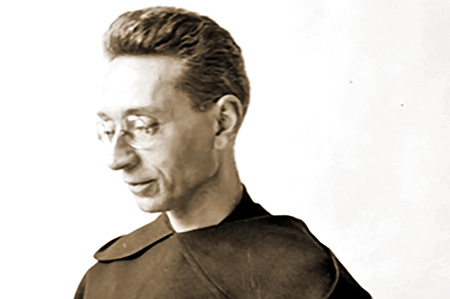 As a junior high student at the Cathedral of St. Raymond’s in Joliet, Illinois I was given the opportunity to attend a journalism class at Joliet Catholic High School, run by the Carmelites. I jumped at the chance. It was titled the “Titus Brandsma Journalism Class.”
As an eighth grader. I had no idea who Titus Brandsma was. I would soon find out. Our instructor, Father Kevin Shanley, O. Carm., made Titus’ life story required reading. It was a compelling read. I was struck by how one man dared to stand up to the Nazis, their ideology and their inhumane treatment of those who stood in their way.
Most impressive to me, was the fact that those persecuted shared little in common with Titus other than their humanity. He needed no other reason to stand up for them, those without a voice. Given multiple opportunities to walk away, he chose to stand by his beliefs.
Father Kevin focused our attention to Titus the journalist. Even while founding the Catholic University of Nijmegen, he still edited a newspaper. He championed freedom of the press and freedom of educational well before the start of World War II. He hailed his heroic efforts to bring a letter, written of his urging, from the Council of Bishops of Holland to the editors of 17 Catholic publications. It detailed how they were to deny the Nazi efforts to add content to and censor their publications. These letters were hand delivered by Titus.
His continued ministry while imprisoned in Dachau has been well documented, as have his mistreatment and murder. His life and death as a martyr for the freedom of the press led to his beatification and canonization.
All of the above are well documented facts but what impact did this have on me? What impact should this have on all of us.
Personally, I witness daily those in need, the homeless, the hungry, those battling substance abuse and personal demons, they too need a voice. I have found numerous agencies in my area to work with such as Habitat for Humanity and the Northern Illinois Foodbank. I hope to provide a voice for my neighbors in need. I do not pretend to have the personal courage of Titus; I am not sure if I have the conviction of faith to give my life for a cause. That does not mean that, inspired by Titus and others, I cannot make a difference in the lives of others. The impact may not be as significant, the results as momentous, but nonetheless an impact.
All of us can benefit from the inspiration of Titus, whether it be in our community, nationally or internationally, life presents us with limitless opportunities to follow his lead.
This leads us to the legacy of Titus. We need to tell his story to our children. We live in a world where the truth can, at times, seem elusive. Our young students would be well served hearing the story of one man. Committed to the truth, compelled to share that truth and show the conviction of his principles.
The lesson of the true costs of freedom and what one man was willing to sacrifice need to be shared with future generations. If not for Father Kevin, I can truthfully say that I would know little of Titus’ legacy. His veneration to sainthood would have gone almost unnoticed. All in spite of receiving my high school education at a Carmelite high school.
While we have all read of the heroic efforts of soldiers on D Day and at the Battle of the Bulge, little time is spent passing along the narrative of lives such as Titus. It was no less heroic than the afore mentioned. He also provides an example of how all us can and should resist crimes against humanity. He provides a wonderful narrative of a human being who was willing to fight for those who shared neither a common faith, ethnic origin or national roots. Most Importantly, they shared humanity and needed to be protected and their story needed to be heard.
If we hope to find a Titus in among us, his story needs to be told, unedited. It is easy to ignore crimes against humanity when we are not personally affected. History, specifically Titus’ story, shows us this is not a good idea.
As we celebrate the legacy of Titus at occasion of his canonization, there is no better way to do so than by telling his story.
Zelo zelatus sum pro domino deo exercituum.
Bill Bayci
“Joliet Catholic High School - Class of 1974"
Journalists ask Pope to name Titus as patron saint

During a press conference organized by the Communications Office of the Carmelite Order for the canonization of Titus Brandsma, a Dutch journalist presented the prior general, Míceál O’Neill, a copy of a letter from Catholic Journalists to Pope Francis. The letter outlines why the newly canonized saint should be designated patron of journalists by the Church.
The four principle signers, from the Netherlands and Belgium, are joined by many others from around Europe and the United States of America.
Here is the copy of the letter from the journalists:
An open letter from Catholic journalists to Pope Francis on the occasion of the canonization of Father Titus Brandsma on May 15, 2022
Your Holiness,
In 2018 you asked us, journalists, loud and clear, “to promote a journalism of peace”, a “journalism that is truthful and opposed to falsehoods, rhetorical slogans, and sensational headlines. A journalism created by people for people, one that is at the service of all, (…) a journalism committed to pointing out alternatives to the escalation of shouting matches and verbal violence” (“The truth will set you free” (Jn. 8:32), Fake news and journalism for peace. Message of His Holiness Pope Francis for World Communications Day, 24 January 2018).
We wholeheartedly endorse your call to action and in it we recognize a mission statement for the whole of the journalistic enterprise: for old and new media, for editors of newspapers, magazines, radio and television stations, and internet platforms - and not only for journalists of Catholic origin, but for all journalists of good will.
On 15 May, in Rome, you will canonize a man who embodied these crucial journalistic values until his dying day: the Dutch Carmelite Father Titus Brandsma (1881 - 1942).
Titus Brandsma has meant a lot to the Catholic community in the Low Countries, but his journalistic work stands out among all his other activities. He was editor-in-chief of a newspaper, devoted himself to the modernization and professionalization of the Catholic daily press in the Netherlands, and strove for better working conditions and the establishment of a professional training for journalists.
Father Brandsma did his work in the context of the rise of fascism and Nazism in Europe. In word and deed he opposed the language of hatred and division that was becoming common at the time. In his view, what we now describe as ‘fake news’ was not to be tolerated in the Catholic press; he successfully argued for an episcopal ban on the printing of National Socialist propaganda in Catholic newspapers.
He paid with his life for this courageous actions: in early 1942 Father Titus was arrested by the occupying forces and consequently sent to the Dachau concentration camp. There, on July 26 of the same year, he was killed by an injection, on the Sunday that the Dutch bishops had their courageous protest against the deportations of Jews read out in all the churches.
We, Catholic journalists, recognize in Titus Brandsma a professional peer and fellow believer of considerable standing. Someone who shared the deeper mission that should drive journalism in modern times: a search for truth and veracity, the promotion of peace and dialogue between people.
We therefore see him as a friend and advocate for our entire profession, indeed a patron saint of journalism. We would therefore like to boldly ask you to make this patron saint’s office official.
The current patron saint of journalism is Francis de Sales. He is undoubtedly a holy man of faith and of great merit, but he was not a journalist in the modern sense of the word. Titus Brandsma was.
And as we said, he gave his life for it. In our view, this makes him particularly suitable for this patronage. According to UNESCO, in 2021, no less than 55 journalists died worldwide while carrying out their work. Many more had to deal with violence, threats, repression, censorship and persecution. The commitment to truth and humanity is extremely dangerous in these times of disinformation and polarization. This urgently requires a holy intercessor who has experienced this personally - and passed the ordeal with flying colors.
We thank you for your kindness in considering this request.
Recent Books on Titus Brandsma

A limited supply of these books (and more!) will be available at the Titus Brandsma Center during the days of the canonization (Hours of operation to be announced). The center is located in the parish hall in the Carmelite church on the Via della Conciliazione, the street leading into the Vatican. The hall is easily accessible from Borgo S. Angelo (across from the Passetto, which connects the Vatican to Castel San Angelo).
. . .
JUST PUBLISHED THIS WEEK IN ENGLISH!
Fernando Millán Romeral. Truth in Love – Titus Brandsma, Carmelite.
Printed Edition ISBN: 978-1-936742-29-5 - 138 pages. Euro US$19.95. Also available as an e-book on Apple Books and Amazon for US$10.99
The English translation of Fr. Fernando’s well-documented research into the life and spirituality of Titus Brandsma and its effect today. As a vice-postulator for the cause for canonization of Fr. Titus and former prior general of the Carmelite Order, Fr. Fernando is extremely knowledgeable about the Fr. Titus’ spirituality and draws out connections not found in other works on Brandsma. This volume in English has been amplified with recent information uncovered by Fr. Fernando which is not in previous translations. Written in a very familiar storytelling style, the reader will find the rich spirituality of this Carmelite saint very accessible.
. . .
Titus Brandsma: Letters to the Family
Collected Works, vol 2
Edited by Elisabeth Hense and Joseph Chalmers. Published by Edizioni Carmelitane – 2021 – 526 pages. Euro 46,00 - US$55.00. Also available as an e-book on Apple Books and Amazon for US$27.99
This second volume of the collected works of Titus Brandsma brings together his numerous writings to his parents, siblings, and other family members. While much of his correspondence has been lost, this collection shows the depth of Blessed Titus’ attachment and concern for his family. He discusses many of the important family matters as well as shares in their joys and sorrows, advises the family on difficult decision, and also writes about his own life and his concerns. He never forgot a birthday, name day, profession day, wedding day, or religious feast day of his relatives— all remembered with a letter or card.
The cards and letters also give a sense of how well-travelled Blessed Titus was due to his work for the Dutch province of the Order as well as his many civic, educational, and Church commitments.
. . .
Titus Brandsma: Mysticism in Action
Collected Works, vol 1
Edited by Elisabeth Hense and Joseph Chalmers. Published by Edizioni Carmelitane – 2021 – 273 pages – Extensive bibliography. Euro 25,00 - US$30.00. Also available as an e-book on Apple Books and Amazon for US$15.00
This is the first volume of a multi volume series, containing the translations into English of Fr. Titus Brandsma’s writings. This book gives an insight into his scholarly work, his social commitment, and his personal relationships. The texts selected here date from the period 1904 to 1942.
Brandsma resolutely opposed the National Socialist (Nazi) movement. He developed an explicitly Christian perspective on the themes of mysticism and spirituality, social teaching, peace and disarmament, heroism, journalism, and education, the fight against poverty- all issues in Dutch society at the time.
. . .
Miguel Arribas, O. Carm. The Price of Truth: Titus Brandsma, Carmelite.
2021. Printed Edition ISBN: 978-1-936742-26-4 - eBook ISBN: 978-1-936742-27-1. 331 pages - Extensive bibliography. Also available as an e-book on Apple Books and Amazon for US$12.99
An extensive biography of St. Titus Brandsma, Carmelite and martyr for the Catholic faith. Fr. Arribas wrote this biography based on the acts of the process of canonization as well as biographies in various languages. To better understand Brandsma’s spiritual journey, the author visited The Netherlands and Germany, in pilgrimage to the places of birth, life, and death of this “martyr for freedom of expression.”
Brandsma led a simple life even though he was a multifaceted priest, mystic, a passionate journalist, “rector magnificus” of the Catholic University of Nijmegan, and a courageous witness for Christ, even to the point of giving his own life for the truth.
. . .
Titus Brandsma: Carmelite Educator - Carmelite Mystic - Carmelite Martyr - Spiritual Guide
Boxed Set of Four Books
Published by Carmelite Media. Euro 23.00 - US$25.00
A four-book boxed set contains writings by and about Carmelite Titus Brandsma that explore Titus' experiences as an educator, mystic, martyr, and spiritual guide. Set includes:
- Carmelite Mysticism-Historical Sketches by Titus Brandsma, O. Carm., (85 pages)
- Friar Against Fascism by Leopold Glueckert, O. Carm. (24 pages)
- Meditations with Titus Brandsma by Jane Lytle-Vierira (25 pages)
- Meditations on the Way of the Cross of Albert Servaes by Titus Brandsma, O. Carm. (56 pages)
Each book is also available individually (only directly from Carmelite Media [carmelites.info/publications]).
. . .
Tito Brandsma, O. Carm. Bellezza del Carmelo:
Appunti storici di mistica carmelitana. Via Crucis. Pace e amore per la pace.
Published by Edizioni Carmelitane (In Italian) - First Reprinting: 2015 - 161 pages.
This book is a brief description of Carmelite spirituality, with historical notes and links to the prominent figures of Carmelite spirituality. The second part of the book contains the Stations of the Cross in the form of a dialogue and a description of the scenes. Written by St. Titus Brandsma with his exposition and spirituality as a teacher and journalist during World War II.
The book contains three writings of Blessed Titus Brandsma: Beauty of Carmel, historical notes of Carmelite mysticism, which constitute the first attempt at a historical synthesis of the spirituality of Carmel. Way of the Cross, contemplative meditation of the fourteen stations of this traditional exercise of piety, so dear to the Christian heart. Peace and Love for Peace, an impassioned lecture given by Prof. Bransma in 1931, but with content very applicable to today.


