8 May Optional Memorial
Because of his virtues, he was looked down upon and treated badly even by the less observant friars. He, however, bore all the annoyances and the temperament of those religious with great patience, and he practiced virtue and devoted himself to the good of the convent. Since he lived in great austerity, he was gaunt in appearance, with a pale face and sunken eyes, but with a lively and honest gaze.
He was a good example to those who came to visit him, and those who frequented him were often moved to tears by his kind words and examples.
Brother Luigi, even though he was prior, did not spare himself from work; on the contrary, he behaved like the humblest of the friars in the convent, going door to door throughout the city of Randazzo to collect alms of bread, candles, and similar items, to support the friars and do good for all. In fact, while he was begging, the poor would turn to him for alms, knowing that he would not fail to distribute the bread he himself had received.
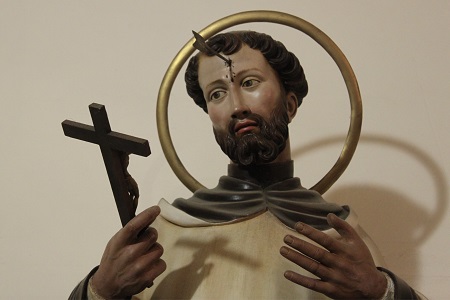
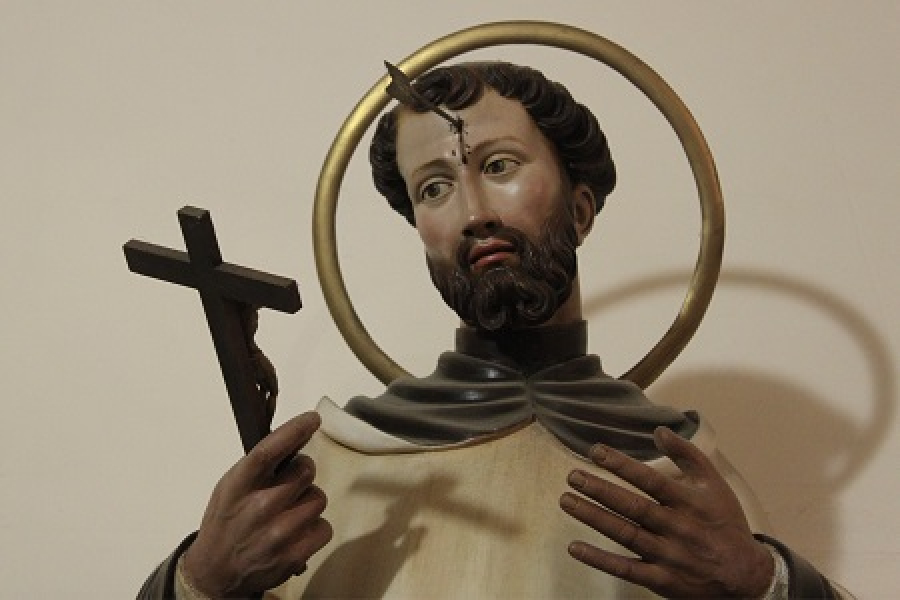
Once, on Easter Sunday, the friars of the convent ate meat, but he wanted bread and water as usual, as attested by Friar Pietro Cubani, a companion of Blessed Luigi. He also recounted that while Blessed Luigi himself was going from farmyard to farmyard and from farmhouse to farmhouse on his usual alms round, an arrow was shot at him from the road and struck him in the forehead, leaving him bedridden for quite some time. Many asked him to reveal who had wounded him, but he never would, and instead, with great patience, he would repeat: “May God forgive him; praise be to God.”
There was a path leading to the convent of St. Michael that was rough and notorious; to eliminate the scandal and immorality that prevailed there, he purchased a plot of land and opened another road, working on it personally alongside those who, at his request, had come to help him. If Brother Luigi needed a favor for the benefit of the convent, no one would say no to him, but they were only too happy to assist him, in remembrance of the benefits they had received, for his courteous manner, and for his generous hospitality.
After he passed from this life, his body was placed in a coffin beneath the main altar of the church, enclosed by an iron grille; and many venerated and invoked him, especially those suffering from quartan fever, who were healed. These things were said then, and are still repeated today.
(Fr. Simonelli, Blessed Luigi Rabatà, Rome, 1968, pp. 74–76)
To read more ...