
















5 November Optional Memorial
Frances was probably born in Thouars on September 28, 1427, to Louis, Viscount of Thouars, and Marie de Rieux, Baroness of Encenis. Promised in marriage at the age of four to Peter, second son of the Duke of Brittany, she spent the rest of her youth with her future mother-in-law Joan, sister of Charles VII, King of France, who instilled in her the deeply Christian spirit she had received from the teachings of St. Vincent Ferrer. Peter, whose father and older brother had died before him, ascended the ducal throne of Brittany and was crowned together with Frances in Rennes Cathedral in 1450. She had a profound beneficial influence on her husband, the duke, on the running of the court and on affairs of state, and the seven years of his reign are remembered by the people as “the times of the blessed duchess.”
Widowed in 1457, despite pressure from her father and the King of France, she not only opposed remarriage but turned towards religious life. After repeated discussions with Blessed John Soreth, prior general of the Carmelites, she decided to join the Carmelite Order, making her possessions available for the foundation of the first Carmelite convent in France. It was established in Bondon, near Vannes, in 1463, with the nuns whom Blessed Soreth had transferred from the monastery in Liège. On March 25, 1468, Frances joined them. Wanting to bridge the social gap with her sisters, she asked them to replace the title of duchess with that of “handmaid of Christ.”
In 1477, under the protection of Our Lady of Couëts (de Scotiis), she founded a second monastery in Nantes, which two years later welcomed the remaining nuns from the former monastery in Bondon. For these foundations and for her influence on the legislation adopted in her and other French Carmelite monasteries, Frances is recognized as the founder of the Carmelites in France. She was responsible for introducing the practice of frequent Communion (and even daily Communion for the sick) and imposing, under penalty of excommunication, the strictest enclosure, which prevented both access to the monastery by all outsiders (including women) and the nuns from leaving the cloistered enclosure. With this vow, she anticipated the legislation of St. Pius V by a century and preserved her religious sisters from the damage that the lack of enclosure caused in other places.
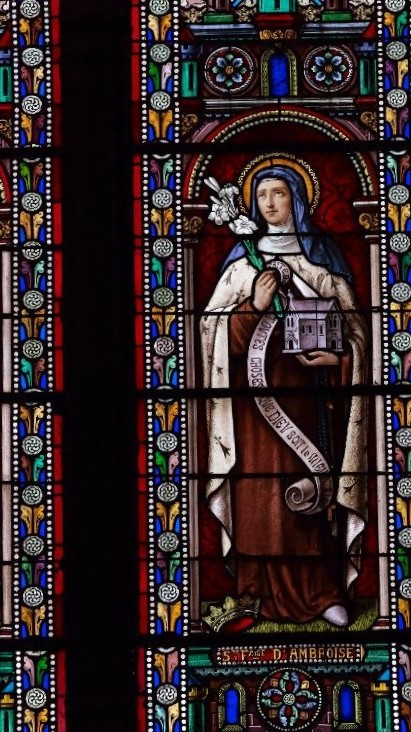
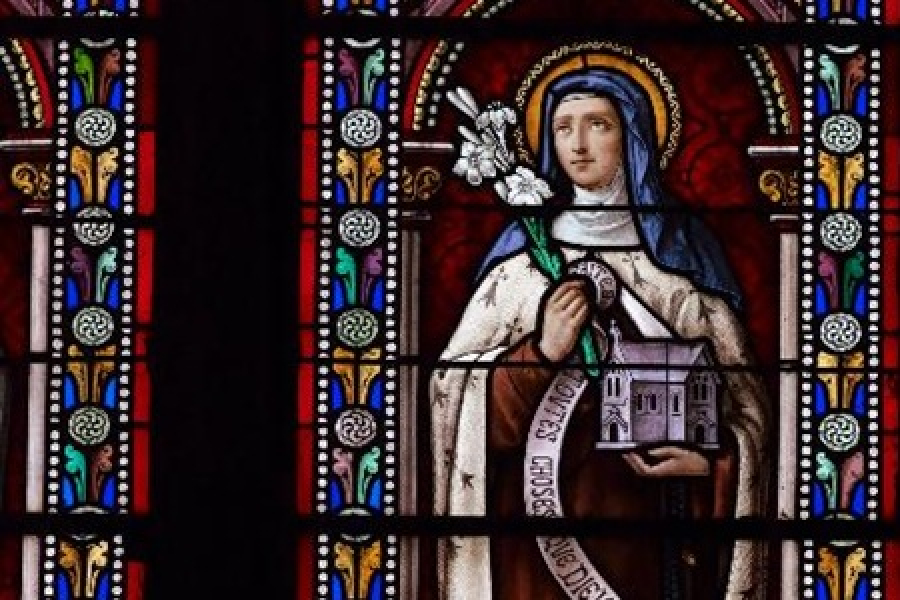
She died in Nantes on November 4, 1485. During the French Revolution, the nuns were forced to abandon the convent, the memories of the blessed were scattered, and her body was desecrated. She is credited with some cloistered instructions, the manuscript of which has been lost, and some meditations published by Christophe Le Roy. Her cult was recognized by Pius IX on July 16, 1863. She is usually depicted with her eyes turned toward the crucifix she holds in her hands; on her Carmelite habit she wears an ermine cape (instead of wool) to recall her rank as a duchess.
To read more ...