









60th Anniversary of Gravissimum Educationis Celebrated at Jubilee for World of Education
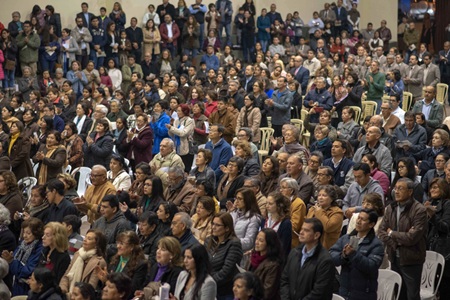
The Pontifical Universities joined with Pope Leo XIV in celebrating the 60th anniversary of the Second Vatican Council document Gravissimum Educationis at a Mass on Monday, October 27, as part of the Jubilee of the World of Education. The pope also signed an Apostolic Letter, Drawing New Maps of Hope, reflecting on the relevance of the Conciliar document in today’s world and on the challenges of education today with particular attention to Catholic schools and universities. He wrote that the Vatican II document “reminded the Church that education is not an ancillary activity but forms the very fabric of evangelization.”
The pontifical universities and institutes in Rome enroll more than 15,000 students from some 125 nations. There are pontifical universities or universities with a pontifical faculty in many parts of the world as well.
Commenting on the fact that many millions of children around the world have no access to primary education, the Holy Father reminded the Church that in his Apostolic Exhoration, Dilexi te, he wrote of education as “one of the highest expressions of Christian charity.” He later repeated another part of Delexi te where he wrote “For the Christian faith, the education of the poor is not a favor but a duty.”
In his homily at the Mass in St. Peter’s, Pope Leo spoke of the deep symbolism of pilgrimage. “Life makes sense only when it is lived as a journey,” he remarked. "It is a continual ‘passing over,’ from death to life, from slavery to freedom, and experience of the Paschal Mystery that calls us to a constant renewal and hope."
Pope Leo addressed the fragmentation in the overall vision, uniting knowledge with meaning. He spoke of this question being addressed by Augustine, Thomas Aquinas, as well as Carmelite Saints Teresa of Ávila and Edith Stein. “The Church needs this unified perspective for both today and tomorrow,” he continued, encouraging students and professors alike to ensure that their academic work does not remain “an abstract intellectual exercise,” but rather that it becomes a force that transforms life, deepens faith, and strengthens witness to the Gospel.
The pope described the mission of educators as a true work of mercy. Teaching, he said, is like the miracle in the Gospel, “for the activity of the educator is to lift people up, helping them become themselves and able to develop informed consciences and the capacity for critical thinking.”
Feeding that hunger for truth which is in everyone is not merely an academic duty but a vital human task. "To feed the hunger for truth and meaning is an essential task, since without them we would fall into emptiness and even succumb to death", he said.
Making reference back to the Gospel for the day (Luke 13: 10-17) in which Jesus heals the woman bent over for eighteen years, the Pope prayed that all those engaged in the academic vocation may be “men and women who are never bent in on themselves but always upright," carrying with them “the joy and consolation of the Gospel wherever you go.”
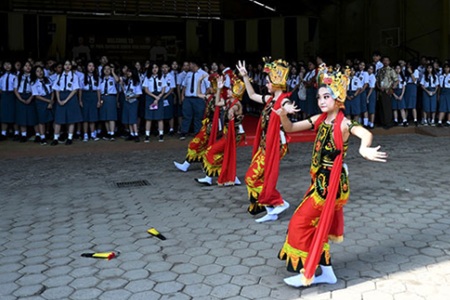
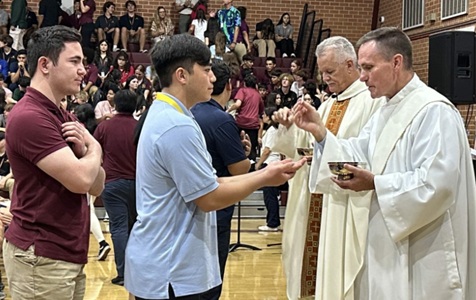
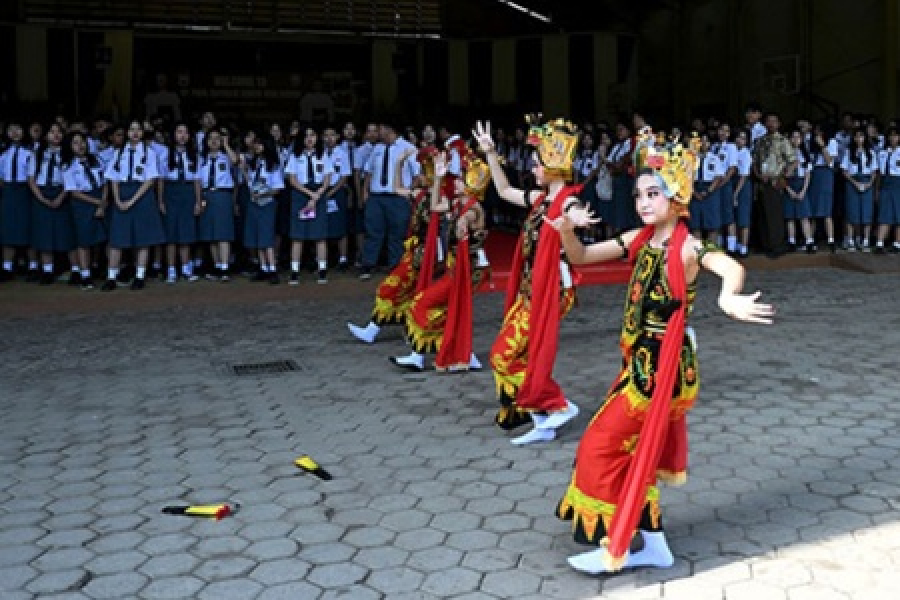
The Carmelite Family around the world educates thousands of students—from pre-school through university. Many Carmelites are involved in education in various universities. There are 30 schools administered by the Order and many of the affiliated Congregations also have schools. The Order’s programs on ongoing formation—in the schools, parishes, and retreat centers—allow adults to continue deepening their faith through a variety of programs.
For the celebration of the Jubilee of the World of Education a number of events took place in and around the Vatican coordinated by the Dicastery for Culture and Education. Three gatherings with Pope Leo, in addition to the Mass on October 27, took place. A second Mass is scheduled for Saturday, November 1 for the declaration of St. John Henry Newman as a doctor of the Church.