









Displaying items by tag: Papa Leone XIV
Pope Leo XIV Releases First Encyclical

Pope Leo XIV’s First Encyclical Calls for “Preserving the Human Person in the Time of Artificial Intelligence”
There were strong indications of what one of his pontificates main focuses would be when Robert Prevost chose the name Leo for his new life as leader of the Catholic Church. He also mentioned artificial intelligence when addressing the crowd in St. Peter’s Square and the world via the various forms of communication we now have available. In May 1891, Pope Leo XIII released the encyclical Rerum novarum addressing the condition of the working class in the period of the Industrial Revolution. It discussed the rights of workers, owners, and the state.
On the 135th anniversary of that encyclical, Pope Leo XIV released his first encyclical, entitled Magnifica humanitas: On Safeguarding the Human Person in the Time of Artificial Intelligence.”
The co-founder of Anthropic, Chris Olah, was invited to speak at the presentation of the encyclical. In his talk, Mr. Olah raised some interesting issues, pointing out that “every frontier AI lab … operates inside a set of incentives and constraints that can sometime conflict with doing the right thing.” He echoed the pope’s call for discernment and highlighted three questions that companies need to discern about and “where I think the Church’s voice is most needed.” First is our duty to the global poor. Secondly is the need for moral imagination and ambition regarding human flourishing. Finally, the world has need for discernment on the nature of AI models.
The reactions have been generally favorable with many being very enthusiastic about the pope’s words. The Archbishop of Chicago, Cardinal Blaise Cupich, is quoted in an interview with Vatican News as giving very high praise for the encyclical. He sees this encyclical as “a new lens to read the entire Social Doctrine of the Church.”
Following interviews with Church leaders in Africa, ACI Africa summed up the leadership’s reactions as seeing the document as “a decisive intervention on the ethical, spiritual, and social implications of artificial intelligence and emerging technologies. Bishop Badejo of Nigeria recalled that just four days after his election, Pope Leo met with the media, challenging them to safeguard the true nature of communication as creation of culture and of human and digital environments that become spaces for dialogue and discussion.”
In response to those who may dismiss the pope’s call in his encyclical, Cardinal Cupich pointed out that “Pope Leo XIV is clear that this is Church doctrine and not simply a body of teaching that Catholics may choose to accept or ignore.”
Bishop Badejo sees the letter’s strongest point is its call for discernment and vigilance regarding the control of emerging technologies. The document is “now calling all segments of society to a shared discernment process guided by the Holy Spirit to discern how to navigate responsibly this intriguing era of AI.” Cardinal Cupich concurs. “The new technology has the potential to overtake our capacity to control it, and the pope is giving us a wake-up call to seize this moment with urgency."
Read to the Encyclical Magnifica humanitas
Pope Marks Vatican Publisher’s 100th Anniversary

Pope Celebrates 100 Years of Vatican Publishing House Stressing Importance of Books and Reading
Meeting with members of the Vatican Publishing House, which has served nine popes, Pope Leo XIV thanked them for their 100 years of service and reflected on the importance of emphasizes the importance of reading and books. The Vatican Publishing House became independent from the much older Vatican Printing Press, originally founded in 1587.
Books offer an opportunity to think said the pope. The physical nature of a book, especially in the digital age, reminds people of the importance of thought, reflection, and study.
“Reading,” the Pope said, “nourishes the mind” and “helps cultivate a conscious and well-formed critical sense, guarding against fundamentalism and ideological shortcuts.”
For this reason, Pope Leo encouraged everyone to read books “as an antidote to closed-mindedness, which is reflected in rigid attitudes and reductive visions of reality.”
Books are also an opportunity to encounter others. "When we hold a book in our hands," Pope Leo said, "we encounter its author in an ideal sense. At the same time, we also encounter those who have read it before us, those reading it now, and those who will read it in the future." He noted that writers and readers increasingly have opportunities to come together to speak and listen to one another.
Recalling Pope Francis’ frequent emphasis on a “culture of encounter,” Pope Leo suggested that books serve as bridges toward others, fostering dialogue, enriching understanding, and broadening perspectives.
Finally, Pope Leo underscored that, for Christians, books are also an opportunity to proclaim Christ. “We know well how reading the biography of a saint or a well-presented spiritual reflection can touch the heart,” he said. He also reflected on artistic depictions linking saints and sacred texts.
“The Virgin Mary," he pointed out, "is often depicted, in scenes of the Annunciation, intent on reading the Sacred Scriptures. Saint Anthony of Padua is portrayed holding the open Book of the Gospels, upon which the Child Jesus stands. Saint Augustine is often shown seated at a writing desk before a large book and, at times, holding a heart in his hand: truth and charity.”
Following up with these popular images, the pope said, “In the school of Mary and the Saints, let us nourish ourselves with the Word of God, so that it may shape our way of thinking and acting.”
Pope Leo Calls for a Worldwide Prayer Vigil for Peace
International Prayer Vigil for Peace
Saturday, April 11, 2026 – St Peter’s Basilica
6 PM (Rome)
Pope Leo XIV has invited all people around the world to join him in praying for peace on Saturday, April 11, at 6pm (Rome time). The Prayer Vigil for Peace will be held in St. Peter’s Basilica, but everyone can participate via Vatican Communications (vatican.va)
The pope and various Catholic organizations as well as individuals have expressed grave concern that the war between the US/Israel and Iran is not only causing massive suffering and death but that the war is unjust.
In his Easter Sunday message, the pope highlighted that Jesus walked the path of dialogue and that the power with which Christ rose is entirely nonviolent— rejecting revenge, choosing compassion, praying for one another and seeking the common good rather than private interests.
“Let those who have weapons lay them down! Let those who have the power to unleash wars choose peace. Not a peace imposed by force but through dialogue! Not with the desire to dominate others, but to encounter them! We are growing accustomed to violence . . . and becoming indifferent . . . The peace that Christ gives us is not merely the silence of weapons, but the peace that touches and transforms the heart of each of us!” (Leo XIV)
Pope Leo XIV: “Aerial Bombings Must Be Banned”
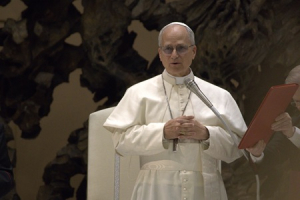
Church and UN Call for Peace—Leo XIV says “Aerial Bombings Should Have Been Banned Forever”
During a meeting with Italian airline executives, Pope Leo XIV called for the permanent abolition of aerial bombing. “After the tragic experiences of the 20th century, aerial bombings should have been banned forever … This is not progress; it is regression!” He later said, “No one should have to fear that threats of death and destruction might come from the sky.”
The US-Israeli war against Iran is in its fourth week. Strikes began on February 28 with attacks on Iran. Iran has retaliated by attacking American and Israeli bases as well as installations in nearby countries. One attack by the US resulted in the bombing of an Iranian school and the deaths of approximately150 children and the wounding of 100 more.
UNESCO, the UN agency promoting cooperation in education, science, culture, and communication to foster peace worldwide, called the bombing of the Iranian primary school “a grave violation of humanitarian law.” A number of other UN organizations and senior officials, including Secretary-General António Guterres, condemned the military attacks as well as the retaliatory strikes by Iran.
It was not the first time the pope has called for the end of war. On March 1, during the Sunday Angelus, he called for the “thunderous sound of bombs” to stop and for guns to “fall silent.” The past Sunday, he called the war “a scandal to the whole human family” and urged leaders to “seek solutions without weapons.”
During his weekly break at Casel Gandolfo on Tuesday, Pope Leo XIV released a statement renewing his call for an unconditional ceasefire, saying that “death and pain caused by these wars is a scandal for the entire human family”.
Asked about the pope’s calls for a ceasefire, the American president responded, “We can talk, but I don’t want a ceasefire.”
The Vatican Secretary of State, Cardinal Pietro Parolin, has reaffirmed the Church’s stance, referring to “the foolishness of war.” The cardinal expressed hope that “at least within the holy sites the rituals may still be celebrated [for Easter]. But due to the Israel-American war celebrations of Easter will be limited in the Holy Land this year.
The Cardinal pointed out the irony that Easter is the victim of war. “Easter is the feast of peace, the peace of the Risen Lord …”
Catholic teaching on war holds a theory of “just war.” Such a war is characterized as proportional with a distinction between combatants and civilians, and a reasonable chance of success in pursuit of a just cause. Cardinal McElroy of the Archdiocese of Washington, DC, has spoken on this point, stating that intervention in Iran fails to meet several conditions required by the Church’s teaching on just war, including that benefits of this war will not “outweigh the harm which will be done.”
Celebration of the 30th World Day for Consecrated Life
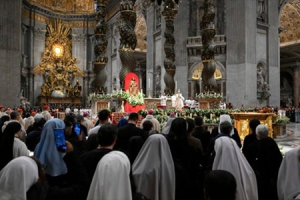
Celebration of the 30th World Day for Consecrated Life on February 2nd, Feast of the Presentation of the Lord
Pope Leo XIV celebrated Mass for World Day for Consecrated Life on February 2, the Feast of the Presentation of the Lord. Preaching on Luke’s Gospel to the people assembled in St. Peter’s Basilica, the pope spoke of Simeon and Anna recognizing and proclaiming Jesus as the Messiah in the Temple. The pope pointed out that this Scripture passage speaks of two movements of love: that of God coming to save his people and that of humanity, awaiting his coming with faith. He stressed that this is the mission of religious men and women in the Church as well as in the world.
The pope, a member of the Augustinian Order, understands well the power that consecrated life can have for teaching about Christ to the whole world. He said those professing the evangelical counsels “are called to bear witness to God’s saving presence in history for all peoples, even within a society in which false and reductive understandings of the human person increasingly widen the gap between faith and life.”
Referring to religious communities as “outposts of the Gospel” he stressed that consecrated individuals “are called to testify that the young, the elderly, the poor, the sick, and the imprisoned hold a sacred place above all else on God’s
The annual observance was started by Pope Saint John Paul II in 1997.
Jubilee for World of Education Celebrated in Rome
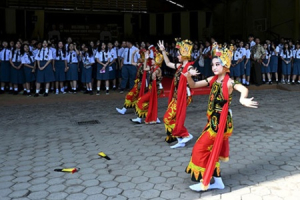
60th Anniversary of Gravissimum Educationis Celebrated at Jubilee for World of Education
The Pontifical Universities joined with Pope Leo XIV in celebrating the 60th anniversary of the Second Vatican Council document Gravissimum Educationis at a Mass on Monday, October 27, as part of the Jubilee of the World of Education. The pope also signed an Apostolic Letter, Drawing New Maps of Hope, reflecting on the relevance of the Conciliar document in today’s world and on the challenges of education today with particular attention to Catholic schools and universities. He wrote that the Vatican II document “reminded the Church that education is not an ancillary activity but forms the very fabric of evangelization.”
The pontifical universities and institutes in Rome enroll more than 15,000 students from some 125 nations. There are pontifical universities or universities with a pontifical faculty in many parts of the world as well.
Commenting on the fact that many millions of children around the world have no access to primary education, the Holy Father reminded the Church that in his Apostolic Exhoration, Dilexi te, he wrote of education as “one of the highest expressions of Christian charity.” He later repeated another part of Delexi te where he wrote “For the Christian faith, the education of the poor is not a favor but a duty.”
In his homily at the Mass in St. Peter’s, Pope Leo spoke of the deep symbolism of pilgrimage. “Life makes sense only when it is lived as a journey,” he remarked. "It is a continual ‘passing over,’ from death to life, from slavery to freedom, and experience of the Paschal Mystery that calls us to a constant renewal and hope."
Pope Leo addressed the fragmentation in the overall vision, uniting knowledge with meaning. He spoke of this question being addressed by Augustine, Thomas Aquinas, as well as Carmelite Saints Teresa of Ávila and Edith Stein. “The Church needs this unified perspective for both today and tomorrow,” he continued, encouraging students and professors alike to ensure that their academic work does not remain “an abstract intellectual exercise,” but rather that it becomes a force that transforms life, deepens faith, and strengthens witness to the Gospel.
The pope described the mission of educators as a true work of mercy. Teaching, he said, is like the miracle in the Gospel, “for the activity of the educator is to lift people up, helping them become themselves and able to develop informed consciences and the capacity for critical thinking.”
Feeding that hunger for truth which is in everyone is not merely an academic duty but a vital human task. "To feed the hunger for truth and meaning is an essential task, since without them we would fall into emptiness and even succumb to death", he said.
Making reference back to the Gospel for the day (Luke 13: 10-17) in which Jesus heals the woman bent over for eighteen years, the Pope prayed that all those engaged in the academic vocation may be “men and women who are never bent in on themselves but always upright," carrying with them “the joy and consolation of the Gospel wherever you go.”
The Carmelite Family around the world educates thousands of students—from pre-school through university. Many Carmelites are involved in education in various universities. There are 30 schools administered by the Order and many of the affiliated Congregations also have schools. The Order’s programs on ongoing formation—in the schools, parishes, and retreat centers—allow adults to continue deepening their faith through a variety of programs.
For the celebration of the Jubilee of the World of Education a number of events took place in and around the Vatican coordinated by the Dicastery for Culture and Education. Three gatherings with Pope Leo, in addition to the Mass on October 27, took place. A second Mass is scheduled for Saturday, November 1 for the declaration of St. John Henry Newman as a doctor of the Church.
Pope Leo XIV Addresses FAO on Its 80th Anniversary
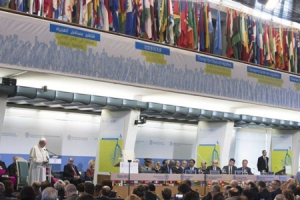
Each of the popes since Paul VI, except John Paul I during his short reign, have had interactions with FAO, concretizing the Holy See’s continued support of the UN agency in accomplishing its mission. This was Pope Leo’s first visit and during his talk, the pope reaffirmed the mission of the organization to end hunger and to build resilient agrifood systems across the globe. He also took the opportunity to urge the international community to redouble its efforts to eradicate hunger, malnutrition, and food insecurity — evils he described as “a moral wound that afflicts the whole human family.”
The Director-General, acknowledging the presence of the pope and many other leaders from around the world, said, “Your presence here today is a true reflection that hunger knows no borders, and that the challenge of food security demands unity among nations.” He implored that there be continued action in this area. “The world’s leaders and people everywhere must come together united by our collective belief that the right to food is a basic human right, and that peace is a prerequisite for food security,” he said.
In his address, the pope spoke of the unacceptable use of food as a weapon of war, which he said contradicts all of the awareness-raising work carried out by FAO over the past eight decades. “Eighty years after the establishment of FAO, our conscience must once again challenge us in the face of the ever-present scourge of hunger and malnutrition,” the pope said. “In this regard, I consider it a true success that World Food Day is being celebrated this year under the theme ‘Hand in Hand for Better Foods and a Better Future.’ At a historical moment marked by deep divisions and contradictions, feeling united by the bond of collaboration is not only a beautiful ideal, but a resolute call to action.”
Continuing to stress the need to move from talking to action, the pontiff said, “We cannot be content with proclaiming values; we must embody them.” He continued “Slogans do not lift people from misery. We must place the human person above profit and guarantee food security, access to resources, and sustainable rural development.”
Established by a United Nations resolution in 1979 and first observed in 1981, World Food Day is celebrated annually on October 16. It is now one of the most widely celebrated UN observances, with events held in over 150 countries. The Day provides an opportunity for people to reflect on the responsibility to care for the land and water, support those who cultivate it, and strengthen the systems that bring food to every table.
The mission of Food and Agriculture Organization of the United Nations (FAO) is to defeat hunger, food insecurity, and malnutrition in a sustainable way while upholding the dignity of every human being. This is more important than ever in a world where conflict, the climate crisis, forced migration and a widening gap between the rich and poor, cast doubt on the goodwill of the international community to place the human person above profit in the name of justice and peace.
Pope Outlines Purpose of Journalism
Pope Outlines Purpose of Journalism during Meeting with MINDS International
Pope Leo XIV took time on Thursday, October 9, to address MINDS International, a global network of leading news agencies whose mission is to share the truth, often at tremendous risk to their personal safety. The pope said, “If today we know what is happening in Gaza, Ukraine, and every other land bloodied by bombs, we largely owe it to them [the news agencies].”
The pope described these "extraordinary eyewitness accounts" as the "culmination of the daily efforts of countless people who work to ensure that information is not manipulated for ends that are contrary to truth and human dignity.”
He called on media professionals to uphold the highest standards of integrity and truth because of the risks their colleagues take to ensure the world stays informed.
He also repeated his appeal for the release of journalists who have been unjustly detained or persecuted—calling out that the work of a journalist “can never be considered a crime. It is a right that must be protected.” It is the duty of media professional to hold fast to their ministry. “Your service requires competence, courage, and a sense of ethics,” said the pope.
The pope highlighted the confusion or crisis that is resulting from the line between truth and falsehood becoming blurred. The irony is that this is occurring as technological developments make news available faster than ever before.
Quoting his predecessor, Pope Francis, the pope repeated his call for "courageous entrepreneurs, courageous information engineers," to prevent the degradation of communication through clickbait, disinformation, and unfair competition. Media agencies, he noted, are on the frontlines and must find ways to balance economic sustainability with a commitment to accurate, balanced reporting.
The pope also raised the fact that the rise of artificial intelligence makes the situation of delivering the truth all the more difficult. "Who controls the algorithms, who directs it, and for what purposes?” he asked. He proposed that human beings remain at the center and that the power over these new tools not be concentrated in the hands of a few.
"With your patient and rigorous work," Pope Leo said, "you can act as a barrier against those who, through the ancient art of lying, seek to create divisions in order to rule by dividing."
The United Nations “World Press Freedom Day” will be celebrated May 3, 2026. This day is a celebration of the commitment to upholding the fundamental principles of press freedom and to defending the media from attacks on its independence. The UN General Assembly proclaimed the day in 1993, following a recommendation from UNESCO, to raise awareness about the importance of press freedom, assess its state globally, honor journalists who have lost their lives in the line of duty, and encourage media professionals to reflect on professional ethics.
Celebrating Jubilee of Consecrated Life in Rome
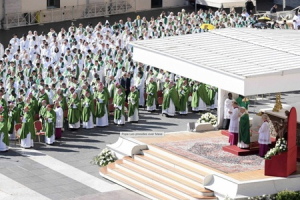
Church Comes Together in St. Peter’s Square to Celebrate Jubilee of Consecrated Life
An overflow crowd of religious sisters and brothers, monks and contemplatives, members of secular institutes, the Ordo Virginum, hermits, and members of “new institutes” from around the world converged on St. Peter’s Square on Thursday morning, October 9, 2025, to join with Pope Leo XIV in celebrating the Jubilee of Consecrated Life.
During his homily, Pope Leo XIV urged religious men and women to be “truly poor, meek, hungry for holiness, merciful,” and to “seek, ask, and knock” for God’s gifts, embodying the prophetic role of religious life. The pope spoke of “God as the fullness and meaning of our lives. For you—for us—the Lord is everything.” He reminded us that “an authentic experience of God always gives rise to generous outpourings of charity.” This can be seen in the lives of the founders and foundresses of the various orders and congregations present.
The pope concluded by urging all the religious “to treasure and cultivate what you have received. … Keep the simplicity of the ‘least ones’ of the Gospel,” in the words of St. Paul VI. “May you succeed in discovering this anew in an interior and closer relationship with Christ and in your direct contact with your brethren.”
A Carmelite Named Prefect of Bishops' Dicastery
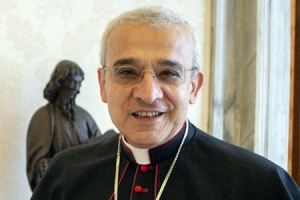
Carmelite Archbishop Filippo Iannone Appointed Prefect of the Dicastery for Bishops by Pope Leo XIV
On Friday, September 26, Pope Leo XIV appointed Archbishop Filippo Iannone as Prefect of the Dicastery for Bishops. He was previously Prefect of the Dicastery for Legistlative Texts. His new role includes the presidency of the Pontifical Commission for Latin America (CAL). He begins his new position on October 15, 2025.
The news of Mons. Iannone's appointment arrived at the General Chapter at the conclusion of the Closing Mass in the Cathedral of Our Lady of Mount Carmel. The prior general, Desiderio García Martínez, made the announcement to the congregation following the signing of the Acts of the Chapter. Later, Fr. Desiderio said, "We were very happy when we received the news that Mons. Filippo Iannone has been appointed by the pope as Prefect of the Dicastery for Bishops and President of the Pontifical Commission for Latin America. We send him our warmest congratulations on behalf of the Carmelite Order. Pope Leo XIV, due to Archbishop Iannone's dedication to the Church, has deemed him worthy of this great responsibility. May the Holy Spirit enlighten him in his new work in the service of the Church."
Archbishop Iannone is a native of Naples, Italy and member of the General Commissariat of La Bruna. He is a jurist and canon lawyer with extensive experience in courts, pontifical universities, and the archdiocese of Naples where he was an auxilary bishop. He has help various positions in Rome, including as member of the Supreme Tribunal of the Apostolic Signatura; a consultant to the then Congregation for Institutes of Consecrated Life; a member of the Council for Legal Affairs of the Italian Bishops' Conference; president of the Committee for Places of Worshop, and a member of the Episcopal Conference of the Italian province of Lazio.
In 2012, he was appointed viceregent of the Diocese of Rome by Benedict XVI. In 2017, he was appointed adjunct secretary of the Pontifical Council for Legislative Texts. He became president of that Council in April of the following year.
It is the first appointment of a head of a Vatican department by Pope Leo and is the position held by then Cardinal Robert Prevost before his election as pope following the death of Pope Francis.


