
Timeline of Titus Brandsma’s Life:
-
Born: 23 February 1881, named Anno Sjoerd Brandsma
-
Early years: grew up near Bolsward in panoramic Frisian countryside; stable, strongly religious upbringing; 5 of 6 children became Religious.
-
Entered Minor Seminary (Franciscan): September 1892
-
Joined Carmelites: 1898 at Boxmeer – took religious name of “Titus” (his father’s name)
-
1st Profession: 1899
-
Priestly Ordination: 1905
-
Post-grad studies in Rome: 1905-1909 (Ph.D)
-
School teacher: 1909 at Oss; subsequently Head Teacher and active in founding a number of other Catholic schools
-
Professor of Philosophy: 1923 at University of Nijmegen; subsequently Rector for many years; at the same time, he was authorised examiner to supervise final examinations at Catholic secondary schools in Holland; Chair of Board of Association of Roman Catholic High Schools & Gymnasia, 1925-42. (His struggle for the rights of Catholic schools led to increasing attention being paid to him by the German government)
“What the students especially appreciated in their professor was his understanding of everyone’s peculiar bent and ambition”.
-
Ecclesiastical Adviser to Catholic Journalists: 1935
-
His basic objection to Nazism was based on its distorted human image, whereby people are subjected to an all-powerful, strong hero, whilst they are stripped of their creativity and become subservient.
-
Brandsma’s human image was that of a person able to live and think independently and maturely and who has acquired so much respect for life and so much inner freedom that he/she is receptive to the hidden signs of God’s presence in the world.
-
He had great respect for the role of journalists and advocated for their professional training and development and the payment of just wages.
-
He refused to place Nazi advertisements in the Catholic papers.
-
-
Arrest: 19 January 1942 – detained in Scheveningen prison
-
Wrote 7 chapters of biography of Teresa of Avila
-
-
Transferred to Amersfoort prison: 12 March 1942
-
At Amersfoort, he helps sick prisoner Jan Hoffmann, devoid of too much concern for his own suffering:
-
From within a circle of inviolable inner freedom;
-
He was open to all … “impressive by virtue of his spiritual inviolability”;
-
He ministered from a world of inner serenity.
-
-
Under the ruse of giving a lecture on Dutch literary history he gave a meditation on Good Friday on the religious meaning of the mysticism of suffering, addressing the questions:
-
How can you make sense of your life of suffering that is inescapable?
-
How can you keep yourself from being crushed by it?
-
How can you learn to bear it?
-
He spoke from the heart to the heart.
-
-
Brandsma’s fellow prisoners recognised his inner freedom:
-
“Freed from grim self-effort and fear, he was receptive to the power that comes from God”.
-
The most mysterious aspect of this was that he was now more himself than ever before.
-
-
-
Verdict of Deportation to Dachau: 6 May 1942
-
Transferred to Kleve holding prison: 16 May 1942
-
Despatched to Dachau: 16 June 1942
-
Befriended by Br Raphael Tijhuis, a Carmelite from the community in Mainz, who post-war wrote a record of their experiences.[1]
-
In his final days, when his death was a certainty, he was nursed by Tizia. She related: Whenever you came into the infirmary there was a group of sick people, all stooped and bent by fatigue and pain, standing around Titus’ bed. With a lonely death facing them they looked for a last moment of comfort in each other’s company. They found it especially by Titus’ bedside. There was in him something that gave people confidence.
-
-
Died: 26 July 1942, having been administered a fatal injection.
-
Beatified: 3 November 1985
[1] Raphael Tijhuis, O. Carm. Nothing Can Stop God from Reaching Us: A Dachau Diary by a Survivor. Edizioni Carmelitane. ISBN 9788872880944.
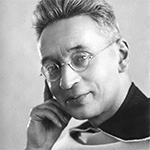
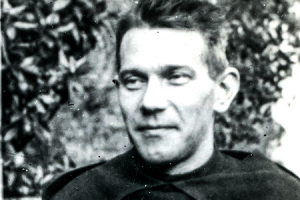
Gallery of pictures of Blessed Titus Brandsma
Anno Brandsma was born to Tjitsje and Titus Brandsma on February 23rd, 1881, at Wonseradeel in Friesland, a province in the very north of Holland.
https://ocarm.org/en/our-service-to-god-s-people/general-commissions-of-the-order/formation-commission-main-menu?start=1120#sigProId81de73c683
Download here the “High Resolution” pictures of Blessed Titus Brandsma
(used with permission of the NCI (Nederlands Carmelitaans Instituut).

Speech by Titus Brandsma on 22 September 1936 for the Catholic Radio Broadcasting Service
In this nationally broadcast talk, Titus Brandsma emphasizes the importance of having a separate Catholic press to make the Church’s opinion heard, for the Catholic perspective to be heard in the chorus of voices, assuring the Church a place in Dutch society. He encouraged all to take advantage of the great freedoms in the Netherlands. Journalism is not only about telling the news, information, and giving education. But a newspaper must give its opinion— honestly and consistently. Different voices show the contradictions in society. This is of great value, as it protects against dilution and elevates politics above opportunism. Catholics are committed to the consistent application of the Catholic faith, including in the social and political realms. He says that Catholics have long been undervalued in the Netherlands; they were often not taken seriously. With a separate Catholic press, the Church can make its opinions heard. But it is not good to cover only Catholic topics. In all other areas, such as sport, economy, and culture, the reporting must also be of a high standard. The reader wants to be broadly informed. This entails great costs, but it is very important to have a good Catholic press in all areas of the country.
Listen to the audio (in Dutch) here

Early Life
Anno Brandsma was born to Tjitsje and Titus Brandsma on February 23rd 1881 at Wonseradeel in Friesland, a province in the very north of Holland. The Brandsma family consisted of four girls and two boys, of which Titus was the second youngest. Five of the siblings would later enter religious life.
The family owned a dairy farm and herd, selling milk and cheese made on the farm itself. At the time, Catholics were a minority in Friesland and protective of their religion and culture. Anno’s father worked to preserve the Friesian culture within his family and the local community. He participated in politics, and at one time served as chairman of the local election board.
When Anno had completed his secondary education at a Franciscan school, he decided to join the Carmelite Order. He began his novitiate at Boxmeer in September 1898 taking his father’s name, Titus, as his religious name. He made his First Profession in October 1899 and was ordained priest on June 17th 1905.
After further studies at the Gregorian University in Rome, he was awarded a PhD in Philosophy in 1909.
Titus also had a keen interest in both Spirituality and Journalism, two areas which, together with his academic pursuits, would make up much of his life’s work.
Ministry and Mission
In 1923, Titus helped found the Catholic University of Nijmegen, and worked there as lecturer, professor and administrator. He served as Rector Magnificus (President) during the academic year 1932-33.
As a Carmelite friar, he also liked to share the Order’s spiritual tradition with people outside of the University.
He travelled widely lecturing on Carmelite Spirituality. In preparation for a lecture tour in the United States in 1935, he spent some time at the Carmelite Priories in Whitefriar Street, Dublin, and Kinsale, Co. Cork, Ireland.
Journalism
Titus also cultivated his interest in journalism and publishing. In late 1935 he became the National Spiritual Adviser to the Union of Catholic Journalists. In this role, he encouraged opposition to the publication of Nazi propaganda in Catholic newspapers and in the Press generally. He was especially critical of its anti-Semitism.
When the Nazis invaded Holland in May 1940, Titus was an adviser to the Archbishop of Utrecht. He encouraged the bishops to speak out against the persecution of the Jews and the infringement of human rights generally by the occupiers. In doing so, he became a marked man by the authorities.
Arrest and Martyrdom
The refusal by Catholic newspapers to print Nazi propaganda sealed the fate of Titus. Titus had agreed to deliver personally to each editor a letter from the Catholic bishops. This letter instructed the editors not to comply with a new law requiring them to print official Nazi advertisements and articles. Titus had visited fourteen editors before being arrested by the Gestapo at Nijmegen on January 19th 1942.
Titus was interned at Scheveningen and Amersfoort in Holland before being transported to Dachau in June.
Under the harsh regime there, his health quickly deteriorated and he was in the camp hospital by the third week of July. He was subjected to biological experimentation before being killed by lethal injection on July 26th, 1942. On the day he died, the Dutch Bishops issued a pastoral letter protesting strongly against the deportation of Jews from Holland.
Before his execution, Titus had prayed that God might help the nurse who would administer the injection to repent of her actions in the camp. He also gave her his rosary beads, although she protested that she was a lapsed Catholic. Some years later, that same woman came to a Carmelite priory seeking forgiveness and was a witness in the process for his beatification, which took place in Rome on November 3rd 1985.
Prayer Before an Image of Christ
O Jesus, when I gaze on You
Once more alive, that I love You
And that your heart loves me too
Moreover as your special friend.
Although that calls me to suffer more
Oh, for me all suffering is good,
For in this way I resemble You
And this is the way to Your Kingdom.
I am blissful in my suffering
For I know it no more as sorrow
But the most ultimate elected lot
That unites me with You, o God.
O, just leave me here silently alone,
The chill and cold around me
And let no people be with me
Here alone I grow not weary.
For Thou, O Jesus, art with me
I have never been so close to You.
Stay with me, with
me, Jesus sweet,
Your presence makes all things good for
me.
Written by Titus Brandsma on February 12th-13th 1942, while a prisoner at Scheveningen.
Translation: Susan Verkerk-Wheatley / Anne-Marie Bos
© Titus Brandsma Instituut 2018
Download the Leaflet 1 A Brief Biography pdf here (4.05 MB)

Speech by Titus Brandsma on 22 September 1936 for the Catholic Radio Broadcasting Service
In this nationally broadcast talk, Titus Brandsma emphasizes the importance of having a separate Catholic press to make the Church’s opinion heard, for the Catholic perspective to be heard in the chorus of voices, assuring the Church a place in Dutch society.

Anno Brandsma was born to Tjitsje and Titus Brandsma on February 23rd 1881 at Wonseradeel in Friesland, a province in the very north of Holland.