









Carmelite NGO Urges Renewed Global Action on Poverty and Inequality at UN Social Development Meeting
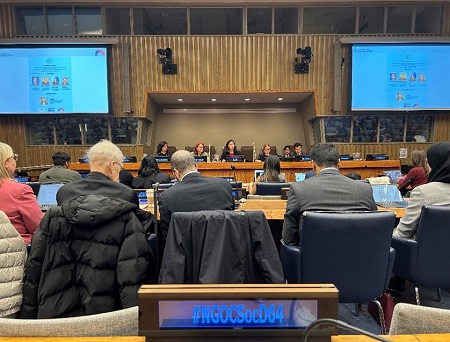
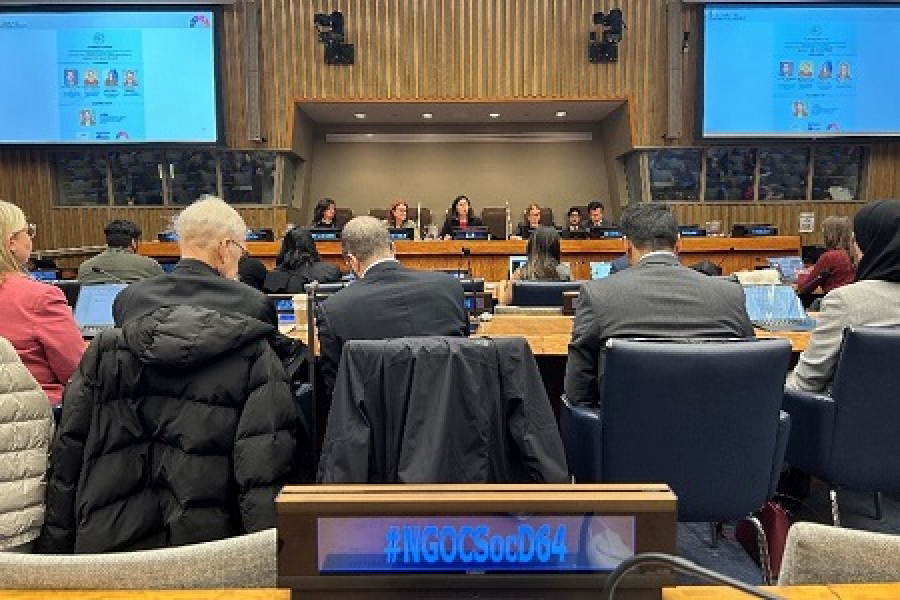
I am writing this from the United Nations headquarters in New York just as the 64th annual meeting of the Commission for Social Development (CSocD64) approaches its conclusion. While here, I have attended various plenary sessions and side events.
A recurring theme during this year’s gathering was the importance of the Doha Political Declaration, the document that came out of the Second World Summit for Social Development, held in Doha, Qatar, this past November.
In a nutshell, the Doha Declaration was an agreement among nations to recommit their efforts to the cause of social development, including the eradication of extreme poverty, the enhancement of social protections for all people, and the promotion of universal human rights. The Summit and the Declaration were meant to jump-start a final push toward meeting the Sustainable Development Goals (SDGs, also known as the 2030 Agenda).
The Summit and CSocD64 have been about “leaving no one behind.” Sadly, progress on the SDGs has been mixed. Many people are, in fact, being left behind. A renewed and reenergized commitment and follow-up in the promotion of genuine social development is certainly needed.
The CSocD64 gathering this month saw many worthwhile conversations and expressions of solidarity and commitment to action. We heard about unpaid caregiving, which is mostly done by women across the globe. If this vital labor was paid, it would be one of the largest segments of the economies of many countries. This is something that must be addressed. (Author’s note: it is revealing and disturbing to contemplate all of the destructive work around the world that is generously paid, yet the critical work of caring for others can be unpaid without apology.)
We also heard at CSocD64 laments about the “overlapping global crises,” which includes growing inequality. Pope Francis called inequality “the root of social evil.” As a sociologist, I can attest to its destructive power. We must address the widening gap between the few very wealthy and the many across the globe who have so little.
It was also said—many times—at CSocD64 that taking action to expand access to education and healthcare and to protect the poor and vulnerable should not be looked upon as “costs,” but rather, they are “investments” in the future of individual countries and the world. The return on proper investments in such things is extraordinarily significant.
Finally, at the Civil Society Forum at CSocD64, it was said that civil society (including NGOs, religions, academic institutions and trade unions) have played and will continue to play a critical role in furthering social development. We are close to the people, so we know the struggles, and we are positioned to have real impact if we engage with our governments and demand action on social development in our own nations and in the world. We need to rise to the challenge!
Dennis Kalob, Ph.D.
Chief Administrative Officer of the Carmelite NGO