















O.Carm
St. Thérèse of the Child Jesus and the Holy Face
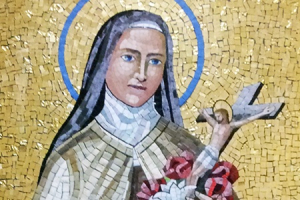
St. Thérèse of the Child Jesus and the Holy Face, Virgin and Doctor of the Church
October 1 | Feast
Saint Thérèse was born at Alençon in France on 2nd January 1873. Her parents were Louis Martin and Zélie Guérin. Following her death on September 30, 1897, of tuberculosis at the age of 24, she became known around the world as St. Thérèse of the Child Jesus and the Holy Face through the publication of her autobiography now known as Story of a Soul.
In 2025, the Church celebrates the 100th anniversary of St. Thérèse's canonization. During his homily at the canonization, the Pope Pius, “If everyone follows this path of spiritual childhood, everyone will see how easily reformation of human society can be achieved, which we have proposed since the beginning of our pontificate. On the wall of the niche in the crypt of St. Peter’s Basilica where Pius XI is buried, there is a mosaic of the saint.
Thérèse’s simple yet powerful spirituality has captured the imagination of Catholics and non-Catholics alike for the last century. Her sense of commitment led her to a profound experience of the love of God and of neighbor. She never had an easy life, but she did live with a great sense of peace and joy.
Read more about the life of St Therese
St. Thérèse, Her Family and Her Spirituality
Proclamation of St. Therese of Lisieux as Doctor of the Church
Edizioni Carmelitane published a book to celebrate the 150th anniversary of her birth in 1873 and the 100th anniversary of her beatification as well as the 100th anniversary of her canonization in 2025. More information is available here:
Singing the Mercies of the Lord Writings on Saint Thérèse of Lisieux
Also available as an ebook
Carmelite Nuns Held Chapter in Trujillo Alto, Puerto Rico
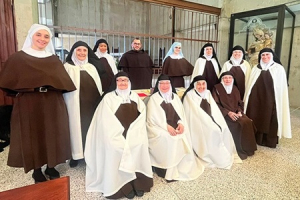
Elective Chapter Held for the San José Carmelite Monastery in Trujillo Alto, Puerto Rico
The Carmelite monastery of San José in Trujillo Alto, Puerto Rico, held its Chapter of Elections on September 22, 2026
The monastery originated in the city of San Juan Bautista on the island of Puerto Rico. In 1646, King Philip IV of Spain issued a decree for its establishment. The nuns from Seville in southern Spain could not accept this foundation due to the immense maritime dangers of that time. Dominican Nuns were called from the neighboring city of Santo Domingo and they began the process of forming the first candidates for religious life and Carmelite life.
In 1651, the monastery was canonically erected. In 1903, the community moved to the city of San Germán and in 1910 to a new location in the city of Santurce. Finally, in 1971, it was established in its current location in the town of Trujillo Alto.
The monastery is in the Diocese of San Juan and part of the Nuestra Señora del Carmel Federation of Carmelite monasteries.
The nuns elected to leadership roles are:
Prioress | Priora | Priora:
Sor Carmen Noemí Marrero, O. Carm.
1st Councilor | 1ª Consejera | 1ª Consigliera:
Sor Linda María Pérez González, O. Carm.
2nd Councilor | 2ª Consejera | 2ª Consigliera:
Sor Mildred María Rosario Rivera, O. Carm.
Formator | Formadora | Formatrice:
Sor Linda María Pérez Gonsález, O. Carm.
Lectio Divina October, 2026
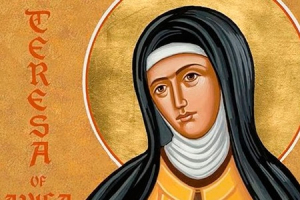
Opening Prayer
Father,
you show your almighty power in your mercy and forgiveness.
Continue to fill us with your gifts of love.
Help us to hurry towards the eternal life your promise and come to share in the joys of your kingdom.
We ask this through our Lord Jesus Christ, your Son, who lives and reigns with you and the Holy Spirit, one God, for ever and ever. Amen.
Third Order Carmelite Fulton J. Sheen Beatified
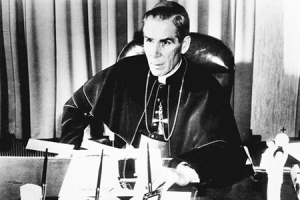
Former bishop of Rochester, New York, television personality in the 1950s, and renown preacher and speaker, Fulton John Sheen, was beatified in a ceremony in St. Louis, Missouri, on September 24, 2026. He was also a member of the Carmelite Third Order. He was professed by the Prior General, Kilian Lynch, in the chapel of Whitefriars Hall in Washington, DC., on July 17, 1948.
On the occasion of the beatification of this Third Order Carmelite, the prior general issued a letter to the Carmelite Family in the official languages of the Order. His letter can be found here.
In his homily at the beatification in St. Louis, Cardinal Luis Antonio Tagle began by greeting all present in the name of Pope Leo. Cardinal Tagle said, “Pope Leo rejoices at the beatification of his fellow countryman, his fellow Illinoisan, and brother bishop.”
At his regular Wednesday General Audience in St. Peter’s Square, the Pope spoke about the beatification and held up Archbishop Sheen as an example for everyone engaged in evangelization. Known affectionately as “Uncle Fultie,” Archbishop Sheen had a national program on the relatively new medium of television. An estimated 30 million viewers regularly watched Sheen’s Life Is Worth Living which aired from 1952 to 1957. He won an Emmy Award for this work.
“Tomorrow in Saint Louis, Missouri, Venerable Fulton Sheen will be beatified,” the pope said. “May the example and intercession of this holy bishop, known for his evangelizing work through the media, inspire many others likewise to find new ways of spreading the Gospel message with joyful enthusiasm."
In his letter declaring Bishop Sheen Blessed, Pope Leo described him as “a tireless preached of the Gospel through the modern means of communications and a diligent shepherd animated by missionary zeal.”
Cardinal Tagle, in his homily, highlighted two aspects of Sheen’s life that stand out in particular: his identity as an evangelizer, or proclaimer of the Gospel, and his vocation as a missionary shepherd.
For the Cardinal the American bishop’s fame as a communicator was secondary to his vocation as a missionary. Cardinal Tagle spoke of Sheen as having a communion with Christ and a communion with people, especially the poor and vulnerable. Tagle noted that the Mass’s three readings likewise place evangelization and mission at the center.
Cardinal Tagle retold the story of a conversation between Sheen and Pope Pius XII: Asked how many conversions he could claim, Sheen replied that he had never counted them, lest he be tempted to think they belonged to him. He described himself instead as “simply a porter” who was sometimes able to lead people to the open door of God’s house.
The evangelizer, the Cardinal explained, does not own the people he encounters, nor does he take credit for what God accomplishes in them. He simply opens the door.
The ceremony was held at The Dome at America’s Center in Saint Louis, Missouri. An estimated 50,000 were in attendance, “exceeding all expectations and hopes” according to one commentator. The entrance procession alone took some 26 minutes.
Elective Chapter Held in Batu, Indonesia
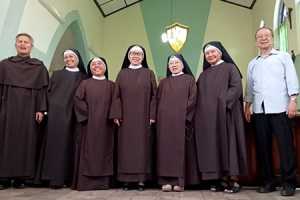
Elective Chapter Held for the Carmelite Monastery in Batu, Indonesia
The Carmelite monastery of Flos Carmeli in Batu, Indonesia, held its Chapter of Elections on September 24, 2026
The monastery of Flos Carmeli was founded in 1962 by two Indonesian nuns from the "St. Mary Magdalene" monastery in Boxmeer, Netherlands, together with three nuns from the "Holy Trinity" monastery in Schlüsselau, Germany. This undertaking was carried out with the approval of Antonius Everardus Ioannes (Avertanus) Albers, O. Carm., the bishop of that diocese.
The Batu monastery is the first Carmelite monastery in Indonesia. In 1993, nuns from this monastery established a daughter foundation at Palangka Raya, Indonesia.
The website of the monastery is: www.floscarmelibatu.org
The nuns elected to leadership roles are:
Prioress | Priora | Priora:
Sr M Brigitta Gitasianiningsih Purnama, O. Carm.
1st Councilor | 1ª Consejera | 1ª Consigliera:
Sr. M. Gerarda Suwarti Jokasemo, O. Carm.
2nd Councilor | 2ª Consejera | 2ª Consigliera:
Sr. M. Rosa Sukatmi Rahayu Moensarip, O. Carm.
3rd Councilor | 3ª Consejera | 3ª Consigliera:
Sr. M. Laura Inacentia Sulistiowati Widjajakusuma, O. Carm.
4th Councilor | 4ª Consejera | 4ª Consigliera:
Sr. M. Angelina Wiwik Andriani Koesman, O. Carm
Formator | Formadora | Formatrice:
Sr. M. Gabriela Sri Wiharti Solichin, O. Carm.
Treasurer | Ecónoma | Economa:
Sr. M. Elisabeth Widhi Habsari Soetadi, O. Carm.
Sacristan | Sacristana | Sacrestana:
Sr. M. Lusia Dwi Estina Waluyaningrum, O. Carm.
New Leadership Elected for Paraná
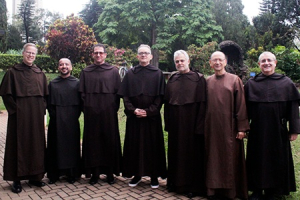
New Leadership Elected for the General Commissariat of Paraná
The Fifth Chapter of the General Commissariat of Paraná is taking place from 21 to 25 September 2026 in Maringá, Brazil, under the theme "Carmel: Presence and Mission" and the biblical motto, "Lord, in your light we see light" (Ps 36:9).
During the Chapter, Frei Edmilson Borges de Carvalho, O. Carm., was elected Commissary General. The Chapter also elected Frei Flávio Barbosa dos Santos, O. Carm., First Councilor; Frei Cleidimar Vilela Roquim da Silva, O. Carm., Second Councilor; Frei Vagner Sanagiotto, O. Carm., Third Councilor; and Frei Romualdo Borges de Macedo, O. Carm., Fourth Councilor.
In 1951, the Upper German Province of the Order began missionary work in the city of Paranavai, in the Brazilian state of Paraná, and within a few years sent fifteen missionaries to the new foundation. The friars immediately fostered local vocations, and as early as 1953, they established a second foundation in the city of Graciosa, where a minor seminary was built.
In 1965, the Paraná mission was raised to the status of a Provincial Commissariat. In 1967, the friars assumed pastoral care of the parish of Saint Joseph in Cidade Gaúcha and the parish of the Immaculate Conception of the Blessed Virgin in Fanny-Curitiba; at this latter parish, they also established a novitiate and a minor seminary. In 1968, following the division of the Cidade Gaúcha parish, the friars took charge of a new parish in the city of Tapira. The following year, the friars established the Saint John of the Cross Seminary and middle schools in the city of Paranavai. In 1984, the friars took over the Good Jesus parish in the city of Dourados, in the state of Mato Grosso do Sul. In 1994, the friars relinquished the parishes they had been serving in Cidade Gaúcha and Tapira in order to launch a new mission in the northern region. Consequently, they assumed pastoral care of the parish of Our Lady of Aparecida in the city of Rolim de Moura, in the state of Rondônia (Amazon region).
In 1996, a house of formation was founded in Barrio Novo, Curitiba; there, the Blessed Titus Brandsma friary for postulants and the Blessed Virgin Mary of Mount Carmel friary for professed friars studying theology were also established. At the beginning of the third millennium, communities were established in Manaus and Navegantes [2009] and in Florianópolis [2011]. On October 20, 2012, the Prior General, with the approval of the Council of the Order, canonically erected the General Commissariat of Paraná.
Invitation to the 2027 Titus Brandsma Congress
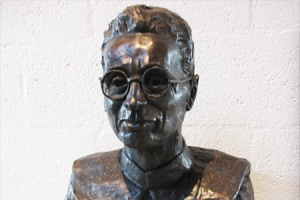
After successful congresses of the Titus Brandsma Circle held in 2023 in Nijmegen (Netherlands) and 2025 in Rome (Italy), another congress on research into Titus Brandsma will be held from November 17-20, 2027 in Freising (Germany).
The Congress is as always open for all aspects in relation to Titus Brandsma. Because of the location the focus if the next Congress will be the death of Titus in Dachau, including a one day trip to the Dachau concentration camp.
The Draft of the programm is available: https://titusbrandsmacircle.
Registration is possible: https://titusbrandsmacircle.
Call for Papers Congress 2027
If you would like to give a presentation at the 2027 congress, submit a proposal on the Call for Papers page: Call for Papers | Titus Brandsma Circle
The General Council Meets in Nocera Umbra
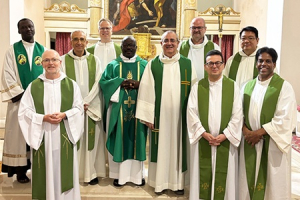
The General Council Meets in Nocera Umbra for Prayer, Fraternity, and Reflection
From September 7-11, 2026, the members of the General Council gathered at the Centro di Spiritualità "Il Carmelo" in Nocera Umbra, a house of the Italian Province, for several days of prayer, fraternity and reflection. The Council is grateful to the brothers of the Italian province and to the local community for their warm hospitality and for making it possible to step away from the usual rhythm of work.
Nearly one year after the General Chapter in Malang, Indonesia, the meeting was a chance to look back on the Council’s first year of service and to look ahead. The first year after a General Chapter is always a busy one. New members of the Council need time to settle in Rome, and the large number of Provincial Chapters during these first months requires considerable travel, especially on the part of the Prior General. The Council reflected on how the scheduling of Chapters in future sexennia might allow a new Council more time at the beginning to come together, establish its way of working and plan for the years ahead.
The Global Plan for the 2025–2031 sexennium is complete and is now being translated. It will be distributed throughout the Order once the translations are ready. During these days the Council also reflected on the perspective that should guide it as the Plan is put into practice.
One conviction became particularly clear during the conversations: the spiritual renewal of the Order and fidelity to the Carmelite charism cannot simply be one priority among many others. They need to provide the horizon for everything else the Council does. Again and again, the discussion returned to a simple question: How can the work of the General Council help the brothers and communities of the Order to live the Carmelite vocation more deeply and to hand it on faithfully to those who come after them?
Within this horizon, the Council looked more closely at three areas. The first was the renewal and transmission of Carmelite life. The conversation took in initial formation, but also ongoing or permanent formation, the preparation of formators, spiritual accompaniment, vocational discernment and liturgical life. It also turned to something that cannot be separated from formation: the quality of the communities in which brothers actually live. Formation does not end when a brother leaves a formation house. Throughout religious life, brothers continue to form one another in community.
The second area was structures and communities. Some entities of the Order are facing significant changes in numbers, leadership, vocations, finances and ministry, while other parts of the Order are growing and face different challenges. The reflection was not mainly about preserving or changing juridical structures. The more important question is whether the structures of the Order, and its local communities, allow brothers to live genuine Carmelite fraternity, prayer, discernment and mission together.
The third area was finances and the resources entrusted to the Order. Here too, the conversation went beyond money and property. The resources of the Order are meant to serve its life and mission. That calls for responsible planning and transparency, but also for greater solidarity among the different realities of the Order and a willingness to consider how available resources can best serve Carmel in the years ahead.
The meeting was not intended to answer every question or to produce another program. It did help the General Council see more clearly the perspective from which it wishes to continue its service. The question is whether its decisions help the brothers and communities of the Order to live and hand on the Carmelite charism with renewed vitality.
The General Council will continue to take up the fruits of these days during its forthcoming plenary meetings and in its accompaniment of the different entities and communities of the Order.
Hate Speech Condemned by Vatican
Hate Speech Condemned by Vatican as Threat to Human Dignity and Source of Violence and Division Among Peoples
At the Global Conference on Promoting Interreligious and Intercultural Dialogue and Tolerance in Countering Hate Speech, Archbishop Christophe Z. El Kassis, the Apostolic Nuncio and Permanent Observer of the Holy See to the United Nations, reaffirmed the moral imperative to reject every form of intolerance, discrimination, and hate speech. He described them as “wounds [to] the human family [which] undermines the conditions for peaceful coexistence.”
The Nuncio cited Pope Leo XIV’s encyclical Magnifica humanitas, reminding those present that the “first contribution we can make toward a more humane civilization is to be mindful of our words.” Because of the power of words, “by disarming words, the first steps are taken to weave the fabric of social peace and foster a culture of dialogue, tolerance, and respect for differences.”
He also stressed that “peace cannot be woven by words alone. True tolerance is … that active recognition of the equal dignity or every person and the freedom of conscience that belongs to each. It requires the patient effort of dialogue, mutual understanding, and the rejection of stereotypes.”
The Archbishop was appointed the new permanent observer of the Holy See to the U.N. in July 2026. These remarks on Sept. 17 were his first address to the international body.
Celebrating At Home - 26th Sunday in Ordinary Time

Disobedient Obedience
(Matthew 21:28-32)
Over the next three Sundays we will listen to three parables where Jesus, having cleansed the temple, addresses the Jerusalem priests and elders. These “parables of judgement” voice God’s judgement against Israel – especially her leaders – for their rejection of Jesus.
The message, however, is also for us.
In this Sunday’s parable, the message could not be simpler: action speaks louder than words.
The tax collectors and prostitutes acted like the first son. Initially they said no to God, but hearing John the Baptist’s preaching they converted and did what pleased God.
The chief priests and elders are like the second son. They, too, heard John’s preaching and saw the responses of the tax collectors and prostitutes but didn’t change. They pretended acceptance of God but refused to accept John’s message. It is the tax collectors and the prostitutes, therefore, who will enter the Kingdom of God before the chief priests and elders.
It is easy to say that we are going to do something to please someone. But the real honour comes in doing.
If we really want to honour our God, we must find ways to do the will of God. Sometimes it won’t be easy, sometimes it will put us out.
We are not called to ‘police’ God’s mercy – to decide who is deserving of it and who is not. If we have truly heard the Word of God we will be more concerned about extending the reign of God’s mercy and love to everyone, especially to those most despised in the world.


