













O.Carm
Lectio Divina November, 2026
Opening Prayer
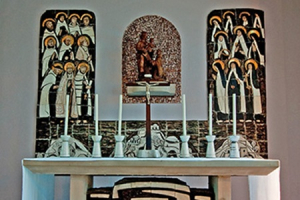
Lord, the meaning of our life is to seek your Word, which came to us in the person of Christ. Make me capable of welcoming what is new in the Gospel of the Beatitudes, so that I may change my life. I would know nothing about you were it not for the light of the words spoken by your Son Jesus, who came to tell us of your marvels. When I am weak, if I go to Him, the Word of God, then I become strong. When I act foolishly, the wisdom of his Gospel restores me to relish God and the kindness of his love. He guides me to the paths of life. When some deformity appears in me, I reflect on his Word and the image of my personality becomes beautiful. When solitude tries to make me dry, my spiritual marriage to him makes my life fruitful. When I discover some sadness or unhappiness in myself, the thought of Him, my only good, opens the way to joy. Therese of the Child Jesus has a saying that sums up the desire for holiness as an intense search for God and a listening to others: «If you are nothing, remember that Jesus is all. You must therefore lose your little nothing into his infinite all and think of nothing else but this uniquely lovable all… (Letters, 87, to Marie Guérin).
Causa Nostrae Laetitiae
INITIUM NOVITIATUS
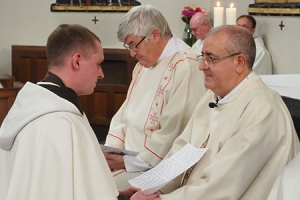
08-09-26 Marcin Michak Puziak (Pol), Salamanca, España
08-09-26 Petr Jeronym Rohan (BM), Salamanca, España
08-09-26 Pasquale Dario Strazzera (Ita), Salamanca, España
08-09-26 Ray Alexander Huertas Padilla (DNM), Salamanca, España
08-09-26 Damian Pyntngenlang Kurbah (Neap), Salamanca, España
08-09-26 Francesco Maria Facecchia (Neap), Salamanca, España
08-09-26 Roberth Eliomar Piñero Ortega (Cat), Salamanca, España
PROFESSIO TEMPORANEA
22-08-26 Minda Maria Stella Maris Teberio (BUR) Burgos, Philippines
08-09-26 Ciro M. Margheron (BRU) Napoli, Italia
12-09-26 Mary Domitilla Ndumi of the Holy Cross (Mach) Machakos, Kenya
13-09-26 José Jesús de Santa María Azócar Carvajal (CAT) Terassa, España
13-09-26 Kristian Jesús de Santa María Castro Blanco (CAT) Terassa, España
PROFESSIO SOLEMNIS
19-09-26 Pedro Antonio Mira Padilla (PCM) San Salvador, El Salvador
03-10-26 Matthew Janvier (Brit) Aylesford, England
ORDINATIO DIACONALIS
27-09-26 Abin Jerome (STSA) Roma, Italia
ORDINATIO SACERDOTALIS
05-09-26 Francisco Manuel Rivera Cascajosa (DNM) Osuna, España
25-09-26 José Ricardo da Silva Oliveira (Pern) Recife, Brasil
15-10-26 Polikarpus Beda Kaha (Indo-Or) Maumere, Indonesia
15-10-26 Siprianus Bruto (Indo-Or) Maumere, Indonesia
15-10-26 Hironimus Nunde Nuru (Indo-Or) Maumere, Indonesia
15-10-26 George Mario Chrystian Amak Doni Soge (Indo-Or) Maumere, Indonesia
15-10-26 Eusabius So'a (Indo-Or) Maumere, Indonesia
15-10-26 Ambrosius Robertus Ratu (Indo-Or) Maumere, Indonesia
15-10-26 Ignasius Liberto Sando Kota (Indo-Or) Maumere, Indonesia
Causa Nostrae Laetitiae
INITIUM NOVITIATUS
23-08-26 Stefanus Manehat Lopez (Indo-Or) Maumere, Flores, Indonesia
23-08-26 Kristoforus Monge (Indo-Or) Maumere, Flores, Indonesia
23-08-26 Marianus Wonda Nanga (Indo-Or) Maumere, Flores, Indonesia
23-08-26 Jemianus Sanaunu Kobi (Indo-Or) Maumere, Flores, Indonesia
23-08-26 Fransisko Ma (Indo-Or) Maumere, Flores, Indonesia
23-08-26 Frumentius Gianlugi Saputra (Indo-Or) Maumere, Flores, Indonesia
23-08-26 Kristoforus Alexandria Raja Kako (Indo-Or) Maumere, Flores, Indonesia
23-08-26 Mariano Kritian Hendrio (Indo-Or) Maumere, Flores, Indonesia
23-08-26 Ambrosius Nikal (Indo-Or) Maumere, Flores, Indonesia
23-08-26 Yosua Wasena Temorubun (Indo-Or) Maumere, Flores, Indonesia
23-08-26 Gilbertus Aril Sardian (Indo-Or) Maumere, Flores, Indonesia
23-08-26 Juliano Yoakim (Indo-Or) Maumere, Flores, Indonesia
23-08-26 Wilhelmus Witak Makin (Indo-Or) Maumere, Flores, Indonesia
23-08-26 Adriano Guteres (Indo-Or) Maumere, Flores, Indonesia
23-08-26 Yohanes Bhoka Somba (Indo-Or) Maumere, Flores, Indonesia
23-08-26 Yohanes Leonar Pase Pedo Ema (Indo-Or) Maumere, Flores, Indonesia
23-08-26 Stefanus Richardo Bang (Indo-Or) Maumere, Flores, Indonesia
23-08-26 Narcitus Reinaldi Lanong (Indo-Or) Maumere, Flores, Indonesia
PROFESSIO TEMPORANEA
15-08-26 Adán de la Candelaria Ávila (DNM) La Victoria - Aragua, Venezuela
15-08-26 Víctor de la Resurrección Méndez (DNM) La Victoria - Aragua, Venezuela
15-08-26 Ruben V Cerillo, Jr (Phil) Cubao, Philippines
15-08-26 Mark Jay B Halili (Phil) Cubao, Philippines
15-08-26 Jan Harold M. Manguera (Phil) Cubao, Philippines
22-08-26 Rodrigo Yireyé de María Bationo (DNM) Salamanca (España)
22-08-26 César María del Sagrado Corazón Samaniego García (DNM) Salamanca (España)
PROFESSIO SOLEMNIS
15-08-26 Mary Eunice Mwikali of the Holy Angels (MAC) Machakos, Kenya
15-08-26 Mary Irene Nzilani of the Virgin Most Sorrowful (MAC) Machakos, Kenya
15-08-26 Alfred S. Perlas (Phil) Cubao, Philippines
15-08-26 Albert R. Magbag (Phil) Cubao, Philippines
ORDINATIO DIACONALIS
08-08-26 Ronam Rodrigues e Silva (Pern) Belém, Brasil
ORDINATIO SACERDOTALIS
15-08-26 Jander Maria de Jesus (Pern) João Pessoa, Brasil
15-08-26 Atsu Roger Aziamale (El Dulce Nombre de María) Lomé, Togo
Celebrating At Home - 30th Sunday in Ordinary Time
Loving God & Each Other
(Matthew 22:34-40)
Another attempt to trap Jesus is contained in the Gospel this Sunday. Opinions and arguments about which was the greatest commandment were common among the Pharisees and questions about it were frequently asked of rabbis. Clearly, those who asked this question of Jesus were trying to disconcert or ‘wrong foot’ Jesus in an attempt to discredit him with his reply.
Once again, Jesus does not cleverly sidestep the question; he goes right to the heart of the matter. Love of God and love of neighbour are brought together in one ‘great commandment’. In refusing to be drawn into an ‘either/or’ response Jesus, as he did last week, brings two separate things into right relationship. Love of God and love of neighbour belong together. That’s why the first reading today from Exodus warns against mistreating strangers, widows and orphans and talks about the proper conduct of loans and pledges. The warning comes from God’s lips. It’s not just a nice piece of social philosophy; it is the demand of living our faith.
It means that true faith, as Jesus teaches it, is about being in loving relationship with God and other human beings. Religious rituals are meant to be ways of reflecting on, savouring, remembering, celebrating and expressing that love. Sometimes they just end up as ‘empty’ rituals, when love has been replaced by fear, or when love is absent.
The Kingdom of God is not some far off place, but the moments when God’s life breaks into the human story. Those moments bring love, wisdom, grace, compassion, generosity, forgiveness and peace. Those practiced in the things of God recognise God’s presence most of all in loving relationships. If our rituals grow out of and express our sincere love for God and neighbour then they have value. We are always at risk of putting ritual above the practise of love.
Carmel in Congo Becomes Africa’s First Province
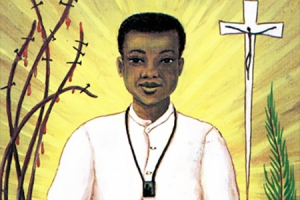
Carmel in Congo Becomes the First Province on the African Continent Today, October 15, the Feast of St. Teresa of Jesus
Today, October 15, the feast of St. Teresa of Jesus, the Carmelites in the Democratic Republic of Congo become a province. It is the first province of the Order on the African continent.
In a letter sent to the members of the new Province of the Congo, the Italian priore provinciale, Gian Domenico Meloni, wrote, "This event marks an historic milestone on your journey and a sign of the fruitfulness of the Carmelite charism in your land."
The new province will be dedicated to Blessed Isidore Bakanja, the Congolese Lay Carmelite who lost his life because of his unyielding devotion to Jesus Christ through his refusal to give up his Scapular and his faithfulness to teaching the Church to his fellow Congolese.
Meloni encouraged the brothers to "safeguard the spiritual heritage of Carmel with renewed fidelity and to pass it on to new generations. Be men of prayer, brothers capable of communion, servants of the Gospel among your people, so that the charism you have received may continue to bear abundant fruit."
With the establishment of the new Province, the Prior General, with the consent of his Council, appointed: Provincial Prior: Jean Pierre Canisius Kasereka Kaniki, O. Carm.; First Councilor: Georges Kabuli Ndiya, O. Carm.; Second Councilor: Jean Marie Vianney Musongya Mahamba, O. Carm.; Third Councilor: Lucien Kasereka Kahatane, O. Carm.; and Fourth Councilor: Innocent Djombu Dz’Djo, O. Carm. The new Provincial Prior and his Council will remain in office until the first Provincial Chapter, which must be held within one year of today.
Celebrating At Home - 29th Sunday in Ordinary Time

The Image of God
(Matthew 22:15-21)
What is on display in this story from Matthew’s Gospel is not Jesus’ clever reply, but the image of God he presents.
Even knowing the plot of the Pharisees and Herodians, Jesus does not refuse to enter into dialogue with them. He is the Word of God always willing to be in conversation with human beings, even those plotting against him.
In not directly answering the question put to him, Jesus leaves the response in the hands of those who ask. Jesus does not come with a list of ready-made solutions to every human difficulty. Deep attention to the word and discernment (the gift of the Spirit) help us to respond, in the tradition of Jesus, when we are trying to figure out what the right thing to do is.
God is not about taking power form us, but about empowering us to live in God’s own image and likeness.
Perhaps Jesus’ words that the coin which bears Caesar’s image belongs to Caesar means also that those things which bear the image of God belong to God – including human beings and creation. Maybe that is why Jesus didn’t walk away from his questioners. He recognises them for what they are – the image and likeness of God.
Thinking about the three parables we have heard over recent weeks we can say that the idea of giving back to God what belongs to God can be understood as giving back the love, generosity, justice and goodness we have received from God. Just as God did not lose anything by giving us these gifts, we don’t lose anything by making them real in our lives, so that others may also share in God’s life through us.
St. Teresa of Jesus and Some of Her Insights
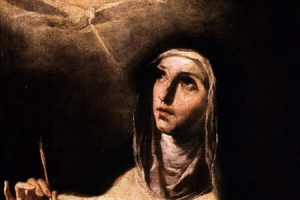
October 15 | Feast
Saint Teresa of Ávila is a 16th-century Carmelite mystic and Doctor of the Church. Also known as Saint Teresa of Jesus, she is remembered today for her practical spiritual wisdom and insights into prayer in her writings. She is also known for her wit. We provide 10 quotes from her writings for your reflection on October 15, her feast day.
“the Lord asks only two things of us: love for His Majesty and love for our neighbor.”
“Let nothing perturb you, nothing frighten you. All things pass. God does not change. Patience achieves everything.”
“Love turns work into rest.”
“In fact, all of your theological concepts may only serve to cool the fire of love in the will.”
“For prayer is nothing else than being on terms of friendship with God.”
“God save us from gloomy saints!”
“Beg our Lord to grant you perfect love for your neighbor and leave the rest to Him.”
“Never suppose that either the evil or the good that you do will remain secret, however strict may be your enclosure.”
“Those who risk all for God will find that they have both lost all and gained all”
“Untilled ground, however rich, will bring forth thistles and thorns; so also the mind of man.”
Read more ...
To learn more about the life of St. Teresa and her work and legacy, we suggest reading the following books from Edizioni Carmelitane:
The Heirs of St. Teresa of Avila, Edited by Christopher C. Wilson, PhD
"I Consider the Labor Well Spent" A Mini-Course on the Interior Castle, Joel Giallanza, CSC
A Spirituality of Truth: Philosophical Explorations of St. Teresa of Jesus, Macario Ofilada Mina
To access these and many other fine publications at Edizioni Carmelitane, click here.
Celebrating At Home - 28th Sunday in Ordinary Time

Invitations Refused & Accepted
(Matthew 22:1-14)
The third of the parables addressed to the chief priests and the elders is our Gospel today. Told in the context of a wedding feast given by a great King it’s a parable in three parts.
The first part is about God’s gracious invitation and its indifferent and sometimes violent refusal by those invited first (the religious and lay leaders).
Second part: God’s invitation having been rejected by the first to whom it was offered, is now offered to others - good and bad alike (the sinners).
Third part: the story of the guest without a wedding garment (one who accepts the invitation but does not change - a little like the son in the first parable who said, “Yes”, but didn’t go to the vineyard).
The wedding garment is a symbol of a converted life full of good deeds.
The sense of the last line of the Gospel: “Many are called but few are chosen”, is that all are called to salvation, but it is only had by those who accept the invitation and who change and yield good deeds. There is no room for complacency.
All three Gospel parables of the last three Sundays are about conversion. Conversion is not just turning away from sin but a radical reorienting of one’s life (turning) towards God. Repentance is not so much being sorry for past sins as a total change of direction. Conversion is impossible for the self-righteous because they don’t believe they need it. Hardness of heart and the refusal to listen are two great biblical sins.
In the three parables, St Matthew is urging his community to seek after true righteousness which comes from conversion and repentance, which flows from allowing the vision of God to fill their eyes and hearts. The kingdom has been entrusted to them, they are to produce its fruit of good deeds through a life of continual turning towards God.
Hard hearts, blocked ears, blind eyes, refusing to change are the path to death.
We are those who choose Life.
Scuola Carmelitana 2026
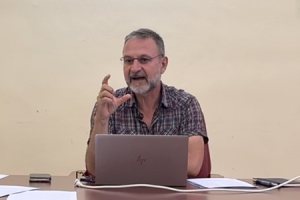
Scuola Carmelitana 2026 at CISA Brings Ongoing Formation
September 14-25, 2026 | Rome, CISA
The Scuola Carmelitana 2026, was held in Rome at CISA from September 14-25, 2026, brought together 12 participants—seven friars and five sisters—for an intensive program of study and reflection on the Carmelite tradition, history, spirituality, and identity.
The program, prepared as part of the Proposta Scuola Carmelitana, offer a comprehensive introduction to key aspects of Carmelite studies. The sessions included the origins and development of the Carmelite Order, its charismatic evolution, the Rule of Carmel, the Rubrica prima of the Constitutions, the Ignea Sagitta, the Catalogo dei santi, the Carmelite liturgical tradition, Mary and Elijah in the Carmelite tradition, the Institutio primorum monachorum, and the development of Carmelite identity through the centuries. The programme also included visits to significant Carmelite historical and spiritual sites in Rome.
A special part of the programme was dedicated to the three important centenaries commemorated in 2026, focusing on their historical context, significance, and relevance for Carmel today: Ut vivendi normam of Honorius III (1226), Inter caeteros of John XXII (1326), and Dum attenta of Sixtus IV (1476).
The sessions were led by Giovanni Grosso, Mario Alfarano, Boby Sebastian Tharakkunnel, Maximilian Agung, Noemi Malagesi, Mario Loya, and Anastasia di Gerusalemme, who generously contributed their knowledge and expertise to the program.
Due to the retreat of the students at San Martino ai Monti, they were unfortunately unable to participate in this year’s Scuola. We hope to welcome them in future editions.
The Scuola Carmelitana will continue next year, with a new program addressing other important themes in Carmelite history, spirituality, theology, and tradition, thus providing further opportunities for deeper study and formation.
All the classes and talks of the 2026 Scuola were recorded and are available online on the Carmelite Institute website. We warmly invite you to access the recordings by scanning the QR code below and to benefit from these valuable resources for Carmelite study and formation.
Scan the QR code given below to access the classes and talks

Carmelites Celebrate Season of Creation in Lima
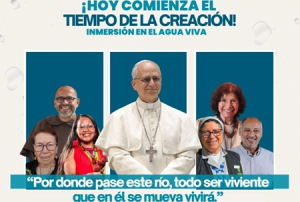
Carmelites in Lima, Perú, Celebrates "Season of Creation" and the Laudato Si' Movement
From September 1st (World Day of Prayer for the Care of Creation) until October 4 (The feast of St. Francis of Assisi, patron saint of ecology), the Carmelite school in the Miraflores section of Lima, Peru, celebrated the Season of Creation.
The theme for 2026 was Living Water referencing the passage in the prophet Ezekial with the image of living water flowing from God’s sanctuary. The passage reveals divine healing that renews land, water, biodiversity, and human responsibility towards the whole of creation.
On Saturday, September 5, members of the school community and others gathered for the 2026 National Day of the Season of Creation – “Living Water.” A National Panel discussed “From Laudato Si’ to Magnifica Humanitas: Water That Unites, Nurtures, and Transforms.” Panel members included Fr Juan Goicochea, Laura Vargas, Maria Teresa Oré, Sr. Ana Maria Palomino, Nísida Antich Deten, and Elizabeth Ochoa. All were representing major organizations in the environmental movement. Edgar Lezama, O. Carm., an asesor national of the Laudato Si’ Movement, and Alexandra Heras, animator for the Laudato Si’ Movement participated.
A video circulated included information to bring the worldwide water crisis home to Perú where some residents were without water for up to 12 hours. The video reminds the viewer that water is in everything that we are and we find it in every aspect of our lives. It recalls the words of Pope Leo XIV who says that the Church cannot remain passive nor indifferent to what happens in the world.
To view the video, go here


