













O.Carm
Bl. Giovanna Scopelli, virgin
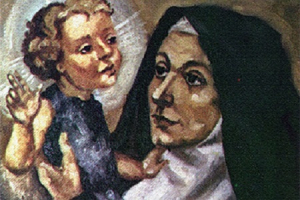
July 9 | Memorial
Born in Reggio Emilia, Italy, in 1439, Bl. Jane Scopelli began her religious life at home living as a Carmelite mantellata (member of a Carmelite lay confraternity, wearing the white cloak or mantella). In 1480, after the death of her parents, she formed a community with a number of other like-minded women.
A few years later, in 1485, she acquired the house and the church belonging to the Humiliate in Reggio Emilia which she converted into a monastery. The nuns became known locally as "The White Nuns". The new community was affiliated to the Reformed Congregation of Mantua. Blessed Jane held the position of prioress in the community which grew to number twenty nuns. Many supernatural events were attributed to her and she was gifted with a great devotion to Our Lady, while living an intensely penitential life. She died on 9th July 1491 and her liturgical cult was approved by Pope Clement XIV in 1771.
Read more ...
Celebrating At Home - 15th Sunday in Ordinary Time

Towards a Love Beyond Labels
(Luke 10:25-37)
Pope Francis said society creates “an adjective culture” that prefers to immediately label people as good or bad. Jesus, he said, breaks the mentality that separates, excludes, isolates and belittles the person.
A good example of what the pope said is found in the parable in today’s Gospel. The very fact that we know the story as, ‘The Good Samaritan’ seems to imply that he is the exception, that most Samaritans are ‘bad’. That’s certainly how Jesus’ audience would have viewed Samaritans.
Ideas of hospitality, welcoming the stranger and caring for those in need held a very high place in Jewish scriptures, spirituality and practice. The practise of these virtues was long recognised as responding to the Word (God’s Law) placed in the believer’s heart. That is, acting after God’s own heart.
Asking who is my neighbour (who is ’in’ or ‘out’) is the wrong question according to Jesus. Rather, one should ask, “How should a member of God’s chosen people act?” In the parable it is not a member of the Chosen People who acts after God’s heart, but an outsider, a Samaritan. It is he who shows how a member of God’s people should act towards those in need. He does not ask, “Who is my neighbour”; he shows himself to be a neighbour and a person after God’s own heart by the lavish way he helps the man in need.
This is ‘loving with all one’s heart’. Can we go and do the same?
- pdf Celebrating At Home - 15th Sunday in Ordinary Time [PDF](3.44 MB)
- default Celebrating At Home - 15th Sunday in Ordinary Time [ePub](2.30 MB)
- pdf Celebrando en Familia - XV Domingo del Tiempo Ordinario(473 KB)
- pdf Celebrando in Casa - XV Domenica del Tempo Ordinario(457 KB)
- pdf Celebrando em família - XV Domingo do Tempo Comum(467 KB)
Vitam Coelo Reddiderunt

|
12-05-25 |
|
|
|
|
|
05-06-25 |
|
|
|
|
|
06-06-25 |
|
|
|
|
|
14-06-25 |
|
|
|
|
|
16-06-25 |
|
|
|
|
|
24-06-25 |
|
|
|
|
|
24-06-25 |
15-10-41 |
24-09-61 |
04-10-64 |
06-07-68 |
Carmelite Nuns in Jesi Holds Elective Chapter

Monastery of the Most Holy Trinity in Jesi Holds Elective Chapter
On Friday, June 20th the Carmelite community of the monastery of the Most Holy Trinity in Jesi (Italy) held their elective chapter.
The monastery was founded in 1684 by Cardinal Pietro Matteo Petucci († 1701), bishop of Aesinate. He changed the Franciscan Tertiaries, Aesinate ascetics, founded in 1660 into Carmelites. A few years later, in 1697, they received the papal cloister, passing to the Second Order. Around 1822, the Carmelite nuns of Montecarotto were received when their monastery was extinguished. Pope Pius IX visited the Aesinate monastery in May 1857. In 1965, a daughter monastery was founded in Montegnacco di Cassacco, and in 1979 the monastery of Carpineto Romano was founded.
The website for the Jesi monastery is: www.carmelitanejesi.com
Those elected to leadership are:
Prioress | Priora | Priora:
Sr. Alma M. Joseph di Gesù Crocifisso
1st Councilor | 1ª Consejera | 1ª Consigliera:
Sr. M. Giovanna Francesca Dei Verbum
2nd Councilor | 2ª Consejera | 2ª Consigliera:
Sr. M. Chiara dell'Eucaristia
Treasurer | Ecónoma | Economa
Sr. M. Chiara dell'Eucaristia
Formator | Formadora | Formatrice
Sr. Alma M. Joseph di Gesù Crocifisso
Sacristan | Sacristán | Sacrestana:
Sr. M. Giovanna Francesca Dei Verbum
Carmelite Nuns Held Elective Chapter in Barcelona

Elective Chapter Held in the Monastery of the Incarnation in Barcelona, Spain
The Carmelite nuns of the Monastery of the Incarnation in Barcelona, Spain, recently held their triennial, elective chapter.
The monastery was founded in 1649 by Srs. Gertrude of the Infant Jesus and Teresa of Jesus, two nuns from the monastery of Vilafranca del Penedès. Ven. Eulalia of the Cross, a mystic and author of several works, lived there, dying in 1721. This monastery founded the Carmelite monasteries in Valls, Vic, and Tarrega. In 1983, the community founded the monastery of Porlamar on the Isla Margarita.
The monastery is part of the Virgo Flos Carmeli Federation. The webpage of the monastery is: www.carmelitasbcn.org. The Facebook page is: carmelo.laencarnacion
The following nuns were elected to leadership:
Prioress | Priora | Priora:
Sr. Hna. María Jacinta Mutio Muithya
1st Councilor | 1ª Consejera | 1ª Consigliera:
Sr. María del Carmen Izquierdo Marín
2nd Councilor | 2ª Consejera | 2ª Consigliera:
Sr. Maria Joana Josa
Treasurer | Ecónoma | Economa
Sr. María Jacinta Mutio Muithya
Formator | Formadora | Formatrice
Sr. María del Carmen Izquierdo Marín
Sacristan | Sacristán | Sacrestana:
Sr. María Elizabeth Mbovi Mutisya
Bl. Maria Crocifissa Curcio, Virgin

4 July Optional Memorial in the Italian provinces
Mother M. Crocifissa Curcio was born on 30 January 1877 in Ispica (Rg), Italy. From the time of her adolescence she realised that she was called to follow Christ in a radical manner, Christ whose loving Mother of Carmel was entrusting her with the task of making Carmel flourish once more in her town as well as in others.
Celebrating At Home - 14th Sunday in Ordinary Time

Missionaries of the Kingdom
(Luke 10:1-12)
On the road to Jerusalem, Jesus teaches the disciples the meaning of ‘following’ him. Part of that following is the proclamation of the Kingdom - drawing attention to the reign of God in the world and in its peoples.
There is a sense of simplicity and urgency as Jesus commissions the seventy-two to spread the Good News of God’s involvement in human life. The Gospel, of course, is not about an historical 72 people being sent out. It is about the mission of every disciple of Jesus. Spreading the message of the Gospel is always to be done in a non-threatening way – by winning over hearts and minds through good example and good living. It is best accomplished by making oneself vulnerable and keeping oneself focussed on the mission rather than on comfort. Real rejoicing is not to be had in the conversion of great numbers of people, but in knowing that one has done the word and the will of God.
Disciples can’t afford to be weighed down by too many things or lost in idle conversation (gossip). They are to be bearers of the peace of God - a peace which heals, strengthens, soothes, frees and restores. Difficulties will be encountered, but the disciples will not be overcome.
That is the cause for the rejoicing sung about in the first reading from the prophet Isaiah. God is at work among his people like a nurturing mother and a flowing river bringing nourishment, peace, comfort and delight. People flourish when the presence of God is recognised and welcomed.
May that presence be always seen and felt in us.
- pdf Celebrating At Home - 14th Sunday in Ordinary Time [PDF](4.04 MB)
- default Celebrating At Home - 14th Sunday in Ordinary Time [ePub](3.44 MB)
- pdf Celebrando en Familia - XIV Domingo del Tiempo Ordinario(552 KB)
- pdf Celebrando in Casa - XIV Domenica del Tempo Ordinario(515 KB)
- pdf Celebrando em família - XIV Domingo do Tempo Comum(507 KB)
Lectio Divina July, 2025

Opening Prayer
Father,
You call Your children to walk in the light of Christ.
Free us from darkness and keep us in the radiance of Your truth.
We ask this through our Lord Jesus Christ, Your Son, who lives and reigns with You and the Holy Spirit, one God, for ever and ever. Amen.
Celebrating At Home - Saints Peter and Paul

Who Do You Say I Am? (Matthew 16:13-19)
At this point in St Matthew’s Gospel, Jesus and his chosen ones have travelled and lived together for some time. He now invites them to explore what they understand about his identity. Even in his question there is explicit hint: Who do people say the Son of Man is? The disciples tell Jesus what they have heard from others: John the Baptist, Elijah, Jeremiah or one of the prophets.Jesus then asks the disciples, “But, who do you say I am?” It is Peter who adds to the title ‘Son of Man’ by recognising Jesus as ‘the Christ, the Son of the living God’.Jesus names Peter as a happy man. This same Peter whose faith faltered when he was buffeted by the wind and waves now shows his openness to God and recognises Jesus for who he is. But this is not the end of Peter’s story. There are ups and downs in his response, as we see in another passage when this ‘rock’ of faith becomes a ‘stumbling block’ to God’s purpose (Matthew 16:21-23).In spite of that, Jesus names Peter as the ‘rock’ on which he will build the church. Peter has a new name and a new vocation. This church will have to battle hostile forces which seek to enslave people in sin. It will be a safe haven of freedom by being the living presence of God.Peter’s job is to use the ‘keys of the kingdom’ to unlock and release the reign of God’s grace into the world. In this work, decisions have to be made for the whole community of the church. Here, Matthew’s words about ‘binding’ and ‘loosening’ have nothing to do with the forgiveness of sins. They are a kind of pledge that the sincere and honest decisions of faithful people have divine backing. It does not mean that these decisions are the best or most perfect ones. Discernment and decision-making are part of the job of being disciples finding together the way of the Lord; of being the living presence of God in the world.Finally, Jesus binds the disciples to silence about his true identity lest his Messiahship get confused with the people’s expectation of a messiah who will free them from Roman occupation.Peter is a lot like us. We really want to believe, to become the presence of God, but we don’t always seem to be able to do it. We have great moments of faith and moments in which we are deeply in tune with the heart of God. Most of us also have moments when we fall back into narrow and harsh ways that cannot hold the power of God’s love. But the Gospel reassures us that, in spite of our weakness and the many ways in which we may be found wanting, God is still close to us and faith is a journey, not a destination.
In my thoughts, words and actions, who do I say Jesus is?
- pdf Celebrating At Home - Saints Peter and Paul [PDF](3.14 MB)
- default Celebrating At Home - Saints Peter and Paul [ePub](2.95 MB)
- pdf Celebrando en Familia - Solemnidad de San Pedro y San Pablo(521 KB)
- pdf Celebrando in Casa - Santi Pietro e Paolo(486 KB)
- pdf Celebrando em família - Solenidade de San Pedro e San Paulo(547 KB)
Province of St. Elias Holds Chapter in Middletown

Province of St. Elias Holds Chapter in Middletown, New York (USA), to Elect New Leadership June 17-20, 2025
The North American Province of St. Elias held its 31st Provincial Chapter in Middletown, New York from June 17-20, 2025. The theme of the Provincial Chapter was "Daily Bread for the Journey: Carmel and the Eucharist.”
There was a presentation by Dr. Susan Timoney, associate professor of Practice in Pastoral Studies at the Catholic University of America on the elements of Eucharistic spirituality in Carmel. The Chapter also spent time developing provincial priorities for the next triennium. These focus on improvements in the province’s vocation and formation programs, enhancing the quality of our community life, and identifying new areas of ministerial outreach, in line with our Carmelite charism. Reports were also heard about the growth and development of our missions in Vietnam and Trinidad.
The following were elected to positions of leadership:
Provincial | Provincial | Provinciale
Robert Chiulli, O. Carm.
1st Councilor | 1er Consejero | 1o Consigliere
Anthony Trung Nguyen, O. Carm.
2nd Councilor | 2do Consejero | 2o Consigliere
Michael Kissane, O. Carm.
3rd Councilor | 3er Consejero | 3o Consigliere
Paul Denault, O. Carm.
4th Councilor | 4to Consejero | 4o Consigliere
Marlon Beharry, O. Carm.


