











O.Carm
Saint Mary Magdalene de' Pazzi, Virgin
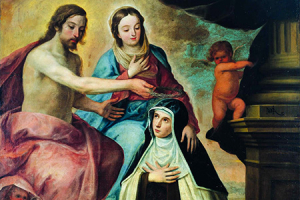
25 May Feast
From On Revelation and On Temptation of St. Mary Magdalene de' Pazzi
Come, Holy SpiritYou are truly wonderful, O Word, in the Holy Spirit, in causing him to infuse himself into the soul, through which infusion it is united with God, conceives God, tastes God, and delights in nothing but God.And the Holy Spirit comes into the soul always marked with that precious seal of the Blood of the Word, the Lamb who was slain; indeed, it is the Blood that moves him to come, if he moves of himself and wills to come.The moving Spirit is in itself the substance of the Father and the substance of the Word; and it departs from the essence of the Father, from the good pleasure of the Word, and comes as a source spreading itself in the soul, and the soul drowns itself in Him. And as two rivers flow forth and unite together in such a way that the smaller one loses its name and takes that of the larger one, so does this divine Spirit who comes to the soul to unite with it. But it is necessary that the soul, which is the smaller one, lose its name and leave it to the Holy Spirit; and it must do this by transforming itself so much in the Spirit that it becomes one with Him.And this Spirit, dispenser of the treasures that are in the bosom of the Father and treasurer of the counsels that are made between the Father and the Word, is infused into the soul in such a gentle way that it is not understood and, because of its greatness, is esteemed by few.With its weight and lightness, it moves in all those places that are suitable and prepared to receive it. By its frequent speech and supreme silence, it is heard by all; with an impetuous gaze, immobile and most mobile, it infuses itself into all.Read about the life of St. Mary Magdalene de’ Pazzi ...
Books published by Edizioni Carmelitane on the life of the saint:
First Chapter of the Eastern Indonesian Province
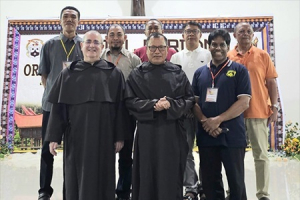
Recently Formed East Indonesian Province Holds First Chapter in May 2026
The First Provincial Chapter of the Eastern Indonesian Province of the Order of Carmelites was held at Our Lady of Mount Carmel Retreat Center in Wae Lengkas, Ruteng, Flores (Indonesia) from May 17-22, 2026. The province was established on March 25, 2025, the Solemnity of the Annunciation of the Lord. At that time, the prior general and his council appointed the first prior provincial and council to hold office until this first Chapter.
The majority of the Chapter was spent on reviewing and approving the statutes. The proposals focused on community building, ministries, formation of the members, and financial stability. The prior general emphasized the need for rooting ourselves into the depth of our charism. He stressed tha "the roots of the tree of the new province should go into the depths of the Carmelite core. Only then will it be able to provide welcome shade for all."
The new province has 130 solemnly professed members, 103 of which participated in the Chapter creating "a warm, fraternal, and joyful celebration."
The East Indonesian Province comprises the ecclesiastical provinces of Makassar, Ende, Kupang, and Merauke.
During the chapter the following were elected:
Prior Provincial | Prior Provincial | Priore Provinciale
Telesforus Jenti, O. Carm.
Vice Provincial | Vice Provincial | Vice Provinciale
Ferdinandus Tay, O. Carm.
1st Councilor | 1er Consejero | 1o Consigliere
Yosep Arnoldus Devanto, O. Carm.
2nd Councilor | 2do Consejero | 2o Consigliere
Hendrikus Dasrimin, O. Carm.
3rd Councilor | 3er Consejero | 3o Consigliere
Aloysius Roja, O. Carm.
4th Councilor | 4to Consejero | 4o Consigliere
Blasius Petrus Su'u, O. Carm.
Call for Articles for Carmelus
In 2026, we will celebrate two anniversaries related to John of the Cross: the 300th anniversary of his canonization and the 100th anniversary of his proclamation as a Doctor of the Church.
Therefore, we would like to feature a special section in Carmelus 1/2026 and request articles on St. John of the Cross.
Especially in light of his elevation to Doctor of the Church, his reception over the last hundred years could be a topic of interest. An article on his reception in church documents over the last hundred years is already available.
Of course, other aspects of the saint’s life and work may also be explored.
And as always, Carmelus welcomes scholarly articles on all topics related to Carmel.
Please send articles and proposals to Fr. Michael Plattig O. Carm.: This email address is being protected from spambots. You need JavaScript enabled to view it.
Thank you very much!
Celebration of the Patronal Feast in Caivano, Naples
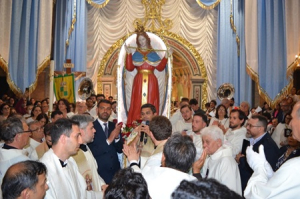
Celebration of the Patronal Feast of St. Mary of Campiglione in Caivano, Naples
May is a special month for all of us believers. The reason is very clear: because during this month we are invited to pay special homage to the Blessed Virgin Mary. In Caivano, one of the sites served by the Carmelites of the Neapolitan Province, this homage is made even more special by the celebration of the feast of the patron saint, Maria Santissima di Campiglione. This year the solemn celebrations began on May 9. Dominic Praveen Lawrence, O. Carm., prior and rector of the Shrine of Maria Santissima di Campiglione, together with the community of the Carmelites, the members of the Third Order, and all the faithful, kicked off the celebrations with the coronation of Maria Santissima di Campiglione.
In the following days, particularly from May 10 to 14, solemn Masses were celebrated, presided over by Bishop Angelo Lucio Renna, O. Carm., Bishop Emeritus of San Severo; Bishop Angelo Spinillo, Bishop of the Diocese of Aversa; Cardinal Crescenzio Sepe, Archbishop Emeritus of Naples; and Cardinal George Jacob Koovakad, Prefect of the Dicastery for Interreligious Dialogue.
One of the most memorable religious events during the days of solemn celebrations is the procession with the statue of Our Lady of Campiglione. As the procession made its way through the city streets, all the faithful joined in solemn prayer and joyful songs of praise. Shortly before the procession returned to the sanctuary, the mayor of Caivano, Dr. Antonio Angelino, presented “the key” to the city into the hands of Mary Most Holy of Campiglione.
This symbolized the entrusting of the city’s protection to her maternal love. Furthermore, there were other events that enlivened the patronal feast, including: pilgrimages from other parishes, traveling marching bands, musical concerts, a cabaret show, and fireworks. All the events were well-organized, beautiful, and engaging thanks to the great collaboration of many.
Our Lady of Campiglione is the mother of all the people of Caivano, and even today, she continues to work many miracles for all her children. Ave Mary!
The Legacy of St. Joaquina de Vedruna
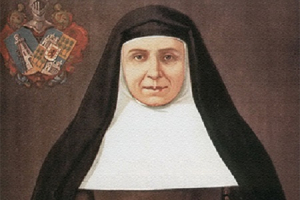
22 May Optional Memorial
The writings of St. Joaquina are foundations for the Carmelite Sisters of Charity, the congregation founded by the saint in February 1826. Assembled into the Epistolario Joaquina de Vedruna, the texts bring together her core spirituality and thoughts. The letters focus on a fervent desire to serve and a complete dedication to the poor: to embrace the needs of the people and to give glory to God.
She believed in removing the obstacles to the pure love of Jesus so that one’s will and faculties are in sync with God’s service. The lives of the followers of St. Joaquina are filled with certainty and confidence that God dwells in each person and “pitched his tent”, especially among those who suffer the most.
Today, the Vedruna Family, formed by women and men, religious and lay, followers of Jesus are ministering on four continents (Europe, Asia, America, and Africe) and continue to respond to the current emergencies of the world, such as migration, youth, promotion of women, education, health, and integral ecology. (Adapted from the Congregation’s website)
To read more ...
Pope Marks Vatican Publisher’s 100th Anniversary

Pope Celebrates 100 Years of Vatican Publishing House Stressing Importance of Books and Reading
Meeting with members of the Vatican Publishing House, which has served nine popes, Pope Leo XIV thanked them for their 100 years of service and reflected on the importance of emphasizes the importance of reading and books. The Vatican Publishing House became independent from the much older Vatican Printing Press, originally founded in 1587.
Books offer an opportunity to think said the pope. The physical nature of a book, especially in the digital age, reminds people of the importance of thought, reflection, and study.
“Reading,” the Pope said, “nourishes the mind” and “helps cultivate a conscious and well-formed critical sense, guarding against fundamentalism and ideological shortcuts.”
For this reason, Pope Leo encouraged everyone to read books “as an antidote to closed-mindedness, which is reflected in rigid attitudes and reductive visions of reality.”
Books are also an opportunity to encounter others. "When we hold a book in our hands," Pope Leo said, "we encounter its author in an ideal sense. At the same time, we also encounter those who have read it before us, those reading it now, and those who will read it in the future." He noted that writers and readers increasingly have opportunities to come together to speak and listen to one another.
Recalling Pope Francis’ frequent emphasis on a “culture of encounter,” Pope Leo suggested that books serve as bridges toward others, fostering dialogue, enriching understanding, and broadening perspectives.
Finally, Pope Leo underscored that, for Christians, books are also an opportunity to proclaim Christ. “We know well how reading the biography of a saint or a well-presented spiritual reflection can touch the heart,” he said. He also reflected on artistic depictions linking saints and sacred texts.
“The Virgin Mary," he pointed out, "is often depicted, in scenes of the Annunciation, intent on reading the Sacred Scriptures. Saint Anthony of Padua is portrayed holding the open Book of the Gospels, upon which the Child Jesus stands. Saint Augustine is often shown seated at a writing desk before a large book and, at times, holding a heart in his hand: truth and charity.”
Following up with these popular images, the pope said, “In the school of Mary and the Saints, let us nourish ourselves with the Word of God, so that it may shape our way of thinking and acting.”
Celebrating At Home - Pentecost Sunday
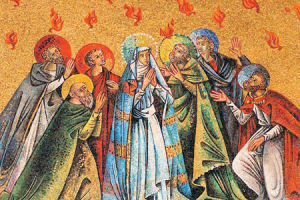
Sent to be God’s Love in the World
(John 20:19-23)
Today we do not pray to receive the Holy Spirit. The presence of the Holy Spirit in us has been affirmed and proclaimed in the sacraments of Baptism and Confirmation. Instead, we pray to grow more aware of the Spirit’s presence in our lives and to allow that Spirit to grow within us, gradually re-shaping our minds and hearts in the image of Jesus.
Pentecost brings to a close the fifty days of the Church’s Easter celebrations. Soon we will begin Ordinary Time again. So, our feast today helps us understand that we take the Holy Spirit with us into the ordinary events and tasks of each day. That is how we allow the sacred to touch, heal and transform us and the world around us.
The spiritual search is for the heart of God within our own. When we enter into relationship with Christ through the Spirit, the gifts begin to flow more abundantly. The Spirit is the source of reconciliation with ourselves and with each other. Reconciliation is essential if we are to ‘hold and guard’ each other in the midst of all that life throws at us, especially at the moment.
The Spirit brings gifts of wisdom, courage, understanding, right judgement, knowledge, reverence, wonder and awe in God’s presence. May we be graced by them all as we discern and decide how we can best work together to build up each other and to let God’s love be seen at work in each of us.
St. Simon Stock Relics Journey to Aylesford
16 May Optional Memorial (Obligatory Memorial the province of Great Britain)
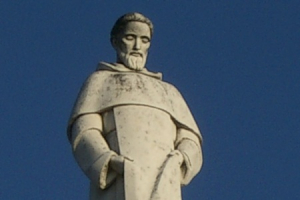
The general's secretary did not fail to make a note concerning St. Simon Stock. "The body of St. Simon Stock is contained intact in a painted casket, set in an elevated position in a special chapel. This saint is held in the greatest veneration in the city, and his office is said in our convent on May 16. It is true that because of wars and devastation by heretics of the convent, which was built 500 years ago, first outside the city, then transferred to its present location inside the city, as can be most clearly shown, there are no writings or documents concerning this saint who was our general, and the relics are venerated only by tradition. There are still in this province religious of 85 and 90 years of age who testify that the aforementioned relics were always venerated and held to be those of St. Simon Stock. A duplex office was composed in his honor, as can be proved by the very ancient choral books which contain the proper office of St. Simon, all in chant."
By the 1950s, the Order had purchased back the ancient property of Aylesford. In the post war optimism, the Order gave expression to its devotions through impressive public celebrations. The seventh centenary of the granting of the scapular, the first of these celebrations, was held from July 16, 1950, to July 16, 1951. It was commemorated on a grandiose scale, as the general chapter had ordained. Early in 1948, the prior general already announced the proposed celebration. Together with the Discalced Carmelites a program, projecting scientific studies, publicity, local congresses, lectures, and novenas was drawn up. A listing of all scapular confraternities erected from 1604 to 1948 was composed from archival and other sources. From August 5th to the 9th, fifteen thousand devotees met in Rome in an International Marian Congress to initiate the centenary. Pope Pius XII honored the occasion with his letter on the scapular devotion, Neminem profecto latet, February 11, 1950. Similar meetings were held in the provinces, and bishops sent pastoral letters.
The centennial year concluded at Aylesford, July 14-16, 1951, with the solemn return of the relics of St. Simon Stock from Bordeaux. The Discalced Carmelite, Cardinal Adeodato Piazza, presided over the ceremony attended by bishops, civil authorities, including Eamon de Valera, president of Ireland, and 25,000 faithful. This occasion also elicited a letter of Pius XII. The relics of the saint can be venerated in the Relic Chapel at Aylesford in Kent, England.
To read more ...
Celebrating At Home - Ascension of the Lord
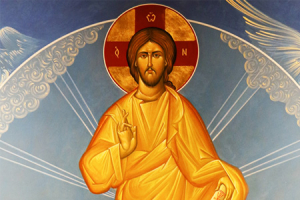
Called, Chosen & Sent
To Be God’s Heart In The World (Matthew 28:16-20)
The true meaning of our feast today is not found in Jesus’ leaving, but in the way he calls his disciples back together, to re-form them as a new community entrusted with the spread of the Gospel. Jesus sends the disciples out to make disciples of all nations, to baptise them in the name of the Father and of the Son and of the Holy Spirit, and to teach them his way. But the disciples are not left to do all that on their own. Jesus promises that he is with them always.
Jesus has called the ragged, group of disciples, scattered after his crucifixion, back to himself to form them, fragile and doubtful as they are, into a community for mission in the name of God. It is comforting to recognise that Jesus doesn’t insist on perfection before he calls us and entrusts us with his mission.
This mission is authorised by God and passed on to us through Jesus. It is not about authority over others. It is actually a call to act as God would act, true to God’s heart as Jesus has taught us.
Ever since Easter, we have been proclaiming that Jesus is alive. The feasts of the Ascension and Pentecost help us to realise that we are part of a long tradition of faithful disciples. We have our faults and failings, but our call is to witness to and teach the way of Jesus by the kind of people we are, the values and attitudes we hold, in thought, word and action - to be the living presence of God in the world today.
- pdf Celebrating At Home - The Ascension Of The Lord [PDF](3.45 MB)
- default Celebrating At Home - The Ascension Of The Lord [ePub](2.99 MB)
- pdf Celebrando en Familia - El Domingo de la Ascensión(1.01 MB)
- pdf Celebrando in Casa - L’Ascensione del Signore(935 KB)
- pdf Comemorando em família - Domingo da Ascensão(1021 KB)
Dutch Province Holds Triennial Chapter in May
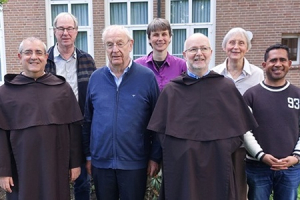
The Provincial Chapter of the Province of the Netherlands took place from May 5-8, 2026. The chapter participants gathered in the beautiful retreat center at Franciscushuis (Denekamp).
This was a very special chapter. In addition to the members of the Dutch Province, five Carmelite friars from the Province of the Philippines and one Carmelite friar from the Eastern Indonesian Province were also attending the chapter as guests. Both of these Carmelite provinces in Asia have had a long connection with the Netherlands as it was Dutch Carmelites who first brought a Carmelite presence to these countries. At this point in time, the Province of the Netherlands is exploring a greater union with the Province of the Philippines with a view to perhaps even becoming a provincial commissariat of the Philippines Province.
Last February, two Dutch Carmelites attended the Provincial Chapter in the Philippines and made a presentation on the situation of the Dutch Province. This time, Noel Rosas, O. Carm, prior provincial of the Province of the Philippines, travelled to the Netherlands and made a presentation on the history and reality of his province. He expressed enormous gratitude for the work that the Dutch Carmelites had done in beginning the Carmelite presence in the Philippines some 68 years previously.
Presiding at the Eucharist on Thursday morning, the prior general, Desiderio García Martínez, O. Carm., reminded those present that the mystics insist that ‘flexibility’ is one of the signs of spiritual maturity. He noted that the Carmelite Saint Mary Madalene de’ Pazzi said that the Holy Spirit is the “super glue” that binds us to the love of Jesus for long time even when there is not a time of consolation (cf. John 15:9-11: remain in my love) in periods of “spiritual seismic activity.” The prior general said to the participants, “Don’t be afraid, everything begins and ends with the love of God.”
The recreation on the final night of the chapter was both enjoyable and memorable with a real international flavor. Overall, while many questions and some doubts remain, the participants left the chapter feeling both thankful for the week together and hopeful for the future of Carmel in the Netherlands. As one participant commented, “It was a grace-filled moment.” At the end of the Chapter, the prior general observed that “something new is being born in the Dutch Province.”
In light of this delicate moment and process of transition (alongside the diminishing numbers of the members in the Netherlands), the prior general and general council agreed to the request of the province to have only two provincial councillors for the next three years (alongside the members of the extended council).
During the chapter were elected:
Prior Provincial | Prior Provincial | Priore Provinciale
Huub Welzen, O. Carm.
1st Councilor | 1er Consejero | 1o Consigliere
Ton van der Gulik, O. Carm.
2nd Councilor | 2do Consejero | 2o Consigliere
Simon Taa, O. Carm.
Extended Council Members | Miembros del Consejo Ampliado | Membri del Consiglio Allargato
Anne-Marie Bos, O. Carm.
Minie Pasop, O. Carm.


