






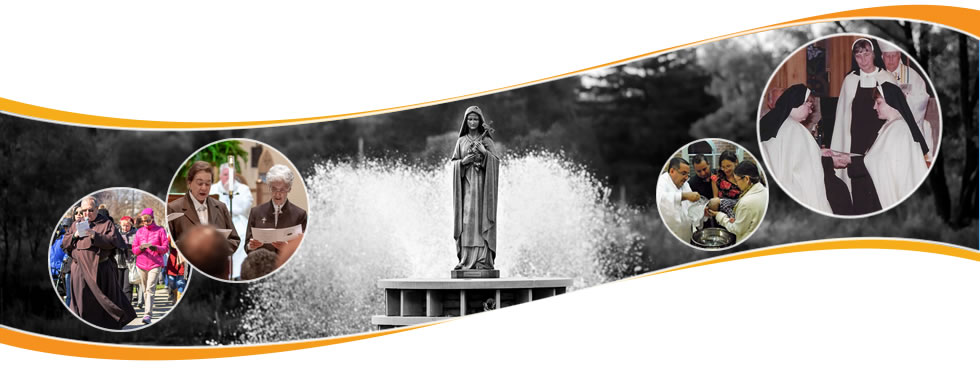


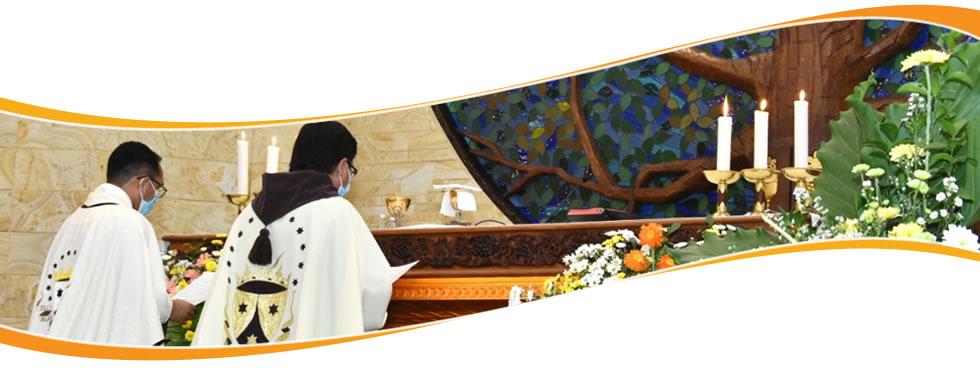
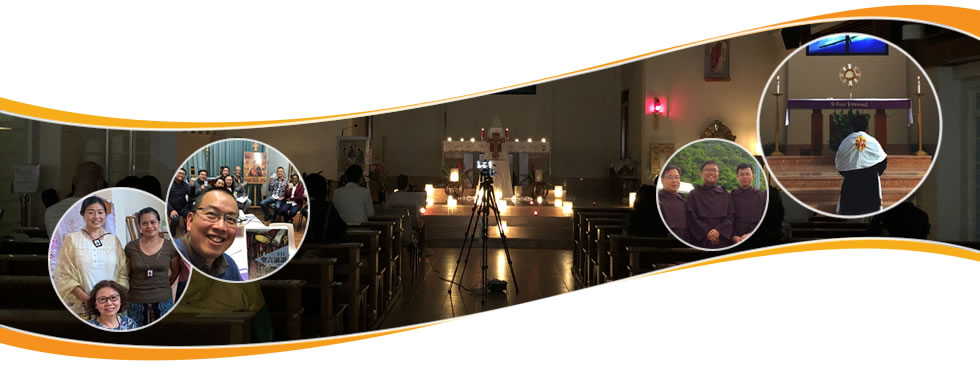



Accompanying the call to return to the roots of the Order has been a renewed interest in both the spirituality and the history of the Order. Institutes and libraries have continued to spring up around the world, especially in new areas where the Order is serving. There has been serious attempt to use the new forms of communication and social media for evangelization as well as contact between the far-flung ministries and communities of the Order.
There is much attention to the various branches and manifestations of Carmel as a family— drawing support from one other in our ministries and communities. In the last 50 years, a number of new foundations have been made outside the established bounds of the provinces. Most provinces not have responsibility for at least one such area. Many have two areas of responsibility. But the Order has seen growth in Africa, South and Central America, and Asia-Oceania while the Carmelite presence in Europe and. In two of three countries in North America.
Some of the already established congregations and institutes expanded to new lands in order to New congregations and institutes of active religious sisters sprung up around the Order. They provided ministries which greatly serve the pastoral needs of the people—education, medical needs, and religious preparation. While some enclosed monasteries have been closed, others have come into being as Carmel continues to develop in various parts of the world.
Today the Order is divided up into geographical areas called Provinces, General Commissariats or General Delegations. Provinces may be divided for the sake of administration into provincial commissariats. Each is headed by the prior (a prior provincial or commissary provincial) or a general delegate (one nominated by the General Curia and approved by the Prior General). Each functions semi-autonomously except for specific provisions reserved the prior general.
It is common for the major part of the ministry in a province to involve parishes which provide the day to day sacramental ministry to the people. However, these remain the remain the responsibility of the local bishop. Carmel provides many other ministries, both sponsored by the Order or its provinces as well as by individual members with particular interest and talents in certain areas. Most provinces sponsor retreat centers or spiritual centers which offer a variety of programs for the purpose of spiritual development and personal restoration. As Carmelites we also realize our responsibility to promote a just world for all. Most ministries throughout the Order have extensive programs (formal and informal) to facilitate this. The Order is also involved in a variety of non-governmental organizations, the Carmelite NGO, for example, which is affiliated with the United Nations Economic and Social Council of the United Nations. Karith is the NGO of the Carmelite Provinces of the Iberian Peninsula.
The Order sponsors for 39 education institutions. These are colegios (primary and secondary) or secondary schools (ages 13-18) with some administered by individual provinces, some in relation with a congregation of religious sisters, and some in agreement with the governments. In addition, there are a number of Institutes which are oriented towards adult education or faith development; some are affiliated with universities and other offer their programs independently.
On December 31, 2016 (the last date figures are available) there were 1,978 male members of the Order in 47 countries, 802 enclosed nuns in 78 monasteries, and an estimated 9,200 Lay Carmelites. There were also six communities of hermits in the Order with a total of 14 members. There were 2,371 religious sisters and brothers of 17 other congregations and institutes affiliated to the Order.


