











O.Carm
St. Simon Stock Relics Journey to Aylesford
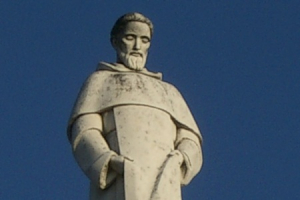
16 May Optional Memorial (Obligatory Memorial the province of Great Britain)
The general's secretary did not fail to make a note concerning St. Simon Stock. "The body of St. Simon Stock is contained intact in a painted casket, set in an elevated position in a special chapel. This saint is held in the greatest veneration in the city, and his office is said in our convent on May 16. It is true that because of wars and devastation by heretics of the convent, which was built 500 years ago, first outside the city, then transferred to its present location inside the city, as can be most clearly shown, there are no writings or documents concerning this saint who was our general, and the relics are venerated only by tradition. There are still in this province religious of 85 and 90 years of age who testify that the aforementioned relics were always venerated and held to be those of St. Simon Stock. A duplex office was composed in his honor, as can be proved by the very ancient choral books which contain the proper office of St. Simon, all in chant."
By the 1950s, the Order had purchased back the ancient property of Aylesford. In the post war optimism, the Order gave expression to its devotions through impressive public celebrations. The seventh centenary of the granting of the scapular, the first of these celebrations, was held from July 16, 1950, to July 16, 1951. It was commemorated on a grandiose scale, as the general chapter had ordained. Early in 1948, the prior general already announced the proposed celebration. Together with the Discalced Carmelites a program, projecting scientific studies, publicity, local congresses, lectures, and novenas was drawn up. A listing of all scapular confraternities erected from 1604 to 1948 was composed from archival and other sources. From August 5th to the 9th, fifteen thousand devotees met in Rome in an International Marian Congress to initiate the centenary. Pope Pius XII honored the occasion with his letter on the scapular devotion, Neminem profecto latet, February 11, 1950. Similar meetings were held in the provinces, and bishops sent pastoral letters.
The centennial year concluded at Aylesford, July 14-16, 1951, with the solemn return of the relics of St. Simon Stock from Bordeaux. The Discalced Carmelite, Cardinal Adeodato Piazza, presided over the ceremony attended by bishops, civil authorities, including Eamon de Valera, president of Ireland, and 25,000 faithful. This occasion also elicited a letter of Pius XII. The relics of the saint can be venerated in the Relic Chapel at Aylesford in Kent, England.
To read more ...
Celebrating At Home - Ascension of the Lord
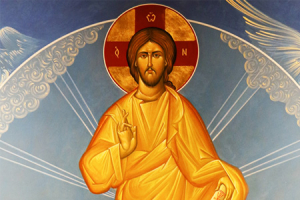
Called, Chosen & Sent
To Be God’s Heart In The World (Matthew 28:16-20)
The true meaning of our feast today is not found in Jesus’ leaving, but in the way he calls his disciples back together, to re-form them as a new community entrusted with the spread of the Gospel. Jesus sends the disciples out to make disciples of all nations, to baptise them in the name of the Father and of the Son and of the Holy Spirit, and to teach them his way. But the disciples are not left to do all that on their own. Jesus promises that he is with them always.
Jesus has called the ragged, group of disciples, scattered after his crucifixion, back to himself to form them, fragile and doubtful as they are, into a community for mission in the name of God. It is comforting to recognise that Jesus doesn’t insist on perfection before he calls us and entrusts us with his mission.
This mission is authorised by God and passed on to us through Jesus. It is not about authority over others. It is actually a call to act as God would act, true to God’s heart as Jesus has taught us.
Ever since Easter, we have been proclaiming that Jesus is alive. The feasts of the Ascension and Pentecost help us to realise that we are part of a long tradition of faithful disciples. We have our faults and failings, but our call is to witness to and teach the way of Jesus by the kind of people we are, the values and attitudes we hold, in thought, word and action - to be the living presence of God in the world today.
- pdf Celebrating At Home - The Ascension Of The Lord [PDF] (3.45 MB)
- default Celebrating At Home - The Ascension Of The Lord [ePub] (2.99 MB)
- pdf Celebrando en Familia - El Domingo de la Ascensión (1.01 MB)
- pdf Celebrando in Casa - L’Ascensione del Signore (935 KB)
- pdf Comemorando em família - Domingo da Ascensão (1021 KB)
Dutch Province Holds Triennial Chapter in May
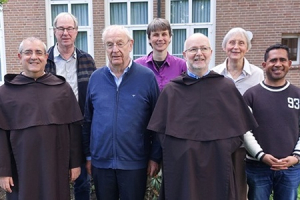
The Provincial Chapter of the Province of the Netherlands took place from May 5-8, 2026. The chapter participants gathered in the beautiful retreat center at Franciscushuis (Denekamp).
This was a very special chapter. In addition to the members of the Dutch Province, five Carmelite friars from the Province of the Philippines and one Carmelite friar from the Eastern Indonesian Province were also attending the chapter as guests. Both of these Carmelite provinces in Asia have had a long connection with the Netherlands as it was Dutch Carmelites who first brought a Carmelite presence to these countries. At this point in time, the Province of the Netherlands is exploring a greater union with the Province of the Philippines with a view to perhaps even becoming a provincial commissariat of the Philippines Province.
Last February, two Dutch Carmelites attended the Provincial Chapter in the Philippines and made a presentation on the situation of the Dutch Province. This time, Noel Rosas, O. Carm, prior provincial of the Province of the Philippines, travelled to the Netherlands and made a presentation on the history and reality of his province. He expressed enormous gratitude for the work that the Dutch Carmelites had done in beginning the Carmelite presence in the Philippines some 68 years previously.
Presiding at the Eucharist on Thursday morning, the prior general, Desiderio García Martínez, O. Carm., reminded those present that the mystics insist that ‘flexibility’ is one of the signs of spiritual maturity. He noted that the Carmelite Saint Mary Madalene de’ Pazzi said that the Holy Spirit is the “super glue” that binds us to the love of Jesus for long time even when there is not a time of consolation (cf. John 15:9-11: remain in my love) in periods of “spiritual seismic activity.” The prior general said to the participants, “Don’t be afraid, everything begins and ends with the love of God.”
The recreation on the final night of the chapter was both enjoyable and memorable with a real international flavor. Overall, while many questions and some doubts remain, the participants left the chapter feeling both thankful for the week together and hopeful for the future of Carmel in the Netherlands. As one participant commented, “It was a grace-filled moment.” At the end of the Chapter, the prior general observed that “something new is being born in the Dutch Province.”
In light of this delicate moment and process of transition (alongside the diminishing numbers of the members in the Netherlands), the prior general and general council agreed to the request of the province to have only two provincial councillors for the next three years (alongside the members of the extended council).
During the chapter were elected:
Prior Provincial | Prior Provincial | Priore Provinciale
Huub Welzen, O. Carm.
1st Councilor | 1er Consejero | 1o Consigliere
Ton van der Gulik, O. Carm.
2nd Councilor | 2do Consejero | 2o Consigliere
Simon Taa, O. Carm.
Extended Council Members | Miembros del Consejo Ampliado | Membri del Consiglio Allargato
Anne-Marie Bos, O. Carm.
Minie Pasop, O. Carm.
A Shared Carmelite Life in Florence
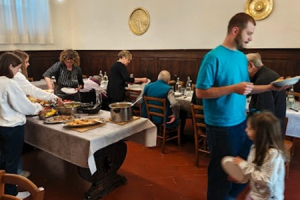
One of the oldest Carmelite houses in Europe, the monastery of Santa Maria del Carmine in Florence (established in 1268), has been home since 1993 to an unusual experiment in shared religious life: a community of friars, married couples, and a consecrated lay woman living together under the same roof.
The initiative grew out of relationships rather than formal planning. Father Agostino Bartolini, O. Carm., the founder, together with some members of the lay movement La Famiglia (“The Family”), made up the group from its earliest days. At its height, more than thirty people lived in the monastery, including several families with young children. Today, three friars, the consecrated lay woman, and three married couples remain in residence, along with four young adults who grew up in the community.
Daily life follows a rhythm shaped by the Liturgy of the Hours. Those present gather for morning prayer, Mass, midday prayer, and evening prayer. Work and ordinary responsibilities fill the rest of the day. Over the years, the families have developed a bakery business that supports the community and connects it with the city of Florence.
Members also participate in the life of the nearby parish through catechesis, and serve as extraordinary ministers of the Eucharist, while the friars provide spiritual guidance and liturgical ministry at Santa Maria del Carmine church.
The physical structure of the monastery has supported both togetherness and appropriate privacy: families have always had their own living quarters, while the church, dining room, cloister, and kitchen remain shared spaces. Meals regularly include guests, extended family, and friends; moments that have played a significant role in sustaining the bonds of community life over more than three decades.
Similar communities shaped by this experience exist at Castellina and Le Salaiole, both in Tuscany. A new chapter in the shared history of these communities is represented by Klara and Giovanni, who are preparing for marriage this September. Klara grew up at Le Salaiole, while Giovanni grew up in Florence; having known each other through these connected communities from childhood, they now begin a family of their own.
As the founding members grow older and the community becomes smaller, questions about the future remain open. What can be said is that for more than thirty years, friars and families have shared prayer, work, and daily life in this place, a lived expression of the Carmelite charism across different vocations.
Institutum Carmelitanum Leaders Set Agenda
Directorate of the Institutum Carmelitanum Meets to Set Agenda
On Monday, May 4, the directorate of the Institutum Carmelitanum met at Centro Internazionale Sant’Alberto (CISA) in Rome to discuss their programming for the coming years. Participating where Boby Sebastian Tharakkunnel, the president of the Institute, Mario Loya, the Institute’s secretary, Giovanni Grosso, general archivist of the Order, and Augustinus Agung Wahyudianto, librarian.
The director of the Order’s communications office, William J. Harry, was invited to participate and give an update on the status of communications in the Order.
Currently the Institutum is preparing a circular letter to all the Major Superiors and leadership in the Order asking them to identify confreres, sisters, and lay associates who have pursued higher studies and specialized formation in various academic disciplines and fields of expertise. To facilitate responses, a Google Form will be attached to the letter, and it can be forwarded to other members with advanced degrees. Each participant will be able to complete the form online, enabling the information to be received promptly and systematically at the Institute.
Following the collection and organization of this data, there will be a series of meetings among members engaged in the various areas of study and research. Through this collaborative effort, the Institute intends to encourage and strengthen research, advanced specialization, scholarly publications, and high-quality academic conferences within the Order in the coming years.
This initiative will also greatly assist the Order in identifying and coordinating our intellectual and academic resources across different regions, cultures, and language groups. “We believe that such networking and collaboration can contribute significantly to the growth of academic excellence and mutual enrichment within the Carmelite family,” said Boby Tharakkunnel, the president of the Institute.
The Institutum will also coordinate the Scuola Carmelitana which is scheduled for September 14-25. The program is open to all students, sisters, and lay people who are interested.
A variety of topics are scheduled to be discussed including events in the 1st century of Carmel and its development; the evolution of the charism; the Rule; key papal documents and their importance for today; the Carmelite Rite; and essential works early in the history of the Order such as Ignea Sagitta (Fiery Arrow) and Institutio primorum monachorum (Institution of the First Monks).
Major figures in the Order, key to understanding Carmelite life, will also be discussed. These would include Mary, Elijah, and the “Fathers of the Order,” Saints Alberto of Sicily and Angelo of Licata.
The group will visit the churches of San Martino ai Monti and Traspontina as well as have a guided tour of “Carmelite” Trastevere.
At the close of the session, Fr. Boby asked, “We kindly request the cooperation and support of everyone involved so that this endeavor may bear lasting fruit for the good of the Order and its future mission.”
A Carmelite Named to the Pontifical Academy for Life
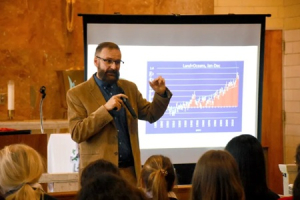
Eduardo Agosta Scarel, O. Carm., of the Carmelite NGO Named to the Pontifical Academy for Life
Eduardo Agosta Scarel, O. Carm., a member of the Dulce Nombre di Maria Carmelite Province and vice president of the Carmelite NGO, has been named as a corresponding member of the Pontifical Academy for Life by Pope Leo XIV.
“I accept this appointment with deep gratitude and a sense of responsibility, as a Carmelite friar, vice-president of the Carmelite NGO, director of the Department of Integral Ecology at the Spanish Episcopal Conference, and a researcher in climate variability and change,” responded Eduardo when contacted by the Carmelite Communications Office. “I accept this appointment as a call to serve through integral ecology and the Social Doctrine of the Church, bringing scientific rigor and ethical discernment to address the challenges affecting human life and our common home. My commitment is to translate technical knowledge on climate risks and their socio-ecological impacts into proposals and guidelines that promote justice, the protection of the most vulnerable, and the common good.”
Asked about his specific goals for his time with the Academy, Fr. Eduardo said, “I shall endeavor to foster interdisciplinary dialogue between science, theology and public policy, offer technical and ethical advice, and collaborate on training and advocacy initiatives that integrate sustainability and human dignity.”
Finally, he added, “I am grateful for the trust placed in me and place myself at the service of the Academy’s mission with humility and dedication.”
The Pontifical Academy for Life is made up of the Ordinary Members, Corresponding Members, Honorary Members and Young Researcher Members. The members of the Academy represent the various branches of the biomedical sciences and those that are most closely related to problems concerning the promotion and protection of life. There are 160 members in total. Corresponding Members are selected by the Governing Council and appointed by it for a term of five years, on the basis of their professional integrity and professional expertise and their acknowledged commitment to the promotion and protection of human life.
In the Motu Proprio Vitae Mysterium issued by St. John Paul II on February 11, 1994, the task of the Academy is “to study and provide information and training about the principal problems of law and biomedicine pertaining to the promotion and protection of life, especially in the direct relationship they have with Christian morality and the directives of the Church's Magisterium.”
World Press Freedom Day 2026 Celebrated
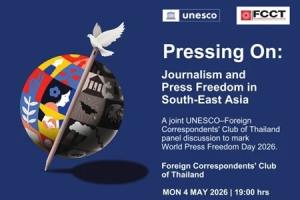
World Press Freedom Day 2026 Celebrated Around the World
One of the annual celebrations of UNESCO is World Press Freedom Day on May 3. In 2026 the theme was “Shaping a Future of Peace.” According to UNESCO the day highlights the essential role of a free, independent, and responsible media in building peaceful and just societies.
It is intended as a reminder to governments of the need to respect their commitment to press freedom. It is also a day for reflection among media practitioners about issues of press freedom and professional ethics and the need for them to be true to their commitment.
In Rome, William J. Harry, O. Carm., the director of the Office of Communications for the Carmelite Order, stressed the need for journalists and the companies that employ them not to get caught up in skewing their reporting to garner larger audiences and more revenue. “Unfortunately, this has become a common practice, especially on American television and internet social media. What has been sacrificed is inconvenient truth in order to secure higher profits. This, of course, raises the question of the ethics of some journalists.”
UNESCO reports that press freedom is “in sharp decline everywhere.” Financing has become a major issue. One analysis shows that just 15 days of the annual global military spending would equal a full year of the investment needed to support public-interest journalism worldwide.
In Cameroon, Bishop Michael Miiabesue Bibi of the Diocese of Buea called for protection of press freedom, reminding everyone that a free and responsible media is essential for promoting peace, justice, and human dignity. In building a culture of peace, journalists are key actors said Bishop Bibi. He said “Freedom of press … should not become a cliché … and return to old forms of repression.”
“Freedom is not absolute; it is tied to the obligation of representing reality accurately and respectfully,” Bishop Bibi said, adding that journalism should be guided by a desire to foster justice and peace rather than personal or vested interests.
In Latin America and the Caribbean, an event was held bringing together journalists, media organizations, civil society actors, public institutions, and government representatives. The goal was to create some dialogue on current challenges and opportunities shaping press freedom in the region.
The UNESCO/Guillermo Cano World Press Freedom Prize for 2026 was awarded to the Sudanese Journalists Syndicate in recognition of its work defending press freedom while the ongoing conflict rages in Sudan. The ceremony was held in Paris.
A panel discussion marked World Press Freedom Day in Thailand. Jointly sponsored by UNESCO and the Foreign Correspondents’ Club of Thailand, the gathering discussed what it takes to keep reporting, why it matters, and what the future holds.
According to UNESCO’s Observatory of Killed Journalists, 14 have died so far in 2026. Since the beginning of the Observatory, 1860 journalists have lost their lives. In 2025, 96 journalists died.
St. George Preca, Priest
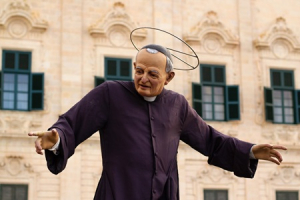
9 May Optional Memorial (Obligatory Memorial in the province of Malta)
Saint George Preca was born in Valletta, Malta, on February 12, 1880. Ordained a priest in 1906, he immediately began dedicating himself to catechizing children. For this mission, he founded the Society of Christian Doctrine in 1907, known as M.U.S.E.U.M. (Magister utinam sequatur Evangelium universus mundus), for which he had to endure many insults. He dedicated his entire life to popular preaching and catechesis, and wrote a large number of books, most of which were aimed at the formation of the members of his Society. His effective apostolate was the fruit of a life of prayer and constant meditation on Sacred Scripture. His spirituality was founded on humility and meekness.
On July 21, 1918, Don Giorgio joined the Carmelite Third Order, and on July 26 of the following year, he made his profession. As a tertiary, he chose the name Franco, after Blessed Franco of Siena, and signed some of his books as Father Franco, Carmelite. In 1952, Prior General Fr. Kiliano Lynch affiliated him with the Order as a sign of recognition for having greatly promoted devotion to the Blessed Virgin of Carmel.
Don Giorgio Preca died on July 26, 1962, and Pope John Paul II declared him blessed on May 9, 2001. Pope Benedict XVI canonized him on June 3, 2007.
To read more ...
Blessed Aloysius Rabatà, Priest
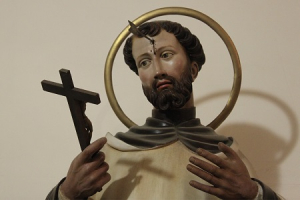
8 May Optional Memorial
Because of his virtues, he was looked down upon and treated badly even by the less observant friars. He, however, bore all the annoyances and the temperament of those religious with great patience, and he practiced virtue and devoted himself to the good of the convent. Since he lived in great austerity, he was gaunt in appearance, with a pale face and sunken eyes, but with a lively and honest gaze.
He was a good example to those who came to visit him, and those who frequented him were often moved to tears by his kind words and examples.
Brother Luigi, even though he was prior, did not spare himself from work; on the contrary, he behaved like the humblest of the friars in the convent, going door to door throughout the city of Randazzo to collect alms of bread, candles, and similar items, to support the friars and do good for all. In fact, while he was begging, the poor would turn to him for alms, knowing that he would not fail to distribute the bread he himself had received.
Once, on Easter Sunday, the friars of the convent ate meat, but he wanted bread and water as usual, as attested by Friar Pietro Cubani, a companion of Blessed Luigi. He also recounted that while Blessed Luigi himself was going from farmyard to farmyard and from farmhouse to farmhouse on his usual alms round, an arrow was shot at him from the road and struck him in the forehead, leaving him bedridden for quite some time. Many asked him to reveal who had wounded him, but he never would, and instead, with great patience, he would repeat: “May God forgive him; praise be to God.”
There was a path leading to the convent of St. Michael that was rough and notorious; to eliminate the scandal and immorality that prevailed there, he purchased a plot of land and opened another road, working on it personally alongside those who, at his request, had come to help him. If Brother Luigi needed a favor for the benefit of the convent, no one would say no to him, but they were only too happy to assist him, in remembrance of the benefits they had received, for his courteous manner, and for his generous hospitality.
After he passed from this life, his body was placed in a coffin beneath the main altar of the church, enclosed by an iron grille; and many venerated and invoked him, especially those suffering from quartan fever, who were healed. These things were said then, and are still repeated today.
(Fr. Simonelli, Blessed Luigi Rabatà, Rome, 1968, pp. 74–76)
To read more ...
Celebrating At Home - Sixth Sunday of Easter
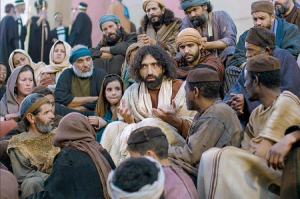
Promise of the Spirit, Love Among Us,
Love Within Us (John 14:15-21)
Jesus returns to the Father in the Ascension, but remains with his disciples through the coming of the Holy Spirit at Pentecost. This Holy Spirit keeps us in a communion of love with Jesus, with the Father and with one another.
The commandments of Jesus are always about love - love of God and love of neighbour. Those who live by these commandments of Jesus abide with him, others and the Father in love.
Along with the call to love comes a gift to help us, to accompany us on our journey, lending knowledge, courage and a deep experience of God’s life and love.
Jesus is the reign of God in person. He is both the image of God and the model of the redeemed human being that each of us is called to be.
The Gospel makes a number of important points: the basis of our relationship with Jesus is love; Jesus’ return to the Father does not leave us orphans because his spirit, the Spirit of truth, the Advocate, will be with us always; Jesus will, one day, return.
The whole Gospel reading today is like a love poem. God’s love for us, shown clearly in the life of Jesus, draws us into love with him and one another and allows us to share God’s life both now and for ever.
- pdf Celebrating At Home - Sixth Sunday of Easter [PDF] (3.07 MB)
- default Celebrating At Home - Sixth Sunday of Easter [ePub] (4.33 MB)
- pdf Celebrando en Familia - Sexto Domingo de Pascua (815 KB)
- pdf Celebrando in Casa - VI Domenica di Pasqua (797 KB)
- pdf Comemorando em família - Sexto Domingo de Páscoa (774 KB)


