
















O.Carm
Titus Brandsma: The Man of Our Time
 In 2018 I had the opportunity to attend the Carmelite formation course on Titus Brandsma in the Netherlands and Germany. Learning more about him made me realise that as an individual and the Order at large, we have a lot to learn from and imitate about Titus.
Titus Brandsma: The Man of Our Time
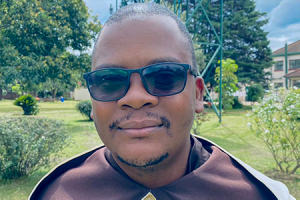
In 2018 I had the opportunity to attend the Carmelite formation course on Titus Brandsma in the Netherlands and Germany. Learning more about him made me realise that as an individual and the Order at large, we have a lot to learn from and imitate about Titus. As we approach the canonisation of Titus I have decided to outline how he can be a model of Carmelite life specifically in the context of the Zimbabwean Commissariate I belong to. I should highlight that this reflection was influenced by the works of scholars like Miguel Arribas, Boniface Hanley, Vanden Heuvel, and Leopold Glueckert.
Titus possessed a profound “practical insight” into situations which can be understood as discretion. This enabled him to deal exceptionally with problematic situations like misunderstandings in the community and elsewhere. In a general sense this means that conflict is inevitable wherever two or more people gather in the same space hence the need to be discreet in conflict solving. In his own right, Titus can be regarded as an embodiment of such a great trait which the Order and the Commissariat in Zimbabwe must emulate in word and in deed. For instance, Carmel in Zimbabwe finds itself in the midst of people who belong to different political parties, cultures, and religions. The Carmelite family in Zimbabwe consists of brothers and sisters who owe their being to such a diversified society. Conflict and other problems proper to community living are bound to arise. As such, Titus reminds us to be peacemakers braced with the weapon of “practical insight” so as to create an enabling environment for Carmelites in Zimbabwe to continue to live in allegiance to Jesus Christ (Carmelite Rule 2) as well as to help the people they serve to do likewise.
In light of the Carmelite charism which states that we are a contemplative fraternity in the midst of people, Titus reiterates the importance of guarding against mere externalization of spirituality which is void of an authentic mystical or inner spiritual life. In a way, Titus advocates a balanced Carmelite way of life, such that no pillar of our Charism should be overemphasized at the expense of the others. This also connects with the Order’s ability to read and interpret the signs of times in order to live our charism in a manner that is relevant to our context. Titus in his lecture on the Concept of God in 1932 emphasized the need to find new ways of conceiving God according to the “spirit of the age.” According to Titus, we have to continue finding new ways of making God known. Those forms should be in line with our modern culture. This is essential as new times require new forms of expression. The past seventy-five years of Carmelite presence in Zimbabwe chronicles how the Commissariat engaged the “spirit of the age” in its provisions of service. From the advent of Carmelites in Zimbabwe to the present day, the Commissariat partakes in various ministries such as pastoral work, chaplaincy, education, and retreat-giving. However, a further challenge from Titus is a need to venture into various apostolates relevant to the needs of our country and the local Church.
Titus comprehensively brings out the importance of our two models of inspiration namely Our Lady of Mt. Carmel and the Prophet Elijah. Titus talks about how Carmelites share in the double portion of the prophet Elijah. Experience enlightens us to understand that ‘inheritance’ is a portion of something given to the first child and in the Zimbabwe context, the first born son. So, the double portion of the spirit of Elijah is the inheritance given to Carmelites, the privileged children of Elijah in order to keep the tradition of the family and to follow in the footsteps of the prophet Elijah. For Titus, the double portion of the spirit of Elijah represents our contemplative and active participation in the life of the prophet Elijah, our father. God used to call him from his contemplative life to fulfill an active role in the society and thereafter he always returned to contemplation.
In the same manner, Carmelites are called to be active contemplatives who, in their active apostolates, should always fall back on contemplation. In fact, contemplation should be regarded as the higher and better part of Carmelite life. So, the double portion of the spirit of Elijah is the harmonious union of the human exercise of virtue and the divine infusion of mystical life; the union of the purgative and illuminative ways with the unitive way (Valabek 221). Thus Carmelites are reminded to live a life of uniting active and passive contemplation. There should be the union of human effort and the mystical life of God. Human challenges, sufferings or sacrifices in prayer and virtue will be rewarded by God “with the beautifying vision of His love and greatness” (224)
Furthermore, Titus helped in the founding of the Catholic University of Nijmegen. Titus valued religious education. He believed. A lack of religious education results in a lack of an attitude of reverence of all creation and especially for other people. I concur with Titus because religious education is essential if human beings are going to be treated with dignity as they are created in the image and likeness of God. Moreover, the inclusion of religion in education helps one to understand oneself, other people, and other societies. Titus' teaching about the reverence of all creation cements the contemporary, ever-growing realization that human beings and the ecology are connected. Today, Titus reminds the Order and the Carmelites in Zimbabwe of the pertinent need to contribute not only in shaping the future generations through the provision of integrated education, but also in practical ministries like environmental apostolates (clean-up campaigns and the placement of litter bins in key spots). This also serves as a practical witness to other people to reverence all creation.
As a journalist Titus unsparingly worked with the media and thus engaged in issues pertaining to social justice. In late 1935 he became the National Spiritual Adviser to the Union of Catholic Journalists. In this apostolate Titus gave his all, even to the point of losing his life, fighting for justice and the truth. In like manner, Carmelites of today have a responsibility like that of Prophet Elijah, which Titus epitomizes, to resolutely stand for the truth always. Standing for what is right comes with its challenges. For instance, during Titus' time some restrictions were imposed on the Catholic radio network so that it was suspended and its freedom of expression consequently thwarted such that it was hardly possible to speak of a Catholic Press.
While in prison at Scheveningen, Amersfoort, and Dachau, Titus faced difficult situations but he remained hopeful and also infused others with hope. Titus’ Good Friday talk shed light on his own approach to what was happening to him. Faith and hope made Titus strong and unrelenting even in the face of stern hostility. Even in great suffering, Titus remained in communion with God. Titus' believed that his sufferings were a participation in the passion of Christ such that in the like-manner as the resurrected Christ, Titus too will emerge victorious. Titus believed that it was only God who could enable him to sail through the darkness he was facing. For him, suffering is an opportunity to experience God’s love in us.
In the contemporary world, especially in Zimbabwe but elsewhere in the world as well, the Carmelite friars are ministering in difficult situations and to broken people whose sufferings are exacerbated by economic meltdown which is dwindling their sources of livelihood. Apart from economic constraints, war is one of the ravaging evils of our time. In recent times, the apocalyptic effects of war are apparent in Ukraine and other warzone countries worldwide. In such times, Titus postulates that faith and hope in God and in our capacity as human beings to revere life and all creation will one day triumph over such existential evils like war. The Order at this time and all times, should unapologetically remain a harbinger and repository of hope, peace, and reconciliation.
Finally, in Titus, Carmelites are reminded to be agents of unity since they serve people from all walks of life. Different ethnicities and religious and political affiliations should not take precedence over the fact that we are all human beings created in the image of God. Titus went a step further to defend the rights of the Jews and advocated for their admission to Catholic schools. Moreover, Titus' founding of an association called ‘Apostolate of Re-unification’ furthered his intention of uniting Catholics and our brethren from the Eastern Church. The question is what are we doing today as Carmelites in the area of ecumenism?
May the celebration of the canonisation of Titus Brandsma bring renewal to the whole Carmelite Order and the entire Church.
Underson Musina O. Carm
Read the original article in Shona pdf here (74 KB)
Database of articles on Titus
Writings of Titus Brandsma (Critical Edition)
A project of the Brandsma Institute - Radboud University
Dr. Anne-Marie Bos
Website: https://titusbrandsmateksten.nl (in Dutch)
Texts:
https://titusbrandsmateksten.nl/writings/ (in Dutch)
https://titusbrandsmateksten.nl/translations/english/ (in English)
https://titusbrandsmateksten.nl/translations/spanish/ (in Spanish)
Commentaries on Titus Brandsma’s Writings:
https://titusbrandsmateksten.nl/translations/spanish/ (Dutch/English/Spanish)
TITUS BRANDSMA INSTITUTE (TBI)
A research institute for the academic study of spirituality within the Judeo-Christian tradition, past and present; for the benefit of Church and society by means of publications, education, and formation.
The institute was established in 1968 in memory of Professor Dr. Titus Brandsma O. Carm (1881-1942) and is located at Radboud University in Nijmegen, The Netherlands.
Website: www.titusbrandsmainstituut.nl
TITUS BRANDSMA ARCHIVES
The edition project of the Titus Brandsma Institute is primarily based on the archives of the Dutch Carmelite Province, especially the Titus Brandsma archives.
These archives are managed by the Dutch Carmelite Institute (Nederlands Carmelitaans Instituut (NCI) in Boxmeer.
Website: www.carmeliteinstitute.nl
THE TITUS BRANDSMA FAMILY ARCHIVE
The Archives Portal Europe
The archive was originally gifted to the Archive and Documentation Centre for the Roman Catholic Friesland Foundation (ADRKF) by the Hettinga family from Bolsward, the descendants of Fr. Titus Brandsma’s sister Gatske de Boer-Brandsma.
Project Website: https://archivesportaleurope.blog/2021/12/09/the-titus-brandsma-family-archive-in-archives-portal-europe/
Family Archives Website: https://www.archivesportaleurope.net/ead-display/-/ead/pl/aicode/NL-BwdADRKF/type/fa/id/NL-BwdADRKF-2
Database of articles on Titus
 Database containing a list of articles written by Titus and others written on him from 1985-2017.
Provincial Commissariat of Sumatra, Indonesia
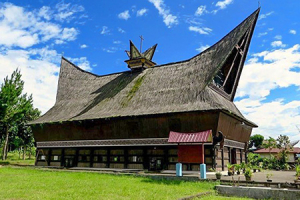
During the Chapter of the Provincial Commissariat of Sumatra, Indonesia, held on March 5-10, the following were elected:
Comisario Provincial | Commissary Provincial | Commissario provinciale:
P. Yohans Tinto Tiopanus Hasugian, O. Carm.
1er Consejero | 1st Councilor | 1° Consigliere:
P. Wilibrordus Agus Purwanto, O. Carm.
2do Consejero | 2nd Councilor | 2° Consigliere:
P. Andreas Corsini Lamtarida Simbolon, O. Carm.
Provincial Commissariat of Eastern Indonesia
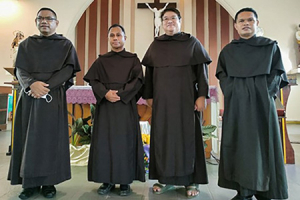
During the Chapter of the Provincial Commissariat of Eastern Indonesia, held on March 17-18, 2022, the following were elected:
Comisario Provincial | Commissary Provincial | Commissario provinciale:
P. Florianus Stefanus Buyung, O. Carm.
1er Consejero | 1st Councilor | 1° Consigliere:
P. Fransiskus Berto Gagu, O. Carm.
2do Consejero | 2nd Councilor | 2° Consigliere:
P. Yanto Yohanes Ndona, O. Carm.
Elective Chapter of the Monastery of Ss.ma Trinità in Jesi
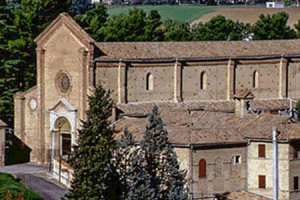
The Elective Chapter of the Carmelite community of the Monastery of the Ss.ma Trinità in Jesi (Ancona) Italy, took place on March 29, 2022.
The results of the elective chapter were as follows:
Prioress | Priora | Priora:
Sr. Alma M. Joseph Sponziello, O. Carm.
1st Councilor | 1ª Consejera | 1ª Consigliera:
Sr. M. Chiara Sabbatini, O. Carm.
2nd Councilor | 2ª Consejera | 2ª Consigliera:
Sr. M. Giovanna Francesca Recososa, O. Carm.
Formator | Formadora | Formatrice:
Sr. M. Giovanna Francesca Recososa, O. Carm.
Treasurer | Ecónoma | Economa:
Sr. Anna Maria Hinlo, O. Carm.
Sacristan| Sacristana | Sacrestana:
Sr. M. Alma Jesusa Santos, O. Carm.
Accompanied by Titus Brandsma by Dr. Paulus Falke TOC

If nature and nurture determine one’s personality, I was predestined to become a Carmelite. Brought up with Carmelite friends of my parents in a Carmelite parish and at a Carmelite school, all of which stands for my upbringing and significant others in my childhood, my nurturing.
Course for OSM and OCARM Archivists
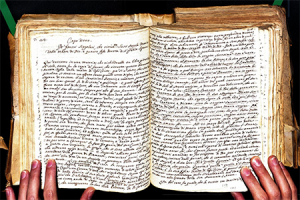
The Historical Institute of the Order of Servants of Mary and the Institutum Carmelitanum are promoting a course for archivists of the Servite and Carmelite families: friars, nuns, sisters, and lay people. The course has been organized by the respective general archives:. It will be held in Italian and will focus mainly on the organization and management of the current archives.
After a general introduction, the course will deal with the following topics: filling plan, protocols, preservation plans, management manuals, electronic documents and archives and the economics of archives. The course program can be found in the attachment to this email and will be available on the Carmelite Archives website (https://archivioocarm.com/) as well as on the Facebook page of the General Archives of the Carmelites.
The course will be held in Rome, in the new Aula Magna of the Pontifical Theological Faculty “Marianum," from June 30 to July 2, 2022. It will be possible to participate either in person or online. The registration fee is € 50.00.
Registrations must be received by May 31, 2022, by emailing the General Archivist, Fr. Mario Alfarano: This email address is being protected from spambots. You need JavaScript enabled to view it.. Registrants will be given all the necessary practical information.
Download the course program pdf here (29 KB)
Vitam Coelo Reddiderunt

|
12-02-22 O. Carm. (Indo) |
Ortus
|
P. Temp.
|
P. Soll.
|
Ord.
|
|
11-03-22 (Indo) |
|
|
|
|
|
24-02-22 (MNT) |
|
|
|
|


