











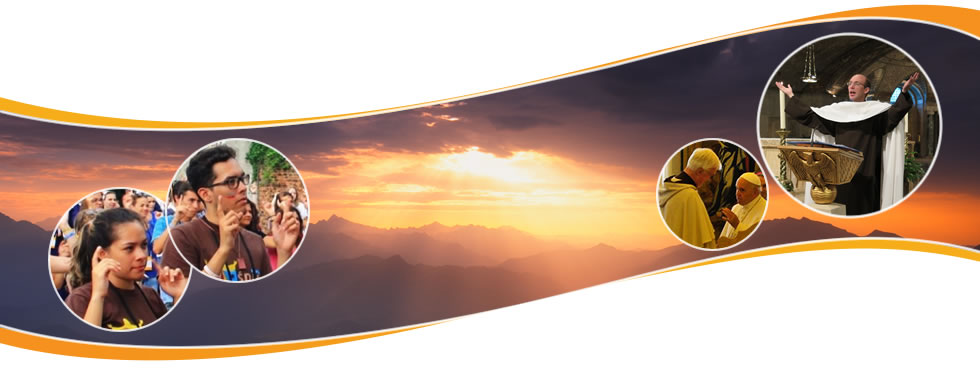
The second Asia-Australia-Oceania Carmelite student friars gathering in this sexennium was held in Malang (Indonesia) from the 4th to 10th April , 2013.
Fr. Lucianus Simon Rande, O.Carm., Provincial Councillor of the Indonesian Province was the main celebrant of the opening Mass. On behalf of Fr. Ignatius Joko Purnomo, O.Carm., Indonesian Provincial, he gave an address of welcome and officially opened the gathering. An address from Fr. Prior General was read by Fr. Albertus Herwanta, the General Councillor for Asia-Australia-Oceania.
Sixty-six Carmelite student friars and formators from India, Vietnam, Philippines, Indonesia and East Timor joined the gathering where they prayed and meditated together. They also listened to Fr. Rico Ponce, O.Carm. (Phil) and Fr. Benny Phang, O.Carm. (Indo). Fr. Rico talked about three things: The mission of animating Carmelite life today within the sphere of formation; The Asian spiritual context and Carmelite spirituality - challenge and response; Following Christ in the context of globalization. Fr. Benny talked about theology of the body.
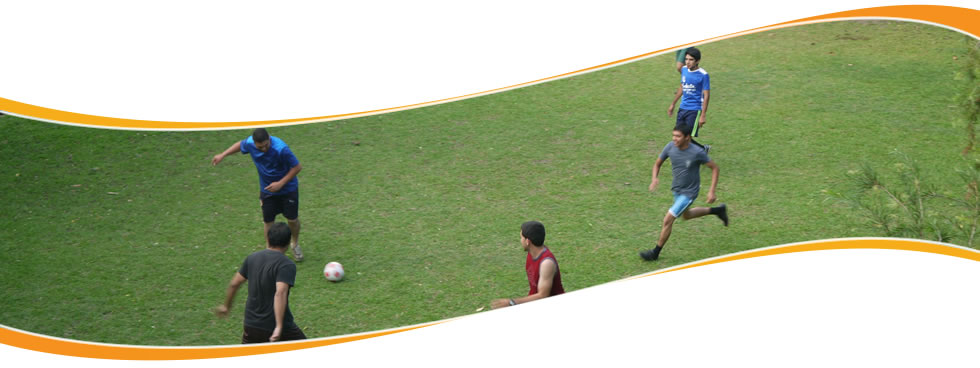
On April 7th the participants visited the following Carmelite communities: the house for the elderly, the provincial house, Saint Albert High School, the Carmelite Nuns and the novitiate house. On April 9th they visited the Safari Park of East Java. They also enjoyed creative performances, and Indian, Vietnamese, Philippine, Timorese and Indonesian food prepared by the participants.
Gratitude was also expressed to all who supported this gathering, especially to the Provincial of Indonesia for his willingness to fraternally host this gathering, and to Fr. Crispinus Ginting, O.Carm. and his team who worked hard to prepare and organize everything.
Carmelite Curia
The cover of this issue of CITOC-magazine shows a very beautiful photo of the first Carmelite Church in the entire American continent in Olinda, Brazil, founded by the Portuguese Carmelites in 1580 and rededicated again on August 5, 2012. The celebrations are an opportunity for the Carmelites to give thanks for the restoration and the return of this marvelous church that from 1877 was in the hands of the Brazilian state, and from today will be the office of the Prior Provincial.
The information on the reality of the Carmelite life in Latin America is rounded off with an article on the Third Congress of ALACAR (the Latin American Association of the Carmelites), an important initiative for the development and exchange among all members of the Carmelite Family in Latin America.
The article from the Prior General recalls the 70th anniversary of the martyrdoms of Blessed Titus Brandsma and Saint Teresa Benedicta of the Cross (Edith Stein). The life of Blessed Titus is an example of the close relationship between the mystical life and commitment to the world in favor of human dignity. Today, the Carmelite NGO has also adopted this plan. An article about the activities regarding these relevant issues of justice and peace is presented by Carmelite NGO.
Next, we present three events in the field of formation in the Order: the course on permanent formation in the Holy Land on the theme: “Returning to the Sources”; the beginning of the common novitiate in Salamanca, Spain; and the regional meeting of Asia-Australia-Oceania formators which took place in Thrissur, India.
A number of meetings in recent months, which express the internationality of the Order, such as the Fifth International Congress of Lay Carmelites, the triennial meeting of bursars in Sassone and the Congress of Fr. Lorenzo van den Eerenbeemt, O. Carm., the cofounder with the Blessed M. Crocifissa Curcio of the Congregation of the Carmelite Missionary Sisters of St. Teresa of the Child Jesus, will also be mentioned.
Another article in this magazine regards the founder of the Carmelite Sisters of the Aged and Infirm, the Servant of God, Mother Mary Angeline Teresa, O. Carm. (Bridget Teresa McCrory), whose decree on the heroic virtues was promulgated. The challenges arising from historic moments of change always demand new responses as shown in the presentations on the unification of the two provinces of Upper and Lower Germany and the canonical erection of the new General Commissariat of Paraná in Brazil.
In addition to these articles, as well as other information, there is a selection of news highlights, some of which were published in CITOC-online.
We wish you all happy reading of these pages of the new issue of CITOC-magazine.
Fr. Fernando Millán Romeral, O.Carm. Prior General
Throughout the six years that the term of the General leadership lasts there are moments that are difficult, joyful, sad, emotional, moments in which one feels an extraordinary pride in our Carmelite family, and so on. At the end of last year, (from 29th November to 4th December 2010) we had one of those very intense, profound and joyful moments, in the meeting of the two General Councils, O.Carm and O.C.D., for a week at the Stella Maris de Monte Carmelo (Haifa, Israel). The meeting gave us a chance to think together, pray and meditate together, and to look at mission and the meaning and importance of Carmel for the Church and the society of today.
The first two days were devoted to a reflection on consecrated life in today’s world, led by Fr. Gabino Uribarri, S.J., the Dean of the Faculty of Theology of the Pontifical University of Comillas in Madrid. Fr. Uribarri has written a number of works on religious life, and his talks helped us to grow in our awareness of the ecclesial dimension of this life, as well as the responsibility it has in the area of evangelisation. Along with the talks, which were always very solid theologically and inspirational at the same time, we had some very interesting sharing of opinions in which we were able to see how we live out these dimensions in each branch of Carmel, as well as the difficulties we encounter in this area.
This first part ended with a visit to the ruins of the first Carmelite foundation. This was a particularly intense moment in which we went through the ruins of the first chapel, the prior’s cell close to the entrance (juxta introitum loci), the spring of Elijah and so on. We sang the Flos Carmeli together, and were very mindful of our sisters and brothers in both branches of Carmel throughout the world.
In the days that followed, the members of both councils visited places of Carmelite interest, and some of the other significant places in the Holy Land. As we went around we had Fr. Francisco Negral and Fr. Renato Rosso, both O.C.D. as our guides. Both were excellent guides who with genuine professional ability and spiritual insight, helped to get a real taste of the spirituality of the different places. Moreover, in each different place we had a Lectio divina, directed by Fr. Desiderio Garcia, O.Carm. who helped us to recapture and re-live the words of the Lord, right there in those places where they were pronounced for the first time.
It was also a great pleasure to visit the four monasteries of Discalced Carmelite women in the Holy Land (Mount Carmel, Nazareth, Bethlehem and the Our Father) where we were able to spend time with the nuns and enjoy their hospitality.
The last day was devoted entirely to the writing of a message for the Order and to the study and evaluation of other joint activities and areas of common endeavour. We looked again at some of the topics that have been studied in the meetings of the two councils, which take place in Rome twice a year.
All that remains is for us to sincerely thank the Carmelite communities at Mount Carmel and throughout the Holy Land for the wonderful hospitality they gave us, and also the Carmelite Sisters in Stella Maris, who, as they always do, made us feel so much at home by the simplicity, pleasantness and fraternal spirit of their hospitality.
During the week that we were in Mount Carmel, we received some bad news. Fifteen kilometres from Stella Maris, on one of the hills that form part of the Mount Carmel chain, there was a fire that burned many acres of forest, and, even more sadly, caused the death of 43 people who were passengers in a coach. Even though neither Stella Maris, nor the Wadi es Siah nor the Muhraqa were affected by the fire, the flames could be seen from miles away. We could not help but recall the words of Amos in the Bible speaking about the destruction of this highly symbolic place: and the top of Carmel dries up … (Amos 1,2). Without getting into visionary interpretations or anything so strange, we might perhaps see a sign in this, something that alerts us, a even warning. Carmel, the biblical place of beauty, synonymous with all that is fertile and the generosity of nature, is on fire on account of human neglect. Perhaps we as Carmelites may have a word to say to this world of ours that is taking giant steps towards the destruction of our environment, our waters, and nature itself. Together, we commend all the victims of the forest fire to the one God whom Elijah adored in these same places.
The Prior General, Fr. Fernando Millán Romeral, O.Carm., together with the Councillor General for Europe, Fr. John Keating, O.Carm. met with the European friars who made solemn vows within the last ten years. This meeting took place at San Andres, the Carmelite University Residence and European Novitiate in Salamanca, Spain from the 4th to the 7th April 2013. This is also the place where St. John of the Cross was a student. Of the forty possible participants thirty-three friars were present for what was entitled "A Dialogue in Hope regarding the future of the Order in Europe." The Prior General spoke about three things with the group: "Hope for the future", "The situation of the Order in Europe" and "A vision for the future." Together in groups and in assembly friars from Arago-Valentina, Betica, Britain, the French Delegation, Germany, Ireland, Italy, Malta, the Neapolitan Province, Netherlands and Poland addressed a wide range of issues among themselves and with the Prior General searching to find common paths for hope regarding the future of the Order in Europe. The final text of their common reflection (in English, Italian and Spanish) can be found on the Order's website at:
http://ocarm.org/en/content/ocarm/anchored-hope-heb-618-19
A very warm welcome was extended to all by the community at San Andres, and the gathering also included a guided tour of the city of Salamanca and Eucharist celebrated by the Prior General at the tomb of St. Teresa of Jesus at Alba de Tormes.
“If we want to build communities in which there is an abundance of life, then we must recognise who and what we are and what it means for us to be alive... Religious communities are like ecological systems. A rare frog will need its own ecosystem if it needs to flourish... If the frog is threatened with extinction, then one must build an environment, with its food and ponds and a climate in which it can grow up. Carmelite life also requires its own ecosystem, if we are to live fully and preach a word of life, it is not enough to talk about it; we must actively plan and build such Carmelite ecosystems. A Province will therefore have to develop a plan for the gradual renewal of communities in which the brethren may flourish. Unless a Province plans the building of such communities, then it dies. A Province with three communities where the brethren flourish in their Carmelite life has a future, with the grace of God. A Province with twenty communities where we are just surviving may well have none.” (Timothy Radcliffe, Sing a New Song: The Christian Vocation, Dublin 2000, 121-124) [Carmelite meeting of major superiors,Sassone, 2006].
1. Rethinking our sense of identity:
To be Carmelite: This is a providential moment for us in Europe; it is a time when we can rethink our Carmelite identity. Teresa of Avila said it is important to ask “Who should we be?” (W.P., 4:1) The classic Latin saying, Operari sequitur esse, states “Our work follows from who we are.” Our identity will always condition what we do. Who are we? What can we, as Carmelites, offer to others? In our Provinces, is there great diversity in our understanding of what it means to be Carmelite? Creative fidelity to our charism encourages us to regenerate and renew the fraternal life of our communities.
2. Renewal of Fraternal Life:
The renewal of fraternal life requires evangelical courage (parresia). We need to regenerate our communities so that they:
a) are welcoming and open: It is important that our communities be places of welcome, to lay people, to members of the wider Carmelite family, and indeed to potential vocation candidates.
b) have good leadership: It is vital that local community leaders seek to maintain a healthy balance between apostolic, prayer, and community life and facilitate a process of dialogue which is respectful of individuals and diversity and which is open to change.
c) have a number which encourages good community life (5?)
d) encourage growth: it is important that our community life allows and encourages ongoing formation, especially for those who have just made their Solemn profession.
This renewal of fraternal life requires a mature process of discernment.
3. Establishing Creative Processes of Discernment:
We realise that there are often difficulties which arise in our communities, due to the natural generation gaps. From our vantage point, at this time in Europe, we have an opportunity to establish processes of discernment, on individual, local, Provincial and Order level. We should open ourselves to the future, not with pessimism or perfectionism, but with a sense of hope. In this process of discernment, there are four questions which it is important to consider: Who are we? What do we do? Why do we do it? Why do we do it this way?
4. Enhancing the Richness of our Internationality:
With a renewed sense of mission, we need to be open to international co-operation, reaching out, and breaking the boundaries and limitations of our geographical realities. The formation of international or inter-provincial communities provides a very practical expression of our re-envisioning of Carmelites life; seeking to do little things in a big way. Two key points are necessary to enable this:
a) The availability of brothers for international projects and communities.
b) The integration of language studies in initial formation.
Solemnly professed young European Carmelites (within last 10 years)
Community of S. Andrés (Spain),
Salamanca 4th to 7th April 2013
Lectio Divina April 2013
Liturgy, Source of Life. That the public, prayerful celebration of faith may give life to the faithful.
Mission Churches. That mission churches may be signs and instruments of hope and resurrection.
| Ipad-Iphone | Kindle | ||
| English | download ebook | download ebook | download PDF |
| Español | descargar eBook | descargar ebook | descargar PDF |
| Italiano | download eBook | download eBook | download PDF |
- Monday, April 1, 2013
- Tuesday, April 2, 2013
- Wednesday, April 3, 2013
- Thursday, April 4, 2013
- Friday, April 5, 2013
- Saturday, April 6, 2013
- Sunday, April 7, 2013
- Monday, April 8, 2013
- Tuesday, April 9, 2013
- Wednesday, April 10, 2013
- Thursday, April 11, 2013
- Friday, April 12, 2013
- Saturday, April 13, 2013
- Sunday, April 14, 2013
- Monday, April 15, 2013
- Tuesday, April 16, 2013
- Wednesday, April 17, 2013
- Thursday, April 18, 2013
- Friday, April 19, 2013
- Saturday, April 20, 2013
- Sunday, April 21, 2013
- Monday, April 22, 2013
- Tuesday, April 23, 2013
- Wednesday, April 24, 2013
- Thursday, April 25, 2013
- Friday, April 26, 2013
- Saturday, April 27, 2013
- Sunday, April 28, 2013
- Monday, April 29, 2013
- Tuesday, April 30, 2013
Fr. Sunny John O.Carm.
“Today the palms - tomorrow the passion”. The grim truth is that the same people who shouted "Hosanna" on Sunday shouted "Crucify him," just five days later. It is sobering to recall that the same people shouting Hosanna on Palm Sunday were crying "Crucify him" on Good Friday! Quite a reversal, pretty inconsistent. But isn't that a contemporary experience too, the inconsistency of what we do here on Sunday and how we are tempted to live the rest of the week in other aspects of our lives.
What we commemorate and relive during this week called "holy" is not just Jesus’ dying and rising, but our own dying and rising in Him.
Are we ready to die with Him in our lives? One of the two men crucified with Jesus was an "honest thief." He was brave enough to confess who he was. If we were honest, we would also admit we had taken things that do not belong to us. You know, it is not just the one who steals money or shoplifts who is a thief. The person who has sex apart from marriage is taking something that does not belong to him. Even if you call it "living together" it is still stealing. The same with the husband who spends all his time with buddies; he is robbing his wife and children. The person whose motto is "shop till I drop" and who never thinks about the needy is stealing from the poor. The one who is speaking to you now, recognizes he is a big thief.
Max Lucado reminds us that each of us has got a donkey that the Lord needs. “Sometimes I get the impression that God wants me to give him something and sometimes I don't give it because I don't know for sure, and then I feel bad because I've missed my chance. Other times I know he wants something but I don't give it because I'm too selfish. And other times, too few times, I hear him and I obey him and feel honored that a gift of mine would be used to carry Jesus to another place. …Maybe you have those questions, too. All of us have a donkey. You and I each have something in our lives, which, if given back to God, could, like the donkey, move Jesus and his story further down the road. Whichever, your donkey belongs to him. It really does belong to him. Your gifts are his and the donkey was his. The original wording of the instructions Jesus gave to his disciples is proof: "If anyone asks you why you are taking the donkeys, you are to say, 'Its Lord is in need.'" [Max Lucado, And the Angels were Silent, p. 54]
What the passion narrative teaches us today?
First, our God, the God of Abraham, Isaac and Jacob, the God who raised Jesus of Nazareth from the dead, the God who created heaven and earth, the God who created your life and mine, that God, the true God, our God, is a God who suffers and cries and dies. Our true God suffers and cries and dies. The suffering of our God is not imaginary or fictitious or make believe. God’s suffering; pain and tears are as real as yours and mine. He knows what the real pain is. He can feel your pain, because he had suffered it before you.
The cross cries out its message of pain. We hear the words at Lazarus’ death: “He wept.” Our God, the true God, suffers and cries and dies, like we do.
We are the only religion in the world whose God gets hurt, whose God gets stabbed, who writhes in pain on the cross, who gets whipped, who has five wounds in his body, and who shouts his pain in the midst of his suffering on the cross, “My God, my God, why have you forsaken me and let me suffer like that?” What other religion is there where a cross becomes a throne? His suffering was not imaginary, it was not make believe, and it is not a fake. The cross tells us that. Passion Sunday tells us that. Our God suffers and cries and dies.
But there is a second part. Our God is a God who loves his children so much that God is willing to die in their behalf. Our passionate God suffers cries and dies for us, in our behalf.
That is what the cross tells us: God loved us so much that God was willing to die for us. That is the message of the cross. It is only in the cross that we see the face of God’s love. The cross is that glorious window through which we see God’s great love, a love so great that God was willing to die for you, that God’s son was willing to lay down his life for you and me.
It is from the cross that we hear the voice of God who constantly and persistently says, “I love you. I forgive you. I am with you always.”
There is something about the cross that compels us to make a choice, either for him or against him. You can’t find a middle ground when it comes to Christ, even though at times we try to.
This is clearly expressed in a poem:
I stood alone at the cross of Christ,In the hush of twilight dim,And faced the questionThat pierced my heart,What shall I do with him?
Crown or crucify, what shall it be?No other choice is offered me.
In the name of the Father and of the Son and of the Holy Spirit. Amen.
Christus resurrexit!
Resurrexit vere! AlleluIa!
In Pascha Domini
A.D. 2013
Fernando Prior Generalis
Domusque Generalis Communitas
Image: Krakow, Graduale de Dominicis iuxta ritum missalis Beatissimae Dei Genitricis Semperque Virginis Mariae de Monte Carmelo, 1644
More...
The Elective Chapter of the Carmelite Monastery of Camerino, Italy, was held 25 March 2013. The following were elected:
- Prioress: Sr. M. Teresita Marino, O.Carm.
- 1st Councilor: Sr. M. Paola Colletta, O.Carm.
- 2nd Councilor: Sr. M. Grazia Di Palma, O.Carm.
- Director of Novices: Sr. M. Paola Colletta, O.Carm.
- Treasurer: Sr. M. Paola Colletta, O.Carm.
- Sacristan: Sr. M. Pia Marzilliano, O.Carm.


