












Warning: Creating default object from empty value in /home/jtthoc/public_html/ocarm.org/components/com_k2/views/itemlist/view.html.php on line 743
Interdisciplinary Seminar on the Contemplative Dimension of Carmel
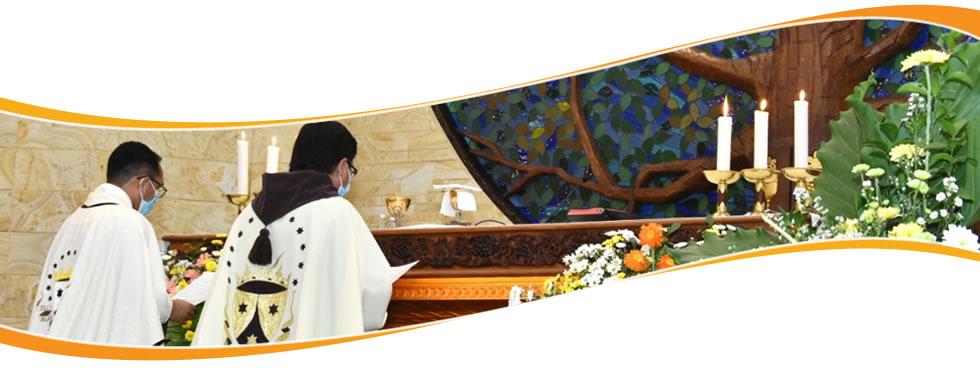
Written byLast 3-7 November, a group of around 20 Carmelite experts in the areas of history, spirituality, biblical studies, and liturgy, gathered at Centro Internazionale S. Alberto (CISA) to examine the contemplative dimension of Carmel according to the first authors of the Order. Beginning with the medieval context, the first part of this seminar, which will continue in the coming years, studied the Carmelite Rule, the Flaming Arrow, the Ten Books of the Institution of the First Monks and various Carmelite authors of the 13th to 15th centuries.
The seminar highlighted the richness that appears in the texts of the well-known and lesser-known authors: all offer themes and elements authentically Carmelite. The particular way of using Scripture and the attention to the dynamic process of transformation towards a mystical union with God, of which diverse authors indicated its fruits rather than give a definition, were noted. The eschatological and glorious perspective was highlighted in various texts, the reciprocal call of the liturgy and prayerful meditation on the Word underline the centrality of Christ. The language used and the mystagogical dimension were also examined, and called for a focused rereading.
photo


*photo courtesy of Carmelite Bristish Province.
Lectio: Solemnity of the Mother of God
Sunday, January 16, 2011
Lectio: 1st Sunday of Advent
Meditating day and night on the Law of the Lord and keeping vigil in prayer
Carmelite reflections on Lectio Divina,
the prayerful reading of the Bible
by
Carlos Mesters, O.Carm.
(translated by Míceál O’Neill, O.Carm.)
Each one of you is to stay in his own cell or nearby, pondering the Lord’s law day and night and keeping watch at his prayers…
(Carmelite Rule: Chapter 10).
Lectio Divina (‘holy reading/listening’) is the ancient method of prayerfully reading the Bible, the Word of God. Originally cultivated by monastic orders – but now an important part of the lives of many Christians from different traditions – lectio divina enables us to contemplate God and God’s will in our lives. If prayed regularly, lectio can deepen our relationship with God.
A prayerful reading of the Bible within what is traditionally called lectio divina is an urgent task if we are to be faithful to what God asks of us today. It is something like curing the veins when the blood which keeps us alive has to flow. To this end, we offer:
● Ten words of advice about the ‘mystical’ life which must guide our prayerful reading of the Bible; that is, the light which needs to be in our eyes when we do our lectio divina. In these words of advice, reference is made to the Carmelite Rule, written by Saint Albert of Jerusalem in the early thirteenth century (the paragraph numbering follows that agreed by the Carmelite and Discalced Carmelite Orders in 1999).
● Ten points of orientation (the least possible) for personal and daily reading of the Bible (each person will gradually develop his or her own way of communicating with the Word of God).
● Seven suggestions for reading the Word of God in groups; in these there is a reflection of the tradition of the ‘four steps’ of Lectio Divina.
The Process of Lectio Divina
1. When you begin a lectio divina of the Bible you are not concerned with study; you are not going to read the Bible in order either to increase your knowledge or to prepare for some apostolate. You are not reading the Bible in order to have some extraordinary experience. You are going to read the Word of God in order to listen to what God has to say to you, to know his will and thus ‘to live more deeply in allegiance to Jesus Christ’ (Carmelite Rule: Chapter 2). There must be poverty in you; you must also have the disposition which the old man Eli recommended to Samuel: ‘Speak, Lord, your servant is listening’ (1 Samuel 3:10).
2. Listening to God does not depend on you or on the effort you make. It depends entirely on God, on God’s freely-made decision to come into dialogue with you and to allow you to listen to the voice to God. Thus you need to prepare yourself by asking him to send his Spirit, since without the Spirit of God it is impossible to discover the meaning of the Word which God has prepared for us today (cf. John 14:26; 16:13; Lk 11:13).
3. It is important to create the right surroundings which will facilitate recollection and an attentive listening to the Word of God. For this, you must build your cell within you and around you and you must stay in it (Carmelite Rule: Chapters 6 & 10), all the time of your lectio divina. Putting one’s body in the right position helps recollection in the mind.
4. When you open the Bible, you have to be conscious that you are opening a Book which is not yours. It belongs to the community. In your lectio divina you are setting foot in the great Tradition of the Church which has come down through the centuries. Your prayerful reading is like the ship which carries down the winding river to the sea. The light shining from the sea has already enlightened the dark night of many generations. In having your own experience of lectio divina you are alone. You are united to brothers and sisters who before you succeeded in ‘meditating day and night upon the Law of the Lord and keeping vigil in prayer’ (Carmelite Rule: Chapter 10).
5. An attentive and fruitful reading of the Bible involves three steps. It has to be marked from beginning to end, by three attitudes:
First Step/Attitude – Reading: First of all, you have to ask, What does the text say as text? This requires you to be silent. Everything in you must be silent so that nothing stands in the way of your gleaning what the texts say to you (Carmelite Rule: Chapter 21) and so that you do not make the text say what you would like to hear.
Second Step/Attitude – Meditation: You must ask, What does the text say to me or to us? In this second step we enter into dialogueCarmelite Rule: Chapter 10). In this way ‘the Word of God will dwell abundantly on your lips and in your heart (Carmelite Rule: Chapter 19). with the text so that its meaning comes across with freshness and penetrates the life of the Carmelite today. Like Mary you will ponder what you have heard and ‘meditate on the Law of the Lord’ (
Third Step/Attitude – Prayer: Furthermore, you have to try to discover What does the text lead me to say to God? This is the moment of prayer, the moment of ‘keeping watch in prayer’ (Carmelite Rule: Chapter 10).
6. The result, the fourth step, the destination of lectio divina, is contemplation. Contemplation means having in one’s eyes something of the ‘wisdom which leads to salvation’ (2 Timothy 3:15). We begin to see the world and life through the eyes of the poor, through the eyes of God. We assume our own poverty and eliminate from our way of thinking all that smacks of the powerful. We recognise all the many things which we thought were fidelity to God, to the Gospel, and to the Tradition; in reality they were nothing more than fidelity to ourselves and our own interests. We get a taste, even now, of the love of God which is above all things. We come to see that in our lives true love of God is revealed in love of our neighbour (Carmelite Rule: Chapters 15 & 19). It is like saying always ‘let it be done according to your Word’ (Luke 1:38). Thus ‘all you do will have the Lord’s word for accompaniment’ (Carmelite Rule: Chapter 19).
7. So that your lectio divina does not end up being the conclusions of your own feelings, thoughts and caprices, but has the deepest roots, it is important to take account of three demands:
First Demand: Check the result of your reading with the community to which you belong (Carmelite Rule: Chapter 15), with the faith of the living Church. Otherwise it could happen that your effort might lead you nowhere (cf. Galatians 2:2).
Second Demand: Check what you read in the Bible with what is going on in life around you. It was in confronting their faith with the situation existing around them that the people of God created the traditions which up to today are visible in the Bible. The desire to embody the contemplative ideal of the Carmelite Order within the reality of ‘minores’ (the poor of each age) brought the first Carmelite hermits to become mendicants among the people. When the lectio divina does not reach its goal in our life, the reason is not always our failure to pray, our lack of attention to the faith of the Church, or our lack of serious study of the text. Oftentimes it is simply our failure to pay attention to the crude and naked reality which surrounds us. The early Christian writer Cassian tells us that anyone who lives superficially – without seeking to go deeper – will not be able to reach the source where the Psalms were born.
Third Demand: Check the conclusions of your reading with the results of biblical studies which have shown the literal meaning of the words. Lectio divina, it has to be said, cannot remain chained to the letter. The Spirit’s meaning has to be sought (2 Corinthians 3:6). However, any effort to identify the Spirit’s meaning without basing it in the written word would be like trying to build a castle on sand ( St. Augustine). That would be a way of falling into the trap of fundamentalism. In this day and age, when so many ideas are flying about, common sense is a most important quality. Common sense will be nourished by critical study of the written word. So that we will not go astray on this point, the Carmelite Rule tells us to follow the example of the Apostle Paul (Carmelite Rule: Chapter 24).
8. The Apostle Paul gives various bits of advice on how to read the Bible. He himself was an excellent interpreter. Here are some of the norms and attitudes which he taught and followed:
When you set yourself to read the Bible…
(a) Look upon yourself as the one to whom the word is addressed, since everything was written for our instruction (1 Corinthians 10:11; Roman 15:4). The Bible is our book.
(b) Keep faith in Jesus Christ in your eyes, since it is only through faith in Jesus Christ that the veil is removed and the Scripture reveals its meaning and tells of that wisdom which leads to salvation (2 Corinthians 3:16; 2 Timothy 3:15; Romans 15:4).
(c) Remember how Paul spoke of ‘Jesus Christ Crucified’ (2 Corinthians 2:2), a ‘stumbling block for some and foolishness for others’. It was this Jesus who opened Paul’s eyes to see how, among the poor on the outskirts of Corinth, the foolishness and the stumbling block of the cross was confounding the wise, the strong, and those who believed themselves to be something in this world (1 Corinthians 1:21-31).
(d) Unite ‘I’ and ‘We’: It is never a question of ‘I’ alone or ‘We’ alone. The Apostle Paul also united the two. He received his mission from the community of Antioch and spoke from that background (Acts 13:1-3).
(e) Keep life’s problems in mind, that is, all that is happening in the Carmelite Family, in the communities, in the Church, and among the people to which you belong and whom you serve. Paul began from what was going on in the communities which he founded (1 Corinthians 10:1-13).
9. When you read the Bible, be always aware that the text of the Bible is not only a fact. It is also a symbol (Hebrews 11:19). It is both a window through which you see what happened to others in the past and a mirror in which you can see what is happening to you today (1 Corinthians 10:6-10). A prayerful reading is like a gentle flood which, little by little, waters the earth and makes it fruitful (Isaiah 55:10-11). In beginning to dialogue with God in lectio divina, you grow like a tree planted near streams of water (Psalm 1:3). You cannot see the growth but you can see its results in your encounter with yourself, with God, and with others. The song says: ‘Like a flood that washes clean, like a fire that devours, so is your Word, leaving its mark upon me each time it passes’.
10. One final point to be born in mind: When you do a lectio divina, the principal object is not to interpret the Bible, nor to get to know its content, nor to increase your knowledge of the history of the people of God, nor to experience extraordinary things, but rather to discover, with the help of the written Word, the living Word which God speaks to you today, in your life, in our lives, in the life of the people, in the world in which we live (Psalm 97:5). The purpose is to grow in faith, like the prophet Elijah, and to experience more and more that ‘the Lord lives, and I stand in his presence’ (1 Kings 17:1; 18:15).
Ten points for personal Lectio Divina
The attitude of the faithful disciple:
The Lord God has given me the tongue of those who are taught, that I may know how to sustain with a word the one that is weary. Morning by morning God wakens, wakens my ear to hear as those who are taught. (Isaiah 50:4).
1. Opening prayer: an invocation of the Holy Spirit
2. Slow and attentive reading of the text
3. A moment of interior silence, to recall what I have read
4. Look at the meaning of each phrase
5. Bring the word into the present, ponder it in relation to my life
6. Broaden my vision by relating this text to other biblical texts
7. Read the text again, prayerfully, giving a response to God
8. Formulate my commitment in life
9. Pray a suitable psalm
10. Choose a phrase which captures the meaning and memorise it
The Lord God has opened my ear, and I was not rebellious, I turned not backward. I gave my back to the smiters… For the Lord God helps me; therefore I have set my face like a flint, and I know that I shall not be put to shame; he who vindicates me is near. (Isaiah 50:5-8).
Seven suggestions for group Lectio Divina
Jesus stood in their midst and said: Peace be with you. Then he opened their minds to understand the scriptures. (Luke 24:36, 45).
And Jesus said: the Holy Spirit, whom the Father will send in my name, will teach you all things, and bring to your remembrance all that 1 have said to you ... the Spirit will guide you into all the truth. (John 14:26; 16:13).
1. Welcome and prayer
- A word of welcome and of sharing expectations.
- Opening prayer, asking for the light of the Holy Spirit.
2. Reading of the text
- Slow and attentive reading, followed by a moment of silence.
- Remaining silent, allowing the Word to come.
- Repeating the text by asking each one to recall a word or phrase from it, until the whole text is heard again.
3. What does the text say?
- Share impressions and questions as to what the text is saying.
- If necessary, read the text again and help one another to understand it.
- A moment of silence in order to assimilate all that has been heard.
4. Its meaning for us
- Ponder the text and discover its meaning for today.
- Apply the meaning of the text to the situation in which we live today.
- Broaden the meaning, by relating this text to the other texts in the Bible.
- Situate the text in God's plan which is accomplished in human history.
5. Pray with the text
- Read the text again with great attention.
- A moment of silence in order to prepare our response to God.
- Share, in the form of intercessions, the lights and strengths which have been received.
6. Contemplation and commitment
- Formulate the commitment to which the prayerful reading has led.
- Choose a phrase which captures the whole message in order to take that phrase with you throughout the day.
7. A psalm
- Pick a psalm which is in tune with all that has been experienced in the meeting.
- Conclude the meeting by reciting the psalm.
And when they heard it, they lifted their voices together to God and said, 'Sovereign Lord, who made the heaven and the earth and the sea and everything in them, who by the mouth of our father David, your servant, said by the Holy Spirit, 'Why did the Gentiles rage, and the peoples imagine vain things? The kings of the earth set themselves in array and the rulers were gathered together, against the Lord and against his Anointed.’… And now Lord, look upon their threats, and grant to your servant to speak your word with all boldness...’ And when they had prayed, the place in which they were gathered together was shaken; and they were all filled with the Holy Spirit and spoke the word of God with boldness. (Acts 4:24-26, 29, 31)
Ordinary Time
1) Opening prayer
Father,
keep before us the wisdom and love
You have revealed in Your Son.
Help us to be like Him
in word and deed,
for He lives and reigns with You and the Holy Spirit,
one God, for ever and ever. Amen.
2) Gospel Reading - Mark 10:1-12
Jesus came into the district of Judea and across the Jordan. Again crowds gathered around him and, as was his custom, he again taught them. The Pharisees approached him and asked, "Is it lawful for a husband to divorce his wife?" They were testing him. He said to them in reply, "What did Moses command you?" They replied, "Moses permitted a husband to write a bill of divorce and dismiss her." But Jesus told them, "Because of the hardness of your hearts he wrote you this commandment. But from the beginning of creation, God made them male and female. For this reason a man shall leave his father and mother and be joined to his wife, and the two shall become one flesh. So they are no longer two but one flesh. Therefore what God has joined together, no human being must separate." In the house the disciples again questioned Jesus about this. He said to them, "Whoever divorces his wife and marries another commits adultery against her; and if she divorces her husband and marries another, she commits adultery."
3) Reflection
• Yesterday’s Gospel indicated the advice given by Jesus on the relationship between adults and children, between the great and the little ones in society. Today’s Gospel advises us how the relationship between man and woman should be, between wife and husband.
• Mark 10:1-2: the question of the Pharisees: “Is it lawful for a man to divorce his wife?” The question is a malicious one. It wants to put Jesus to the test. This is a sign that Jesus had a different opinion, because if this was not so the Pharisees would not have questioned Him on this matter. They do not ask if it is lawful for the wife to divorce the husband. That was not allowed. This is a clear sign of the strong dominion of men and the marginalization of women in the society of that time.
• Mark 10:3-9: The answer of Jesus: man cannot divorce his wife. Instead of responding, Jesus asks: “What did Moses command you?” The Law permitted a man to draw up a writ of dismissal in cases of divorce. This permission reveals the reigning machismo of the time. Man could divorce his wife, but the woman did not have the same right. Jesus explains that Moses acted that way because they were so hardhearted, but that the intention of God was different when He created the human being. Jesus goes back to the plan of the Creator and denies to man the right to divorce his wife. He takes away the privilege of man regarding his wife and asks for the maximum equality between the two.
• Mark 10:10,12: Equality of man and woman. At home the disciples asked Jesus something on this point. Jesus draws the conclusions and reaffirms the equality of rights and duties between man and woman. The Gospel of Matthew adds a comment of the disciples on this point. They say: “If that is how things are between husband and wife, it is advisable not to marry” (Mt 19:10). Jesus goes to the very depth of the question and says that there are only three cases in which a person is permitted not to get married: “Not everyone can understand it but only those to whom it is granted. In fact there are eunuchs born so from their mother’s womb; there are eunuchs made so by human agency and there are eunuchs who have made themselves so for the sake of the kingdom of Heaven. Let anyone accept this who can. (Mt 19:11-12). The three cases are: “(a) impotence, (b) castration, and (c) for the Kingdom. Not to get married only because man does not want to lose dominion over woman, this is not permitted by the New Law of Love! Matrimony as well as celibacy should be at the service of the Kingdom and not at the service of egoistic or selfish interests. Neither one of these can be a reason to maintain man’s dominion on woman. Jesus changed the relationship man-woman, wife-husband.
4) Personal questions
• Equality in society is always framed in terms of power. Yet, this last week we have read almost every day about service, humility, and welcoming children. Jesus taught us to serve, to be humble, to welcome and care for the children in order to reach the Kingdom of God. It is not for the powerful. Who is closer to the Kingdom?
• In the life of my family and of my community, do we focus on power, or on service and humility as a basis for equality?
• Within community, how important to equality is listening, obedience, and prayer (obsculta, oboedientia, oratio) and what roles and purpose do each of these contribute to equality?
5) Concluding Prayer
Yahweh is tenderness and pity,
slow to anger and rich in faithful love;
His indignation does not last for ever,
nor His resentment remain for all time. (Ps 103:8-9)
Ordinary Time
1) Opening prayer
Father,
keep before us the wisdom and love
You have revealed in Your Son.
Help us to be like Him
in word and deed,
for He lives and reigns with You and the Holy Spirit,
one God, for ever and ever. Amen.
2) Gospel Reading - Mark 9:38-40
John said to Jesus, "Teacher, we saw someone driving out demons in your name, and we tried to prevent him because he does not follow us." Jesus replied, "Do not prevent him. There is no one who performs a mighty deed in my name who can at the same time speak ill of me. For whoever is not against us is for us."
3) Reflection
• Today’s Gospel narrates quite a beautiful and actual example of the pedagogy of Jesus. It shows us how He helped His disciples to perceive and to overcome the “yeast of the Pharisees and of Herod”.
• Mk 9:38-40: A closed mentality: He was not one of ours” Someone who did not belong to the community used the name of Jesus to drive out devils. John, the disciple, sees this and forbids it: We have stopped him because he was not one of us. In the name of the community he forbids that the other one can do a good deed! He thinks that being a disciple, he can have a monopoly on Jesus, and because of this, he wants to forbid that others use the name of Jesus to do good. This was the closed mentality of the “chosen People, a separated People!” Jesus responds: “You must not stop him; no one who works a miracle in my name could soon afterwards speak evil of me. Anyone who is not against us is for us.” (Mk 9:40). It would be very difficult to find a more ecumenical affirmation than this affirmation of Jesus. For Jesus, what is important is not if the person forms part of the community or not, but rather if the person does the good which the community should do.
• A picture of Jesus, formator of His disciples. Jesus, the Master, is the axis, the center, and the model of formation given to the disciples. By His attitudes He is an example of the Kingdom. He embodies the love of God and reveals it (Mk 6:31; Mt 10:30; Lk 15:11-32). Many small gestures show this witness of life with which Jesus marked His presence in the life of the disciples, preparing them for life and for their mission. This was His way of giving a human form to the experience which He had of God, the Father. The following is a picture of Jesus, the formator of His disciples:
- He involves them in the mission (Mk 6:7; Lk 9:1-2; 10:1),
- when they return He reviews with them all that they have lived (Lk 10:17-20)
- He corrects them when they fail and want to be the first ones (Mk 9:33-35; 10:14-15
- He waits for the opportune moment to correct them (Lk 9:46-48; Mk 10:14-15)
- He helps them to discern (Mk 9:18-19)
- He challenges them when they are slow (Mk 4:13; 8:14-21)
- He prepares them to face the conflict (Jn 16:33; Mt 10:17-25)
- He orders them to observe reality (Mk 8:27-29; Jn 4:35; Mt 16:1-3)
- He reflects with them on questions of the moment (Lk 13:1-5)
- He confronts them with the needs of the people (Jn 6:5)
- He teaches them that the needs of the people are above the ritual prescriptions (Mt12:7-12)
- He meets alone with them so as to be able to instruct them (Mk 4:34; 7:17; 9:30-31; 10:10; 13:3)
- He knows how to listen even if the dialogue is difficult (Jn 4:7-42)
- He helps them to accept themselves (Lk 22:32)
- He is demanding and asks them to leave everything out of love for Him (Mk 10:17-31)
- He is severe concerning hypocrisy (Lk 11:37-53)
- He asks more questions than gives responses (Mk 8:17-21)
- He is firm and does not allow himself to deviate from the right path (Mk 8:33; Lk 9:54)
- He prepares them for conflict and persecution (Mt 10:16-25).
• Formation was not, in the first place, the transmission of truths to be remembered, but the communication of the new experience of God and the life which radiates from Jesus for the disciples. The community which was forming around Jesus was the expression of this new experience. Formation led people to have a different way of looking, to have different attitudes. It gave them a new conscience concerning the mission and concerning themselves. It helped them to place themselves at the side of the excluded. And soon afterwards, it produced “conversion” as a consequence of the acceptance of the Good News (Mk 1:15).
4) Personal questions
• “Anyone who is not against us is for us.” How do we define “for us” and “against us” today with so many variations in Christian beliefs?
• If someone selectively and creatively creates their own “doctrine” and interpretations of Jesus’ teachings, are they “for us” or “against us”?
• How does my formation in Jesus take place in my life? Is it a serious, ongoing process, or whatever comes along?
• Go back to the list of how Jesus does formation. Read each, adding the question “how does He do this for me personally?” at the end of each line. Then answer each for your own formation.
5) Concluding Prayer
Bless Yahweh, my soul,
from the depths of my being, His holy name;
bless Yahweh, my soul,
never forget all His acts of kindness. (Ps 103:1-2)
Ordinary Time
1) Opening prayer
Father,
keep before us the wisdom and love
You have revealed in Your Son.
Help us to be like Him
in word and deed,
for He lives and reigns with you and the Holy Spirit,
one God, for ever and ever. Amen.
2) Gospel Reading - Mark 9:41-50
Jesus said to his disciples: "Anyone who gives you a cup of water to drink because you belong to Christ, amen, I say to you, will surely not lose his reward. "Whoever causes one of these little ones who believe in me to sin, it would be better for him if a great millstone were put around his neck and he were thrown into the sea. If your hand causes you to sin, cut it off. It is better for you to enter into life maimed than with two hands to go into Gehenna, into the unquenchable fire. And if your foot causes you to sin, cut if off. It is better for you to enter into life crippled than with two feet to be thrown into Gehenna. And if your eye causes you to sin, pluck it out. Better for you to enter into the Kingdom of God with one eye than with two eyes to be thrown into Gehenna, where their worm does not die, and the fire is not quenched. "Everyone will be salted with fire. Salt is good, but if salt becomes insipid, with what will you restore its flavor? Keep salt in yourselves and you will have peace with one another."
3) Reflection
• Today’s Gospel narrates some advice from Jesus on the relationship of adults with the little ones and the excluded. At that time, many persons were excluded and marginalized. They could not participate. Many of them would lose their faith. The text on which we are going to meditate now contains strange affirmations which, if taken literally, cause perplexity in the reader.
• Mark 9:41: A glass of water will be rewarded. A phrase from Jesus is inserted here: If anyone gives you a cup of water to drink because you belong to Christ, then in truth I tell you, he will most certainly not lose his reward. Two thoughts: 1) “Anyone who gives you a cup of water to drink”. Jesus is going to Jerusalem to give His life. A gesture of great donation! But He does not forget the small gestures in life each day: a cup of water, an act of acceptance or kindness, to give alms, so many gestures. Anyone who rejects and despises the brick will never be able to construct a house! 2) “…because you belong to Christ”: Jesus identifies Himself with us who want to belong to Him. This means that for Him we have great value. The word here is because, not if. To give a cup of water because the receiver belongs to Christ also acknowledges Christ! In this act of kindness the giver is also acknowledging Christ by his action.
• Mark 9:42: Who is a cause of scandal for these little ones. Scandal, literally, it is a stone along the road, a stone in the shoe. It is what leads a person away from the right path. To scandalize the little ones is to be the cause of why the little ones go away from the right path and lose their faith in God. Anyone who does this receives the following sentence: “It would have been better to be thrown into the sea with a great millstone hung round his neck!” Jesus identifies Himself with the little ones (Mt 23:40-45). Today, in the whole world, many little ones, many poor people, are leaving the traditional churches. Every year, in Latin America, approximately three million people leave to other churches. They cannot believe what we profess! Why does this happen? Is this an action taken in full knowledge and as a definitive statement? Is it based on a lack of understanding or teaching? Up to what point are we to be blamed for this? Do we also merit having a millstone round our neck?
• Mark 9:43-48: To cut off your hand and your foot and to tear out your eye. Jesus orders the person to cut off the hand, the foot, to tear out the eye, in the case in which they are cause of scandal. And He says: “It is better to enter into life or into the Kingdom with one foot (hand, eye) than to be thrown into hell with two feet, (hands, eyes)”. These phrases are not to be taken literally, but rather, that there is nothing so important that it should be retained if it were to keep a person from entering the Kingdom. They mean that the person has to be rooted in his/her choice of God and of the Gospel. It might seem obvious that a person can’t be more attached to something than their own hand or foot, but many are – to their money, their car or house, their social position, or even more trivial things. It is better to cut off the things that are not in alignment with the priorities of the Kingdom.
The expression “hell”, where their worm will never die nor their fire be put out”, is an image to indicate the situation of a person who remains without God. “Gehenna” was the name of a valley near Jerusalem. Jeremiah condemns it (II Kings 23:10; Jer 7:31; 32:35 et al.; see *Moloch) as a place where children were cult sacrificed, which is the predominant rabbinical thought. Rabbi David Kimhi’s commentary (ca. 1200 AD) stated it was where the trash of the city was thrown and where a fire was always burning to burn the trash. This place, terrible either way, full of stench, was used by the people to symbolize the situation of the person who did not participate in the Kingdom of God.
• Mark 9:49-50: Salt and Peace. These two verses help us to understand the severe words on scandal. Jesus says: “Have salt in yourselves and be at peace with one another!” The community, in which the members live in peace with one another, is like a bit of salt which gives flavor to all the meal. To live in peace and fraternally in the community is the salt that gives flavor to the life of the people of the community. It is a sign of the Kingdom, a revelation of the Good News of God. Are we salt? The salt which does not give flavor is good for nothing! Has our salt become insipid?
• Jesus accepts and defends the life of the little ones. Several times, Jesus insists that little ones should be accepted. “Anyone who welcomes a little child in my name welcomes me” (Mk 9:37). Anyone who gives a cup of water to one of these little ones will not lose his reward (Mt 10:42). He asks not to despise little ones (Mt 18:10). And at the final judgment the just will be received because they would have given something to eat “to one of these little ones” (Mt 25:40). If Jesus insists so much on acceptance of the little ones, it is because there are many simple people considered less, who are not accepted! In fact, women and children were not taken into account (Mt 14 21; 15:38), they were despised (Mt 18:10) and reduced to silence (Mt 21:15-16). Even the Apostles prevented the children from getting close to Jesus (Mt 19:13-14). In the name of the Law of God, misinterpreted by the religious authority of the time, many good people were excluded. Instead of welcoming the excluded, the law was used to legitimize the exclusion. In the Gospels, the expression “little ones” (in Greek it is said elachisto, mikroi or nepioi), sometimes indicates “the children”, and other times it indicates the sections excluded by society. It is not easy to discern. Sometimes the “little ones” in the Gospel means “the children”. This because the children belonged to the category of the “little ones”, of the excluded. Besides, it is not always easy to discern between what comes from the time of Jesus and that which comes from the time of the communities for which the Gospels were written. Even if things were like this, what is clear is the context of exclusion which reigned at the time and which the first communities kept from Jesus: He places Himself on the side of the little ones and the excluded, and takes up their defense.
4) Personal questions
• Today in our society and in our community, who are the little ones and the excluded? How are they accepted on our part?
• “Anyone who welcomes a little child in my name welcomes me” (Mk 9:37). How does this apply to welcoming a child versus abortion in our society?
• We spoke of “Anyone who is not against us is for us” yesterday, and it’s relation to other Christian doctrinal interpretations. We talk about ecumenism. Today we talked about so many people leaving to other churches. These are various views on the same thing. How do they fit together?
• “A millstone round the neck”. Does my behavior deserve a millstone or a cord round the neck? What does the behavior of our community deserve?
5) Concluding Prayer
The Lord forgives all your offenses,
cures all your diseases,
He redeems your life from the abyss,
crowns you with faithful love and tenderness. (Ps 103:3-4)


