











Warning: Creating default object from empty value in /home/jtthoc/public_html/ocarm.org/components/com_k2/views/itemlist/view.html.php on line 743
 15 de octubre Fiesta
En el siglo Teresa de Cepeda y Ahumada, reformadora del Carmelo, Madre de las Carmelitas Descalzas y de los Carmelitas Descalzos; "mater spiritualium" (título debajo de su estatua en la basílica vaticana); patrona de los escritores católicos (1965) y Doctora de la Iglesia (1970)
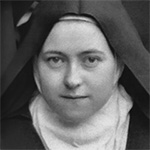 1 de octubre Fiesta
Nació en Alençon (Francia) el día 2 de enero de 1873. Sus padres fueron Louis Martin y Zélie Guérin. Tras la muerte de su madre, el 28 de agosto de 1887, Teresa se trasladó con toda la familia a Lisieux.
 17 de septiembre Fiesta
Nacido hacia la mitad del siglo XII en la ciudad de Castel Gualtieri en Emilia (Italia), ingresó en los Canónicos Regulares de la Santa Cruz de Mortara (Pavía), y fue su prior en 1180.
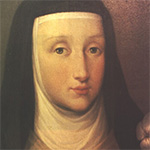 1 de septiembre Memoria libre
Nace en Arezzo el 1 de septiembre de 1747 de la noble familia Redi. En 1764 entró en el monasterio de las Carmelitas descalzas de Florencia, cambiando su nombre de bautismo, Ana María, por el de Teresa Margarita del Sdo. Corazón de Jesús.
 26 de agosto Memoria libre
Nació el 15 de septiembre de 1746 de una familia de comerciantes. Fue un joven serio, amante de los libros y de grandes dotes. A los 15 años, fue acogido en el convento carmelita de su ciudad natal.
 25 de agosto Memoria libre
María Baouardy nació en Abellin en Galilea el 5 de enero de 1846, de padres muy pobres pero honrados y piadosos cristianos greco-católicos.
17 de agosto Memoria libre
Ángel Mazzinghi Nació en Florencia, o sus cercanías, en fecha desconocida, pero ciertamente antes de 1386. Recibido en la Orden en 1413.
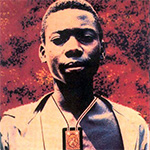 12 de agosto Memoria libre
Nacido entre el 1880 y el 1890 en Bokendela (Zaire), en la tribu de los Boangi. Desde pequeño, para vivir tuvo que trabajar como albañil o en los campos.
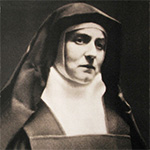 9 de agosto Memoria obligatoria
(Fiesta en las provincias de Europa: Patrona de Europa)
Edith Stein nace en Breslau el 12 de octubre de 1891 de padres hebreos alemanes y después del bachillerato se inscribió en la facultad de filosofía de su ciudad.
Ordinary Time
1) Opening prayer
Father,
Your love never fails.
Hear our call.
Keep us from danger
and provide for all our needs.
We ask this through our Lord Jesus Christ, Your Son,
who lives and reigns with You and the Holy Spirit,
one God, for ever and ever. Amen.
2) Gospel Reading - Mark 12:1-12
Jesus began to speak to the chief priests, the scribes, and the elders in parables. "A man planted a vineyard, put a hedge around it, dug a wine press, and built a tower. Then he leased it to tenant farmers and left on a journey. At the proper time he sent a servant to the tenants to obtain from them some of the produce of the vineyard. But they seized him, beat him, and sent him away empty-handed. Again he sent them another servant. And that one they beat over the head and treated shamefully. He sent yet another whom they killed. So, too, many others; some they beat, others they killed. He had one other to send, a beloved son. He sent him to them last of all, thinking, 'They will respect my son.' But those tenants said to one another, 'This is the heir. Come, let us kill him, and the inheritance will be ours.' So they seized him and killed him, and threw him out of the vineyard. What then will the owner of the vineyard do? He will come, put the tenants to death, and give the vineyard to others. Have you not read this Scripture passage: The stone that the builders rejected has become the cornerstone; by the Lord has this been done, and it is wonderful in our eyes?" They were seeking to arrest him, but they feared the crowd, for they realized that he had addressed the parable to them. So they left him and went away.
3) Reflection
• Jesus is in Jerusalem. It is the last week of His life. He has returned to the portico of the Temple (Mk 11:27) where He now begins the direct confrontation with the authorities. Chapters 11 and 12 describe the diverse aspects of this confrontation: (a) with the men buying and selling in the Temple (Mk 12:11-26), (b) with the priests, elders and the scribes (Mk 11:27 and 12:12), (c) with the Pharisees and the Herodians (Mk 12:13-17), (d) with the Sadducees (Mk 12:18-27), and (e) once again with the scribes (Mk 12:28-40). Finally at the end the confrontation with all of them, Jesus comments on the widow’s mite (Mk 12:41-44). Today’s Gospel describes part of the conflict with the priests, elders and the scribes (Mk 12:1-12). All of these confrontations make the disciples, and us, understand more clearly what is Jesus’ plan and what is the intention of those who have power.
• Mark 12:1-9: The parable of the vineyard: the direct response of Jesus to men of power. The parable of the vineyard is a summary of the history of Israel. A beautiful summary taken from the prophet Isaiah (Is 5:1-7). Through this story, Jesus gives an indirect response to the priests, scribes and elders who had asked Him, “What authority have You for acting like this? Who gave You authority to act like this?" (Mk 11:28). In this parable Jesus (a) reveals the origin of His authority: He is the Son, the heir (Mk 12:6); (b) He denounces the abuse of the authority of the tenants, that is, of the priests and of the elders who were not concerned about the people of God (Mk 12:3-8); (c) He defends the authority of the prophets, sent by God, but massacred by the tenants of the vineyard! (Mk 12:2-5); (d) He unmasks the authority which manipulates religion and kills the son because they do not want to lose the source of income which they have succeeded in accumulating for themselves throughout the centuries (Mk 12:7).
• Mark 12:10-12: The decision of men of power confirms the denunciation made by God. The priests, the scribes and the elders understood very well the meaning of the parable, but they were not converted. Rather, they maintained their own plan to arrest Jesus (Mk 12:12). They rejected “the cornerstone” (Mk 12:10), but they do not have the courage to do it openly, because they fear the people. Thus, the disciples know what awaits them if they follow Jesus!
• The men of power at the time of Jesus: In chapters 11 and 12 of the Gospel of Mark we see those in power: priests, elders and scribes (Mk 11:27); Pharisees and Herodians (Mk 12:13); and Sadducees (Mk 12:18).
-Priests: They were the ones in charge of the worship in the Temple, where one tenth of the income was collected. The High priest occupied a central place in the life of the people, especially after the exile. He was chosen among the families who had more power and who were richer.
-Elders or Chiefs of the people: They were the local chiefs, in the villages and in the cities. Their origin was the heads of the ancient tribes.
-scribes or Doctors of the Law: they were those in charge of teaching. They dedicated their life to the study of the Law of God and taught the people how to observe the Law of God in all things. Not all the scribes followed the same line. Some of them were with the Pharisees, others with the Sadducees.
- Pharisees: Pharisee means “separated.” They fought in order that by means of the perfect observance of the Law of purity, people would succeed in becoming pure, separated, and holy as the Law and Tradition demanded! By means of the exemplary witness of their life within the norms of the time, they governed in almost all the villages of Galilee.
-Herodians: this was a group bound to Herod Antipas of Galilee who governed from 4 BC until 39 AD. The Herodians formed part of an elite class who did not expect the Kingdom of God in the future, but who considered it already present in Herod’s kingdom.
- Sadducees: They were an elite class, willing to incorporate Hellenism into their lives. They did not believe in oral law, only a literal interpretation of the written law, and thus, they did not accept the changes defended by the Pharisees, for example, faith in a resurrection and the existence of angels.
- Sanhedrin: This was the Supreme Tribunal of the Jews with 71 members among high priests, elders, Pharisees and scribes. It had the role of great power before the people and represented the nation before the Roman authority.
4) Personal questions
• What is your reaction to Church authority? What is the difference between “just authority” and “unjust authority”?
• How do you exercise authority within your community, your family, and among peers?
• A position of authority is often at odds with humility. How do you, or would you, balance authority and humility in action?
5) Concluding Prayer
Integrity and generosity are marks of Yahweh
for He brings sinners back to the path.
Judiciously He guides the humble,
instructing the poor in His way. (Ps 25:8-9)


