













Warning: Creating default object from empty value in /home/jtthoc/public_html/ocarm.org/components/com_k2/views/itemlist/view.html.php on line 743
 1 de octubre Fiesta
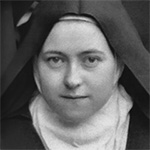
Nació en Alençon (Francia) el día 2 de enero de 1873. Sus padres fueron Louis Martin y Zélie Guérin. Tras la muerte de su madre, el 28 de agosto de 1887, Teresa se trasladó con toda la familia a Lisieux.
 17 de septiembre Fiesta
Nacido hacia la mitad del siglo XII en la ciudad de Castel Gualtieri en Emilia (Italia), ingresó en los Canónicos Regulares de la Santa Cruz de Mortara (Pavía), y fue su prior en 1180.
 1 de septiembre Memoria libre
Nace en Arezzo el 1 de septiembre de 1747 de la noble familia Redi. En 1764 entró en el monasterio de las Carmelitas descalzas de Florencia, cambiando su nombre de bautismo, Ana María, por el de Teresa Margarita del Sdo. Corazón de Jesús.
 26 de agosto Memoria libre
Nació el 15 de septiembre de 1746 de una familia de comerciantes. Fue un joven serio, amante de los libros y de grandes dotes. A los 15 años, fue acogido en el convento carmelita de su ciudad natal.
 25 de agosto Memoria libre
María Baouardy nació en Abellin en Galilea el 5 de enero de 1846, de padres muy pobres pero honrados y piadosos cristianos greco-católicos.
17 de agosto Memoria libre
Ángel Mazzinghi Nació en Florencia, o sus cercanías, en fecha desconocida, pero ciertamente antes de 1386. Recibido en la Orden en 1413.
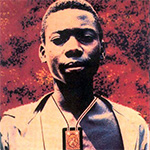 12 de agosto Memoria libre
Nacido entre el 1880 y el 1890 en Bokendela (Zaire), en la tribu de los Boangi. Desde pequeño, para vivir tuvo que trabajar como albañil o en los campos.
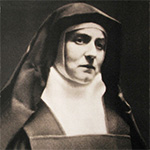 9 de agosto Memoria obligatoria
(Fiesta en las provincias de Europa: Patrona de Europa)
Edith Stein nace en Breslau el 12 de octubre de 1891 de padres hebreos alemanes y después del bachillerato se inscribió en la facultad de filosofía de su ciudad.
Ordinary Time
1) Opening prayer
Father,
Your love never fails.
Hear our call.
Keep us from danger
and provide for all our needs.
We ask this through our Lord Jesus Christ, Your Son,
who lives and reigns with You and the Holy Spirit,
one God, for ever and ever. Amen.
2) Gospel Reading - Mark 12:1-12
Jesus began to speak to the chief priests, the scribes, and the elders in parables. "A man planted a vineyard, put a hedge around it, dug a wine press, and built a tower. Then he leased it to tenant farmers and left on a journey. At the proper time he sent a servant to the tenants to obtain from them some of the produce of the vineyard. But they seized him, beat him, and sent him away empty-handed. Again he sent them another servant. And that one they beat over the head and treated shamefully. He sent yet another whom they killed. So, too, many others; some they beat, others they killed. He had one other to send, a beloved son. He sent him to them last of all, thinking, 'They will respect my son.' But those tenants said to one another, 'This is the heir. Come, let us kill him, and the inheritance will be ours.' So they seized him and killed him, and threw him out of the vineyard. What then will the owner of the vineyard do? He will come, put the tenants to death, and give the vineyard to others. Have you not read this Scripture passage: The stone that the builders rejected has become the cornerstone; by the Lord has this been done, and it is wonderful in our eyes?" They were seeking to arrest him, but they feared the crowd, for they realized that he had addressed the parable to them. So they left him and went away.
3) Reflection
• Jesus is in Jerusalem. It is the last week of His life. He has returned to the portico of the Temple (Mk 11:27) where He now begins the direct confrontation with the authorities. Chapters 11 and 12 describe the diverse aspects of this confrontation: (a) with the men buying and selling in the Temple (Mk 12:11-26), (b) with the priests, elders and the scribes (Mk 11:27 and 12:12), (c) with the Pharisees and the Herodians (Mk 12:13-17), (d) with the Sadducees (Mk 12:18-27), and (e) once again with the scribes (Mk 12:28-40). Finally at the end the confrontation with all of them, Jesus comments on the widow’s mite (Mk 12:41-44). Today’s Gospel describes part of the conflict with the priests, elders and the scribes (Mk 12:1-12). All of these confrontations make the disciples, and us, understand more clearly what is Jesus’ plan and what is the intention of those who have power.
• Mark 12:1-9: The parable of the vineyard: the direct response of Jesus to men of power. The parable of the vineyard is a summary of the history of Israel. A beautiful summary taken from the prophet Isaiah (Is 5:1-7). Through this story, Jesus gives an indirect response to the priests, scribes and elders who had asked Him, “What authority have You for acting like this? Who gave You authority to act like this?" (Mk 11:28). In this parable Jesus (a) reveals the origin of His authority: He is the Son, the heir (Mk 12:6); (b) He denounces the abuse of the authority of the tenants, that is, of the priests and of the elders who were not concerned about the people of God (Mk 12:3-8); (c) He defends the authority of the prophets, sent by God, but massacred by the tenants of the vineyard! (Mk 12:2-5); (d) He unmasks the authority which manipulates religion and kills the son because they do not want to lose the source of income which they have succeeded in accumulating for themselves throughout the centuries (Mk 12:7).
• Mark 12:10-12: The decision of men of power confirms the denunciation made by God. The priests, the scribes and the elders understood very well the meaning of the parable, but they were not converted. Rather, they maintained their own plan to arrest Jesus (Mk 12:12). They rejected “the cornerstone” (Mk 12:10), but they do not have the courage to do it openly, because they fear the people. Thus, the disciples know what awaits them if they follow Jesus!
• The men of power at the time of Jesus: In chapters 11 and 12 of the Gospel of Mark we see those in power: priests, elders and scribes (Mk 11:27); Pharisees and Herodians (Mk 12:13); and Sadducees (Mk 12:18).
-Priests: They were the ones in charge of the worship in the Temple, where one tenth of the income was collected. The High priest occupied a central place in the life of the people, especially after the exile. He was chosen among the families who had more power and who were richer.
-Elders or Chiefs of the people: They were the local chiefs, in the villages and in the cities. Their origin was the heads of the ancient tribes.
-scribes or Doctors of the Law: they were those in charge of teaching. They dedicated their life to the study of the Law of God and taught the people how to observe the Law of God in all things. Not all the scribes followed the same line. Some of them were with the Pharisees, others with the Sadducees.
- Pharisees: Pharisee means “separated.” They fought in order that by means of the perfect observance of the Law of purity, people would succeed in becoming pure, separated, and holy as the Law and Tradition demanded! By means of the exemplary witness of their life within the norms of the time, they governed in almost all the villages of Galilee.
-Herodians: this was a group bound to Herod Antipas of Galilee who governed from 4 BC until 39 AD. The Herodians formed part of an elite class who did not expect the Kingdom of God in the future, but who considered it already present in Herod’s kingdom.
- Sadducees: They were an elite class, willing to incorporate Hellenism into their lives. They did not believe in oral law, only a literal interpretation of the written law, and thus, they did not accept the changes defended by the Pharisees, for example, faith in a resurrection and the existence of angels.
- Sanhedrin: This was the Supreme Tribunal of the Jews with 71 members among high priests, elders, Pharisees and scribes. It had the role of great power before the people and represented the nation before the Roman authority.
4) Personal questions
• What is your reaction to Church authority? What is the difference between “just authority” and “unjust authority”?
• How do you exercise authority within your community, your family, and among peers?
• A position of authority is often at odds with humility. How do you, or would you, balance authority and humility in action?
5) Concluding Prayer
Integrity and generosity are marks of Yahweh
for He brings sinners back to the path.
Judiciously He guides the humble,
instructing the poor in His way. (Ps 25:8-9)
The promise of the Spirit:
Jesus will send the Spirit in the Father’s name
John 16:12-15
1. LECTIO
a) Opening prayer:
O God, who in sending Your Son Jesus have revealed abundantly Your love for the salvation of all people, stay always with us and continue to reveal Your attributes of compassion, mercy, clemency and fidelity. Spirit of Love, help us to grow in the knowledge of the Son so that we may have life.
Grant that, by meditating Your Word on this feast day, we may become more aware that Your mystery is a hymn to shared love. You are our God and not a solitary God. You are Father, fruitful source. You are Son, Word made flesh, close and fraternal love. You are Spirit, all-embracing love.
 b) Reading of the Gospel:
Jesus said to his disciples: "I have much more to tell you, but you cannot bear it now. But when he comes, the Spirit of truth, he will guide you to all truth. He will not speak on his own, but he will speak what he hears, and will declare to you the things that are coming. He will glorify me, because he will take from what is mine and declare it to you. Everything that the Father has is mine; for this reason I told you that he will take from what is mine and declare it to you."
c) A time of prayerful silence:
With St. Augustine we say, “Grant me time to meditate on the secrets of your law, do not shut the door to those who knock. Lord, fulfill your plan in me and unveil those pages. Grant that I may find grace before you and that the deep secrets of your Word may be revealed to me when I knock.”
2. MEDITATIO
a) Preamble:
Before we start the Lectio, it is important to pause briefly on the context of our liturgical passage. Jesus’ words in Jn 16:12-15 are part of a section of the Gospel known by exegetes as the Book of Glory (13:1-17:26). In His farewell discourse, Jesus reveals His intimate self, calls the disciples friends and promises them the Holy Spirit who will accompany them as they accept the mystery of His person. The disciples, then, are invited to grow in love towards the Master who gives Himself to them completely.
In this section, we can distinguish three well-defined sequences or parts. The first includes chapters 13-14 and treats of the following theme: the new community is founded on the new commandment of love. Through His instructions, Jesus explains that the practice of love is the way that the community must walk in its journey to the Father. In the second part, Jesus describes the position of the community in midst of the world. He reminds them that the community He founded carries out its mission in the midst of a hostile world and can only acquire new members if it practices love. This is the meaning of “bearing fruit” on the part of the community. The condition for a fruitful love in the world is: remain united to Jesus. It is from Him that life flows – the Spirit (Jn 15:1-6); union with Jesus with a love like His so as to establish a relationship of friendship between Jesus and His disciples (Jn 15:7-17).
The community’s mission, like that of Jesus, will be carried out in the midst of the hatred of the world, but the disciples will be strengthened by the Spirit (Jn 15:26-16:15). Jesus tells them that the mission in the world implies pain and joy and that He will be absent-present (Jn 16:16-23a). He simply assures them of the support of the Father’s love and His victory over the world (Jn 16:23b-33). The third part of this section includes Jesus’ prayer: He prays for His present community (Jn 17:6-19); for the community of the future (Jn 17:20-23); and expresses His desire that the Father glorify those who have known Him and, finally, that His mission in the world may be fulfilled (Jn 17:24-26).
b) Meditation:
- The voice of the Spirit is Jesus’ voice
Previously, in Jn 15:15, Jesus had told His disciples what He had heard from the Father. This message was not nor could it have been grasped by the disciples in all its force. The reason is that the disciples, for the present, ignored the meaning of Jesus’ death on the cross and the substitution of the new way of salvation for the old. With His death, a new and definitive saving power comes into the life of humanity. The disciples will understand Jesus’ words and actions after the resurrection (Jn 2:22) or after His death (Jn 12:16).
In Jesus’ teaching there are many matters and messages to be understood by the community as it gradually faces new events and circumstances; it is in daily life and in the light of the resurrection that it will understand the meaning of His death-exaltation.
It will be the Holy Spirit, Jesus’ prophet, who will communicate to the disciples what they have heard from Him. In the mission that Jesus’ community will carry out it will be the Holy Spirit who will communicate to them the truth in that He will explain and help them to apply that which Jesus is and means as the manifestation of the Father’s love. Through His prophetic messages, the community does not transmit a new doctrine but constantly proposes the reality of the person of Jesus, in the witness to and orientation of its mission in the world. The voice of the Holy Spirit, which the community will hear, is the voice of Jesus Himself. In the wake of the Old Testament prophets who interpreted history in the light of the covenant, the Holy Spirit becomes the determining factor in making Jesus known, giving the community of believers the key to an understanding of history as a continual confrontation between what the “world” stands for and God’s plan. The starting point for reading one’s presence in the world is Jesus’ death-exaltation, and as Christians grow in this understanding they will discover in daily life “the sin of the world” and its harmful effects.
The role of the Holy Spirit is a determining factor for the interpretation of the mystery of Jesus’ life in the life of the disciples: He is their guide in undertaking a just commitment on behalf of humanity. To succeed in their activities for humankind, the disciples have to listen to the problems of life and history, and be attentive to the voice of the Holy Spirit, the only reliable source for getting a real sense of the historical events in the world.
- The Holy Spirit’s voice: true interpreter of history
Then Jesus explains how the Holy Spirit interprets human life and history. First, by manifesting His “glory”, that He will take “what is Mine”. More specifically, “what is Mine” means that the Holy Spirit draws His message from Jesus, whatever Jesus said. To manifest the glory means manifesting the love that He has shown by His death. These words of Jesus are very important because they avoid reducing the role of the Holy Spirit to an illumination. The Spirit’s role is to communicate Jesus’ love and places Jesus’ words in harmony with His message and also with the deeper sense of His life: Love expressed in giving His life on the cross. This is the Holy Spirit’s role, the Spirit of truth. Two aspects of the role of the Holy Spirit that enable the community of believers to interpret history are: listening to the message and understanding it, and being in harmony with love. Better still, Jesus’ words mean to communicate that only through the communication of the love of the Holy Spirit is it possible to know who a person is, to understand the purpose of life, and to create a new world. The model is always Jesus’ love.
- Jesus, the Father, the Holy Spirit and the community of believers (v.15)
What does Jesus mean when He says “everything the Father has is Mine”? First that what Jesus has is shared with the Father. The first gift of the Father to Jesus was His glory (Jn 1:14), or more precisely, faithful love, the Spirit (Jn 1:32; 17:10). This communication is not to be understood as static but rather as dynamic, that is, on- going and mutual. In this sense the Father and Jesus are one. Such mutual and constant communication permeates Jesus activity so that He is able to realize the designs of the Father and His plan for the whole of creation. So that believers may be able to understand and interpret history, they are called to live in harmony with Jesus, accepting the reality of His love and making this love concrete for others. This is the Father’s plan that the love of Jesus for His disciples may be realized in all. God’s plan as realized in Jesus’ life must be realized in the community of believers and guide the believer’s commitment in their endeavor to improve everyone’s life. Who carries out the Father’s plan in Jesus’ life? It is the Holy Spirit who unites Jesus and the Father and carries out and fulfills the Father’s plan and makes the community of believers partakers in this dynamic activity of Jesus: “will be taken from what is Mine”. Thanks to the action of truth of the Holy Spirit, the community listens to Him and communicates Him concretely as love.
The Holy Spirit communicates to the disciples all the truth and wealth of Jesus; He dwells in Jesus; “comes” into the community and when He is received renders the community partakers in Jesus’ love.
b) A few questions:
- A serious danger threatens the Christian community today. Are we not tempted to divide Jesus, following either a human Jesus who through His actions has changed history, or a glorious Jesus detached from His earthly existence and thus also from ours?
- Are we aware that Jesus is not just a historical example but also and above all the present Savior? That Jesus is not just an object of contemplation and joy, but the Messiah whom we must follow and with whom we must collaborate?
- God is not an abstraction, but the Father made visible in Jesus. Are you committed to “seeing Him” and recognizing Him in Jesus’ humanity?
- Do you listen to the voice of the Spirit of truth who communicates to you Jesus’ whole truth?
3. ORATIO
a) Psalm 103: Send your Spirit, Lord, to renew the earth
This is a joyful hymn of thanksgiving that invites us to meditate on humanity’s fall and God’s eternal mercy. After sin, sickness and death, comes the kind and loving action of God: He fills us with good things all our lives.
Bless Yahweh, my soul,
from the depths of my being,
His holy name;
bless Yahweh, my soul,
never forget all His acts of kindness.
He forgives all your offenses,
cures all your diseases,
He redeems your life from the abyss,
crowns you with faithful love and tenderness;
He contents you with good things all your life,
renews your youth like an eagle's.
Yahweh acts with uprightness,
with justice to all who are oppressed;
He revealed to Moses His ways,
His great deeds to the children of Israel.
Yahweh is tenderness and pity,
slow to anger and rich in faithful love;
His indignation does not last for ever,
nor His resentment remain for all time;
He does not treat us as our sins deserve,
nor repay us as befits our offenses.
As tenderly as a father treats his children,
so Yahweh treats those who fear Him;
But Yahweh's faithful love for those who fear Him
is from eternity and for ever;
Bless Yahweh, all His angels,
mighty warriors who fulfill His commands,
attentive to the sound of His words.
Bless Yahweh, all His armies,
servants who fulfill His wishes.
Bless Yahweh, all His works,
in every place where He rules.
Bless Yahweh, my soul.
b) Closing prayer:
Spirit of truth
You make us children of God,
so that we can approach the Father in trust.
Father, we turn to You
with one heart and one soul
and we ask You:
Father, send Your Holy Spirit!
Send Your Spirit upon the Church.
May every Christian grow in harmony with Christ’s love,
with the love of God and of neighbor.
Father, renew our trust
in the Kingdom that Jesus came to proclaim
and to incarnate on earth.
Let us not be dominated by delusion
or be conquered by weariness.
May our communities be a leaven
that produces justice and peace
in our society.


