










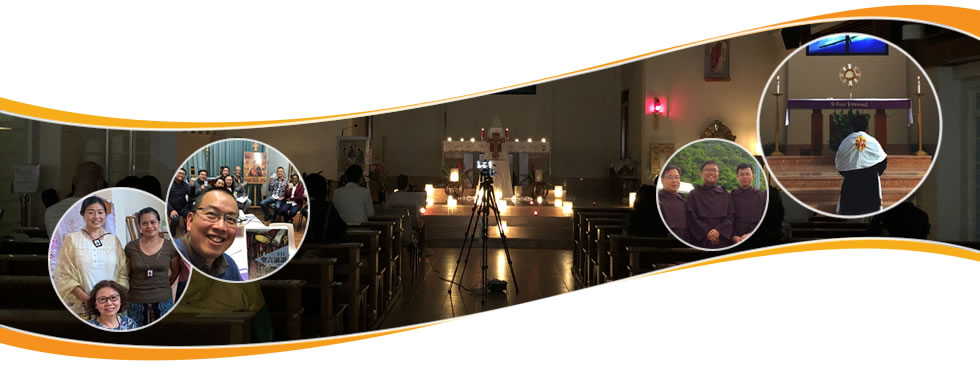






Lectio Divina Year C 2016 (23)
Holy Father's Prayer Intentions
World Youth Day. That World Youth Day in Brazil may encourage all young Christians to become disciples and missionaries of the Gospel.
Asia. That throughout Asia doors may be open to messengers of the Gospel.
Lectio Divina July - Julio - Luglio 2013
| Ipad-Iphone | Kindle | ||
| English | download ebook | download ebook | download PDF |
| Español | descargar eBook | descargar ebook | descargar PDF |
| Italiano | download eBook | download eBook | download PDF |
- Monday, July 1, 2013
- Tuesday, July 2, 2013
- Wednesday, July 3, 2013
- Thursday, July 4, 2013
- Friday, July 5, 2013
- Saturday, July 6, 2013
- Sunday, July 7, 2013
- Monday, July 8, 2013
- Tuesday, July 9, 2013
- Wednesday, July 10, 2013
- Thursday, July 11, 2013
- Friday, July 12, 2013
- Saturday, July 13, 2013
- Sunday, July 14, 2013
- Monday, July 15, 2013
- Tuesday, July 16, 2013
- Wednesday, July 17, 2013
- Thursday, July 18, 2013
- Friday, July 19, 2013
- Saturday, July 20, 2013
- Sunday, July 21, 2013
- Monday, July 22, 2013
- Tuesday, July 23, 2013
- Wednesday, July 24, 2013
- Thursday, July 25, 2013
- Friday, July 26, 2013
- Saturday, July 27, 2013
- Sunday, July 28, 2013
- Monday, July 29, 2013
- Tuesday, July 30, 2013
- Wednesday, July 31, 2013
Holy Father's Prayer Intentions
Mutual Respect. That a culture of dialogue, listening, and mutual respect may prevail among peoples.
New Evangelization. That where secularization is strongest, Christian communities may effectively promote a new evangelization.
Lectio Divina June - Junio - Giugno 2013
| Ipad-Iphone | Kindle | ||
| English | download ebook | download ebook | download PDF |
| Español | descargar eBook | descargar ebook | descargar PDF |
| Italiano | download eBook | download eBook | download PDF |
- Saturday, June 1, 2013
- Sunday, June 2, 2013
- Monday, June 3, 2013
- Tuesday, June 4, 2013
- Wednesday, June 5, 2013
- Thursday, June 6, 2013
- Friday, June 7, 2013
- Saturday, June 8, 2013
- Sunday, June 9, 2013
- Monday, June 10, 2013
- Tuesday, June 11, 2013
- Wednesday, June 12, 2013
- Thursday, June 13, 2013
- Friday, June 14, 2013
- Saturday, June 15, 2013
- Sunday, June 16, 2013
- Monday, June 17, 2013
- Tuesday, June 18, 2013
- Wednesday, June 19, 2013
- Thursday, June 20, 2013
- Friday, June 21, 2013
- Saturday, June 22, 2013
- Sunday, June 23, 2013
- Monday, June 24, 2013
- Tuesday, June 25, 2013
- Wednesday, June 26, 2013
- Thursday, June 27, 2013
- Friday, June 28, 2013
- Saturday, June 29, 2013
- Sunday, June 30, 2013
Holy Father's Prayer
Administrators of Justice. That administrators of justice may act always with integrity and right conscience.
Seminaries. That seminaries, especially those of mission churches, may form pastors after the Heart of Christ, fully dedicated to proclaiming the Gospel.
| Ipad-Iphone | Kindle | ||
| English | download ebook | download ebook | download PDF |
| Español | descargar eBook | descargar ebook | descargar PDF |
| Italiano | download eBook | download eBook | download PDF |
- Wednesday, May 1, 2013
- Thursday, May 2, 2013
- Friday, May 3, 2013
- Saturday, May 4, 2013
- Sunday, May 5, 2013
- Monday, May 6, 2013
- Tuesday, May 7, 2013
- Wednesday, May 8, 2013
- Thursday, May 9, 2013
- Friday, May 10, 2013
- Saturday, May 11, 2013
- Sunday, May 12, 2013
- Monday, May 13, 2013
- Tuesday, May 14, 2013
- Wednesday, May 15, 2013
- Thursday, May 16, 2013
- Friday, May 17, 2013
- Saturday, May 18, 2013
- Sunday, May 19, 2013
- Monday, May 20, 2013
- Tuesday, May 21, 2013
- Wednesday, May 22, 2013
- Thursday, May 23, 2013
- Friday, May 24, 2013
- Saturday, May 25, 2013
- Sunday, May 26, 2013
- Monday, May 27, 2013
- Tuesday, May 28, 2013
- Wednesday, May 29, 2013
- Thursday, May 30, 2013
- Friday, May 31, 2013
Lectio Divina April 2013
Liturgy, Source of Life. That the public, prayerful celebration of faith may give life to the faithful.
Mission Churches. That mission churches may be signs and instruments of hope and resurrection.
| Ipad-Iphone | Kindle | ||
| English | download ebook | download ebook | download PDF |
| Español | descargar eBook | descargar ebook | descargar PDF |
| Italiano | download eBook | download eBook | download PDF |
- Monday, April 1, 2013
- Tuesday, April 2, 2013
- Wednesday, April 3, 2013
- Thursday, April 4, 2013
- Friday, April 5, 2013
- Saturday, April 6, 2013
- Sunday, April 7, 2013
- Monday, April 8, 2013
- Tuesday, April 9, 2013
- Wednesday, April 10, 2013
- Thursday, April 11, 2013
- Friday, April 12, 2013
- Saturday, April 13, 2013
- Sunday, April 14, 2013
- Monday, April 15, 2013
- Tuesday, April 16, 2013
- Wednesday, April 17, 2013
- Thursday, April 18, 2013
- Friday, April 19, 2013
- Saturday, April 20, 2013
- Sunday, April 21, 2013
- Monday, April 22, 2013
- Tuesday, April 23, 2013
- Wednesday, April 24, 2013
- Thursday, April 25, 2013
- Friday, April 26, 2013
- Saturday, April 27, 2013
- Sunday, April 28, 2013
- Monday, April 29, 2013
- Tuesday, April 30, 2013
Lectio Divina March 2013
Respect for Nature. That respect for nature may grow with the awareness that all creation is God's work entrusted to human responsibility.
Clergy. That bishops, priests, and deacons may be tireless messengers of the Gospel to the ends of the earth.
Lectio Divina March - Marzo - Marzo 2013
| Ipad-Iphone | Kindle | ||
| English | download ebook | download ebook | download PDF |
| Español | descargar eBook | descargar ebook | descargar PDF |
| Italiano | download eBook | download eBook | download PDF |
- Friday, March 1, 2013
- Saturday, March 2, 2013
- Sunday, March 3, 2013
- Monday, March 4, 2013
- Tuesday, March 5, 2013
- Wednesday, March 6, 2013
- Thursday, March 7, 2013
- Friday, March 8, 2013
- Saturday, March 9, 2013
- Sunday, March 10, 2013 - 10
- Monday, March 11, 2013
- Tuesday, March 12, 2013
- Wednesday, March 13, 2013
- Thursday, March 14, 2013
- Friday, March 15, 2013
- Saturday, March 16, 2013
- Sunday, March 17, 2013
- Monday, March 18, 2013
- Tuesday, March 19, 2013
- Wednesday, March 20, 2013
- Thursday, March 21, 2013
- Friday, March 22, 2013
- Saturday, March 23, 2013
- Sunday, March 24, 2013
- Monday, March 25, 2013
- Tuesday, March 26, 2013
- Wednesday, March 27, 2013
- Thursday, March 28, 2013
- Friday, March 29, 2013
- Sunday, March 31, 2013
Lectio Divina February 2013
Migrant Families: That migrant families, especially the mothers, may be supported and accompanied in their difficulties.
Peace: That the peoples at war and in conflict may lead the way in building a peaceful future.
Ebooks
Lectio Divina February - Febrero - Febbraio 2013
| Ipad-Iphone | Kindle | ||
| English | download ebook | download ebook | download PDF |
| Español | descargar eBook | descargar ebook | descargar PDF |
| Italiano | download eBook | download eBook | download PDF |
Daily Lectio
- Friday, February 1, 2013
- Saturday, February 2, 2013
- Sunday, February 3, 2013
- Monday, February 4, 2013
- Tuesday, February 5, 2013
- Wednesday, February 6, 2013
- Thursday, February 7, 2013
- Friday, February 8, 2013
- Saturday, February 9, 2013
- Saturday, February 9, 2013
- Sunday, February 10, 2013
- Monday, February 11, 2013
- Tuesday, February 12, 2013
- Wednesday, February 13, 2013
- Thursday, February 14, 2013
- Friday, February 15, 2013
- Saturday, February 16, 2013
- Sunday, February 17, 2013
- Monday, February 18, 2013
- Tuesday, February 19, 2013
- Wednesday, February 20, 2013
- Thursday, February 21, 2013
- Friday, February 22, 2013
- Saturday, February 23, 2013
- Sunday, February 24, 2013 - 10
- Monday, February 25, 2013
- Tuesday, February 26, 2013
- Wednesday, February 27, 2013
- Thursday, February 28, 2013
Lectio Divina January 2013
General prayer intention: "That in this Year of Faith Christians may deepen their dfdfdfdfdfdof the mystery of Christ and witness joyfully to the gift of faith in him".general prayer intention for January 2013 is: "That in this Year of Faith Christians may deepen their knowledge of the mystery of Christ and witness joyfully to the gift of faith in him".
Mission intention: "That the Christian communities of the Middle East, often discriminated against, may receive from the Holy Spirit the strength of fidelity and perseverance".
His mission intention is: "That the Christian communities of the Middle East, often discriminated against, may receive from the Holy Spirit the strength of fidelity and perseverance".
| Ipad-Iphone | Kindle | ||
| English | download ebook | download ebook | download PDF |
| Español | descargar eBook | descargar ebook | descargar PDF |
| Italiano | download eBook | download eBook | download PDF |
- Tuesday, January 1, 2013
- Wednesday, January 2, 2013
- Thursday, January 3, 2013
- Friday, January 4, 2013
- Saturday, January 5, 2013
- Sunday, January 6, 2013
- Monday, January 7, 2013
- Tuesday, January 8, 2013
- Wednesday, January 9, 2013
- Thursday, January 10, 2013
- Friday, January 11, 2013
- Saturday, January 12, 2013
- Sunday, January 13, 2013
- Monday, January 14, 2013
- Tuesday, January 15, 2013
- Wednesday, January 16, 2013
- Thursday, January 17, 2013
- Friday, January 18, 2013
- Saturday, January 19, 2013
- Sunday, January 20, 2013
- Monday, January 21, 2013
- Tuesday, January 22, 2013
- Wednesday, January 23, 2013
- Thursday, January 24, 2013
- Friday, January 25, 2013
- Saturday, January 26, 2013
- Sunday, January 27, 2013
- Monday, January 28, 2013
- Tuesday, January 29, 2013
- Wednesday, January 30, 2013
- Thursday, January 31, 2013
Liturgical Year C
The liturgical year begins with First Sunday of Advent, which starts four Sundays before Christmas (December 25). In this Liturgical year which begins on the 29th of November , 2015, Circle C, the Church meditates on the Gospel of Luke and uses it for most of Sunday readings (St. Matthew for Circle A and St. Mark for Circle B). St. John, who appears several times in the Liturgy of the Word of almost all three years, is offered in a special way during the time of the Lord's Passion.
The Gospel of Luke
Who is Luke?
 Luke the Evangelist (Ancient Greek: Λουκᾶς, Loukás) is one of the four evangelists or authors of canonical Gospels of Jesus Christ. A native of the Hellenistic city of Antioch in Syria, He was ascribed, by early church fathers, the authorship of both, the Gospel according to Luke and the book of Acts of the Apostles, which originally conformed a single literary work. Such authorship was later reaffirmed by prominent figures in early Christianity such as Jerome and Eusebius, although within scholar circles, both secular and religious, discussions have been held due to the lack of evidence as to the real identity of the author of the works.
In the New Testament, Luke is mentioned briefly a few times, and referred to as a doctor in the Pauline epistle to the Colossians, thus He is thought to have been both, a physician and a disciple to Paul. Considered by early Christians as a Saint, He is believed to have died a martyr, although re-accounts of the events do vary.
Why did Luke write his account?
In his introduction to the gospel (see Luke 1:1-4) Luke speaks in the first person. This is a somewhat unique approach since the other gospels all speak in the third person. Luke addresses his friend, Theophilus, a name which means "beloved of God". In so many words he says, "I am writing to you the most incredible story humankind has known." And this story is utterly believable because it comes from many reliable firsthand witnesses of those who knew Jesus Christ personally, heard his teaching, and saw his miracles, death and resurrection, and ascension to the right hand of the Father in heaven. Who were these many? Mark the evangelist was certainly one of them. Luke’s account contains over half of the verses in Mark’s account (some 350 verses out of a total 660 verses in Mark) . Some 325 verses of Luke are also common to Matthew’s gospel. The Acts of the Apostles tell us that Luke was in Israel for some time. This would have given him an opportunity to speak with many contemporaries of Jesus.
Jesus in the Gospel of Luke
For Luke, Jesus is our “Compassionate Savior.” Luke's image of Jesus is presented as the compassionate Savior of the world, with love and compassion for all people, whether rich or poor, Jew or Gentile. He reaches out especially to poor, the marginalized, the oppressed, the women and the poor and outcast of society. Luke emphasizes divine mercy, depicting God as the Father who forgives his prodigal children with unbounded love. Meeting Jesus as the compassionate Savior draws us to imitate the Lord by approaching the Father in confident prayer. The story of the widow of Nain teaches us about Jesus' mercy to a grieving mother (Luke 7:11-17).
The Gospel of Women
Luke gives a special place to women in his gospel account. More women appear in Luke than the other gospels. The events leading to Jesus’ birth are told from Mary’s point of view. We read of Elizabeth, the cousin of Mary, of Anna the prophetess, of the widow at Nain, and of the woman who anointed Jesus’ feet in the house of Simon the Pharisee (Luke 7:36-50). Luke tells us of the special friendship Jesus had with Martha and Mary and how Jesus transformed the life of Mary Magdalene. Luke also mentions many women who traveled with Jesus and the apostles and who “ministered to their needs” (Luke 8:1-3).
The Gospel of Prayer and Praise
Luke gives special emphasis to prayer and to the power of intercession. He shows Jesus at prayer on many occasions (Luke 3:21; 5:16; 6:12; 9:18; 9:29; 11:1; 23:46). Jesus prayed for Peter in his hour of testing (Luke 22:32). And Jesus told two parables about the power of prayer (Luke 11:5-13; 18:1-8). Jesus concludes the Lord’s Prayer with an exhortation to pray confidently knowing that “for every one who asks receives, and he who seeks finds, and to him who knocks it will be opened” (Luke 11:10).
The Gospel of the Holy Spirit
Luke’s gospel emphasizes the role and work of the Holy Spirit. The Holy Spirit is active in the initiation of the Incarnation (Luke 1:5, 35, 41, 67, 80), in the early witness to Jesus (Luke 2:25-27), and in the activity of Jesus himself (Luke 4:1, 17; 10:21). Luke’s gospel is infused with the joy of the Holy Spirit (see Luke 1:14, 47, 58; 2:10; 6:23; 10:17, 20; 19:37). The gift of the Holy Spirit is available to all who seek: “How much more will the heavenly Father give the Holy Spirit to those who ask him!” (Luke 11:13).
THE MEANING OF THE LITURGICAL YEAR
• The Liturgical Year celebrates the Mystery of Christ
By preaching the Church “announces” “the whole mystery of Christ” (CD 12) and with the Liturgy it “celebrates it presenting the sacred memory (SC 102). In such a way it makes present today “the unfathomable treasure of Christ” (Eph 3, 8 ff; cf. 1, 18; 2, 7): his signs of salvation, with which the faithful come into contact in order to draw from it the grace of salvation. The Liturgical Year which has its “source” and its “summit” in the Paschal Mystery is articulated into five “periods of time” which have a special relationship with the diverse moments of the Mystery of Christ (SC 10; LG 11). Therefore, they follow a progressive order: Advent and Christmas; Lent and the Passover or Easter; Ordinary Time.
• Time of Advent and of Christmas
Advent is a time of preparation with a twofold characteristic: it recalls the first coming of the Son of God in humility and pre- announces the second coming in glory: it is a time of active waiting, of expectation, of desire, of prayer, of evangelization, of joy. Christmas is a time of joyful contemplation of the Mystery of the Incarnation of the Son of God and of his first manifestations, who has come for our salvation “man among men”. During this time Mary is particularly celebrated as “Mother of God”.
• Time of Lent and of Passover or Easter
Lent is a time of preparation the purpose of which is to guide to a more intense and gradual participation in the Paschal Mystery. During this time the catechumens are accompanied through the various degrees of Christian initiation, and the faithful through the living memory of Baptism and Penance. The Passover or Easter is the summit of the Liturgical Year, from which all the other parts draw their efficacy of salvation, it is the fulfilment of the redemption of humanity and of perfect glorification of God: it is the destruction of sin and of death, communication of resurrection and of life.
• Ordinary Time
During this long period of time, which has a first stage between Christmas Time and Lent, and develops more extensively from Pentecost to the following Advent, is a global celebration of the mystery of Christ, which is taken up again and deepened in many of its particular aspects.

Already, we can say that Sundays – “The Day of the Lord” – are the “Weekly Passover or Easter” and therefore, a living grafting into the central nucleus of the mystery of Christ throughout the whole year; but then the Weeks (33 and 34) develop through an intense and continued recourse to the Bible the deepening of small cycles of the mystery of Christ, offering these to the meditation of the faithful in order that this may become a stimulus to the action in the Church and in the world.
LITURGICAL COLORS
Liturgies celebrated during the different seasons of the liturgical year have distinctive music and specific readings, prayers, and rituals. All of these work together to reflect the spirit of the particular season. The colors of the vestments that the priest wears during the liturgy also help express the character of the mysteries being celebrated.
 | White, the color of joy and victory, is used for the seasons of Easter and Christmas. It is also used for the feasts of Our Lord, for feasts of Mary, the angels, and for saints who are not martyrs. Gold may also be used on solemn occasions. |
 | Red (the color of blood) is used on days when we celebrate the passion of Jesus on Passion Sunday and Good Friday. It is also used for the birthday feasts of the apostles and evangelists and for the celebrations of martyrs. Red (the color of fire) recalls the Holy Spirit and is used on Pentecost and for the sacrament of Confirmation. |
 | Green, seen everywhere in plants and trees, symbolizes life and hope and is used during Ordinary Time.
|
 | The colors violet or purple in Advent help us to remember that we are preparing for the coming of Christ. Lent, the season of penance and renewal, also uses the colors violet or purple. |
 | Rose may be used on the Third Sunday of Advent, Gaudete Sunday, and on the Fourth Sunday of Lent, Laetare Sunday. It expresses the joy of anticipation for Christmas and Easter, respectively. |
Liturgical Year C
General Intention: That migrants throughout the world may be welcomed with generosity and authentic love, especially by Christian communities.
Missionary Intention: Christ, light for all humanity. That Christ may reveal himself to all humanity with the light that shines forth from Bethlehem and is reflected in the face of his Church.
| Ipad-Iphone | Kindle | ||
| English | download ebook | download ebook | download PDF |
| Español | descargar eBook | descargar ebook | descargar PDF |
| Italiano | download eBook | download eBook | download PDF |
- Saturday, December 1, 2012
- Sunday, December 2, 2012
- Monday, December 3, 2012
- Tuesday, December 4, 2012
- Wednesday, December 5, 2012
- Thursday, December 6, 2012
- Friday, December 7, 2012
- Saturday, December 8, 2012
- Sunday, December 9, 2012
- Monday, December 10, 2012
- Tuesday, December 11, 2012
- Wednesday, December 12, 2012
- Thursday, December 13, 2012
- Friday, December 14, 2012
- Saturday, December 15, 2012
- Sunday, December 16, 2012
- Monday, December 17, 2012
- Tuesday, December 18, 2012
- Wednesday, December 19, 2012
- Thursday, December 20, 2012
- Friday, December 21, 2012
- Saturday, December 22, 2012
- Sunday, December 23, 2012
- Monday, December 24, 2012
- Tuesday, December 25, 2012 - 19
- Wednesday, December 26, 2012
- Thursday, December 27, 2012
- Friday, December 28, 2012
- Saturday, December 29, 2012
- Sunday, December 30, 2012
- Monday, December 31, 2012


