












Displaying items by tag: Celebrating At Home
Celebrating At Home - 25th Sunday in Ordinary Time
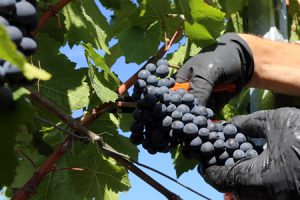
God’s Outrageous Generosity
(Matthew 20:1-16)
For many, the parable which Jesus tells in the Gospel today seems profoundly unjust. Why should those who have done little work get the same pay as those who worked all day?
Maybe the answer lies in the first reading for today: My ways are not your ways; my thoughts not your thoughts. So often in the scriptures, God seems to have a totally different way of approaching things to most of us.
The parable presents God as a landowner going out at five different times during the day to hire workers for his vineyard.
With the 6am workers he makes an agreement for one denarius for the day’s work - the usual daily wage for a labourer. The workers who come later are promised a ‘fair wage’. But when payment time comes, they get a full day’s pay even though some have worked only one hour!
Usually, the youngest and fittest would be hired first and older and weaker workers left till last. But God doesn’t seem too worried about what condition the workers are in or what time of day it is.
The last comers must have been delighted to have received their unexpected full day’s pay. For them, it was really a gift rather than a wage for time worked. The ‘early birds’ fell victim to ‘rising expectations’, thinking that they would get more.
In giving both early birds and late comers the same ‘wage’ the landowner has made them equals – all are equal beneficiaries of God’s gracious invitation to the Kingdom. And there is a place for everyone in that Kingdom, including those often left behind in the world – the poor, sick, old, disabled, etc.
Life in the Kingdom is not a reward for long hours of work. It is a gift – it cannot be earned, but is had by responding to God’s choice of us, no matter what condition we are in, whether we are an early bird or a late comer.
God’s kind of thinking and acting is often very different to human thinking and acting.
The parable can also be interpreted as a practical expression of how to love our neighbour – with generosity and compassion, without considering if they deserve our kindness or not – for the disciple of Jesus must think and act like God.
This parable fits right into the biblical idea of justice which is heavily biased in favour of the ‘have nots’ – the widows, orphans, poor, blind, lame, sinners, etc. No one is left out of the gaze of God’s care.
God’s outrageous and extravagant graciousness and generosity is so different to the often petty and exacting way in which we treat each other. God’s sense of fairness and justice is so much broader and richer than ours. That is what life in the Kingdom of God is supposed to be.
Like last Sunday, it is our awareness of God’s extraordinary kindness, patience and mercy which help us to act in the same way - to see with God’s eyes, to feel with God’s heart and to act with God’s intention.
Celebrating At Home - 24th Sunday in Ordinary Time

A Family Formed by Forgiveness - Part 2
(Matthew 18:21-35)
Today’s Gospel follows directly from last Sunday’s reading about how to deal with differences and disputes.
Peter has understood the point of last Sunday’s Gospel (forgiveness and pastoral care), but wants to know the limits – is forgiving someone seven times enough? Jesus’ reply indicates that there should be no limit to the number of times. Then he tells a parable about forgiveness and gratitude.
There is no doubt that genuine forgiveness, forgiveness ‘from the heart’, is a real challenge. The more personally we are hurt by another person the harder it is to forgive them. Forgiveness is often more a movement than a moment. Often we only come to forgiveness step by step over a long period of time.
If we can pray for those who hurt us we have already taken the first step on the road to forgiveness.
Forgiveness does not imply that what a person did was OK.
The biblical idea of forgiveness is built on the awareness of God’s extraordinary compassion towards us; God’s refusal to hold our past against us - the theme of today’s first reading.
But that action of God must find its resonance in how we behave towards each other. It will only have that resonance when we experience personally God’s overwhelming love for us. That is what binds us into relationship with God and into acting towards others as God has acted towards us. That experience of God’s compassion builds a gratitude in us which enables us to forgive each other.
For the disciple of Jesus, forgiveness must be real and genuine - from the heart - and built on the awareness of God’s compassion and mercy towards us. That is why Jesus includes forgive us our debts as we have forgiven those who are in debt to us in his great prayer. If God has forgiven us, then we must forgive each other.
We don’t live our Christian lives in some kind of fantasy-land filled with pious thoughts and lovely dreams. We live it in the often harsh realities and difficult situations that human beings encounter.
How we live it will depend on the degree to which we have the same mind and heart as God.
Real life is the proving-ground of faith.
Celebrating At Home - 23rd Sunday in Ordinary Time

A Family Formed By Forgiveness
(Matthew 18:15-20)
Chapter 18 of St Matthew’s Gospel is often referred to as the Sermon on the Church. It contains the teaching of Jesus about the life of the Christian community.
Today’s reading details a procedure for dealing with differences and disputes. It follows the Parable of the Lost Sheep which is concerned with seeking out and bringing back the one who gets lost.
In the same way, resolving disputes is not about being right and punishing an offender, but about conversion and reconciliation.
The three-stage process moves from individual dialogue to a small group trying to sort things out, to the whole community being involved in discernment and decision.
Traditionally, we have understood the words, ‘if he refuses to listen to the community, treat him like a gentile or a tax collector, to mean that the person should be expelled or excommunicated from the community.
However, Jesus was notorious for sharing meals with tax collectors and sinners and he called one of them, Matthew, into his inner circle of disciples. At the end of the Gospel, Jesus instructs the disciples not to reject the pagans but to invite them to become children of God. Excommunication doesn’t seem to fit, either, with the sentiments in the Lord’s prayer about forgiveness.
The parable of the Lost Sheep immediately before this passage seems to indicate that the church, following Jesus’ example, should never give up on any of the sheep, especially the lost ones. It has a responsibility to try to win them back.
The next verse about ‘binding and loosing’ extends to the community the power of authoritative decision-making given to Peter and the disciple-leaders in the Gospel of two Sundays ago. This decision-making follows community discussion and discernment about what is to be done. If members of the community pray and discern together about how to win back the lost one, their prayer will be heard, even if only two pray. Jesus reminds them that whenever members of the community gather in his name he is present with them.
We share a common responsibility for the lives and faith of one another and for our community as a whole. Our presence, example and prayer encourage and confirm the faith and life of Jesus among us.
Celebrating At Home - 18th Sunday in Ordinary Time
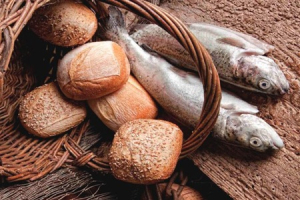
The Kingdom of God in Everyday Life
(Matthew 14:13-21)
This week’s Gospel is the beginning of a new section of St Matthew’s Gospel which talks about the Kingdom of God on earth and the Church as a visible sign of the Kingdom.
The Kingdom is found where human beings are. It is deeply enfolded and immersed in the world of human experience: hunger, fear, disease, the sound of sheer silence, celebration, joy, hope, forgiveness, mercy, justice, in hearing and keeping the word of God. The kingdom is made present especially when human needs are responded to and transformed with the life of God.
In today’s Gospel, we encounter several human situations: Jesus’ own need to grieve the death of John the Baptist; a large group of distressed people who search him out; a large group of hungry people; a group of disciples in training.
Jesus is moved with compassion for the crowd in spite of his own grief. As evening approaches, the disciples want to send the people away, but Jesus wants to feed them. He invites the disciples into a moment of reflection, training them to have confidence, to show initiative, to be leaders.
Jesus uses the common Jewish meal ritual of blessing, breaking and giving to feed the crowd with just five loaves and two fish. By working with Jesus and entrusting him with the little they have, the huge crowd is fed. What, at first, seemed so inadequate became more than enough.
Like Jesus, the disciple has to learn how to touch the world of human need with the transforming life of God.
Like the huge crowd we can be oblivious to God’s action revealed in the goodness of other people.
Sometimes we, too, need to lift up our heads to see what is really happening and recognise how many times in the ordinary circumstances of life God favours us with moments of grace. God continually invites us to see what is really going on and how extraordinary the ordinary can be when we see with God’s eyes.
Celebrating At Home - 17th Sunday in Ordinary Time

Close Encounters with the Kingdom of God
(Matthew 13:44-52)
In the Gospel, Jesus compares the Kingdom to treasure hidden in a field, to a merchant on the lookout for fine pearls and to a fisherman’s dragnet which brings in a very mixed catch.
The point of the parables is the behaviour of the people in them.
In the first parable someone stumbles across the treasure by chance. Sometimes that can happen to us, too. We are happily living our lives when, by chance, something happens or we meet someone and our lives change for ever. On reflection we discern the presence of God in that encounter.
In the second parable the Kingdom is found after a long search. It is a reassurance that those who seek always find, and those who knock on the door will always have it opened.
The third parable introduces a note of reality: the Kingdom is a mixture of all kinds of things and some sorting out is needed.
In the first two parables the joy and delight of those who find (experience) the Kingdom is obvious. It is so strong that nothing is spared in order to posses the Kingdom.
The purpose of parables is not to provide answers to questions but to get us to think.
As we know, the Kingdom of God is not a ‘thing’ or a ‘place’. It is an experience or an encounter with the life of God.
In the life and ministry of Jesus many people experienced the Kingdom through their encounter with him which brought dignity, love, forgiveness, release from illness, disability, guilt, shame and even death. Jesus made present the reign of God’s grace for people in all kinds of need.
While we are sometimes overwhelmed by the experience of the presence of God within our hearts, more often we experience the reign of God’s grace through others. These people, like Jesus, somehow make present, make real the presence and action of God especially (but not only) in our moments of need. Having experienced that, we too, want to possess, to find and hold onto, the Source which touched us so deeply and brought us hope, comfort and freedom.
The kingdom, as we are reminded in the third parable, is a mixed bag of good and rotten fish, saints and sinners. It is not the task of members of the kingdom to judge; the final sorting out belongs to God alone. In the meantime, patience and tolerance must guide the practice of those in the kingdom.
The people of the kingdom seek the things that are of real value in life. They are prepared to make great sacrifices in order to make them their own. They live their lives with virtue and wisdom and their lives are a blessing for others as they draw from their rich store of values and virtues, of wisdom and grace. They never stop seeking the things of real value, the riches of the kingdom and they never stop making God present for those around them.
Celebrating At Home - 16th Sunday in Ordinary Time
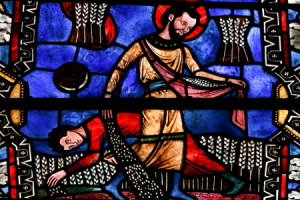
The Patient Gardener
(Matthew 13:24-30)
The section of St Matthew’s Gospel from which we are now reading concerns the Kingdom of God. Jesus uses this expression frequently in his teaching. The Kingdom is not heaven, it is the life and heart of God. We live in the Kingdom when we live according to the mind and heart of God. The Kingdom, or reign of God, breaks into human reality when human beings live, breathe and act out of the life of God; when the heart of God becomes ours; when we allow God to speak and act in and through us.
Jesus frequently uses parables in his teaching - stories drawn from real life, designed to get his listeners to think, ask questions and make decisions.
Today’s parable is a story about wheat and darnel growing together in a field. Apparently darnel, a weed, looks so similar to wheat that it is almost impossible to tell the two apart until the ears appear at harvest time. Only then can you really tell the difference between the two plants. Before that, there may be some signs to do with the direction in which the spikelets grow. Perhaps that is what the servants see and report it to the owner.
They ask if the owner wants them to remove the darnel. The owner says to leave both plants to grow together until harvest when the difference in the plants will be obvious. That will be the time to do the weeding.
So, what does it all mean?
No doubt, there were people in Matthew’s community who thought that the Reign of God would come swiftly and with vehemence and immediately crush what was contrary to it. Others had grown anxious about the fact that the coming of the Kingdom seemed much delayed and wanted to get on with the job of weeding out the ‘evil ones’ according to their own judgement.
The parable, however, urges patience and to leave final judgement to God. What appears to be darnel may yet turn out to be wheat. Only time will tell.
The parable is also a reflection on the mixture of good and evil in the world. But it calls us to reflect, too, on the mix of good and evil we find in our own hearts. What will we turn out to be?
The parable also raises the question: can darnel turn into wheat given God’s patience and mercy?
Celebrating At Home - 15th Sunday in Ordinary Time
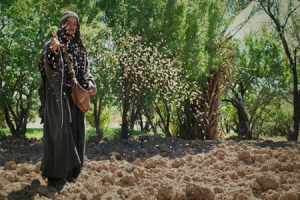
Becoming Rich Soil
(Matthew 13:1-9)
The section of St Matthew’s Gospel from which we are now reading concerns the Kingdom of God. Jesus uses this expression frequently in his teaching. The Kingdom is not heaven, it is the life and heart of God. We live in the Kingdom when we live according to the mind and heart of God. The Kingdom, or reign of God, breaks into human reality when human beings live, breathe and act out of the life of God; when the heart of God becomes ours; when we allow God to speak and act in and through us.
This section about the Kingdom of God is the centrepiece of St Matthew’s Gospel. Matthew uses seven parables and explanations to unfold Jesus’ teaching about the Kingdom.
Last week’s Gospel offered reassurance to those overburdened by religious law and often unable to fulfil it that they were not forsaken by God. Jesus says he is the one who will reveal what God is really like through gentleness and humility and by providing rest (not more burdens) for their souls.
This week we begin the series of parables about the Kingdom with the parable of the Sower. The Sower sows, the seed falls, sometimes the sower’s work succeeds, sometimes it does not. The different soils represent different human responses to hearing the word of God. Not everyone receives the message or responds well to the invitation.
The parable teaches us that God will try anything to get a harvest. The sign of success is the fruit-bearing of the recipients. That’s when God’s word sown in our hearts becomes our word, too.
Those who do respond to the invitation to life in the Kingdom yield the harvest of goodness and Godliness.
Celebrating At Home - 14th Sunday in Ordinary Time

Lifting the Burden; Lightening the Load
(Matthew 11:25-30)
The Gospel today is a joyful, ecstatic outburst of feeling by Jesus.
Matthew’s community must have been deeply troubled by the fact that the ‘learned and clever’ religious leaders of their day did not accept the message of Jesus. Surely they, of all people, should have been able to recognise the truth. But in this passage, Matthew explains that it is not from a position of knowledge or power that one recognises who Jesus is. Rather, it is from an attitude of openness and simplicity, such as we often find in children.
Matthew also makes the point that Jesus does not approach us like a warlord, with threats of punishment, but in humility and gentleness.
The tone of the reading is set by Jesus’ warm and intimate address of ‘Abba’ (Father) which occurs five times in this short passage. This intimate relationship is characterised by God’s entrusting all of things to the Son, and the Son in turn revealing them to those who have faith. These, in turn, are drawn into intimate relationship with God.
The rules and laws of religious leaders in Jesus’ day often added to the burden experienced by those regarded as simple and sinful. Whereas Jesus always tried to lift burdens from people.
Jesus invitation in today’s Gospel is for everyone. It could be an invitation for us to look at our lives and ask what burdens we impose on others. Do our concerns, anxieties, our need for power, wealth and status, exact a high price from others and ourselves?
Are we a burden or a blessing for each other? What can we do to make life easier for each other - to lift the burdens and share the load?
Celebrating At Home - 13th Sunday in Ordinary Time
True Discipleship
(Matthew 10:37-42)
Today’s Gospel is the final in this section of Matthew’s Gospel about the spread of the Kingdom and the role of the disciples.
Matthew often uses events as a beginning point for Jesus’ sermons. The section we have been listening to began with the call of Matthew and was followed by the instructions given to the disciples before setting out on mission. We heard part of that last Sunday.
So far in this sermon we have heard Jesus teach that the truly virtuous are those who exercise mercy; disciples are to proclaim the Kingdom of God with works of compassion and mercy; they are not to let fear compromise the message, but are to trust always in God.
Today’s Gospel passage highlights both the cost and rewards of true discipleship. The disciples’ relationship with Jesus must be the centre of their lives and the context for all other relationships.
Hospitality and welcome are concrete expressions of discipleship because the disciple is one who witnesses to the compassion and mercy of God with open hearts and concrete good actions.
Even though the first paragraph of today’s Gospel sounds like an exclusive choice must be made between Jesus and family, the idea behind the text is more that: in our relationship with Jesus, all other relationships fall into their proper context.
Without being in right relationship with Jesus we can’t learn how to be in right relationship with others. It is our relationship with Jesus which brings depth and richness to all our other relationships. So, for example, our family relationships become more than just fulfilling a social custom. They become true relationships filled with love, mercy, forgiveness and respect.
The Pharisees and Scribes seldom made good disciples because they thought that religion was about doing religious things. They went to the synagogue, kept the Law, fasted, and so on, but their hearts were never changed by their religious observance. They were self-righteous, despised the poor and the ‘sinners’, and acted without justice or mercy.
The truth about our conversion to Jesus (our becoming Jesus) is not so much seen in easily identifiably ‘religious’ things but in concrete good actions and right relationships.
Our religious observance is meant to support and nourish our relationship with Jesus. It is not a substitute for it. That relationship has the power to change and transform us so that we can bear witness to Christ through lives of mercy, compassion, justice and integrity.
Celebrating At Home - 12th Sunday in Ordinary Time
Be the Living Gospel
(Matthew 10:26-33)
The second part of Jesus’ instruction to the disciples as they set out for their mission is the text of the Gospel today.
The opening sentence sets the tone for the disciples’ mission: Do not be afraid - a phrase which is repeated twice more in this Gospel passage.
The first reading from the Old Testament book of the prophet Jeremiah reflects Jeremiah’s experience of rejection - no one wants to hear the message God has called him to give. In fact, they want to kill him. Jeremiah sounds desperate and afraid. But then the reading turns into a prayer of confidence and trust in God’s companionship and spiritual protection - God and Jeremiah will win out.
Preaching in the name of God is a risky and frightening business, as Jesus knows. So he urges the disciples not to be afraid of small beginnings, of those who can kill only the body, or that God would abandon them. He reminds them that God is always mindful of them and accompanies them on their mission. He urges them to be brave and bold in proclaiming the truth about God and in confessing their belief in Jesus before others.
Matthew’s audience, like Jesus, Jeremiah and the disciples, knew all about persecution and rejection. Their question is also ours: if we allow fear to silence us how will the Good News of Jesus Christ ever be heard in the world? If we don’t speak, who will? If we don’t act, who will?
It is not really a matter of talking at people and quoting at length from the Bible. As St Francis of Assisi said, ‘Preach the Gospel at all times. When necessary use words’.


