











O.Carm
Retreat for Young Carmelites in Europe
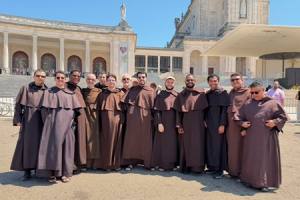
Retreat for Young Carmelite Living in Europe – Prophetic Fire: Renewing Our Carmelite Heart in the Land of Mary.
On July 25-31, 2026, the younger Carmelites living in Europe met for a retreat at Casa São Nuno, Fátima in Portugal). This included the simply professed, newly solemnly professed, and newly ordained Carmelites from the various entities within Europe. In total, there were 29 participants.
The week together was also an important opportunity for those who have recently joined the Order in diverse European countries to get to know each other and create connections for the future. Translation was provided in the official languages of the Order.
In welcoming the participants, the Commissary General of Portugal, Fr. Altamiro Tenório da Paz, O. Carm., noted that the participants came from many different nations and languages of Europe. He said that, “It is with profound joy that I welcome you, on behalf of the Commissariat General of Portugal, here at Casa São Nuno, beside the Sanctuary of Fátima and the small Chapel of the Apparitions, where Mary chose to speak to the world through the simplicity of three shepherd children.”
The retreat was led by Dr Donna Orsuto, an expert in Carmelite spirituality, who has been a professor in the Gregorianum since the 1990s, and, who is also an honorary member of the First Order. She is also a member for the Dicastery for Divine Worship and Discipline of the Sacraments. The retreat was entitled: Prophetic Fire: Renewing Our Carmelite Heart in the Land of Mary.
In opening the retreat, Dr Orsuto noted that Carmelite life begins in listening to God. It is deepened in silence, renewed by conversion, strengthened in fraternity and sent forth with prophetic fire to serve the Church and the world.
As well as celebrating the liturgy in Casa São Nuno, the participants participated in the International Sunday Eucharist at the Sanctuary of Fátima and also attended the nightly rosary and candlelight procession at the Shrine of Fátima. They led the Eucharist at the Chapel of the Apparitions on one of the afternoons.
The group also prayed the Via Crucis (The Way of the Cross) which is along the route the three visionaries took from their home village in Aljustrel to Fátima. At the end of the Via Crucis, the group celebrated the Eucharist in the Chapel of St Stephen. An excursion to Nazaré was made on one of the afternoons which included a visit to the famous Chapel of Remembrance to see the image of the Sítio de Nossa Senhora da Nazaré.
In evaluating the retreat, as well as noting the incredible hospitality of Casa São Nuno, the participants expressed their gratitude for the profound Carmelite input in such an important Marian location. They found the ten conferences given by Dr Orsuto to have been very concrete and challenging. Sharing with brothers from different provinces and realities was found to be especially enriching. There was a strong desire to repeat these experiences in the future.
Carmelite NGO Joins CSTIP to Fight Human Trafficking

Carmelite NGO Joins with CSTIP and Others to Fights Trafficking in Persons
The Carmelite NGO is joining with other NGOs at the United Nations to co-sponsor an event during the 80th Session of the UN’s Third Committee. The theme is Bankrupting the Business of Human Trafficking: Prevention Techniques to Reduce Prevalence and Illicit Profiteering. The event’s main sponsor is the NGO Committee to Stop Trafficking in Persons (CSTIP). The interview will feature leaders from government, business, the financial sector, law enforcement, media, and the NGOs who have implemented successful prevention programs that reduce trafficking prevalence. The session will be held on October 21 from 1-3pm (East Coast USA time).
CSTIP has been at the forefront in recognizing that the growth of human trafficking is driven by immense profits and little risk to perpetrators, enablers, and buyers. Because raising awareness in the community has not prevented human trafficking, especially of children, CSTIP proposes a new prevention model focuses on found strategic pillar designed to bankrupt the business of human trafficking: financial detection, ending impunity, ending demand, measuring and publicly displaying the results.
The event can be viewed via UN TV or Zoom on October 21.
Carmelite Sisters for the Aged Elects Leadership
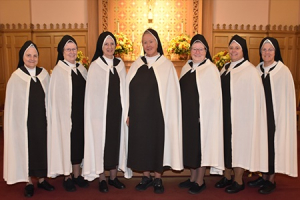
The XVth Ceneral Chapter of the Carmelite Sisters for the Aged and Infirm Elects Leadership
The Congregation of the Carmelite Sisters for the Aged and Infirm held their 15th General Chapter in Germantown, New York.
On September 14, 2026, Mother Mary Rose Heery, O. Carm., was elected as the Prioress General of the Congregation. On the following day, the Chapter elected the members of the General Council. They are Sister Theresa Marie Pfeffer, O. Carm. - 1st Councilor/Vicar General; Sister M. Peter Lillian Angeline DiMaria, O. Carm. - 2nd Councilor; Sister Patricia Margaret Rawdon, O. Carm. - 3rd Councilor; Sister M. Anthony de Lourdes Veilleux, O. Carm. - 4th Councilor; Sister M. Richard Carmel Brusca, O. Carm. - Secretary General; and Sister M. Veronica Robert Bien, O. Carm. - Treasurer General.
Sr. M. Richard Carmel Brusca is from Brooklyn, New York, and was re-elected to the office of Secretary General, which she has held since 2002. Sr. Patricia Margaret Rawdon is from Brooklyn, New York, and was elected to the office of Councilor General. She has been serving as Vice President and Chief Mission Director of the Carmelite System, and Director of Mission Integration at Carmel Richmond Healthcare and Rehabilitation Center on Staten Island.
Sr. M. Peter Lillian Angeline DiMaria is from Enfield, Connecticut. She was elected to the office of Councilor General in 2020 and was re-elected to a second term of six years. Sr. Theresa Marie Pfeffer is from Altoona, Pennsylvania. She has been serving on the General Council since 2023 and was elected to the Office of 1st Councilor and Vicar General. Sr. M. Anthony de Lourdes Veilleux is from Manchester, New Hampshire. She was elected to the office of Councilor General. She had been serving as the Prioress and Director of Mission Integration at St. Patrick’s Residence in Naperville, Illinois. Sr. M. Veronica Robert Bien is from Cincinnati, Ohio. She was re-elected to the office of Treasurer General, which she has held since 1996.
Mother Mary Rose Heery is from Queens, New York. She was elected to the Office of Prioress General of the Congregation in 2020, and was re-elected to a second term of six years.
The Carmelite Sisters for the Aged and Infirm are a religious congregation of Pontifical Rite. They were founded by Mother Mary Angeline Teresa McCrory (1894-1984) on September 3, 1929, with the approval and encouragement of Cardinal Patrick Hayes, archbishop of New York. Elias Magennis, the prior general of the Carmelites, granted affiliation with the Order on August 24, 1931. The congregation's specific mission is to attend to the needs of the elderly and to care for the sick, in the spirit fo the Carmelite tradition. They serve in various locations in the United States and have one home in Dublin, Ireland.
The website of the congregation is: https://www.carmelitesisters.
Chapter of the Carmelite Nuns Held in Vetralla
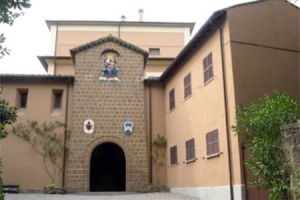
Elective Chapter Held in Carmelite Monastery of Monte Carmelo in Vetralla, Italy
The Carmelite monastery of Monte Carmelo in Vetralla, Italy, held its Chapter of Elections on September 9, 2026.
The monastery was founded in 1669 by Carmelite nuns commonly referred to as the "Barberine." The Venerable Maria Minima Aloisia of Jesus the Nazarene (d. 1831) lived there. After the buildings were completely destroyed during the Second World War, a new monastery was established in the suburbs of the town of Vetralla. In 2021, following the suppression of the San Giovanni La Punta monastery, three nuns from that community joined the Carmel in Vetralla.
From that monastery, nuns set out to found the Carmelite monastery in San Giovanni La Punta in 1960. The body of Cardinal Domenico Tardini was buried in the church of the monastery. It was through his generosity that the purchase of the new house was possible following the war. On July 30, 1962, Pope John XXIII visited the monastery and prayed at the tomb of the cardinal.
In the original monastery, St. Paul of the Cross, founder of the Congregation of the Passion of Christ (Passionists), conducted spiritual exercises and meditations and provided spiritual guidance to the nuns. The grills behind which he spoke are still preserved in the cloister parlors of the new monastery.
The monastery is a member of the St. Mary Magdalene de' Pazzi Federation of Carmelite monasteries. The website of the monastery is: www.carmelitanevetralla.it
The nuns elected to leadership roles are:
Prioress | Priora | Priora:
Sr M Rosalia di Gesù Risorto, O. Carm.
1st Councilor | 1ª Consejera | 1ª Consigliera:
Sr Marianna di Cristo Re, O. Carm.
2nd Councilor | 2ª Consejera | 2ª Consigliera:
Sr M Rita di Gesù Cristo, O. Carm.
Treasurer | Ecónoma | Economa:
Sr M Rita di Gesù Cristo, O. Carm.
Sacristan | Sacristana | Sacrestana:
Sr Marianna di Cristo Re, O. Carm.
St. Albert of Jerusalem, Bishop and Lawgiver
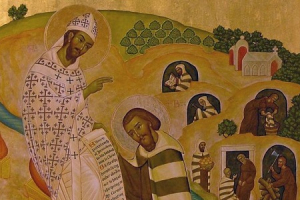
September 17 | Feast
There are very few facts known about the birth of Albert. The first biographical data comes from the Canons of Mortara. Albert entered into this order around 1170. Around 1180 Albert began developing connections with the pope and the Roman curia. Between 1181 and 1183 he undertook two missions at the behest of Alexander III and Lucio III. The following year he was nominated bishop.
He was bishop of Vercelli for 20 years but continued to be involved in diplomatic activity on behalf of the popes. Some of his work was settling conflict between people or cities. But he was also very active in the area of legislation and organizational structure. He would ultimately provide these gifts in service to the hermits on Mount Carmel.
In 1204 the Canons of the Holy Sepulchre elected Albert as patriarch of Jerusalem. Pope Innocent III added the responsibilities. Of papal legate for the Holy Land and Middle East. Albert arrived in Palestine in 1206, residing at Acre since Jerusalem was occupied by the Saracens. Here too Albert became the mediator of various disputes. In fact, this role as mediator has led some to conclude that Albert became involved with the hermits on Mount Carmel because of a dispute among the members.
When exactly Albert wrote his formula vitae for the hermits is open for discussion. This document was addressed to someone named “B” which later traditions named “Brocard.” Albert becomes referred to in the Carmelite Order as “the lawgiver” for his development of a rather short document outlining the life of the hermits on Mount Carmel. Albert’s formula vitae which will eventually become the Rule of the Order.
By the 16th century Albert’s feast was celebrated on April 8. Later it was customary to celebrate his feast on September 17. There were attempts to have Albert proclaimed as a martyr but the Order continues to celebrate him as “bishop and legislator of our Order.”
Read more about the life of St. Albert ...
Read about the Carmelite Rule | Text of the Rule ...
Watch here the Reflections on St. Albert of Jerusalem with Br. Patrick Mullins O. Carm.
Watch here the Interview with Br. Patrick Mullins O. Carm, an expert on St. Albert.
Books Published by Edizioni Carmelitane on St. Albert of Jerusalem:
Celebrating St. Albert and His Rule. Rules, Devotion, Orthodoxy and Dissent
Edited by Michelle Sauer and Kevin Alban, O. Carm.
The Bollandist Dossier on St. Albert of Jerusalem
Daniel Papenbroeck, SJ | Edited and translated by Patrick Mullins, O. Carm.
St. Albert of Jerusalem and the Roots of Carmelite Spirituality
Patrick Mullins, O. Carm.
The Life of St. Albert of Jerusalem. A Documentary Biography. Part 1
Patrick Mullins, O. Carm.
The Life of St. Albert of Jerusalem. A Documentary Biography. Part 2
Patrick Mullins, O. Carm.
Albert and His Rule
Michael Mulhall, O. Carm.
A Pattern for Life. The Rule of St. Albert and the Carmelite Laity
Patrick Thomas McMahon, O. Carm.
The Carmelite Rule. Proceedings of the Lisieux Conference. 4-7 July 2005
Various Authors
Celebrating At Home - 25th Sunday in Ordinary Time
God’s Outrageous Generosity
(Matthew 20:1-16)
For many, the parable which Jesus tells in the Gospel today seems profoundly unjust. Why should those who have done little work get the same pay as those who worked all day?
Maybe the answer lies in the first reading for today: My ways are not your ways; my thoughts not your thoughts. So often in the scriptures, God seems to have a totally different way of approaching things to most of us.
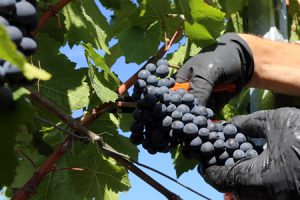
The parable presents God as a landowner going out at five different times during the day to hire workers for his vineyard.
With the 6am workers he makes an agreement for one denarius for the day’s work - the usual daily wage for a labourer. The workers who come later are promised a ‘fair wage’. But when payment time comes, they get a full day’s pay even though some have worked only one hour!
Usually, the youngest and fittest would be hired first and older and weaker workers left till last. But God doesn’t seem too worried about what condition the workers are in or what time of day it is.
The last comers must have been delighted to have received their unexpected full day’s pay. For them, it was really a gift rather than a wage for time worked. The ‘early birds’ fell victim to ‘rising expectations’, thinking that they would get more.
In giving both early birds and late comers the same ‘wage’ the landowner has made them equals – all are equal beneficiaries of God’s gracious invitation to the Kingdom. And there is a place for everyone in that Kingdom, including those often left behind in the world – the poor, sick, old, disabled, etc.
Life in the Kingdom is not a reward for long hours of work. It is a gift – it cannot be earned, but is had by responding to God’s choice of us, no matter what condition we are in, whether we are an early bird or a late comer.
God’s kind of thinking and acting is often very different to human thinking and acting.
The parable can also be interpreted as a practical expression of how to love our neighbour – with generosity and compassion, without considering if they deserve our kindness or not – for the disciple of Jesus must think and act like God.
This parable fits right into the biblical idea of justice which is heavily biased in favour of the ‘have nots’ – the widows, orphans, poor, blind, lame, sinners, etc. No one is left out of the gaze of God’s care.
God’s outrageous and extravagant graciousness and generosity is so different to the often petty and exacting way in which we treat each other. God’s sense of fairness and justice is so much broader and richer than ours. That is what life in the Kingdom of God is supposed to be.
Like last Sunday, it is our awareness of God’s extraordinary kindness, patience and mercy which help us to act in the same way - to see with God’s eyes, to feel with God’s heart and to act with God’s intention.
Celebrating At Home - 24th Sunday in Ordinary Time

A Family Formed by Forgiveness - Part 2
(Matthew 18:21-35)
Today’s Gospel follows directly from last Sunday’s reading about how to deal with differences and disputes.
Peter has understood the point of last Sunday’s Gospel (forgiveness and pastoral care), but wants to know the limits – is forgiving someone seven times enough? Jesus’ reply indicates that there should be no limit to the number of times. Then he tells a parable about forgiveness and gratitude.
There is no doubt that genuine forgiveness, forgiveness ‘from the heart’, is a real challenge. The more personally we are hurt by another person the harder it is to forgive them. Forgiveness is often more a movement than a moment. Often we only come to forgiveness step by step over a long period of time.
If we can pray for those who hurt us we have already taken the first step on the road to forgiveness.
Forgiveness does not imply that what a person did was OK.
The biblical idea of forgiveness is built on the awareness of God’s extraordinary compassion towards us; God’s refusal to hold our past against us - the theme of today’s first reading.
But that action of God must find its resonance in how we behave towards each other. It will only have that resonance when we experience personally God’s overwhelming love for us. That is what binds us into relationship with God and into acting towards others as God has acted towards us. That experience of God’s compassion builds a gratitude in us which enables us to forgive each other.
For the disciple of Jesus, forgiveness must be real and genuine - from the heart - and built on the awareness of God’s compassion and mercy towards us. That is why Jesus includes forgive us our debts as we have forgiven those who are in debt to us in his great prayer. If God has forgiven us, then we must forgive each other.
We don’t live our Christian lives in some kind of fantasy-land filled with pious thoughts and lovely dreams. We live it in the often harsh realities and difficult situations that human beings encounter.
How we live it will depend on the degree to which we have the same mind and heart as God.
Real life is the proving-ground of faith.
Prior General's Schedule for September 2026
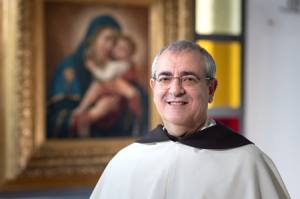
Fr. Desiderio García Martínez, O. Carm., the prior general, has the following schedule planned for the month of September 2026:
August 31-September 3: Triennial Chapter of the Neapolitan Province
September 7-11: Retreat-Planning -- General Curia -- Nocera Umbra, (Italy)
September 21-25: Elective Chapter of the Commissariat of Paranà -- Brazil
Celebrating At Home - 23rd Sunday in Ordinary Time

A Family Formed By Forgiveness
(Matthew 18:15-20)
Chapter 18 of St Matthew’s Gospel is often referred to as the Sermon on the Church. It contains the teaching of Jesus about the life of the Christian community.
Today’s reading details a procedure for dealing with differences and disputes. It follows the Parable of the Lost Sheep which is concerned with seeking out and bringing back the one who gets lost.
In the same way, resolving disputes is not about being right and punishing an offender, but about conversion and reconciliation.
The three-stage process moves from individual dialogue to a small group trying to sort things out, to the whole community being involved in discernment and decision.
Traditionally, we have understood the words, ‘if he refuses to listen to the community, treat him like a gentile or a tax collector, to mean that the person should be expelled or excommunicated from the community.
However, Jesus was notorious for sharing meals with tax collectors and sinners and he called one of them, Matthew, into his inner circle of disciples. At the end of the Gospel, Jesus instructs the disciples not to reject the pagans but to invite them to become children of God. Excommunication doesn’t seem to fit, either, with the sentiments in the Lord’s prayer about forgiveness.
The parable of the Lost Sheep immediately before this passage seems to indicate that the church, following Jesus’ example, should never give up on any of the sheep, especially the lost ones. It has a responsibility to try to win them back.
The next verse about ‘binding and loosing’ extends to the community the power of authoritative decision-making given to Peter and the disciple-leaders in the Gospel of two Sundays ago. This decision-making follows community discussion and discernment about what is to be done. If members of the community pray and discern together about how to win back the lost one, their prayer will be heard, even if only two pray. Jesus reminds them that whenever members of the community gather in his name he is present with them.
We share a common responsibility for the lives and faith of one another and for our community as a whole. Our presence, example and prayer encourage and confirm the faith and life of Jesus among us.
Chapter of the Carmelite Sisters held in Málaga
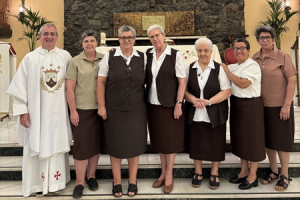
The XXIst Ordinary General Chapter of the las Hermanas Carmelitas del Sagrado Corazón de Jesús was held in Málaga
The 21st Ordinary General Chapter of the Hermanas Carmelitas del Sagrado Corazón de Jesús began on August 2 and concluded on August 22, 2026.
The Chapter took place at their Motherhouse / Madre Asunción School in El Limonar (Málaga) under the theme of the Chapter Year: Anchored in the Heart of Jesus Christ, Forgers of Hope.
During these three weeks, representatives from communities in various countries evaluated the progress of the Congregation and discerning the organizational steps for the coming years.
The Chapter Assembly elected the Superior General and her Council, who will guide the life and mission of the Congregation over the next four years.
The General Council is composed as follows:
Sr. Ma Teresa Delgado Aguado
Superior General
Sr. Lus Marina Materano Perozo
Vicar General
Sr. Lucía María Frois Colaco
Delegate Councilor for the Africa Zone
Sr. Mercedes Espinal de Jesús
Delegate Councilor for the Caribbean Zone
Sr. María José Medina Alguacil
Delegate Councilor for the Iberian Zone
Sr. Ma Dolores Calvo López
General Treasurer


