
















O.Carm
10. Clash of Ideas

As a University Professor with a specialty in Philosophy, Titus Brandsma would have been acutely aware of the ideas and propaganda circulating in neighboring Germany during the 1930s.
9. Mary, the Mother of God
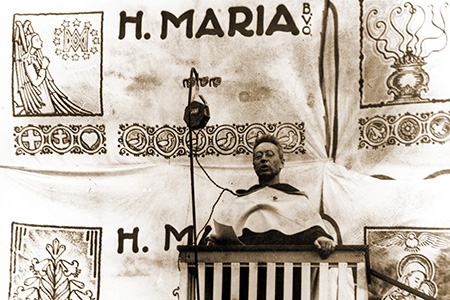 To Jesus with Mary
Our Lady held a special importance for Titus Brandsma throughout his life. As a young boy Titus became familiar with various Marian practices including the rosary which the Brandsma family prayed on a daily basis. This Marian devotion would last a lifetime for Titus who even in prison organised several rosaries for himself when his one was taken from him.
In addition, Titus became familiar with the idea that we find Jesus by going through Mary. With Mary as a mother and as a sister, he followed Jesus on his way to the heavenly father.
My soul magnifies the Lord
Titus entered the Carmelite novitiate out of his desire for a more intense prayer life and because of the Order's great devotion to Our Lady. Later, Titus places on the picture for his ordination the words of Mary in her Magnificat: My soul magnifies the Lord. He who is mighty has done great things to me. (Luke 1: 46, 49) During his Roman years (1905-1909) Titus visited the catacombs, where an ancient image of Our Lady, called the Orante, impressed him. This he refers to as the image of the praying Church and to the image of Mary who sings her Magnificat. In a Marian magazine, Carmelrozen, which he co-founded, Titus wrote dozens of articles so as to foster love for Mary through an increased knowledge about the different forms of veneration of Mary, her feast days, Christian art work and the teaching of the church and councils on Mary.
Mary’s divine motherhood
Of special importance to Titus was the Council of Ephesus (431) which had declared the dogma of Mary as Theotokos (God-bearer). Titus reflected on the divine motherhood of Mary writing:
In Mary we see the most beautiful image of our union with God. She, the bride of the Holy Spirit, teaches us how we also, though not in the fullness of grace but in a wider sense, must be brides of God, in order that he be born in us, united – also in us – with human nature, our human nature. Under the beneficent influence of the Holy Spirit we must be born to a new life with God, who lives in us more than we live of ourselves.
Increasing our devotion to Mary means learning to imitate the attitudes she has in her life. And so, we too are called to become like Mary: bearers of the divine life.
By following her example, we should obviously be other Marys. We ought to let Mary live in us. Mary should not stand outside the Carmelite, but the Carmelite should live a life so similar to Mary’s that the Carmelite should live with, in, through, and for Mary.
Mary, Hope of all Carmelites
In 1939, Titus wrote a Way of the Cross for a pilgrimage. At the ninth station, when Jesus falls under the Cross for the third time, he prays:
O Mary, who has observed with admiration and motherly compassion the final efforts of your Son, help me to remember this when the fulfilling of my task in life becomes too heavy.
Perhaps this prayer was with him when he was arrested in January 1942 and sent initially to the prison of Scheveningen. There Titus transforms his prison cell into a Carmelite cell with a picture of Christ and a picture of Mary:
In the part of the breviary we are using now and which was luckily left to me, is the beautiful picture of Our Lady of Mount Carmel. So now my breviary is standing wide open on the topmost of the two corner shelves, to the left of the bed. When sitting at my table I only have to look a bit to the right and I can see her beautiful picture; while laying in bed my eye is firstly caught by that star-bearing Madonna, Hope of all Carmelites.
With the eyes of his heart fixed on Mary and with Jesus at his side Titus continued his own way of the cross from Scheveningen to Dachau. There he died on July 26th 1942. May his example inspire us to live a Christian and Marian life.
Download the Leaflet 9. Mary, the Mother of God pdf here (4.26 MB)
9. Mary, the Mother of God

Our Lady held a special importance for Titus Brandsma throughout his life. With Mary as a mother and as a sister, he followed Jesus on his way to the heavenly father.
8. O Jesus when I gaze on you
 ‘O Jesus, when I gaze on You’
The poem ‘O Jesus’, which Titus Brandsma wrote – and which was smuggled out of the prison – is for many people a comfort.
The Inscription
Titus wrote the poem in two days, 12 and 13 February 1942, in the convict prison of Scheveningen – established for political prisoners. The poem places itself ‘Before the image of Jesus’. In his cell, Titus has fixed three small illustrations from his breviary on his small folding table: the image of Christ on the cross, with the wounds of the Sacred Heart; St Teresa with her saying Mori aut pati (to die or to suffer); and St John of the Cross with his Pati et contemni (to suffer and to be scorned).
The Opening Line
The opening line evokes the atmosphere of contemplative attention. Seated silently ‘before the image of Jesus’, Titus Brandsma keeps his loving gaze directed to Jesus on the cross. The lament ‘O Jesus’ expresses the intimacy of his attention.
Once more alive, That… That…
Titus prayerfully explains what is happening whilst he gazes: ‘Once more alive…’ Devotion causes us to ‘rise up out of tepidity’ and ‘awakens love’. In his description of the movement of love coming from Titus and the counter movement coming from Jesus, Titus describes not only the reciprocal love he experiences but, more than that, a special friendship.
Good friends should mutually care for each other so that the value of friendship is not lost. In ‘O, Jesus’ the special nature of the friendship arises out of the mutually shared suffering.
Suffering shared in Friendship
A friend asks for the courage to suffer, a ‘special friend’ asks for ‘the courage to suffer more’, certainly when it concerns the friendship with Jesus who bears the suffering of humanity. Whoever suffers with his friend is like him. Thus, the disciples of Jesus ‘resemble’ Him who had gone before them on the way of ‘suffering’ in solidarity in suffering which leads into his Kingdom of peace. Friends desire to ‘resemble’ each other, they do not wish to see their friend standing there all alone, they wish to share the lot of their friend. In this spirit Titus says: ‘Oh, for me all suffering is good’. Friends bear each other’s suffering, through which ‘all suffering’, which in itself is evil, is ‘good’ for ‘me’ as a ‘friend’.
The Union with God
Does Titus mean a glorification of suffering? No, a spiritual logic is at work here: in suffering shared in friendship is the way of the good; bliss is the ultimate flowering of the good; this is the union with God. The friend ‘knows’ that his friend has taken his suffering seriously. It no longer belongs to him alone. His friend also bears it. However, what is of most importance here is the ultimate goal of the way: the union with God. This is, the heart of all devotion. The suffering reaches beyond the awareness of itself and can – as in ecstasy – only call out: ‘O God’.
O, leave me here
Titus notes in his prison letter that it can be ‘very cold’ in the winter. But this does not need to change for him: ‘Just leave me here’, here ‘before the image of Jesus’.
At this point in the poem the motif ‘with me’ begins to resound. The solitariness serves the interiorization of the bliss which was received in the shared suffering of the friendship. The ‘here alone’ does not become ‘weary’.
Your Presence makes all things good for me
Solitariness is the place where Titus can expose himself to the bliss of the suffering shared in friendship. For Titus the meaning of ‘Jesus with me’ and ‘never so close to me’ lies in the suffering shared in friendship as a way to Jesus’ Kingdom, leading to the union with God which reaches a climax in the last two lines: ‘Stay with me, with me, Jesus sweet, / Your presence makes all things good for me’. The occupying power defines the course of events ‘in prison’, but this far ‘here’, in the cell of Titus ‘before the image of Jesus’, its influence does not extend.
Download the Leaflet 8. O Jesus when I gaze on you pdf here (3.57 MB)
8. O Jesus when I gaze on you

The poem ‘O Jesus’, which Titus Brandsma wrote – and which was smuggled out of the prison – is for many people a comfort.
Celebrating At Home - Fifth Sunday of Easter

Farewell, glory & discipleship of love
(John 13:31-35)
Given during Jesus’ last meal with his disciples, these words begin what is called The Farewell Discourse in John’s Gospel (13:31-17:26). They are Jesus’ last words to his disciples before his death.
In the course of offering assurance and comfort, Jesus develops various themes that have been introduced earlier in his ministry, including in particular glory, mutual indwelling and love.
His main point is the experience of life in God the disciples have and will continue to have. The relationship between the Father and the Son, which has been revealed in the first twelve chapters of the Gospel, Jesus now declares to be realised in the disciples.
The relationship between the Father, the Son and the Spirit are described in more detail here than anywhere else in the Bible. In these chapters, therefore, is the most profound teaching on God and discipleship in the Bible.
The first part of today’s Gospel reading is a bit confusing unless we understand that ‘glory’ in the biblical tradition has to do with the revelation of the unseen God. So, in these lines there is a sense of mutual glorification - the Father is revealed in the Son and the Son reveals the Father in his death on the cross. The Son will reveal the love of the Father most patently when he gives up his life.
Using the intimate form of address, ‘My little children,’ Jesus gently begins to prepare the disciples for the difficult reality of his leaving them.
Just as Jesus has been God’s love in action in the world, so now, the disciples must be.
The indispensable nature of abiding in love is underlined by the use of ‘commandment’. It is through their mutual love that all will recognise them as disciples of the One who loved even to laying down his life.
- Celebrating At Home - pdf Fifth Sunday of Easter [PDF] (3.36 MB)
- Celebrating At Home - default Fifth Sunday of Easter [ePub] (5.77 MB)
- Celebrando En Familia - pdf Quinto Domingo de Pascua (1.60 MB)
- Celebrando In Casa - pdf Quinta Domenica di Pasqua (1.61 MB)
Video "In Dialogue with Titus Brandsma"
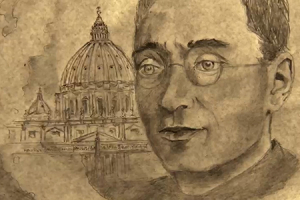
The following video "In Dialogue with Titus Brandsma", adapted from the book "The Courage of Truth" by Fr. Fernando Millán Romeral O. Carm, reviews some key passages of Titus' life, his faith and his testimony, shedding light on our life today.
Watch in French here
Watch in Spanish here
Watch in Portuguese here
Film on Titus to be Presented on Italian TV
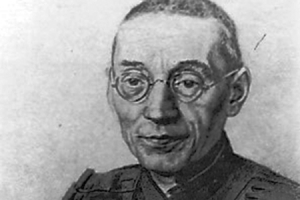
RAI (Radiotelevisione italiana) the Italian national broadcasting company will present the film "The Two Crosses" on Saturday, May 14 at 5 p.m. and Monday morning at 9:30 a.m. for audiences who want to learn more about the dramatic and painful story of Father Titus during World War II.
This film is available from Carmelite Editions and other Carmelite communication centers around the world for €15.00 or US$15.00. It will be available for purchase at the Titus Brandsma Center during the days of the canonization celebration in Rome, from May 9th to 14th. The original is in Italian but has subtitles in English and Spanish.
Letter to Carmelite Family around the world
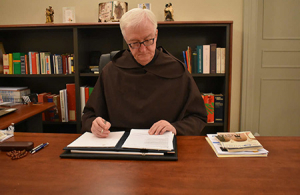
The Office of Communications is releasing this letter from the Carmelite Prior General regarding the canonization of Carmelite Titus Brandsma on May 15. We invite you to quote from the letter as you see appropriate.
You can also find more information about St. Titus Brandsma at the website of the Order: ocarm.org or by following us on Twitter: @ocarm_org or Facebook: @ocarm.org
The Cross for me is Joy
Dear Brothers and Sisters in the Carmelite Family: His Holiness, Pope Francis, presiding at the ordinary consistory of cardinals, gave his approval to the canonisation of Blessed Titus Brandsma, a cause of enormous joy to the whole Carmelite Family. In the same act he announced the date on which Blessed Titus would be inscribed among the saints as the 15th of May, 2022. With enormous satisfaction, I take this opportunity to address the Carmelite Family around the world.
The witness of Fr. Titus is one that inspires and enlightens, not only members of the Carmelite Order, but the society in which we live. We find in him in these times so troubled by the threat and existence of war, a prophet of hope and a champion of peace. We are troubled by the millions of people forced to flee from their homes in the Ukraine as the devastation continues in their country. Events in the Ukraine make us think of other parts of the planet too where we can see the wounds of many other conflicts that appear to be forgotten, or treated with indifference. In these situations the Church has the opportunity to make a real contribution, by taking up the teaching of Fratelli tutti, and by placing its trust in the hope of a God who created and will always support the universal brotherhood and sisterhood of his own children. Let us unite our voices with the men and women of good will who in the face of the suffering of the innocent, stand for peace, freedom and the defence of the dignity of every human being. Titus, a true expert of humanity, by shedding his blood out of love (cf. Mk 14,24) taught us that to be a disciple of Jesus Christ means not only that we look up to him and know all that we can about him, but also that we are called to share in the destiny of love that fell to him.
1. A witness to the truth.
The world and the Church itself demands of us today a clear witness and an authentic life. Our desire is that the people might see what Carmelites are called to be.1 “¿What is it that we are to be?2 Our saints asked. “Who am I?” is the defining question, the most important spiritual question. I am what God has made me. I am the combination of charisms that God placed in me. What I do comes from who I am. The very intense life of Blessed Titus Brandsma helps us to understand that when identity is understood as defined by activity, we run the risk of losing ourselves, choosing the wrong pathways. Charism is a living thing, beyond speculation. There has to be an interaction between identity and mission, in which what we do helps us to define who we are and who we are helps us to determine what we do.3Blessed Titus helps us to realise that our life becomes a valuable witness when it is adorned by our works. In addressing his Carmelite Brothers in the Netherlands he once said: “It is better not to know anything, and believe fully, than to know everything and have no feeling … Only the one who is closely united to God can be truly close to his neighbour. Only the one who takes his nourishment from God can give witness to God by his works.” On another occasion he said, “What makes our life lived in common beautiful is not so much our rights or our duties as much as the way we help one another and our mercy”. The Church needs the everyday saints, the saints whose lives are coherent, the “saints from next door”, as Pope Francis likes to say.4 The Church also needs saints who have the courage to accept the grace to be witnesses to the end, even unto death. All of them, including our brother, Titus, are the life blood of the Church.
2. I was enthralled by Carmel
Pope Francis in his address to the 2019 General Chapter of the Friars, made the connection between authenticity and the faithful living of the vocation that each one has received. Referring to Blessed Titus on that occasion, he said, “Something that belongs to the Carmelite Order, even though it is a Order of mendicants, living and working in the midst of the people, is to maintain a great respect for solitude and for detachment from the things of the world, seeing in solitude and contemplation the best part of their spiritual lives.” Titus Brandsma entered the Carmelite Order because he was drawn by its charism: “The spirituality of Carmel, that is a life of prayer and of tender devotion to Mary, led me to the very happy decision to take on that life. I was enthralled by the spirit of Carmel.” Fr. Titus is not someone who was lost in the past, but rather one who looked to the history of Carmel, its mystics and models of holiness, to find prophetic figures who have something to say to the present moment. To this effect, he set up the Institute of Mysticism in the University of Nijmegen, which would lead in time to the Institute that was to bear his name.
Titus, friend of God, forms a bridge among the great “throng of witnesses” (cf. Hb 12,1) in Carmel’s spiritual tradition. He knew how to bring together tradition and modernity in a way that was authoritative and integrated. He was open and flexible, with an enormous capacity for work to which he gave his all with great passion and generosity. There was balance and harmony in the way that he lived his Carmelite contemplative life. He was the prayerful, prophet and fraternal one, living in the midst of the people. Perhaps that is the key to understanding his versatile personality shown in the variety of jobs and duties that he took on: Rector of the Catholic University, professor, lecturer, translator, scholar, founder of schools, promoter of the ecumenical movement, professional journalist, the Dutch bishops’ representative with the press, as well as all he did by way of apostolate (looking after migrants, writing letters for an illiterate child to send to her family).When commenting on the translation with his great friend and mentor Hubertus Driessen, they surmised how much the translation of the works of Teresa, that they had published at that time, had “given again to the name of Carmel in Holland a good reputation as an Order of prayer and mysticism”2.
There are two lectures of Titus Brandsma that might help us in a particular way to see the link between him and Teresa of Jesus. In the lecture that he delivered to the University of Nijmegen, under the title Godsbegrip (The Idea of God)3 we find that the idea of God that most appeals to him is the idea of God who enters the life of every human being and will enter more and more into the person who by their way of living and believing make space for him to enter. In his words: What I thus defend and consider to be indispensable for our time is the contemplation of all being in its dependence on God and its emergence from God whose work we have to see in everything and whose being we have to discern in everything. We also have to recognise and venerate God in all things, and first of all in ourselves. God is revealed to us in the depths of all things and in our own depths. God wishes to be seen and to be known. Nowhere is God to be known better than in the very depth of our being. If the thought about God’s indwelling, about the total dependence of all human nature on God, on God’s guidance and revelation was alive in everything, we would act quite differently and would adjust our behaviour to be in tune with God’s revelation.4 As he pronounced these words, it is possible that Titus was thinking about Teresa, from whom he learned about the union of the soul with God and the all-pervading nature of God in the life of the human person. Among the series of ten lectures that Titus Brandsma gave in his tour of the United States of America in 1935, one was dedicated entirely to Teresa of Jesus. In this lecture, in line with his understanding of the idea of God, he showed, relying mostly on the Interior Castle, how Teresa supported the idea of God entering more and more into the lives of people who know about God, accept God and seek to know his love more and more. In the words of Titus:
St. Teresa paints the mystical life as something which develops in the soul, according to the soul’s natural ability, as the ultimate realisation of human powers.
There have been implanted by God in human nature and will be realised when the soul is aware of its possibility to reach that highest degree of perfection and therefore gives up itself wholly into the hands of the Lord who alone is able to carry it to the highest of elevations. For all this, nothing else is asked of the soul than that it accomplish God’s wishes and desires, put its trust in Him, and in Him only finds its happiness. God likes to have an ordered love and he himself will order that love in the soul.5
He stood out for his sense of fraternity, unfailing humanity, and tenderness towards all who surrounded him (students, colleagues, friends and many others). He made dialogue the new name for charity. In Titus, as Pope Francis reminded us, contemplation and compassion were never far apart. Here there is no pseudo mysticism or weekend solidarity, no attempt to make the poor invisible lest they question us in any way. Titus’ commitment both to God and to people had no pretence.
3. An everyday mystic.
Titus was a mystic in the truest sense of the word: a believer who was aware of the presence of the love of God in all the circumstances of life, from the most simple to the most heroic events of his martyrdom. He was distinguished by the depth of his spirituality, both the theoretical aspect, and the practical and experiential dimensions. He was recognised as an expert in the Flemish school, the devotio moderna, and for his great knowledge of the works and teachings of St. Teresa of Jesus, of whom he was always a great admirer. This holy man came to understand that God’s greatest acts are performed in silence, might explain his reluctance to speak about his own interior life, until the time when it became visible to all in the most dramatic moments of his life, especially in the different concentration camps that he came to know. Mystical experience – he would say – is not limited to an elite or to a select group.
In a talk he gave in the U.S.A., drawing on the thought of the venerable 17th century French Carmelite mystic, John of St. Samson, Titus said, “(John of St. Samson) roundly rejected the idea that the idea of the mystical life – which has little to do with visions, apparitions, stigmatas or levitations but rather the reality of seeing God before us and within us – was not something for each and every one of us.”. Titus was appreciative of the witness of those who in the Carmelite tradition came to understand that the human person is a God by participation.5
Titus Brandsma held that the true mystic is not a person who is separated for what is happening in the world, not one living in a bubble, but one whose deep relationship with God (cf. I Kg 17,1) turns him into one who is open to the needs, dramas and questions of the men and women of his time. Prayer, he would say, is life, and not an oasis in the desert of life. He would not be just an academic or a professor of spirituality, but rather one who would manage to make of his life a perfect union of prayer and work. He was, therefore, a mystic deeply in touch with the world and with people, seeing in each person the image and likeness of God. (cf. Gen 1,27, Sal 8,5; Hb 2,7). One who saw how Titus lived was the well-known Dutch writer Godfried Bomans. Familiar with Titus’ untiring journeying spirit, with some humour, Bomans said of him: “Brandsma was the only mystic in Europe who had a bus pass and grew in holiness in the carriage of a train.”
4. “Blessed are those who work for peace …” (Mt 5,9).
Titus stood out as an artisan of peace. In one of his best known lectures in Deventer, 1931, he spoke with some fervour about the idea that the work of peace is not only the task of the politicians and leaders: All of us are responsible and all of us can do more. The thinking of Titus Brandsma is very far from the kind of pessimism that is resigned to believe in the old saying, If you want peace, prepare for war. He rejected the idea that after one war there has to be another. There have always been in the history of humanity, he would remind us, those people, who have been heralds of peace and workers for peace. He believed in Christ, the King of Peace and Messenger of Peace. The biblical “Shalom” is more than a pious desire, or the absence of conflict. The peace of the risen Christ, much more than a superficial peace agreement, is a deep feeling of reconciliation, kindness, love, forbearance, patience, confidence and more that transforms the world of social, political and economic relations. Titus very firmly maintained that if there is not true conversion, that seeks peace at the heart of every man and woman, and as a consequence, at the heart of every society, the outbreak of a new war is only a matter of time ,just as it was, and sadly continues to be.
Titus could see a certain kind of collective egotism that leads the nations to seek just their own wellbeing and security, even though, in order to achieve that, they have to trample on the rights of their neighbours. Christ did not build walls or boundaries that divide. (cf. Ef 2,14-15). “Peace is possible” – he insisted – rejecting the idea that violence and war are inevitable because they are an inherent part of the human condition. Indeed on numerous occasions he reflected on the role of the Catholic press in modern society as that of promoting peace, denouncing, the arms race, xenophobia and the exaltation of national or racial identity.
5. The power of the press
We must not forget that Titus was called upon to defend the independence of the Catholic media, when he opposed the demand that the Catholic press should publish the propaganda of the National Socialist regime. This may be for us a wonderful stand in the era of the post-truth, in which fake news and the manipulation of public opinion abound. Titus did not accept that thinking of those who held that in war the first victim is the truth. He would continue to proclaim that it is truth that will set us free. (cf. Jn 8,31): “After the churches, the press is the best pulpit from which to proclaim the truth, not only to be able to respond to those who wage war, but to go on day after day proclaiming the same truth. The press is the power of the word against the violence of arms. It is the power of our fight for the truth.” For Titus Brandsma the press could not be treated as a weapon at the service of an ideology or a regime. It was rather a means of encounter, dialogue, honest and sincere pursuit of the truth. Journalism requires a certain kind of interior integrity.Pope John Paul II understood this: In an address to journalists that he gave in February 1986 he spoke about the mystical and spiritual aspect of the life of Titus Brandsma:
“Respect for the truth demands a very serious commitment, a careful and scrupulous endeavour to seek out, to verify and to evaluate … Here I think immediately of the heroic figure of the Carmelite priest, Titus Brandsma, who I had the joy to inscribe among the Blesseds. A courageous journalist, imprisoned and killed in a death camp for his untiring defence of the Catholic press, he remains as the martyr of the freedom of expression against the tyranny of dictatorship ….”
6. The power of little ones, who know how to love.
Love of one’s friends is something that belongs to everybody – Tertullian wrote – but love of one’s enemies is the stuff of Christians.6 For Titus, forgiveness was not a sign of weakness but rather a sign of heroism in people with large hearts. He stood out as a servant of reconciliation. True forgiveness he would say is a supernatural decision rooted in God, much more than in human endeavour. It was not easy to hold that view in the feverish and convulsive Europe of his day. The Christian, in his view, cannot give in to the kind of fatalism that would think that reconciliation has no part to play in the world of politics or in international relations, with the idea that it belongs only to a person’s private life. He believed deeply in the transforming power of forgiveness. In his celebrated homily on the 16th of July, 1939 in a Mass celebrated in honour of St. Boniface and St. Willibrood, he utter a veritable song of praise for the love of enemies. His way of denouncing every kind of war-seeking philosophy was very clear. “We live in a world that condemns love as if it were a weakness that we have to overcome. It is not love that we have to cultivate, some would say, but our own strength: let every individual be as strong as he or she can be, and let all the weaklings perish … They come with this kind of doctrine, and there are always those who are not careful and follow them willingly ….” Titus preached forgiveness. At the end of his life, his way of dying was also a “sacrament of forgiveness”. Tizia (the name given to the nurse who injected him with phenic acid) told her story of how the compassion and kindness in Titus’ way of looking at her (Is 53,7) helped her to feel the mercy of God and to find herself again. The gentle Carmelite was aware how destructive hatred can be, and that only love can make people whole. As part of the process of beatification, Tizia in her testimony said this: “He felt compassion for me …” “The way he looked at me showed no sign of hatred whatsoever …. Those who saw him could see that in him something supernatural was speaking”. “He gave me his Rosary beads, as a way of asking me, Would I like to pray?: I said I did not know how, and for that reason the Rosary was of no use to me. He said, even though I might not know how to pray, all I needed to do was recite the second part of the Ave Maria, “Pray for us sinners”. Along with Titus other prisons were used for experiments in the infirmary and Titus knew that, Tizia affirmed. At a certain moment he cried out, “Let your will be done, O Lord, not mine.” This left a deep impression on the young nurse. One of his colleagues, also a professor at the University of Nijmegen Robert Regout, S.J. wrote about him, “Brandma died as he had lived. He did not just die. He was united with Christ and imitated him right to the very end.” The life of Titus Brandsma is a cry for reconciliation. In the prison, in his last days, writing from prison, he left a message that called in moving terms for reconciliation. ¡God save the Netherlands. God save Germany. May God grant these two countries to walk together again in peace and freedom recognising his Glory for the good of these two nations that are so close to one another!”
7. “Let him take up his cross, and follow me” (Mt 16,24).
There is no love, no commitment, no sacrifice that does not have its share of the cross.
Titus joined all those Carmelites who possessed an intimate devotion for the cross, St. John of the Cross, St. Mary Magdalene de’ Pazzi, Angelo Paoli, St. Teresa Benedicta of the Cross …. As a mystic he discovered that what greatly characterises the human person is vulnerability, that is, the capacity to be hurt by other people. In suffering, it is possible for us to become aware of how much we love, and of how much we are loved. Titus was in love with God and with humanity. Like Jesus, he too was pierced, (cf. Jn 19,34) and the mystery of the cross continued in his life as he was the victim of violence, evil, and injustice. It was something he had taught in his days as a professor: There are people who dream of a kind of mysticism that is very sweet, and they do not notice that God, who wants us to be united with him, proposed a way that includes the cross, dying on the cross”. “We need God’s help”, he would say on another occasion, “because in the face of suffering, we are just poor human beings”. We need to ask the question, if in our time we do not need men and women who are willing to take upon their shoulders the sufferings of this world.
We are struck by Titus’ particular devotion to the contemplation of Christ’s passion and the way he defended the Way of the Cross of the Belgian painter Alvert Servaes, in which Christ was represented as a man who was weak, famished and emaciated. The Church authorities were scandalized by what they say and banned the exposition. Titus, in the middle of the debacle, supported the work, affirming that the broken body of Christ is prolonged in every person that is beaten and broken as a recognition of vulnerability. In the prison cell in Scheveningen, our Carmelite brother wrote a commentary on the Way of the Cross for the Shrine of St. Boniface in Dokkum, where he was born. Curiously, the last station is missing. It is possible that the journalist and writer ran out of time and couldn’t finish, or that because at that time they sent him to the sorting camp at Amersfoort, and the chapter was lost among the papers that were sent back to his family. Perhaps, Brandsma anticipated without realising it his own destiny: he would not be buried in a grave, his ashes would be mixed with thousands of others and spread around the fields close to the Lager of Dachau. Thus he would share the destiny of those millions who were carbonised in Hiroshima and Nagasaki, the victims of the Gulags, of the Twin Towers in New York, the genocide in Bosnia-Herzogovina and many other examples or the countless other victims of the barbarities in their different forms in the past twentieth century, to which we are now sadly beginning to add those of the 21st century.
The cross allows us to see, on the one hand, the fragility of humanity, the existence of evil and suffering; on the other hand, the strength and capacity to love, as a reflection of the great love of God for humankind. Love and suffering are never far apart. We are not talking about any kind of masochism or that kind of bravura that wants to see how far we can go in putting up with suffering. In the cross we can see our ability to love freely and unconditionally, to what extent we are disposed to share with, accompany or console our neighbour. In those extreme circumstances, Blessed Titus Brandsma made mercy and compassion the core of his preaching.
8. Never so happy!
A martyr professes his faith to the end, no matter what. John Paul II in his homily at the beatification of Titus Brandsma had this to say: “This kind of heroism is not something we can make up. It is the result of a deep interior life.” The test of any spirituality is its capacity to be sealed in blood. A martyr is free in relation to power, the world, free not to love his own life that has so much fear of death. Martyrdom is not the result of human effort, it is a gift of God, that makes us able to offer our lives out of love for Christ and the Church, and the world as well. (cf. LG 42).
Titus, in the concentration camp of Scheveningen, kept his faith, and in the midst of the hell of that lager, he wrote the poem that now we know so well, When I look at Jesus.:
I am happy in my suffering,
Because I do not consider it to be suffering anymore,
But is the fate that is most desired,
That unites me with You, 0 God.
For You, o Jesus, are with me,
I have never felt so close to You,
Stay with me, with me. Sweet Jesus
Your presence makes all good for me
Later on, in Amersfoort, on Good Friday, standing on a wooden box, he spoke to his fellow prisoners in their pavilion – as we read from the testimony given by one of them in the Summarium – it was the most sincere sermon of his life: “He spoke to us about the passion of Jesus Christ, which he compared to our suffering and pain. He told us that our time in the camp was just like the time Christ spent in the tomb and that we like him one day would be set free from this darkness”. The assembly listened to him, with that sense of imminent death. Among his listeners there were doctors, trades unionists, royalists, Jews, communists, Catholics and protestants … it was a living shrine, where more than in any other place those who were there could feel the presence of Christ.
*****
We, Carmelites, in this crucial time in our history, a time when humanity continues to tackle the difficult questions of war, violence, inequality, and many other evils, continue to place our trust in the grace and mercy of God. We denounce with all the prophetic vigour of Elijah everything that diminishes or destroys people, our sisters and brothers with whom we share in full the pilgrimage of life, with its joys and hopes, it fears and sadness (cf. GS 1). At the same time, we seek to discover, contemplate and reflect upon the wonderful signs, fragile and hidden at times, of the presence of God in our lives. With as much realism as possible, and with the eyes of faith, we see the beauty that the Spirit of God has poured out upon people everywhere. Just like the first Christian community, together with Mary the Mother of Jesus” (Acts 1,14), we too want to be a sign of hope and commitment for all who enter into contact with the spirituality of Carmel. It is our desire to reflect, as Saint Titus Brandsma did, in important situations, the mercy and tenderness of God. In saying that, I make my own the beautiful invocation that Saint Titus used in one of his retreat talks: “Like the apostles, we want to remain with one heart and one soul, in prayer with Mary, the Mother of Jesus, filled with the confidence that through her intercession the Holy Spirit will come down on us to renew us and inflame our tepid hearts and spirits …..
Mary will be the one to guide us.
Mary, Mother and Sister to us, standing at the foot of the cross (cf. Jn 19,25), you learned from the meek and humble heart of Jesus (cf. Mt 11,29), we commend to your care all those who suffer for their fidelity to your Son and his Church. You who are the Queen of martyrs, help us to be convincing witnesses to the Gospel, responding to the evil and injustice that are in the world with the power of forgiveness, truth and charity.
___________________
Fr. Míċeál O’Neill, O. Carm.
Prior General
Rome, 1 May 2022
1 The Global Plan of the General Council 2019-2025
2 St. Teresa of Jesus, The Way of Perfectioin 4,1.
3 Constitutions of the Friars, 2019, n. 177
4 Gaudete et exsultate, 7
5 St. John of the Cross, Spiritual Canticle B, 39,4.
6 Tertullian, De Patientia, 6
Download the Letter pdf here (232 KB)
Titus Brandsma: Lessons for Living with Illness?

A reflection by
Gregory James Geaney, O. Carm.
Pucusana, Perú
Not for a minute would I dare to compare myself to Titus Brandsma, Carmelite, about to be canonized a Saint. The only thing we have in common is our “Carmeliteness,” nothing more. But I can't help seeing some parallels in our lives' journeys, parallels that are comforting to me as I grow older and finally must face death in real time as Titus did. The parallels are unforeseen gut punches (or passive dark nights of the spirit) occasioned by 1) forced time spent all alone in one's cell, and 2) the prospect of untimely death hanging over one's head. Both experiences lead to an overpowering sense of uselessness and an overwhelming sense of powerlessness.
Maybe Titus saw coming his incarceration in Holland of the 1940's, but I didn't see coming the Covid Pandemic in Peru of the 2020's. In March of 2020 I found myself going from busy pastor in Pucusana, a fishing town just south of Lima, to life in prison in the Pucusana parish house. It was a strict lockdown, the mother of all lockdowns in South America at the time. Suddenly my cell became more than just a day-time refuge from pastoral obligations or a night-time place to lay my head. It became an honest-to-God 13th century style hermitage, the type you would find on Mount Carmel in 1207 or so.
On January 19th, 1942, Titus's normal life, full of vehement activity, changed drastically. He ended up all alone in a real cell with bars and locks, and his first reaction was: "I am now getting what I always wanted in life. I am going to a cell where I will finally become a true Carmelite. "It was almost with a sense of joy that he embraced the solitude of his cell and focused in on the real presence of God accompanying him at every moment, day and night. In the silence of his cell, he would have to deal with a deeper sense of self and give a new meaning to the way he spent his days, no longer feeling useful as was his wont when fighting for peace and justice and equality in his job as University Rector.
My pandemic lockdown in the Pucusana parish was not so joyful, although I did experience a deeper sense of the presence of God in my life. I also had some good spiritual reading to keep my spirits up, like the book on Titus titled Encountering God in the Abyss by Constant Dölle. At the same time, I was experiencing a lot of real guilt (shut up in my room like a coward while the people in town went to work - nurses and doctors with Covid patients, people tending to stores in the market place, bus drivers and fishermen, essential workers). However, unlike Titus, I was not powerless. I asked my Superior for a change of venue, ending up in our Novitiate teaching some classes to the Novices...somewhat of a relief.
The relief lasted a couple of months. Then the Spirit struck again with a second gut punch (second passive dark night of the Spirit). One night, after preparing classes, I began to urinate blood. Several exams and operations later the doctor diagnosed malignant cancer in the bladder. After removal of the tumor i had to move to our main house in Miraflores, once again confined to my cell during therapy, experiencing not only uselessness, but powerlessness and, like Titus, having to be realistic about the possibility of dying in the not too distant future. I soon would be 88 years old.
As luck would have it, my therapy began to work, and I went back to the Pucusana Parish in a limited capacity. The challenge now was how to keep working without becoming bitter. Titus again showed the way. On his way to Dachau via Kleve he was thrown into smaller and more crowded cells. It was a time of terrible physical and spiritual suffering. for Titus, an awful passive dark night, but a night of enormous consolation for those who had the luck of sharing their lives with his. Titus could foresee the suffering to come in Dachau, no longer in a private cell, but thrown into the common barracks with thousands of other prisoners. In one of his poems, he wrote: ¨But pain for me is a blessing for my heart, for pain makes me become like You." The dark night would transform him, as did the time spent in his cell, into the God of compassion and mercy of Dachau. His focus would no longer be on God and himself, but on God and his brother prisoners by incarnating in himself the arcane but accurate definition of love: "when the needs of others are greater than my needs." No matter how much he suffered on work details or getting physically punished by sadistic soldiers, he would always be there for his brothers whose needs were greater than his. He visited each one each day in their common quarters, a consoling word to keep their spirits up, a friendly hug to renew their faith in love, a timely prayer to give them strength to get through the day, while he himself walked blindly in a pitch black night of the soul.
The transformation of Titus was subtle but total. His mentor, John of the Cross, would have it in his Spiritual Canticle: "No flocks are now my care, no other toil I share, and only now in loving is my duty." He no longer had a flock to care for in Holland. He was no longer looked up to as a distinguished scholar who could solve educational problems or give profound theological talks or write profound newspaper articles. Only love was left attending to the needs of his brother prisoners whose needs were greater than his. And so, Titus prepared for death by injection by humbly accepting his present state of dejection and subsequent rejection: "pati and contemni" --to suffer at the hands of the guards and be despised, becoming nothing, no-thing, just a number 30492. But at the same time, he was fusing with the God of Love and Compassion and Mercy, becoming love, which was everything.
As I said at the beginning, I would never dare to compare my life to Titus's life. But how he inspires me to end my Carmelite journey here on earth as nobody, no-thing, not looked for, not consulted, not needed, leaving only love, as Thomas Keating would say. Love is the only thing that matters in the long run. Titus shared God's love with his fellow prisoners right up to the end, and finally, with his nurse, Tizia, who reluctantly had to administer his final lethal injection. He felt so sorry for her and tried to ease her sense of guilt- her need being greater than his at the very last moment of his life. Wow!
God knows how many months or years I have yet to live. The only thing I know now is how to die. Saint Titus, we pray, please show us the way.


