











O.Carm
Feast of St. John of the Cross

St. John was born, probably in 1540, in Fontiveros, near Avila in Spain.
As Saint John says - in order to arrive at the All which is God, it is necessary that man should give all of himself, not like a slave but inspired by love.
Canonized by Pope Benedict XIII on 27th December 1726, he was proclaimed a doctor of the Church by Pius XI on 24th August 1926.
Read pdf here (67 KB) "Who is St. John of the Cross for Me?", by Sister Hernalyn U. Rebuton, INSC.
Watch here the Interview with Dr. John D. Love, S.T.D., on the relevance of St. John's today.
Read more here
Fr. Míċeál O'Neill Elected to USG Committees
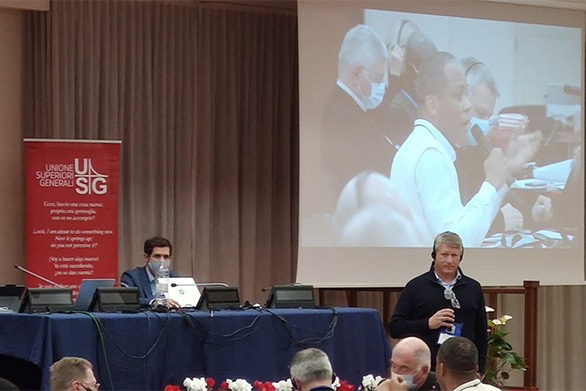
The Carmelite Prior General, Míċeál O'Neill, O. Carm., was elected to the executive committee of the Union of Superiors General (USG). He will represent the Mendicant orders. Fr. Míċéal was also selected as one of the members of the so-called Commission of 16.
The Executive Committee is responsible for the ordinary decisions of the Union and for implementation of resolutions of the Assembly. The Commission of 16 is made up of eight male religious and eight female religious. They have the charge of engaging in formal dialogue with the Congregation for Institutes of Consecrated Life and Associations of Apostolic Life from time to time.
The members also elected Fr. Arturo Sosa S.J., for a second term as president of the USG. The newly elected serve for the period 2021-2024.
The USG was created "to promote the life and mission of the individual institutes at the service of the Church, for a more effective collaboration among them, and for a more fruitful contact with the Holy See and hierarchy. Its members are the superior generals of men’s Religious Institutes or Societies of Apostolic Life of Pontifical Right. Practically it is a voluntary forum for the exchange information and accompaniment.
The organization’s 96th Assembly was held on November 24-26, 2021, at the Fraterna Domus, a facility of the Associazione Volontari del Servizio Sociale Cristiano.
Vitam Coelo Reddiderunt

H. Carmen Inmaculada Avellana Gilabert (HSM)
26-10-21
Ortus: 14-10-34
P. Temp.: 08-12-59
P. Soll.: 08-12-62
Ord.: 20-11-21
P. Cláudio (Jildert) Van Balen (Flum)
20-11-21
Ortus: 26-09-33
P. Temp.: 22-01-54
P. Soll.: 23-02-57
Ord.: 19-12-59
Celebrating At Home - 3rd Sunday of Advent

What must we do? (Luke 3:10-18)
We continue to focus on John the Baptist in the Gospel today. Last week we heard about John’s ministry of preaching repentance and baptism for the forgiveness of sins. The idea of repentance is about turning around and facing in a new direction. John’s call to the people was to turn away from the old ways of life and to turn towards God.
The Gospel opens with the people, the tax collectors and some soldiers, having heard the call to change their lives, all asking John, ‘What must we do?”
These three groups would normally be very suspicious of each other. The Roman soldiers, occupying the country, the locals who collected tax on behalf of the Romans, and the crowd, often the victim of both. Yet somehow John’s preaching has brought them all together in a community of sorts.
Notice how practical John’s advice is. And, at the same time, it is a call to live by the values of compassion (to the crowd), justice (to the tax collectors), and the promotion of peace (to the soldiers).
Values and behaviours opposite to these hinder relationship with God, dehumanise others and ruin life in community.
What results from conversion is a new way of life. In the Gospel, John spells out what that new way of life might look like for these groups of people.
John’s teaching and advice build a sense of expectancy among the crowd. “Is this the One?” they ask themselves.
It would have been easy for John to get carried away with his popularity, but he proves to be a true servant of the Word (like the prophets) and directs the peoples’ attention away from himself and towards the One who is to come.
Feelings of expectation and rejoicing dominate the prayers and readings of this part of Advent as we grow closer to celebrating the Christmas feast.
Our celebration of the historical birth of Jesus is the lens through which we again contemplate the enduring presence of Jesus in our lives.
Accompanied by the beautiful thoughts of the first reading we can be confident in God’s love, which (as the reading says) renews us.
How do we respond to this new awareness of God’s abiding love? We ask the same question as the people asked John, “What must I do?” Our response to that question leads to a reformation of our attitudes and behaviour towards others. To be baptised with the Holy Spirit and with fire is to be baptised ‘from within’, to have hearts and minds re- made in the image and likeness of Christ.
Learning the way of Christ is how we become the wheat in the Kingdom of God, not the chaff in the fire.
- pdf Celebrating At Home - 3rd Sunday of Advent [PDF](1.20 MB)
- default Celebrating At Home - 3rd Sunday of Advent [ePub](2.68 MB)
- pdf Celebrando En Familia - Tercer Domingo de Adviento(249 KB)
- pdf Celebrando In Casa - III Domenica di Avvento(267 KB)
- pdf Celebrando Em Familia - III Domingo do Advento [Português](248 KB)
The Season of Advent
The word “advent” means appearing, arrival, to come. Advent is the Church’s time of preparation for celebrating God’s gift of his Son. Our liturgy will gather the great Advent themes of hope, expectation and preparation. During Advent we recall Christ’s coming at Bethlehem and we look forward to his second coming at the end of time.
Advent is a season of joyful expectation.
Advent has two parts. The first two Sundays focus on preparing for Jesus’ return at the end of time. The second two Sundays focus on preparing to celebrate the anniversary of Jesus’ birth.
The Gospels of the Sundays in Advent have four great movements 1. Stay Awake! 2. Prepare! 3. Rejoice! and 4. Receive!
Advent is a journey from
Maranatha! Come, Lord Jesus!
to
Emmanuel. God-is-with-us!
...
This resource is presented by the Carmelites of Australia & Timor-Leste at a time when we cannot gather together as we usually do to celebrate the Eucharist. We are conscious that Christ is present not only in the Blessed Sacrament but also in the Scriptures and in our hearts. Even when we are on our own we remain part of the Body of Christ.
In the room you decide to use for this prayer you could have a lighted candle, a crucifix and the Bible. During Advent it is particularly appropriate to have an Advent Wreath in the place where you pray. These symbols help keep us mindful of the sacredness of our time of prayer and can help us feel connected with our local worshipping communities.
This text is arranged with parts for a leader and for all to pray, but the leader’s parts can be shared among those present.
As you use this prayer know that the Carmelites will be remembering in our prayer all the members of our family at this time.
Blessed Bartolomew Fanti, Carmelite

On December 5th we celebrate the memorial of Blessed Bartolomew Fanti.
For 35 years, Bartolomew Fanti was part of the Confraternity of Our Lady in the Carmelite church of Mantova. On January 1, 1460, he became the spiritual director and rector of the confraternity, writing its rule and statutes. It is clear that he was completely dedicated to this ministry until he died.
Such was his own devotion to the Eucharist that it stressed by his biographers along with that of his very loving devotion towards the Virgin Mary. A popular image of Blessed Bartolomew shows him explaining the Eucharist to a group of novices, including Blessed Baptist Spagnoli, seated prominently in the front row. Other biographers stress his extraordinary effective preaching.
Such claims that Blessed Baptist Spagnoli was a novice of Fanti’s appear to be erroneous for a couple of reasons. There are no reliable indications that Fanti served as a novice director and Spagnoli spend his first year in 1463-1464 at Ferrara and not at Mantova.
The Rule for the Confraternity consists of 12 chapters written by Fanti. He uses a very simple and concise style some say is indicative of the First Order of Carmelites. He also wrote a registry of worthwhile facts. These writings have been published, with an exhaustive introductory text, by Graziano of St. Teresa.
Fanti died in 1495. In 1516 his body was moved from its tomb to the chapel of the Church to Our Lady. In 1598 his body was placed under the altar. Following the suppression of the house, in 1783, his body was moved to San Marco, and from there, after approximately 10 years, to the cathedral where it remains today, incorrupt, in the chapel of the crowned Madonna.
Prayer
Lord God,
you made Blessed Bartholomew Fanti
outstanding in his zeal for devotion to the Eucharist
and to the Blessed Virgin Mary.
May we experience in this regard
the same fullness of spirit that was his.
We ask this through Christ, our Lord.
Celebrating At Home - 2nd Sunday of Advent

Prepare a way for the Lord (Luke 3:1-6)
The sense of preparing is very strong in our readings this weekend. The Gospel highlights the role of John the Baptist as the one who prepares the way for Jesus. It was John’s ministry of preaching and baptism which laid the foundation for Jesus’ ministry. The idea of repentance has less to do with feeling sorry for individual sins and more to do with turning around and facing in a new direction. John’s call to the people was to turn away from the old way of life and to turn towards God.
The first reading from the prophet Baruch is a call to do the same. It talks about taking off the dress of sorrow and distress and putting on the beauty and glory of God. It’s a call for the people to become God’s people. God will lower the mountains and smooth the way so that God’s people can walk in safety, guided by God’s light and escorted by mercy and integrity.
In the Gospel, Luke refers to a similar text found in the writings of the prophet Isaiah. Making straight paths for the Lord can be understood as the radical change of behaviour away from sin and towards God.
The loving action of God gently fills in the valleys and lowers the mountains and straightens and smooths the roads so that we can be fully open to the living and transforming presence of Jesus so that ‘all mankind shall see the salvation of God’ in and through us.
Our Advent readings help us realise God’s profound love for us and his presence within us through the Holy Spirit. Knowing that God will always treat us with love and tender care helps us to turn again towards him and to trust in the depth of his mercy.
Our Advent journey is showing us how to prepare our hearts for a fresh discovery of God’s presence in our lives; how to recognise the hidden presence of Jesus among and around us; how to turn around and face towards God with faith, hope and love; and how to be the living presence of Jesus in our moment of history.
- pdf Celebrating At Home - 2nd Sunday of Advent [PDF](1.10 MB)
- default Celebrating At Home - 2nd Sunday of Advent [ePub](2.11 MB)
- pdf Celebrando En Familia - Segundo Domingo de Adviento(419 KB)
- pdf Celebrando In Casa - II Domenica di Avvento(447 KB)
The Season of Advent
The word “advent” means appearing, arrival, to come. Advent is the Church’s time of preparation for celebrating God’s gift of his Son. Our liturgy will gather the great Advent themes of hope, expectation and preparation. During Advent we recall Christ’s coming at Bethlehem and we look forward to his second coming at the end of time.
Advent is a season of joyful expectation.
Advent has two parts. The first two Sundays focus on preparing for Jesus’ return at the end of time. The second two Sundays focus on preparing to celebrate the anniversary of Jesus’ birth.
The Gospels of the Sundays in Advent have four great movements 1. Stay Awake! 2. Prepare! 3. Rejoice! and 4. Receive!
Advent is a journey from
Maranatha! Come, Lord Jesus!
to
Emmanuel. God-is-with-us!
...
This resource is presented by the Carmelites of Australia & Timor-Leste at a time when we cannot gather together as we usually do to celebrate the Eucharist. We are conscious that Christ is present not only in the Blessed Sacrament but also in the Scriptures and in our hearts. Even when we are on our own we remain part of the Body of Christ.
In the room you decide to use for this prayer you could have a lighted candle, a crucifix and the Bible. During Advent it is particularly appropriate to have an Advent Wreath in the place where you pray. These symbols help keep us mindful of the sacredness of our time of prayer and can help us feel connected with our local worshipping communities.
This text is arranged with parts for a leader and for all to pray, but the leader’s parts can be shared among those present.
As you use this prayer know that the Carmelites will be remembering in our prayer all the members of our family at this time.
Lectio Divina December 2021

God of all people,
You know how people hunger and thirst for truth, love and acceptance.
If we accept You and believe in You we see our deepest trust and aspirations being fulfilled by You as we work for the coming of Your kingdom.
Help us to let the cup that You pour for us overflow on all Your people, that all may praise You now and forever.
JPIC Commission Webinar On Human Rights

The Webinar on Human Rights organized by the Carmelite Commision for JPIC of Asia, Australia and Oceania will take place this upcoming Saturday, November 27, 2021 at 12:00 hrs. (Rome, Italy, GMT +1).
During this webinar the members of the Comission for JPIC and participants will share their perpectives on human rights and will provide us with some illumination on challenges the members of the Carmelite family worldwide are experiencing in their lives.
P. Míċéal O'Neill, O.Carm., Prior General, will present the conference "JPIC and Human Rights: A Carmelite Perspective," and Fr. Christian Buenafe, JPIC Convener, from the Philippine Province will speak about "JPIC and Human Rights Work: Philippine Province."
The Asia-Australia-Oceania Geographic Area JPIC commission was formed in April 2021. The Commission has identified three areas to focus it's work in this sexennium (2019-2025), namely human rights, environment, and culture and religion as part of our JPIC work. This is the first initiative involving the whole Carmelite family in the Geographic area as a commission.
The Carmelite Order General Commission for Justice, Peace and Integrity of Creation (JPIC) works in the person of the General Councillor responsible, Fr. Conrad Mutizamhepo, O.Carm. and all his members, with the international community through the Carmelite NGO at the United Nations and with the other NGOs within the Carmelite Family towards promoting Sustainable Development Goals in Carmelite ministries around the world especially in the areas of education, religious freedom and human rights, among other aspects contained in the Global Plan of the General Council 2019-2025.
To connect to the Zoom Meeting:
ID #873 0782 4093
Passcode: 255294
Celebrating At Home - 1st Sunday of Advent

Stay awake! Your liberation is near
The great Advent journey begins. The Advent readings are a rich tapestry of images centered on the truth that God has come among us. We do not pretend that we are waiting for Jesus to be born in a stable. That happened once, a long time ago, and it will not happen again. We remember that birth as we remember our own birthdays.
The God who came among us is still among us. Advent’s invitation is to become aware of the all-pervading presence of the risen Jesus as Emmanuel – God among us.
In the first reading this Sunday Jeremiah looks forward to the coming of one who will save God’s people, one who acts with honesty and integrity. In the second reading St Paul encourages the people of Thessalonica in their following of Christ. He prays that their love will grow and that their hearts will be ‘confirmed in holiness’. The early Christians believed that Jesus would return very soon as the Lord of Glory.
As time passed, they had to re-think this belief and work out how to live in the meantime, the time in between the first and final comings of Christ. That’s our challenge, too.
Today’s Gospel from St Luke warns Christians not to be distracted by the cares and snares of the world, but to be ready to stand confidently before the Son of Man when he comes. Remaining constant in love and attentive to our calling we become the living presence of Jesus until he comes again.
- pdf Celebrating At Home - 1st Sunday of Advent [PDF](762 KB)
- default Celebrating At Home - 1st Sunday of Advent [ePub](5.98 MB)
- pdf Celebrando En Familia - Primer Domingo de Adviento(466 KB)
- pdf Celebrando In Casa - I Domenica di Avvento(465 KB)
...
This resource is presented by the Carmelites of Australia & Timor-Leste at a time when we cannot gather together as we usually do to celebrate the Eucharist. We are conscious that Christ is present not only in the Blessed Sacrament but also in the Scriptures and in our hearts. Even when we are on our own we remain part of the Body of Christ.
In the room you decide to use for this prayer you could have a lighted candle, a crucifix and the Bible. During Advent it is particularly appropriate to have an Advent Wreath in the place where you pray. These symbols help keep us mindful of the sacredness of our time of prayer and can help us feel connected with our local worshipping communities.
This text is arranged with parts for a leader and for all to pray, but the leader’s parts can be shared among those present.
As you use this prayer know that the Carmelites will be remembering in our prayer all the members of our family at this time.
Decree of Brandsma Miracle Authorized to be Promulgated
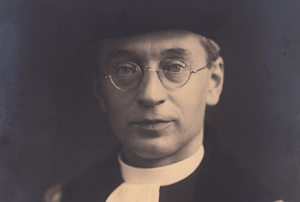
Today, the Holy Father, during the Audience granted to His Most Reverend Eminence Cardinal Marcello Semeraro, Prefect of the Congregation for the Causes of Saints, authorized the said Congregation to promulgate the Decree concerning the miracle attributed to the intercession of Blessed Titus Brandsma.
We give thanks to God for the positive outcome obtained and we continue to pray to the Lord, hoping that soon the canonization of Blessed Titus Brandsma will take place.
Read here (only in Italian) the Bulletin of the Holy See Press Office


