










O.Carm
Lectio Divina: September

Almighty God, every good thing comes from you. Fill our hearts with love for you, increase our faith, and by your constant care protect the good you have given us.
We ask this through our Lord Jesus Christ, your Son, who lives and reigns with you and the Holy Spirit, one God, for ever and ever.
Amen.
New Book on Titus Brandsma Published in English
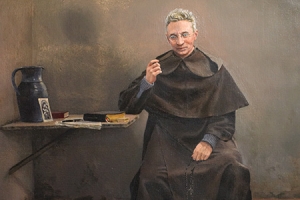
Our latest book on Titus Brandsma
We are happy to announce the publication of an English translation of the authoritative biography of Titus Brandsma, O. Carm., by Miguel Arribas, O. Carm.
Watch this short presentation of the book here
Memorial of Bl. Jacques Retouret, Priest and Martyr
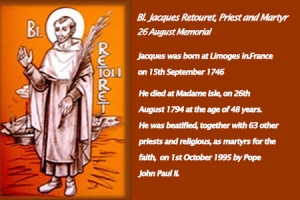
Bl. Jacques Retouret was born at Limoges in France on 15th September 1746 to a merchant family.
He was a serious young man, a lover of books and greatly gifted.
At fifteen years of age, he entered the Carmelite house in his native city.
After ordination, his zeal and learning were widely admired and large crowds of people were attracted by his way of preaching.
Memorial of St. Mary of Jesus Crucified
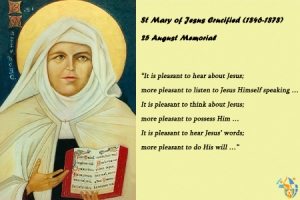
Mariam Baouardy was born at Abellin in Galilee on 5th January 1846 to very poor parents who were good living and devoted Greek-rite Catholics.
She was canonized by Pope Francis in Rome on 17 May 2015.
Her tomb, a place of pilgrimage by Christians and Muslims, is located in Carmel's church in Bethlehem.
Carmelites Increases Presence in Social Media
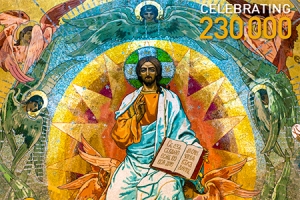
For a religious order well known for its charism of prayer and contemplation, the Carmelites of Australia and Timor-Leste have made a big splash in social media, clocking up more than 230,000 Facebook followers in just over four years.
Communications Director Fr David Hofman O.Carm says the Carmelites have been surprised and delighted at the growth of their social media following and the opportunities for connecting with people that it presents.
“We are not one of the enclosed Carmelite orders,” Fr David said. “We work in a variety of ministries including parishes in Australia and Timor-Leste, and we have a secondary school and the Carmelite Centre here in Victoria, but certainly, our charism is one of prayer and contemplation.
“So the purpose of our outreach on social media is to try and share that spirituality with people. We post prayer and reflections as well as invitations to things we’ve got going on and we see that as part of our contemplative ministry really.”
During the past month the Carmelites Facebook page reached over one million users with over 140,000 post engagements.
Fr David said that from time to time, the Carmelites use the Facebook page to ask people to contribute their prayer intentions, which are then offered at Mass.
Fr David said a particular highlight of the Facebook growth has been the fact that nearly 25,000 followers are from Timor-Leste.
“That was a surprise to me,” he said. “I hadn’t expected it, because getting onto the internet in Timor via a computer is hard.
“But what I hadn’t counted on is that almost everyone in Timor has a smart phone, because in a country where land lines are either patchy or non-existent, mobile phones are the only way to communicate. So they’re accessing our Facebook page on their phones.
“I think that’s great. It’s a real point of contact with the people in Timor and much more effective in outreach than waiting for them to come to our webpage.”
The Carmelites are trying to use beautiful images and engaging posts as a means of attracting people to their page and say they are grateful for the professional advice and support they’ve received.
“We started out with around 1000 followers and to see it grow to over 230,000 in 4 years has been really wonderful. We’ve been surprised and delighted at the connections we’re making with people and it is very encouraging to see that 78% of our Facebook followers are aged between 18-34”, Fr David said.
Meeting Of The Major Superiors Of Latin America
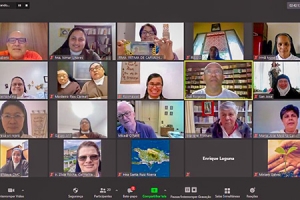
On July 19, 2021, the major superiors of religious congregations present in Latin America and the Caribbean met. The meetings was convened by Luis Maza, General Counsellor for the Americas, with the presence of Míċéal O'Neill, prior general. Marlene Frinhani, Irmãs Carmelitas da Divina Providência (Carmelite Sisters of Divine Providence), explained the theme of the meeting: "Something New is Emerging. "
Also participating were the major superiors with sisters in Brazil, Peru, Puerto Rico, Dominican Republic, Trinidad, and Venezuela. They represented, the Corpus Christi Carmelites, the Divine Providência, the Hermanas Carmelitas del Sagrado Corazón de Jesús, Hermanas de la Virgen María del Monte Carmelo, Irmãs Missionárias Carmelitas de Jesus, Istituto di Nostra Signora del Carmelo, Suore Carmelitane Missionarie di S. Teresa del Bambino Gesù, Hermanas Carmelitas de Madre Candelaria. Also participating were members of the Carmelite Family Secretariat for the Americas.
The prior general, Míċéal O'Neill, introduced the meeting, "Something New is Emerging," pointing out the new directions in the Church. He noted that the Church asks for forgiveness for not listening. He went on to quote Pope Francis that we are contemplatives with mercy. Another point highlighted by the prior general is how to be faithful who listen to the Word of God and reflect on the impact that COVID-19 has brought to the world— "people who can do nothing without God and without their brother and sister." He concluded his remarks with a question: so, what are we going to do?
Afterwards, there was a moment to share what the Spirit inspired through the words of the Prior General, echoing the invitation to open our eyes, ears, and hearts to this emerging change. On the other hand, the need to continue to walk together as Carmelite Family in unity and with the hope that arises when you are confronted with the most difficult realities was confirmed.
Marlene Frinhani presented her remarks "Signs of a New Time," using two metaphors. The first metaphor was of old hands handing over a plant to the new hands receiving it. It reflects the experience of walking into the new. The second metaphor was of the smoke that warns of someplace being on fire. Marlene also pointed out that we are slow sometimes to perceive the signs revealing changes that are emerging, and she invited us to recognize some of the signs of change in our personal circumstances.
Marlene also expressed that darkness, when we are far from God, prevents us from seeing the light. She invited us to listen, observe, and perceive God's presence in our midst, in economic disparities, technological progress, inequalities in living conditions and in the lethal power of the pandemic and its variants. How does the Carmelite Family stand in response to these warning signs? What are we going to do? We are invited to walk with the people amidst their anxieties and hopes, open to the search for truth and the practice of universal fraternity, as Pope Francis recommends in the documents Fratelli Tutti and Patris Corde.
The online meeting concluded with an invitation to participate in FOCAM in August and a presentation of the JUCAR-AMERICA project. There is the hope of meeting again to share the experiences as the Carmelite family.
FOCAM Will Host Workshop On “Living In Carmel"

FOCAM (Formators of the Carmelite Family of the Americas) will be hosting a workshop on August 26-28 on the theme “Living in Carmel in Allegiance to Jesus Christ: Memory Identity and Commitment.” FOCAM replaced FOCAL (Carmelite Formators of Latin America) earlier in the year.
On the first evening of the workshop, Marlene Frinhani, Enrique Laguna Vargas, Zilda Aparecida Rocha, and Nicolás H.D. Medina will reflect on the historical journey of the FOCAL from the perspective of formation.
Other speakers scheduled to address the participants are Carlos Mesters giving biblical reflections on “Elijah in the Formation Process of Carmel,” “Mary in the Formation Process of Carmel,” and “Elisha in the Formation Process of Carmel;” Carmelite Bishop Francisco de Sales Alencar Batista speaking on “Carmelite Identity: Living in Allegiance to Jesus Christ Today;” and Benny Phang on “Aspects that Challenge Us in the Formation Process of the Carmelite Identity.”
Talking from the formation point of view, Gilfranco Lucena will speak on “Living in Carmel in Allegiance to Jesus Christ as a Lay Person;” Rose Mary Lancelloti and Sabina Giraldo will speak on the experience of living the lay Carmelite vocation. Rosario María Vera Martin concludes this section with a talk entitled “Formation Plan for the Laity of the Order / Experience of Formation in the Order.”
On the final afternoon the topic “Encourage the Brothers and Sisters in the Commitment to ‘Live in Carmel in Allegiance to Jesus Christ’" with speakers Mícéal O’Neill, prior general, Consuelo Hernández Abreu, and Gildete da Silva. A lay person will also be joining the panel.
Because of the covid restrictions, the presentations will be held on Zoom.
Memorial of Bl. Angelus Augustine Mazzinghi
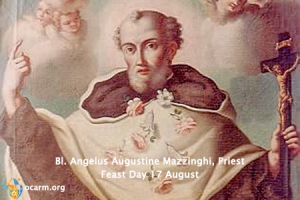
Today we celebrate the memorial of Bl. Angelus Augustine Mazzinghi.
The year of birth of Bl. Angelus in Florence, Italy, or nearby, is unknown but it was certainly before 1386.
He was an eloquent preacher and a reformer with zealous love for the Eucharist and the Blessed Virgin Mary.
He was received into the Order in 1413 and was the first member of the reform at Santa Maria delle Selve.
Vietnamese Carmelites Feed the Masses

Covid-19 continues to bring challenges to people around the world. As has been reported we have reported previously, Carmelite ministries around the world have responded to the needs of the people they serve as well as those they live around.
For the last 3 years, the Carmelites of the Province of St. Elias Commissariat of Vietnam have been providing food to its neighbors but for the last three weeks, when the 4th wave of Covid came on the scene, Vietnam has been hard hit. The response of the members of the Commissariat has been to redouble their efforts to make sure that people have the food they need on a regular basis. Particular efforts have been directed to the immigrants from the countryside who come to town for employment. Many of the buildings near the Carmelite ministries have rooms that these workers rent to sleep in.
Since the recent increase in covid infections, strict quarantines have been imposed and movement has been very limited, Daily curfews have been in place, especially in Saigon where the Carmelites have four priories. The supply of food available and accessible to the people has become severely limited. The situation is complicated by the placement of fences everywhere in order to control movement. “You are not allowed to leave your particular neighborhood. Everyone is literally fenced in,” reports Provincial Commissary Joseph Hung Tran, O. Carm. “Everything is closed. No one is working. No stores are open. These people can only stay in their rooms whereas normally they are only there to sleep.”
Because of the generosity of the friends and benefactors of the Carmelites, a lot of food—especially rice, vegetables, and fish—has been available for the Carmelites to distribute. “Our neighbors are immigrants who are workers on daily wages. We try to provide rice and some food for them as there are more than 1,000 rooms around our priories but no one is working. So far we have distributed over 13 tons of rice. We have also had a lot of vegetables and fish to give out as well,” said Fr. Hung. “People were very concerned about us. But we have enough food. So we are now busy making the food available to those who have no way of getting the food they need."
The Provincial Commissary of Vietnam was established on March 19, 2019. It currently has 45 members with 4 houses. 10 of the members study and work in the parishes of the province in the United States. Four are currently studying in Rome.
Caribbean Region Talks about Mary in Carmel
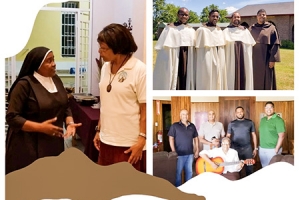
The Caribbean Carmelite Conference 2021 was held virtually from July 13th to July 15th 2021 with the theme, “Mary in the Carmelite Tradition.” The main speaker was Dr. Johan Bergström- Allen, T.O.C. of the United Kingdom, author of “Climbing the Mountain: The Carmelite journey.” The Conference was conducted on Zoom as a result of implications of the Covid-19 pandemic.
The conference, the third of its kind in the past 8 years, was a collaborative effort among all branches of the Carmelite family in the English-speaking Caribbean. Conference participants were mainly from Trinidad, as well as participation from Guyana, Grenada and St. Lucia; with a few participants from the United States and the Netherlands. Fr. Brent Alexis. O. Carm spearheaded the coordination and planning of the many parts of this year’s conference. There were approximately one hundred participants in attendance which included vocation prospects, friars, Corpus Christi Carmelite sisters, Carmelite Tertiaries (Lay Carmelites), Handmaids of our Lady of Mt. Carmel, members of Carmelite parishes and friends of Carmel.
 Dr. Johan explored the conference topic of Our Lady in Carmel, over the three days, with sub-topics of “Mary in Carmelite History,” “Mary in Carmel’s Art & Devotions” and “Mary in Carmel’s Liturgy.” Dr. Johan’s well-prepared power point slides, historical facts, reference to Carmelite literature and his sharing his own experiences as a Lay Carmelite kept attendees very engaged and interested. There was ample time after each of his talks for questions, observations and conversation.
The goal of the Conference was to bring together members of the various branches of the Carmelite Order in the Caribbean region and to deepen our knowledge of the Carmelite spirituality and charism. Parishioners of Carmelite parishes and friends of Carmel have also attended these conferences and expressed greater interest to learn more about the Order and some have even expressed greater enthusiasm toward becoming members of the Third Order.
Following the main talk, participants were broken into smaller groups for workshop topics of their choosing. Workshop topics were: Carmelite Family Dynamics by Fr. Hasely King, O. Carm, Liturgical Prayer by Bro. Nigel Ali, O. Carm, Lectio Divina by Sr. Claire Marie Nero, O. Carm, Contemplative Prayer by Mr. Kirk Nancoo, the Prophet Elijah by Sr. Katrina Charles, O. Carm, Blessed Titus Brandsma by Fr. Michael Driscoll, O. Carm, St. Angelus by Fr. Gerard Tang Choon, O. Carm, Servant of God Mother Mary Ellerker by Mrs. Neila Todd, T.O.C. and St. Therese by Fr. Mikhail Woodruffe, O. Carm. One week before the Conference, there was a shorter online session led by Fr. Hasely King, O. Carm that introduced persons to the fundamentals of Carmelite spirituality and history in preparation for the Conference.
 The three-day conference concluded each day with a Triduum of Masses celebrated each day by one of the friars in Trinidad and livestreamed. Similarly, conference attendees as well as other members of the Carmelite family across the Caribbean viewed the special livestreamed Mass for the Solemnity of Our Lady of Mt. Carmel on July 16th.
This was the third Caribbean Carmelite Conference, which are held every 2 to 3 years. The past two conferences were held in-person in Trinidad with main speakers: Fr. Leopold Glueckert, O. Carm of the United States of America and Fr. Kevin Alban, O. Carm of the United Kingdom (RIP).
Conference attendees provided feedback that they felt very enlightened about areas of their Carmelite heritage and feel excited to see the future of Carmel in the region.


