










Displaying items by tag: Celebrating At Home
Celebrating At Home - 5th Sunday in Ordinary Time

Vulnerable Risk-Takers
(Matthew 5:13-16)
Last Sunday, in the ‘Beatitudes’, Jesus called his disciples to be vulnerable risk-takers in the way they lived their lives.
Continuing the Sermon on the Mount this week, Jesus goes on to say that if they live this way, they will be like the salt that transforms the flavour of food and the light that transforms the darkness.
Undertaking this path of transformation produces the flavour and light of good works which lift burdens from our fellow human beings, not for the praise of the disciple but for the praise to God. In this way, these good works draw others into the circle of God’s friendship and the experience of the kingdom.
Disciples walk the path of vulnerability and risk in order to help lift burdens from human beings; to make the world safe for their brothers and sisters.
These good, life-giving actions towards our fellow human beings restore life, heal relationships and seek peace and justice.
This non-aggressive, non-grasping, non-competitive stance towards one another would hardly be described by many in today’s world as the way to a successful life. It is a real challenge to live by the Gospel in a world which fawns over and celebrates wealth, power, aggression, status and deceptive and combative behaviour. We, too, can be easily seduced.
We need to be bold and brave in our care for one another, like a light-filled city on a hilltop.
So, can we run the risk of being poor in spirit, gentle, a peacemaker, working for what is right, being merciful, or persecuted in the cause of right? Can we be vulnerable risk-takers?
As always, the first reading (see back page) provides an introduction to the Gospel text. The reading from Isaiah (58:7-10) gives some very practical examples of good works: share your bread with the hungry, clothe the naked, look after your family members. Then ‘your light will shine’. Integrity will be yours and God will walk with you. ‘If you do away with the angry word and the clenched fist, feed the hungry, give relief to the oppressed, your light will rise in the darkness and your shadows become like noon.’
A great ‘setting of the scene’ for the Gospel!
- pdf Celebrating At Home - 5th Sunday in Ordinary Time [PDF](2.93 MB)
- default Celebrating At Home - 5th Sunday in Ordinary Time [ePub](4.15 MB)
- pdf Celebrando en Familia - V Domingo del Tiempo Ordinario(451 KB)
- pdf Celebrando in Casa - V Domenica del Tempo Ordinario(455 KB)
- pdf Celebrando em família - Quinto Domingo do Tempo Comum(456 KB)
Celebrating At Home - 4th Sunday in Ordinary Time

Catching the Vision
(Matthew 5:1-12)
Last Sunday’s Gospel introduced the beginning of Jesus’ ministry in Galilee, his call to repentance, the choice of some disciples and the spread of his fame.
Now, over the next four Sundays, the church will take us on a journey through Jesus’ teaching in Chapters 5-7 of Matthew’s Gospel. These chapters form the Sermon on the Mount. Each Sunday’s Gospel builds on the one before – they are part of this first discourse in Matthew’s Gospel and need to be understood in a connected sense, not as a series of isolated sayings.
The text we know as the ‘Beatitudes’ introduces Jesus’ teaching about the kingdom, discipleship, the true meaning of the Law and true righteousness (virtue), interior disposition of the heart against external fulfilment of Law, trust in God and keeping the Kingdom as the focus of the disciple’s life.
Matthew’s beatitudes have been understood as a pattern of life for the follower of Jesus. Put in the context of Jesus’ call to conversion (the idea of radical change and transformation), those willing to be transformed will enjoy the blessings of the kingdom as their reward.
To be ‘poor in spirit’, to experience sadness (‘mourn’) because of the present state of affairs, to be gentle and unselfish rather than on the make, to have a passionate commitment to justice, to exercise mercy instead of taking advantage, to be ‘pure in heart’, to be ‘peacemakers’, to endure persecution and calumny for the sake of the right way of life (‘righteousness’) and allegiance to Christ: all these things make one vulnerable here and now, entailing much loss. The vulnerable make the world safe for humanity.*
For those who live according to the heart of God as Jesus reveals it, the blessings of the Kingdom will be theirs, their place in the household of God will be assured and they will be making the world a safe place for their brothers and sisters.
*Byrne, Brendan, Lifting the Burden: reading Matthew’s Gospel in the Church Today. St Pauls, 2004, pp55-57
- pdf Celebrating At Home - 4th Sunday in Ordinary Time [PDF](2.92 MB)
- default Celebrating At Home - 4th Sunday in Ordinary Time [ePub](3.77 MB)
- pdf Celebrando en Familia - IV Domingo del Tiempo Ordinario(476 KB)
- pdf Celebrando in Casa - IV Domenica del Tempo Ordinario(452 KB)
- pdf Celebrando em família - Quarto Domingo do Tempo Comum(453 KB)
Celebrating At Home - 3rd Sunday in Ordinary Time

The Light Shines
(Matthew 4:12-23)
Last Sunday’s Gospel served as an introduction to Jesus, the Lamb of God.
The Sunday Gospels between now and the beginning of Lent will use the Sermon on the Mount to help us explore and reflect upon who this Lamb of God is and how we, as disciples, should respond to him. They will unfold for us how Jesus, the Lamb of God, is the source of true peace and how we can find our way to him and to one another – that is, how we can live faithful to the tradition of Jesus.
This Sunday Jesus begins his ministry in an unexpected place – Capernaum in the countryside, not in the holy city, Jerusalem. The familiar Gospel demand: Repent for the kingdom is close at hand, is sounded for the first time by Jesus, echoing John the Baptist.
To the ministry of proclaimers of the Kingdom Jesus adds four intimates who will be with him throughout the journey into the light.
The Gospel begs many questions: just what is this Kingdom all about? Who is this Jesus who seems to have the power to compel prosperous, ordinary men to follow him? What does it mean to be ‘fishers of men’? Why does Jesus begin his ministry in an unexpected place? What is this Good News of the Kingdom that Jesus offers?
In all, the Gospel serves not just to tell us about Jesus and what he did, but also to help us reflect on our own experience of Jesus: what does it mean for us also to be called (not just as followers but also as ‘fishers’)? How immediate and life-changing is our response to him? Can we follow him all the way to the cross? How do we proclaim the Good News of the kingdom? How are we healers of people and situations which are part of our lives?
- pdf Celebrating At Home - 3rd Sunday in Ordinary Time [PDF](3.16 MB)
- default Celebrating At Home - 3rd Sunday in Ordinary Time [ePub](4.94 MB)
- pdf Celebrando en Familia - III Domingo del Tiempo Ordinario(523 KB)
- pdf Celebrando in Casa - III Domenica del Tempo Ordinario(526 KB)
- pdf Celebrando em família - III Domingo do Tempo Comum(521 KB)
Celebrating At Home - 2nd Sunday in Ordinary Time

The Gentleness of the Lamb
(John 1:29-34)
Ordinary Time in the church’s year begins with the Feast of the Baptism of the Lord which celebrates his identity as the ‘beloved Son’. On this second Sunday in Ordinary Time we move from the baptism to the mission of the one baptised.
John the Baptist names Jesus as, ‘the lamb of God that takes away the sins of the world.’ In doing so, he links Jesus with a number of Old Testament passages about the lamb of sacrifice and the suffering servant of God. As the first reading this Sunday says, this servant has a universal mission to gather and restore God’s people, to be the ‘light of the nations’ and to proclaim God’s salvation ‘to the ends of the earth’.
In speaking about Jesus, John also tells us about his own mission: to proclaim that someone greater than he is was coming, one who would baptise with the Holy Spirit - the Chosen One of God.
Perhaps our reflection on the identity and mission of Jesus also tells us something about who we are meant to become as his disciples.
There is a gentleness we associate with lambs. They are not regarded as aggressive creatures. They do not kill, even to eat. In a world which often praises and rewards violence and aggression, the Lamb calls us to a different way of life.
Celebrating At Home - Christmas - Nativity of the Lord

God Is With Us!
(Matthew 1:18-25)
We began Advent with the cry, ‘Come, Lord Jesus’. Now we end it with the joyful shout, ‘God is with us!’
Reflecting on the historical birth of Jesus, the Church proclaims the truth that God is, and has always been, with his people. And if God is with us, then God is for us. God is on our side.
God has no desire to live in houses made of wood, stone or gold. God’s deepest desire is to live in human flesh. Just as God did that in the human flesh of Jesus Christ a long time ago, God continues to do so now in us.
Like Mary, we accept God’s invitation, allowing Jesus to become flesh in us, too; to be seen and experienced in good thoughts, good words and good actions, in deeds of loving kindness which bring life, not death, to God’s people.
- pdf Celebrating At Home - Christmas - Nativity of the Lord [PDF](640 KB)
- default Celebrating At Home - Christmas - Nativity of the Lord [ePub](1.46 MB)
- pdf Celebrando en Familia - La Natividad del Señor(320 KB)
- pdf Celebrando in Casa - Natività del Signore(322 KB)
- pdf Celebrando em família - Natal – Natividade do Senhor(317 KB)
Celebrating At Home - 4th Sunday of Advent

The Promise Fulfilled
(Matthew 1:18-24)
The great Christmas feast is almost here. As always in Advent, what is promised in the first reading is brought to fulfilment in the Gospel reading. We began Advent with the cry, ‘Come, Lord Jesus’. We will end it with the joyful shout, ‘God is with us!’
Our Advent journey has called us to:
stay awake to the coming of God,
prepare ourselves to receive the Lord,
rejoice that he is not afraid to make his home with us, and to
receive him with faith and love.
At Christmas we will hear the call to give birth to him in word and action so that the saving power of God may be seen and experienced through our every thought, word and action.
The promise of the first reading from Isaiah that, “The virgin will conceive and give birth to a son and they will call him Emmanuel, a name which means ‘God-is-with us’,” is fulfilled in the Gospel which tells how Joseph received both Mary and Jesus into his home.
Following Joseph’s example, we joyfully welcome Jesus, and Mary, into our hearts.
The great gift of Jesus to the world cannot be confined only to one moment in history. Through us, the Body of Christ, the Gift is given again and again; born into every moment of human history. The presents we exchange at Christmas are meant to be symbols of our readiness to give and receive Christ, the eternal gift of God’s love.
As, year by year, we travel the liturgical journey of the Church’s feasts and seasons we touch ever more deeply the living presence of Christ in us that we may become ever more deeply the living presence of Christ in the world.
Celebrating At Home - 3rd Sunday of Advent

Are You the One?
(Matthew 11:2-11)
This Sunday marks the turning point in the Advent Season. Traditionally called Gaudete Sunday it is a day of rejoicing that the Saviour is near. The focus shifts from the final coming of Christ at the end of time to the first coming of Christ at Bethlehem. The note of joy is symbolised by the inclusion of the colour rose among the purple of the Season.
The joyful first reading from the prophet Isaiah proclaims that God is on his way to save his people. This coming brings healing and rejoicing and an end to sorrow and lament.
Using images of farmers and prophets, the letter of St James urges patience in our waiting for God. A kind of patient certainty is the attitude of the disciple.
Perhaps it is actually us who are slow in responding to God; slow in letting the message of the Gospel and the Holy Spirit transform our lives so that we too might have power to bring healing and joy. In the Gospel Jesus fulfils the prophecy of the first reading about the Messiah. John the Baptist asks, “Are you the one who is to come, or have we got to wait for someone else?”
The words of Jesus clarify his identity and that of John the Baptist. Jesus comes, not as the kind of warrior-messiah, slaughtering and slashing, but as ‘the kindness of God’, tending the sheep, healing and liberating the needy - the blind see again, the lame walk, lepers are cleansed, the deaf hear, and the dead are raised to life and the Good News is proclaimed to the poor.
But is Jesus the ‘one’ for us, or are we really waiting for someone or something else to save us?
Our Christmas can’t simply be about Jesus’ birth a long time ago, celebrating an historical anniversary. It has to be more than that - the celebration of a fresh discovery of an ever-deepening presence of Christ in each of us.
Rejoice! God is not only ‘on his way’, he is already here!
- pdf Celebrating At Home - 3rd Sunday of Advent [PDF](1.11 MB)
- default Celebrating At Home - 3rd Sunday of Advent [ePub](4.07 MB)
- pdf Celebrando en Familia - Tercer Domingo de Adviento(391 KB)
- pdf Celebrando in Casa - III Domenica di Avvento(383 KB)
- pdf Celebrando em família - Terceiro Domingo Do Advento(382 KB)
Celebrating At Home - 2nd Sunday of Advent

Prepare A Way For The Lord
(Matthew 3:1-12)
The magnificent first reading from the prophet Isaiah this weekend looks forward to the appearance of one ‘on whom the spirit of the Lord rests – a spirit of wisdom and insight, counsel and power and knowledge of the fear of the Lord’.
He gives judgement in favour of the poor. His judgement is not influenced by appearances or hearsay. He judges with integrity. His word strikes the ruthless and his sentences bring death to wickedness. In his day extraordinary things happen: ‘the wolf lies with the lamb…’ All creation is at peace. Even natural enemies (symbolised by the animals) live together in peace. No hurt or harm is done because the whole country ‘is filled with the knowledge of the Lord’. John the Baptist sits at the centre of this week’s Gospel and next week’s. He is the ‘one who cries in the wilderness: Prepare a way for the Lord; make his paths straight’.
John was preparing the people for the coming of Jesus.
Moved by his preaching many sought baptism in the river Jordan. This ancient water-rite symbolised dying to the old way of life and rising to a new way of life.
That’s what repentance is about: turning away from sin and turning towards God. It is about true conversion of heart. It’s about making straight the pathways of our hearts. The fruit of our repentance and true conversion shows itself in good works.
Our preparation for the coming ‘day of the Lord’ is a continual cycle of dying and rising; of turning away from sin and towards God; of remaking our minds and hearts after the mind and heart of Christ. The good works we do give Christ presence, form and shape in the concrete reality of human life. So, Christian life is a constant act of preparation through repentance and good works.
Christmas is not just about the birth of Jesus long ago.
It’s also about giving birth to him in our lives every day.
- pdf Celebrating At Home - 2nd Sunday of Advent [PDF](1.38 MB)
- default Celebrating At Home - 2nd Sunday of Advent [ePub](1.96 MB)
- pdf Celebrando en Familia - Segundo Domingo de Adviento(393 KB)
- pdf Celebrando in Casa - II Domenica di Avvento(388 KB)
- pdf Celebrando em família - Segundo Domingo Do Advento(409 KB)
Celebrating At Home - 1st Sunday of Advent
Stay Awake!
(Matthew 24:37-44)
The great Advent journey begins. The Advent readings are a rich tapestry of images centered on the truth that God has come among us. We do not pretend that we are waiting for Jesus to be born in a stable. That happened once, a long time ago, and it will not happen again. We remember that birth as we remember our own birthdays.
The God who came among us is still among us. Advent’s invitation is to become aware of the all-pervading presence of the risen Jesus as Emmanuel – God among us.
In the first reading this Sunday Isaiah captures the sense of God’s presence among his people through the images of the high mountain and the Temple – the dwelling place of God among his people. The people’s response in the reading is to be drawn into God’s presence ‘that he may teach us his ways’ and ‘we may walk in his paths’, and be utterly transformed into a new way of living (making swords into ploughshares, etc). In the second reading St Paul reminds the Romans that they are already living in ‘the time’. They should ‘wake up now’ and ‘live decently as people do in the daytime’.
The early Christians believed that Jesus would return very soon as the Lord of Glory. As time passed, they had to re-think this belief and work out how to live in the meantime, the time in between the first and final comings of Christ. That’s our challenge, too.
This week’s Gospel calls us to “Stay awake”, to be vigilant and attentive to the signs of the times so that we do not miss the moment when God breaks into human history once again. The God who came among us is still among us. In Advent we train our eyes to see the reign of God more clearly so that we may be totally caught up in God’s action in the world as we wait for the final manifestation of God’s glory.
- pdf Celebrating At Home - 1st Sunday of Advent [PDF](3.11 MB)
- default Celebrating At Home - 1st Sunday of Advent [ePub](3.93 MB)
- pdf Celebrando en Familia - Primer Domingo de Adviento(470 KB)
- pdf Celebrando in Casa - Prima Domenica di Avvento(442 KB)
- pdf Celebrando em família - Primeiro Domingo Do Advento(465 KB)
Celebrating At Home - Christ the King
The Royal Shepherd
(Luke 23:35-43)
a kingdom of holiness and grace,
a kingdom of justice, love, and peace’.
The first reading from the book of Samuel tells the story of David’s election as king of Israel. Under David all the twelve tribes of Israel gathered to form one kingdom. The reading recalls God’s commission to David to be ‘shepherd of my people Israel’. David is not to lord it over his people, but to be a shepherd to them.
Like David, Christ comes to gather all people into the one Kingdom of God. He, too, acts as a shepherd-king to God’s people.
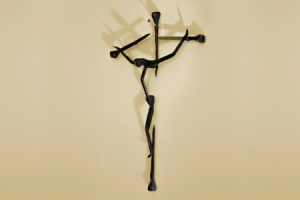
The Gospel illustrates this clearly. Here is a king who gives up his life for his people. He has no fine clothes. His throne is the cross. His crown is made of thorns, not of gold. Even in the throes of death faith and forgiveness are at work and entry into the kingdom of God gained and granted. Indeed, the final act of the dying King Jesus is to grant forgiveness, mercy and admission to the kingdom – a gospel within the Gospel.
The Gospel readings throughout Ordinary time have lead us on a journey of accompanying Jesus on his earthly journey, listening to him unfold God’s desire for the human family, watching him restore health and wholeness to many, being taught how to pray properly, to be aware that the Kingdom is both ‘here and now’ and ‘yet to come’, the lengths God goes to in order to win us back, and how God meets us with mercy, forgiveness, healing and peace. Our journey has been about discovering who God is and therefore, who Jesus is, and therefore, who we are called to be when we enter into a faithful relationship with him.


