













O.Carm
Vitam Coelo Reddiderunt
|
05-12-25 |
|
|
|
|
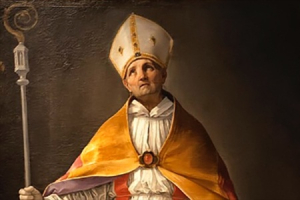
St. Andrew Corsini, Bishop
January 9th | Feast
Born in Florence at the beginning of the 14th century, St. Andrew Corsini entered religious life in the Carmelite house in his native city. He was appointed Provincial of Tuscany in 1348 by the General Chapter meeting in Metz and the following year he was named bishop of Fiesole, near Florence. He governed his diocese well, becoming a model of charity and an eloquent preacher.
He was distinguished by his zeal for the apostolate, his wise judgement and his love for the poor.
Prior General's Schedule for January 2026
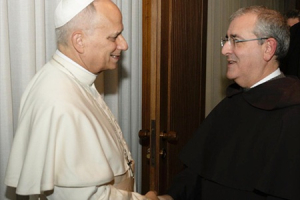
Fr. Desiderio García Martínez, O. Carm., the prior general, has the following schedule planned for the month of January 2026:
January 8: Visit to the Carmelite monastery of Carpineto Romano. Meeting with Sr. M. Valentina Rita Rossin, president of the St. Mary Magdalene de' Pazzi Federation of the Order's monasteries in Italy.
January 12-13: Meeting of the priors provincial, commissaries general, and the general delegates of Europe.
January 18-23: Provincial Chapter of the Province of Pernambuco (Brasil)
January 25-30: Provincial Chapter of the Rio de Janeiro Province
St. Peter Thomas, bishop
January 8th | Feast
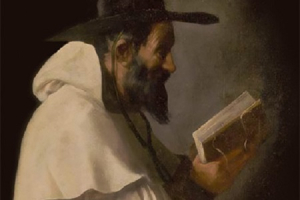
Peter Thomas was a true Carmelite, not only in his relationship to Mary as the Queen and Decor Carmeli, but also in the way he lived his life according to the customs of the Order. However, his special commitment and concern was primarily for the unity of Christians. He constantly strove for reconciliation between the Church of Rome and the Orthodox Christians who had separated from the See of Peter in 1054. He developed an intensive apostolic activity as a peacemaker and defender of the popes. He always preached reconciliation. Miracles and extraordinary signs accompanied his eventful life.
A fresco created in 1880 by the Munich painter Max Fürst in the Carmelite church in Straubing shows St. Peter Thomas surrounded by confreres caring for the needy and giving communion to the sick. However, the painting also points to an essential characteristic of the saint's piety: his fervent devotion to Mary, who appears to him with the infant Jesus in her arms, accompanied by angels, and assures him of her protection and blessing. Tradition also credits him with writing a treatise on the Immaculate Conception of Mary (De Immaculata Conceptione BMV). Four volumes of his sermons have also been preserved.
In 1366, his chancellor and friend Philippe di Mézières, of whom he was also a spiritual director, wrote the biography of Petrus Thomas. Noted Carmelite historian, Joachim Smet, edited the Latin text from hitherto unpublished manuscripts. (The introduction and notes are in English.)
For more on St. Peter Thomas and his work, click here
Books Available from Edizioni Carmelitane:
The Life of Saint Peter Thomas by Philippe de Mézieres (Latin)
Introduction and Notes by Joachim Smet, O. Carm.
The Bollandist Dossier (1643) on St. Peter Thomas, O. Carm.
Edited and translated by Patrick Mullins, O. Carm.
The Revised Bollandist Dossier (1659) on St. Peter Thomas, O. Carm.
Edited and translated by Patrick Mullins, O. Carm.
Lectio Divina January, 2026

Opening Prayer
Lord Jesus, send your Spirit to help us to read the Scriptures with the same mind that you read them to the disciples on the way to Emmaus. In the light of the Word, written in the Bible, you helped them to discover the presence of God in the disturbing events of your sentence and death. Thus, the cross that seemed to be the end of all hope became for them the source of life and of resurrection.
Create in us silence so that we may listen to your voice in Creation and in the Scriptures, in events and in people, above all in the poor and suffering. May your word guide us so that we too, like the two disciples from Emmaus, may experience the force of your resurrection and witness to others that you are alive in our midst as source of fraternity, justice, and peace. We ask this of you, Jesus, son of Mary, who revealed to us the Father and sent us your Spirit. Amen.
Celebrating At Home - Christmas - Nativity of the Lord

God Is With Us!
(Matthew 1:18-25)
We began Advent with the cry, ‘Come, Lord Jesus’. Now we end it with the joyful shout, ‘God is with us!’
Reflecting on the historical birth of Jesus, the Church proclaims the truth that God is, and has always been, with his people. And if God is with us, then God is for us. God is on our side.
God has no desire to live in houses made of wood, stone or gold. God’s deepest desire is to live in human flesh. Just as God did that in the human flesh of Jesus Christ a long time ago, God continues to do so now in us.
Like Mary, we accept God’s invitation, allowing Jesus to become flesh in us, too; to be seen and experienced in good thoughts, good words and good actions, in deeds of loving kindness which bring life, not death, to God’s people.
- pdf Celebrating At Home - Christmas - Nativity of the Lord [PDF](640 KB)
- default Celebrating At Home - Christmas - Nativity of the Lord [ePub](1.46 MB)
- pdf Celebrando en Familia - La Natividad del Señor(320 KB)
- pdf Celebrando in Casa - Natività del Signore(322 KB)
- pdf Celebrando em família - Natal – Natividade do Senhor(317 KB)
Christmas Greetings 2025, Prior General
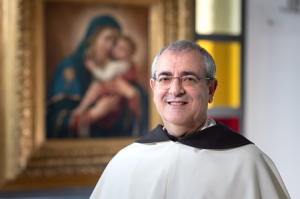
Dear brothers and sisters of the Carmelite Family: I wish you a Merry Christmas and a Happy New Year in 2026! May the Child Jesus fill you with his blessings and grant you peace.
1. A few years ago, Pope Emeritus Benedict XVI illustrated this Holy Night, which we are about to celebrate, by reminding us that anyone who tries to enter the Church of the Nativity of Jesus in Bethlehem will find that the entrance gate has been largely bricked up. Only a small opening of about one and a half metres remains. As he pointed out, “the intention was probably to better protect the church against possible attacks but, above all, to prevent horses from entering the house of God.” This is providential, because "those who wish to enter the place where Jesus was born must bow down... if we want to find the God who appeared as a Child, we must dismount from the horse of our “enlightened” reason. We must lay aside our false certainties, our intellectual pride, which sometimes prevents us from perceiving God's closeness." What is humility if not lowering oneself in order to enter through the door of faith and find God? May the Christ Child teach us to bow down before the mystery of God. Let us also pray this Christmas for those who have to live in poverty, pain, sickness and abandonment, so that through our hands, the goodness that God, with the birth of His Son, brought to the world may also reach them.
2. The Music of Silence. Entering the Sacred Space by David Steindl-Rast and Sharon Lebell is a book that a friend gave me. The authors of this book remind us that the biblical stories of Christmas are full of “angels.” In fact, they are omnipresent in our lives. Voltaire, quite sceptically, went so far as to write mockingly that “no one knew precisely where angels lived.” Our era, happily freed from understanding reality literally, no longer concerns itself with the wingspan of angels, their gender, or how many can fit on the head of a pin. We focus on the meaning of their name: angel, which, as we well know, originally means “messenger, herald.” “Beings of light,” dedicated “totally to the service of God,” and defined, above all, by the mission they carry out. Mary and Joseph, through an angel, were able to meet the Lord. In our communities there too are many “angels.” To discover them, we must pause, connect with God, and contemplate our surroundings. Those who accompany our sick brothers and sisters to the doctor; those who quietly close or open doors every day; those who take out the rubbish for collection; those who bring in the mail ...; those who smile kindly every morning... All of them are inspired by an angel. Perhaps what Voltaire did not realise is that angels dwell in the community. That is where they live!
May the Child Jesus bless us, sustain our families and all those who have been forced to be far from their loved ones, their friends and their homeland. May He strengthen our leaders in their commitment to defend life and the most vulnerable. May our communities be the new dwelling place of the angels.
Fraternally in Carmel,
Australia–Timor-Leste Facebook Views Top 11.3M

Australia and Timor-Leste Facebook Views in 2025 Reaches 11.3 Million
The Carmelites of Australia and Timor-Leste are making a big impact on social media with 11.3 million Facebook views so far this year. With 240,000 followers on Facebook and 6,600 on Instagram the resources we provide are finding a home in many parts of the world - nearly 45,000 downloads of Lectio Divina, over 14,500 downloads of the Jubilee Year logo, and more than 106,000 downloads of St Titus Brandsma resources. The mix is distinctly Carmelite—including short prayers and reflections, weekly Celebrating at Home Sunday materials, Lectio Divina, and stories from ministries across Australia and Timor-Leste—crafted to place beauty, Scripture and hope within everyday reach.
“This isn’t about chasing numbers,” a provincial spokesperson said. “It’s about making space—on phones and in hearts—for quiet prayer, honest hope, and the Gospel lived simply. If our posts travel far, it’s because people are finding something they can trust.”
New General Delegate for the Nuns Appointed
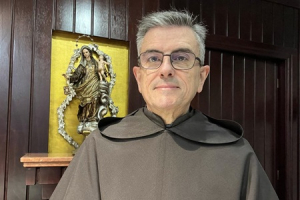
The General Council Names the New General Delegate of the Nuns
The General Council has appointed Fr. Francisco Daza Valverde of the Bética Province (Spain) of the Most Holy Name of Mary as Delegate to the Nuns. The Prior General and his Council thank Fr. Francisco for his willingness to serve the Order and will keep him in their prayers.
Francisco Daza Valverde was born in Santa Eufemia, Córdoba on 6 August 1962. He made his temporary profession on October 3, 1981, and his solemn profession on December 7, 1986. He was ordained a priest on September 23, 1988. He obtained a master's degree in Spiritual Theology from the Pontifical University of Comillas (Madrid). He has taught at two Carmelites Schools in Madrid and has been councilor for formation, councilor for vocations, secretary and formator in the community of Seville. In 2000, he was part of the founding team of the Carmelite mission in Burkina Faso, where he remained until 2008. He was prior provincial of the Bética Province from 2014 to 2020. He is currently religious assistant to the Federation of the Carmelite Nuns ‘Mater et Decor Carmeli,’ of the Bética Province, in Spain.
Causa Nostrae Laetitiae

INITIUM NOVITIATUS
02-12-25 Erçio Manuel Freitas (Aust-TL) Hera, Timor-Leste
02-12-25 João Martinho Falo (Aust-TL) Hera, Timor-Leste
02-12-25 Celestino Exposto (Aust-TL) Hera, Timor-Leste
02-12-25 Ricardo Carvalho Saldanha (Aust-TL) Hera, Timor-Leste
02-12-25 Lorenço Colo (Aust-TL) Hera, Timor-Leste
02-12-25 Zeferino José Carvalho (Aust-TL) Hera, Timor-Leste
02-12-25 Domingos Dos Santos Martins (Aust-TL) Hera, Timor-Leste
02-12-25 Emilio Dos Santos Ribeiro (Aust-TL) Hera, Timor-Leste
02-12-25 Hajetelino Sanches Simões (Aust-TL) Hera, Timor-Leste
02-12-25 Tõsio João Guterres Rangel (Aust-TL) Hera, Timor-Leste
PROFESSIO TEMPORANEA
20-11-25 Paulo Martins De Araújo (Aust-TL) Hera, Timor-Leste
20-11-25 Celesino Soares (Aust-TL) Hera, Timor-Leste
20-11-25 Elias Soares Sin (Aust-TL) Hera, Timor-Leste
20-11-25 João Fernando Cabal (Aust-TL) Hera, Timor-Leste
20-11-25 Fernando Gusmão (Aust-TL) Hera, Timor-Leste
20-11-25 Samuel Lopes (Aust-TL) Hera, Timor-Leste
ORDINATIO SACERDOTALIS
22-10-25 Jaynor Mike Gomez (Phil) Cubao, Philippines
22-10-25 Adrian Vergel Ballares (Phil) Cubao, Philippines
22-10-25 Dave Malinao (Phil) Cubao, Philippines
22-10-25 Rolando Mamites (Phil) Cubao, Philippines
08-12-25 Yohanes Seran (Indo-Est) Sorong-Ovest, Papua


