













O.Carm
Vitam Coelo Reddiderunt

|
Carmelite School for Third Order Formators
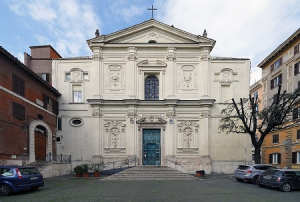
A formation program for those who themselves will be formators within the Third Order of the Italian Province is being launched. Courses will be divided into five modules.
The province began organizing the coursesduring the summer of 2022 after being proposed by Antonios Mascali, O. Carm., the spiritual assistant of the Third Order; Sebastian Benchea, O. Carm., the vice spiritual director; Michaele Bonanno, provincial president; and Nicola Sozzi, provincial delegate. The work was completed in the early days of 2023.
To motivate people to consider this preparation as formators, a letter to the Third Order from then Carmelite prior general, John Malley, was referenced. In that letter John Malley urged each member to be a point of reference in Carmel and in society. It recalled the document Lumen Gentium, “the most important document of the Second Vatican Council,” which speaks of the role of the laity in the Church. It clearly indicates the mission, apostolate, and importance of lay men and women in building up the Body of Christ that is the Church.
The letter continues positing that “attracted by the charism and spirituality of Carmel, our lay members are present in the world, and they have the special opportunity to share the Order's core values...”
More than 100 people participated in the first lessons.
Modules of the Carmelite School
Introduction to Church History
January 23 and 30, 2023 | Enrique Andres Trujillo Herrera
Introduction to the Liturgy and Sacraments
February 13 and 20 | Daniele Di Filippo
Introduction to Sacred Scripture
March 13 and 20 | Roberto Toni
Magisterium
April 17 and 24 | Luca di Girolamo
Introduction to Carmelite Spirituality
May 8 and 15 | Salvatore Asta
New Leadership in Third Order of the Italian Province

The Carmelite Third Order in Sassari, Biancavilla, and Messina held elective chapters for their area. The meeting of Sardinia took place on January 15, 2023, at the Carmine in Sassari. The chapter opened with an invocation to the Holy Spirit and a brief reflection led by Giuseppe Basile, O. Carm., of the Italian province, before moving on to the election. Elected for the new triennium 2023-2026 was Tertiary Maria Carla Pinna. After the election, those participating celebrated the Eucharist.
The first elective chapter of the Third Order in Biancavilla (CT) was held on January 19, 2023. The meeting was held at the parish Our Lady of the Angel of the Annunciation in Biancavilla. Those present elected Franca Papotto as president and Giuseppina Paratore and Anna Montalto as councilors.
On February 7, 2023, the elective chapter of the Third Order for Messina was held at Our Lady of Mount Carmel parish in Messina. Ursula Jaszcznska was elected president and Guido Carmela, Pagano Domenico, Roberto Vita were elected councilors.
Image captions:
- Elective chapter of the Third Order in Biancavilla (CT)
- Elective chapter of the Third Order for Messina
Third Volume of St. Titus Collected Works Published
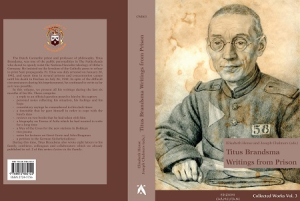
Writings of St. Titus Brandsma during his imprisonment have been translated into English and gathered together in the third volume of the multi-volume series The Collected Works of Titus Brandsma. (Eight letter written to family, confrères, colleagues, and collaborators were already published in vol 2 of the series.) This attractively printed volume is now available for purchase at Edizioni Carmelitane and other webstores on the internet.
Included in this volume:
A reply to an official question posed to St. Titus by his captors;
Consolatory sayings he remembered in this dark time;
A timetable that he gave himself in order to cope with the lonely days;
Reviews on two books that he had taken with him;
The biography of Teresa of Avila which he had wanted to write for many years;
A Way of the Cross for the new Stations of the Cross in Dokkum;
Two poems;
Notes for lectures on Geert Grote and John Brugman;
A petition to the German Sicherheitsdienst (Nazi Security Service);
Also included are short biographies of other Carmelites who were in Dachau with Titus and information about other religious or diocesans who were martyrs. There is also an exposition of how World War II affected Carmelite life around the world.
Finally there are various articles on aspects of St. Teresa of Avila’s life, a woman who greatly influenced Fr. Titus.
This 485 page book is available for 47.00 euro from Edizioni Carmelitane. It will be available as an ebook soon.
St. Titus Brandsma, a Patron of Journalists?

According to the latest issue of America, a monthly magazine published by the American Jesuits, Pope Francis has expressed “full support” for naming St. Titus Brandsma “a patron of journalists.” The pope’s statement came in response to a request by Mr. Van Lierde and three Dutch journalists during an interview. On May 15, 2023, the Church will be celebrating the 1st anniversary of Titus’ canonization by Pope Francis at St. Peter’s Square in Rome.
During a press conference organized by the Order’s Communications Office and held days prior to the canonization of St. Titus, a Dutch journalist asked Míceál O’Neill, the prior general, for his support in the efforts to have Brandsma named patron of journalists. He presented the prior general with a letter to Pope Francis from Catholic journalists accredited to the Vatican.
The letter outlined reasons why the newly canonized St. Titus should be designated as patron of journalists. Part of the letter says “you will canonize a man who embodied these crucial journalistic values until his dying day ...” The journalists recall the 2018 admonition of Pope Francis for journalists “to promote a journalism of peace,” a “journalism that is truthful and opposed to falsehoods, rhetorical slogans, and sensational headlines. A journalism created by people for people, one that is at the service of all, (…) a journalism committed to pointing out alternatives to the escalation of shouting matches and verbal violence.”
Later in the letter the journalists write that they see St. Titus as a friend and advocate for the entire profession, indeed a patron saint of journalism.
Emmanuel Van Lierde is the former editor in chief of Tertio, a Belgian Christian weekly. The pope gave the interview on Dec. 19, 2022, two days after he celebrated his 86th birthday and a day after Argentina won the World Cup. The text of the interview now appears in Dutch in a book reviewing the 10-year pontificate of the pope written by Mr. Van Lierde. The book is entitled Paus Franciscus: De conservatieve revolutionair (Pope Francis: The conservative revolutionary) as well as in the weekly Tertio.
Celebrating At Home - 2nd Sunday in Lent

Transfiguration
(Matthew 17:1-9)
This Sunday’s Gospel of the Transfiguration completes the ‘little parable’ formed by the Gospels of the first two Sundays of Lent.
These Gospels tell us what Lent is about and what Christian life is about: a journey from temptation and doubt to transfiguration and faith. A journey away from allowing ourselves to be tempted to evil, and towards allowing ourselves to be tempted to good by the action of God’s Holy Spirit within us.
As the ‘Chosen One’ Jesus will let God’s glory be fully seen in the resurrection. On the one hand, this Gospel looks forward to the Passion and Resurrection of Jesus. On the other, it invites us to reflect on our journey from temptation to transfiguration.
The journey Jesus undertakes does not end in death, but in life. Through prayer we remain in contact with the heart of God which allows God’s love to transform and transfigure us and to ‘burst forth’ in goodness.
That’s how we allow the glory of God to be seen in us and through us.
Transfiguration means to be shot-through with the presence of God. Being transfigured is about allowing the presence of God to completely transform us; it’s a revolution of mind and heart driven by God’s Spirit and enabled by our open heartedness.
Our life as Christians is about being transfigured by the Spirit of God so that God is seen in, and experienced through, us.
It takes faith and perseverance to dare to allow ourselves to be tempted by the passion, hope and vision of God rather than our own desires and wants. It takes great faith to trust in God’s word to us. But if we do, the living word of the Chosen One forms in us the heart of God.
Quiet time for reflection
- pdf Celebrating At Home - 2nd Sunday in Lent [PDF](6.18 MB)
- default Celebrating At Home - 2nd Sunday in Lent [ePub](5.13 MB)
- pdf Celebrando en Familia - Segundo Domingo del Tiempo de Cuaresma(367 KB)
- pdf Celebrando in Casa - II Domenica di Quaresima(379 KB)
- pdf Celebrando em familia - Segundo Domingo da Quaresma(369 KB)
Lectio Divina March 2023
Forgiving, merciful God, we pray you for a good measure of humility and honesty to acknowledge before you and people that we are weak and fallible men and women, who often try to turn a blind eye to our shortcomings and our sins.
Strong with the grace won in the hard way by your Son on the cross, we beg you for the courage to seek your forgiveness and to turn and return wholeheartedly to you and to serve you and people.
We ask this through Christ our Lord.
Elective Chapter of Carmel of Mary in Philippines

The trienniel elective chapter of the Monastery of Carmel of Mary, Star of the Sea in Tanay (Rizal), Philippines took place on February 18, 2023. The election of the prioress was presided over by the Most Rev. Francisco de Leon, the bishop of Antipolo.
Carmel of Mary, Star of the Sea is the first and only foundation of the Stella Maris Federation of the Carmelite nuns in the Philippines. Four foundresses came from Carmel of Our Lady of Nazareth (Cabanatuan City), four foundresses from the Carmelite monastery of the Holy Family (Guiguinto), and one foundress from the Carmelite monastery of Our Lady of Maravillas and St. Joseph (Dumaguete City). It is the fruit of the union of the monasteries.
The monastery was inaugurated on November 11, 2001, and was canonically erected on November 14, 2001. The first canonical election of the prioress was held on December 4, 2001. The late Rev. Mother Maria de los Angeles of Jesus Perez, O. Carm., was elected to serve.
The results of the elective chapter were as follows:
Prioress | Priora | Priora:
Sr Maria Esperanza of the Immaculate Heart of Mary Cecilio, O. Carm.
1st Councilor | 1ª Consejera | 1ª Consigliera:
Sr Mary Grace of the Crucified and Risen Jesus Bruno, O. Carm.
2nd Councilor | 2ª Consejera | 2ª Consigliera:
Sr Maria Rebecca of the Sacred Heart of Jesus Valdez, O. Carm.
3rd Councilor | 3ª Consejera | 3ª Consigliera:
Sr Maria Carmela Therese of the Child Jesus Necodino, O. Carm.
4th Councilor | 4ª Consejera | 4ª Consigliera:
Sr Maria Wilma of Jesus Crucified Galang, O. Carm.
Director of Novices | Maestra de Novicias | Maestra delle Novizie
Sr Maria Rebecca of the Sacred Heart of Jesus Valdez, O. Carm.
Treasurer | Ecónoma | Economa:
Sr Mary Grace of the Crucified and Risen Jesus Bruno, O. Carm.
Sacristan | Sacristán | Sacrestana:
Sr Maria Faustina Jenelyn of the Blessed Sacrament Padojinog, O. Carm.
Celebrating At Home - 1st Sunday in Lent

Temptation to transfiguration
(Matthew 4:1-11)
Our great Lenten journey has begun. It’s a journey which begins in ash and ends in water. Fire is a profound part of our experience. We know its power to destroy, blacken and reduce to ash.
We know that evil can do the same - destroy our wholeness of spirit, blacken our lives and reduce the beauty of human life to so much dust.
We begin Lent in the ash of acknowledging our own part in harbouring, creating and doing evil - those places in our hearts where the fire of anger, bitterness, selfishness or narrowness of mind and heart has left nothing but cold ash.
The ash is a reminder that our true life is not found in mortal things which eventually turn to dust, but in eternal things. We also know that out of ash new life can bud, grow strong, bloom into fullness - that’s the Easter miracle.
As always, the Gospels of the first two Sundays in Lent provide a road map for our Lenten journey from temptation (this Sunday) to transfiguration (next Sunday).
We allow ourselves to be tempted out of the ash of selfishness and narrowness of heart and into a life of open-hearted goodness. We celebrate God’s graciousness to us by sharing what we have with those in need whether it be food, wealth, time, love, friendship or compassion. That’s what it means to ‘repent and believe the Good News’.
In these days when we are so conscious of the impact of human life on God’s creation, perhaps we could think about some permanent fasting from our excessive consumption of power, food and petrol in order to allow our earth to heal, to breathe and to continue to be a source of nourishment and life for the whole human family.
Quiet time for reflection
- pdf Celebrating At Home - 1st Sunday in Lent [PDF](6.11 MB)
- default Celebrating At Home - 1st Sunday in Lent [ePub](7.07 MB)
- pdf Celebrando en Familia - Primer Domingo del Tiempo de Cuaresma(277 KB)
- pdf Celebrando in Casa - I Domenica di Quaresima(292 KB)
- pdf Celebrando em familia - Primeiro Domingo da Quaresma(657 KB)
Training Courses for Secretaries and Archivists
The Servants of Mary Historical Institute and the General Archives of the Carmelites have planned new training activities for secretaries and archivists. After the training course on current archives, which was held in June 2022, the two institutions have decided to offer some workshop activities to help participants practice practically some of the content proposed during the course.
The first workshop, scheduled for Feb. 25 and led by Prof. Emanuele Atzori, will focus on the management of current archival tools. The second workshop, scheduled for April 22 and led by Prof. Alessandro Alfier, will be devoted to electronic archives. From June 22 to June 24, 2023, a training course on historical archives will be held.
All these activities will take place at the Marianum Pontifical Faculty in Rome.
More information can be found on the General Archives website:
www.archivioocarm.com


