












O.Carm
God’s Merciful Indulgence and the 2025 Jubilee Year
Jesus told Peter, ‘Whatever you bind on earth will be bound in heaven, and whatever you loose on earth will be loosed in heaven’ (Mt. 16:19), the same promise being made to the disciples, collectively, in Matthew 18:18.
The power to bind is the basis of the penance imposed on the penitent by the confessor as part of the Sacrament of Penance and Reconciliation. The power to loose, on the other hand, has often taken the form of a mitigation, in the sense of replacing a very-demanding penance with another, easier one, which was granted when certain conditions were met, as when the Council of Epaone (517) reduced to two years the duration of the penance that apostates were to undergo on their return to the Church.
For the pilgrims who came to Rome for the first ever Holy Year Jubilee, in 1300, and fulfilled the requirements, Pope Boniface VIII granted the complete removal of the temporal punishment due to sin. Quoting 1 Peter 1:19 on our having been ransomed ‘with the precious blood of Christ,’ Pope Clement VI’s Jubilee decree, Unigenitus Dei (1343), described the ‘copious flood, like a stream’ of Christ’s blood as ‘an unfailing treasure for human beings’ which Christ ‘committed to the care of St. Peter, who holds the keys of heaven, and to his successors, who are to distribute it to the faithful for their salvation’, applying it ‘with compassion, for pious and good reasons, in order that it may benefit those who are truly contrite, and who have confessed’.
Among the 95 Theses that drew up in Wittenburg, in 1517, Luther questioned the Pope’s teaching on indulgences and the spiritual treasure of the Church when he claimed that the ‘treasures of the Church whence the Pope grants indulgences are neither sufficiently named nor known among the people of Christ’ (n. 56) and he also questioned the ‘traffic in pardons [indulgences]’ (n. 73) because of the scandalous claims sometimes made concerning ‘the preaching of pardons [indulgences]’ (n. 81).
In its Decree on Indulgences (1563), the Council of Trent recognised that ‘the power of conferring Indulgences was granted to the Church by Christ,’ and that their use was ‘most salutary to the Christian people, and approved by the authority of the holy Councils.’ Recognising the validity of Luther’s criticism of how indulgences had been preached, however, Trent desired that ‘moderation be observed in accordance with the ancient custom approved in the Church,’ and that ‘all evil traffic’ in indulgences should be abolished.
Describing an indulgence as ‘the remission in the sight of God of the temporal punishment due to sins which have already been blotted out as far as guilt is concerned,’ Pope St. Paul VI presented the ‘treasury of the Church,’ not as ‘akin to a hoard of material wealth’, but as ‘the infinite and inexhaustible value which the expiation and merits of Christ have in the sight of God,’ through which ‘the whole of humanity’ can ‘be freed from sin and arrive at fellowship with the Father.’
Recognising that being reconciled with God through the Sacrament of Penance and Reconciliation ‘does not mean that there are no enduring consequences of sin from which we must be purified,’ Pope John Paul II described these ‘temporal consequences as including ‘an unhealthy attachment to creatures’ and everything that ‘impedes full communion’ with God and with our brothers and sisters.’ Recognising that, in the Church, ‘the holiness of one benefits others in a way far exceeding the harm which the sin of one has inflicted upon others,’ and, as a result, the ‘good works of the saints’ are constantly adding to ‘the treasures of the Church,’ he described the Jubilee indulgence for the Holy Year in 2000 as disclosing ‘the fulness of the Father’s mercy, who offers everyone his love,’ because it expressed the ‘total gift of the mercy of God’ by granting repentant sinners ‘a remission of the temporal punishment due for the sins already forgiven as regards the fault.’
In the title of his bull announcing the 2025 Jubilee Year, Spes non confundit, Pope Francis quotes St. Paul, ‘Hope does not disappoint’ (Rom. 5:5), and he points out that, at one time, the terms ‘mercy’ and ‘indulgence’ were interchangeable, because indulgences were ‘expressions of the fullness of God’s forgiveness, which knows no bounds,’ recognising God’s mercy, fully revealed in Christ, the basis of our hope. Describing those coming to Rome for that holy year as ‘pilgrims of hope,’ he prays that, for everyone, the Jubilee may be ‘a moment of genuine, personal encounter with the Lord Jesus,’ who is ‘our hope’ (1 Tim. 1:1).
Patrick Mullins, O.Carm.
Liturgical Resources
Pilgrims of Hope in a Pilgrim Church
Pilgrim, Welcome!
The Catholic Church sees itself as a “pilgrim church” (L.G. VII) It is a church that is on the way, creating its own story. It is the story of people down through the ages finding in its message a challenge to live a fuller life, to discover the seeds of eternal life that are already present in this life. It is a church of companionship that gives us the story of two disciples on the road out of Jerusalem towards Jericho, in conversation,  seeing their lives transformed by the “stranger” who joined them on the journey, (Lk 24, 13-35) or a women going to fetch water, who meets the same “stranger” at the well and begins to talk about her life and finds in him someone who was able to tell her everything about herself. (Jn 4, 1-42) People gather in this pilgrim church as members of a community of pilgrims, journeying together, nourished by the grace that comes in different forms, at different times and in different ways, but always from the one source, the love of God that has been poured into our hearts. (Rm 5,5)
You are a pilgrim, with your heart full of desire and your eyes open. You are open to the things that life will show you. Life shows us the things that God wants to show us and so all around us we can see the signs of God’s love - in creation, in nature, in other people, in faith communities, in events. You will find signs of hope also in the many churches that make up the pilgrim church. Each of these churches is a place where people find peace, because of what they see in the many symbols and features of the church, and also because of the realization that in these places pilgrims have prayed and celebrated, confessed their sins and built community, for generations, all with a sense of hope in the good that will come when the promises that have been given to them will be fulfilled. The pilgrim church announces those promises and lives in hope of their fulfilment.
You may find in all that Carmel represents a particular attention to the knowledge of God’s love as it has been poured into our hearts through the work of the Holy Spirit. This, it might be said, is Carmel’s best gift to the Church that sees itself as a pilgrim church waiting to see the full revelation of God’s love when Christ will be all in all and all of Creation will be one in Him.
This church offers us the companionship of Mary and the Saints for our journey, In particular, Mary as the mother and beacon of hope, holds a special place in the Carmelite tradition as a model of holiness and purity and a sign of hope because she was united to God and obedient to his will in all the circumstances of her life. Mary is recognized as blessed by her cousin Elizabeth, because she believed that all that was promised to her would come true. (Lk 1,45)
 It may be that we don’t think of hope so much when everything seems to be going well. Hope comes much more into play when we are disturbed or even frightened by what is happening in the world and we get a sense of our own powerlessness and the intricacies and unpredictability of humanity. It is then that we begin to think about hope, the assurance that all will be well. St. Paul in his very reassuring way reminds us in the Letter to the Romans that all things work for good for those who love the Lord. (Rm 8,29)
The Carmelite Rule, offers to those who follow it a pattern for their lives, somewhat like an architect’s design. You build the house, and the house is well built, with lots of forethought about how the people will live in it, but without much idea of what might happen when the people begin to live there. The rule suggests that while we live our lives in a well ordered fashion, we always leave space for what is not yet there, but will be because of the hope that they find in the promise of Christ’s return, whenever that might be. (Carmelite Rule 24)
Our hope is fundamentally our belief in Jesus Christ. It is he who offers us the salvation that is built into creation right from the beginning. Jesus is our model, our motivation and reward. Living a life that is similar to his, moved by him, through his Spirit, to do the best we can in this life, we come to the reward of being deeply united with him in this life, in thought, desire and existence. Being united with Jesus Christ, in this life and in the next, is the fulfilment of the Carmelite’s greatest hope.
God’s Merciful Indulgence and the 2025 Jubilee Year
Jesus told Peter, ‘Whatever you bind on earth will be bound in heaven, and whatever you loose on earth will be loosed in heaven’ (Mt. 16:19), the same promise being made to the disciples, collectively, in Matthew 18:18.
The power to bind is the basis of the penance imposed on the penitent by the confessor as part of the Sacrament of Penance and Reconciliation. The power to loose, on the other hand, has often taken the form of a mitigation, in the sense of replacing a very-demanding penance with another, easier one, which was granted when certain conditions were met, as when the Council of Epaone (517) reduced to two years the duration of the penance that apostates were to undergo on their return to the Church.
 For the pilgrims who came to Rome for the first ever Holy Year Jubilee, in 1300, and fulfilled the requirements, Pope Boniface VIII granted the complete removal of the temporal punishment due to sin. Quoting 1 Peter 1:19 on our having been ransomed ‘with the precious blood of Christ,’ Pope Clement VI’s Jubilee decree, Unigenitus Dei (1343), described the ‘copious flood, like a stream’ of Christ’s blood as ‘an unfailing treasure for human beings’ which Christ ‘committed to the care of St. Peter, who holds the keys of heaven, and to his successors, who are to distribute it to the faithful for their salvation’, applying it ‘with compassion, for pious and good reasons, in order that it may benefit those who are truly contrite, and who have confessed’.
Among the 95 Theses that drew up in Wittenburg, in 1517, Luther questioned the Pope’s teaching on indulgences and the spiritual treasure of the Church when he claimed that the ‘treasures of the Church whence the Pope grants indulgences are neither sufficiently named nor known among the people of Christ’ (n. 56) and he also questioned the ‘traffic in pardons [indulgences]’ (n. 73) because of the scandalous claims sometimes made concerning ‘the preaching of pardons [indulgences]’ (n. 81).
In its Decree on Indulgences (1563), the Council of Trent recognised that ‘the power of conferring Indulgences was granted to the Church by Christ,’ and that their use was ‘most salutary to the Christian people, and approved by the authority of the holy Councils.’ Recognising the validity of Luther’s criticism of how indulgences had been preached, however, Trent desired that ‘moderation be observed in accordance with the ancient custom approved in the Church,’ and that ‘all evil traffic’ in indulgences should be abolished.
Describing an indulgence as ‘the remission in the sight of God of the temporal punishment due to sins which have already been blotted out as far as guilt is concerned,’ Pope St. Paul VI presented the ‘treasury of the Church,’ not as ‘akin to a hoard of material wealth’, but as ‘the infinite and inexhaustible value which the expiation and merits of Christ have in the sight of God,’ through which ‘the whole of humanity’ can ‘be freed from sin and arrive at fellowship with the Father.’
Recognising that being reconciled with God through the Sacrament of Penance and Reconciliation ‘does not mean that there are no enduring consequences of sin from which we must be purified,’ Pope John Paul II described these ‘temporal consequences as including ‘an unhealthy attachment to creatures’ and everything that ‘impedes full communion’ with God and with our brothers and sisters.’ Recognising that, in the Church, ‘the holiness of one benefits others in a way far exceeding the harm which the sin of one has inflicted upon others,’ and, as a result, the ‘good works of the saints’ are constantly adding to ‘the treasures of the Church,’ he described the Jubilee indulgence for the Holy Year in 2000 as disclosing ‘the fulness of the Father’s mercy, who offers everyone his love,’ because it expressed the ‘total gift of the mercy of God’ by granting repentant sinners ‘a remission of the temporal punishment due for the sins already forgiven as regards the fault.’
In the title of his bull announcing the 2025 Jubilee Year, Spes non confundit, Pope Francis quotes St. Paul, ‘Hope does not disappoint’ (Rom. 5:5), and he points out that, at one time, the terms ‘mercy’ and ‘indulgence’ were interchangeable, because indulgences were ‘expressions of the fullness of God’s forgiveness, which knows no bounds,’ recognising God’s mercy, fully revealed in Christ, the basis of our hope. Describing those coming to Rome for that holy year as ‘pilgrims of hope,’ he prays that, for everyone, the Jubilee may be ‘a moment of genuine, personal encounter with the Lord Jesus,’ who is ‘our hope’ (1 Tim. 1:1).
Patrick Mullins, O.Carm.
St. Raphael of St. Joseph (OCD), Priest
19 November Optional Memorial in the province of Poland
Raphael of St. Joseph (in lay life: Joseph Kalinowski) was born at Vilna to a Polish family on 1st September 1835 and died at Wadowice on 15th November 1907. Graduating in engineering at the Academy of Military Sciences at St. Petersburgh, he was appointed to the fortress at Brest Litowski and later promoted to be Chief of Staff in the Russian Army.
In spite of his desire to leave the military life, he took part in the rising against the Czarist occupying forces in Poland, accepting the position of Minister of War in Vilna. The night of the 24th March 1864, he was arrested and put in prison where he was condemned to death but the sentence was later commuted to ten years forced labour in Siberia. He was freed in 1874 and returned to Poland. Being forbidden to live in any of the main Polish cities, he took up a post as tutor to the young Prince Augusto Czartoryski who spent most of his time in Paris.
In 1877, Raphael joined the Carmelites. He was ordained priest in 1882 and began an apostolate centred on the confessional, in the giving of spiritual direction and being full of enthusiasm for ecumenism, he worked strongly for unity in the Church. A great devotee of Our Lady, he revived the Discalced Carmelite Order in Poland. He was canonized by Pope John Paul II on 17th November 1991.
Causa Nostrae Laetitiae

PROFESSIO SOLEMNIS
01-11-25 Charles Brandon Pabst (LAK) Lake Elmo, USA
08-11-25 Irysson Felipe Nascimento da Silva (Pern) Petrolina, Brasil
ORDINATIO DIACONALIS
04-07-25 Davi Maria Santos (Pern) São José de Princesa, Brasil
25-10-25 Lloyd Champiruka (Hib-Zim) Rusape, Zimbabwe
08-11-25 Maicor José Cueto (Bet-V) La Victoria, Venezuela
Carmelite NGO Has Active Presence at COP 30 in Brazil

— Renato Rallo, Carmelite NGO Observer
We have arrived at COP30 in Belém, Brazil!
The first impression upon arrival is that logistics are not easy this year. The few hotels in the city are very expensive, so everyone has had to be "creative" with their plans. At the conference venue, there is a constant loud background noise from the air conditioners. In addition, from time to time, usually in the early afternoon, it starts to rain heavily and the raindrops rumble on the tents. You can hardly hear anything.
However, this "problematic background" is important for the participants: it allows all delegates to experience what it is like to live outside the world's major cities or developed countries. These small inconveniences can help them to put themselves in other people's shoes, in a process that is essentially cooperative, not competitive.
Expectations for this COP before it began were quite low. The international crisis and the weakening of multilateralism in the face of growing dualism (some call it G2) do not bode well. The main issues on which progress is expected are: biofuels (through the "Belém 4x" initiative); forest conservation; a common framework of criteria for evaluating adaptation initiatives (to climate change). Anything else will be a very welcome surprise.
In a climate of great uncertainty, which some see as the beginning of disenchantment, the Carmelite NGO is here to bear witness.
The Carmelite NGO is represented at the meeting (either in person or on-line) by Dr. Renato Rallo, Mechanical Engineer in Energy Resources and Environment; Alirio Cáceres, a deacon and eco-theologian from Bogotá, Colombia, working for CELAM; Abilio Peña from Bogotá, Councilor at SICSAL and the executive director of JPIC for the Franciscan Community of Our Lady of Lourdes; Sonia Olea Ferreras of the Caritas España Advocacy Team in Madrid; Environmental Engineer Miriam Montero Hidalgo, a researcher and lecturer at the Rey Juan Carlos University, Madrid; Dr. Dennis Kalob, the Carmelite NGO’s Chief Administrative Officer; and Dr. Eduardo Scarel, O. Carm., the Vice President of the Carmelite NGO and director of the Department of Integral Ecology of the Spanish Episcopal Conference.
Celebrating At Home - Christ the King
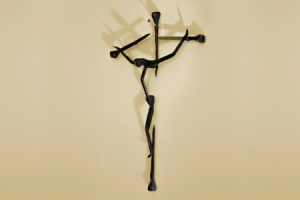
The Royal Shepherd
(Luke 23:35-43)
a kingdom of holiness and grace,
a kingdom of justice, love, and peace’.
The first reading from the book of Samuel tells the story of David’s election as king of Israel. Under David all the twelve tribes of Israel gathered to form one kingdom. The reading recalls God’s commission to David to be ‘shepherd of my people Israel’. David is not to lord it over his people, but to be a shepherd to them.
Like David, Christ comes to gather all people into the one Kingdom of God. He, too, acts as a shepherd-king to God’s people.
The Gospel illustrates this clearly. Here is a king who gives up his life for his people. He has no fine clothes. His throne is the cross. His crown is made of thorns, not of gold. Even in the throes of death faith and forgiveness are at work and entry into the kingdom of God gained and granted. Indeed, the final act of the dying King Jesus is to grant forgiveness, mercy and admission to the kingdom – a gospel within the Gospel.
The Gospel readings throughout Ordinary time have lead us on a journey of accompanying Jesus on his earthly journey, listening to him unfold God’s desire for the human family, watching him restore health and wholeness to many, being taught how to pray properly, to be aware that the Kingdom is both ‘here and now’ and ‘yet to come’, the lengths God goes to in order to win us back, and how God meets us with mercy, forgiveness, healing and peace. Our journey has been about discovering who God is and therefore, who Jesus is, and therefore, who we are called to be when we enter into a faithful relationship with him.
Commemoration of All Carmelite Souls

15 November Optional Memorial
by Fr. Emiel Abalahin, O.Carm.
The homes of most people do not consist of a mere wooden frame or a cement foundation; rather, they are constructed from a great variety of materials, and more often than not, the result of the participation of more than one or two people. So, too, the Order of Carmel continues to grow and develop today because of the presence and contributions of all those who built upon its spiritual foundations, and not just its great saints.
Read more ...
Carmelite Institute of Malta Hosts John of the Cross Events
Carmelite Institute of Malta Providing St John of the Cross Inspired Seminars, Retreat and Pilgrimage
The Carmelite Institute Malta has announced a series of events to commemorate the 300th anniversary of the canonization of St John of the Cross. The anniversary is being celebrated from November 2025 through April 2026.
The first is a seminar, “In the Silent Flame: The Carmelite Mysticism of St John of the Cross,” to be held over six sessions. The seminar will cover the saint’s mystical theology, his Carmelite roots, and his lasting influence on Christian spirituality.
The program will feature respected scholars and Carmelite friars, each guiding participants through different dimensions of the saint’s life and writings. Scheduled sessions include Carmelite foundations by Alexander Vella, O. Carm., on November 22; the life and times of the saint with Pia Attard Yeon on December 20; ), The Ascent of Mount Carmel with Kurt Mizzi, O. Carm., on January 31; and The Dark Night led by Dr Christopher Bezzina on February 28. The final two sessions will be led by Rev. Prof. Charló Camilleri, O. Carm., exploring mystical love, the Spiritual Canticle, and mature mysticism in the Living Flame of Love.
All sessions will be held at the Ċentru Spiritwalità Tereżjana in Birkirkara.
A second initiative planned is a May retreat titled “On the Spiritual Summit: Journey to the Heart of God,” inspired by the teachings of St John of the Cross. The retreat will take place from May 15–17 at the Dar tat-Talb Lunzjata in Rabat. The retreat will be led by Rita Grima.
Drawing on the saint’s doctrine of inner transformation and detachment, the retreat invites individuals to engage deeply with Carmelite spirituality in a reflective and contemplative environment.
The Carmelite Institute will also host a special pilgrimage to Spain planned for June and July. The participants are invited to walk in the footsteps of St John of the Cross. The journey will include visits to sacred sites where the saint lived, prayed and wrote, offering insights into the landscapes and communities that shaped his spiritual legacy.
Pilgrims will explore monasteries, churches and locations central to his life of contemplation, while also experiencing Spain’s rich cultural and religious heritage. The Institute describes the pilgrimage as an opportunity not only to deepen one’s understanding of the saint, but also to strengthen personal faith through direct engagement with Carmelite history.
For more information or to register online, go to: https://forms.gle/b5cwkZtcrM4jMVCPA
All Carmelite Saints

November 14 | Feast
The Heavenly Bliss of Paradise
From De Patientia of Bl. Battista Mantovano, Carmelite
The blessed will hear resounding from all sides the highest praises of God, according to the word of the Prophet: blessed is he who dwells in your house: always sing your praises. They will see the heavens and taste all their harmony, they will see Christ and His Mother and all the glorious bodies of the blessed. These, now incorruptible and clothed in incomparable beauty, will be such a sweet spectacle to the beholders that they will not know what better to desire.
Read the complete article
Read more about the Feast of All Carmelite Saints
Blessed Maria Teresa Scrilli, Virgin

Some Observations on the Spirituality of Mother Scrilli
From childhood she showed signs of extraordinary piety and, thanks to the positive influence of her teachers, cultivated her spiritual life through assiduous attendance at the sacraments and readings from the lives of the saints, especially St. Mary Magdalena de'Pazzi. Her mother’s lack of love for having a second daughter and her own long serious illness at the age of 15 drew her ever closer to the suffering of Christ and his Cross. Suffering experienced as an act of love made her delve more and more into the mystery of the Cross. “Patire per amore” (To Suffer for Love) was her motto.
In addition to devotion to Christ’s passion and the Eucharist, she had a tender love for Mary whom she considered her “dear mother.”
When she attempted to live as a cloistered nun at the monastery of St Mary Magdalen de’Pazzi, who she had a devotion to as well, she found that God had other plans for her. She and some friends started teaching. But that too did not work out because of the anti-Church attitudes in Florence at the time. Years later, in 1875, they restarted the Istituto di Nostra Signora del Carmelo knowing that this was God’s will.
To her intense activity, Mother Scrilli united a profound and continuous life of prayer. She knew how to harmonize prayer and work, contemplation and action, self-giving to God and service to her brothers and sisters. This became the goal of the Institute.
While she endured many constant physical sufferings, she also endured moral one with a spirit of faith and conformity to Divine Will. Her whole desire, in fact, was to fulfill God’s will. The “fiat” was the constant that accompanied her throughout her life.
To learn more about the life of Mother Maria Teresa and her work and legacy, we suggest reading The Autobiography of Maria Teresa Scrilli, Foundress of the Institute of Our Lady of Mount Carmel published by Edizioni Carmelitane


