













O.Carm
Day of Prayer for World Environment Day - June 5

“In the beginning, when God created the heavens and the earth, the earth was a formless wasteland, and darkness covered the abyss, while a mighty wind swept over the waters.”
“Then God said, let there be light, and there was light. God saw how good the light was.”
“Then God said, let there be a dome in the middle of the water, to separate one body of water from the other. And so it happened.”
“Then God said, let the water under the sky be gathered into a single basin, so that the dry land may appear. And so it happened; the water under the sky was gathered into its basin, and the dry land appeared. God called the dry land the earth, and the basin of the water He called the sea. God saw how good it was.”(Genesis 1:1-10).
Pause and reflect
The World Bank reports that about 75% of carbon emissions are a result of the burning of fossil fuels in the United States, and there are several other pollutants other than carbon dioxide and methane that are emitted (Denchak).
Sulfur dioxide emissions contribute to acid rain, and “can exacerbate respiratory ailments, including asthma, nasal congestion, and pulmonary inflammation” (Union of Concerned Scientists). Coal-fired power plants alone produce two-thirds of sulfur dioxide emissions in the United States (Denchak). Nitrogen oxides, a result of fossil fuel combustion and fossil fuel-powered vehicles, contribute to acid rain, and can also burn lung tissue and increase chances of respiratory diseases, including asthma and bronchitis (Union of Concerned Scientists).
Every step in the use of fossil fuels from extraction to transportation to waste all contributes to the deterioration of the environment, affecting people’s health.
Pause and reflect
“Then God said, let the water teem with an abundance of living creatures and on the earth let birds fly beneath the dome of the sky. And so it happened…. God saw how good it was blessed them.”
“Then God said, let the earth bring forth all kinds of living creatures; cattle, creeping things, and wild animals of all kinds. And so it happened. God saw how good it was.” (Genesis 1:20-25).
Pause and reflect
While fossil fuels have proven to generate a large amount of global warming emissions, non-fossil fuel energy sources have resulted in less than 1% of global warming emissions (Union of Concerned Scientists). Renewable energy sources are also expected to become cheaper than fossil fuels. Clearly, energy efficiency and renewable energy provide better energy sources for more than one reason.
The Intergovernmental Panel on Climate Change (IPCC) says we can reduce greenhouse gas emissions to alleviate the impacts of climate change. They tell us that progress is being made to reduce greenhouse gas emissions, but the progress is slow and more still needs to be done. IPCC also says that plans for future fossil fuel expansion must be abandoned. We have all the solutions we need, we just need the will to put into practice what we already know.
Pause and reflect
 “God looked at everything He made, and He found it very good.” (Genesis 1:31).
There are things I can do.
I can pray daily that I have the will power to save our planet.
I can incorporate more plant-based foods into my diet.
I can reduce the amount of waste I produce by purchasing products that come with less packaging and/or come in packaging that can be recycled.
I will reduce the amount of plastic packaging and use recycle materials.
Whenever possible I will avoid plastic products such as, cups, utensils, straws and napkins.
A Reflective Prayer for this Moment (David Semmons, O. Carm.)
Breathing in we know that we are breathing in and we thank you for this gift of life.
Venus has been so bright recently. I watch it from my window early in the morning until it rises too high for the window and the dawn begins to light the sky. I see it through the tree whose leaves are just coming out again. It is beautiful. Thank you.
There is much suffering now.
The cry of the earth is the cry of the poor. So many migrating from places that can no longer support them. So much suffering. And among those migrating there are some that have learned to carry the suffering lightly, even joyfully. They lighten the suffering of all around them. These are teachers. May we sit at their feet as students. They have learned how to transform the suffering. They must have listened and carry your teaching. May we be silent and still enough to learn from them.
They have nothing remarkable in their appearance. Just like the shiny black beans I planted recently. Unremarkable, yet when they rise again from the soil the transformation is amazing. Who would have thought they have all that in them.
So this is a prayer for this moment. May we watch these teachers and know how to recognize them. Like watching Venus as it rises early in the morning. And in the silent darkness practice. So that we too may carry your teaching to lighten suffering around us as dawn begins to light the sky. Thank you. Amen.
For resources on World Environment Day go to United Nations World Environment Day 2022 at: https://www.worldenvironmentday.global.
Celebrating At Home - Pentecost Sunday

Let God’s love be seen
(John 14:15-16, 23-26)
At Pentecost we celebrate the gift of the Holy Spirit to the first group of Christian believers - the disciples.
This gift of the Holy Spirit is the culmination of the life, death and resurrection of Jesus.
It would be wrong to think that this gift happened only once, in one moment of history. In fact, the gifting of the Holy Spirit is a continuing event in the life of every believing person and, therefore, in every age of human history. The Holy Spirit is the presence of God with us - the enduring way in which Jesus remains present in the Church and in the life of each person.
Today we do not pray to receive the Holy Spirit. The presence of the Holy Spirit in us has been affirmed and proclaimed in the sacraments of Baptism and Confirmation. Instead, we pray to grow more aware of the Spirit’s presence in our lives and to allow that Spirit to grow within us, gradually re-shaping our minds and hearts in the image of Jesus.
Pentecost brings to a close the fifty days of the Church’s Easter celebrations. Soon we will begin Ordinary Time again. So, our feast today helps us understand that we take the Holy Spirit with us into the ordinary events and tasks of each day. That is how we allow the sacred to touch, heal and transform us and the world around us.
The spiritual search is for the heart of God within our own. When we enter into relationship with Christ through the Spirit, the gifts begin to flow more abundantly. The Spirit is the source of reconciliation with ourselves and with each other. Reconciliation is essential if we are to ‘hold and guard’ each other in the midst of all that life throws at us, especially at the moment.
The Spirit brings gifts of wisdom, courage, understanding, right judgement, knowledge, reverence, wonder and awe in God’s presence. May we be graced by them all as we discern and decide how we can best work together to build up each other and to let God’s love be seen at work in each of us.
- Celebrating At Home - pdf Pentecost Sunday [PDF] (3.75 MB)
- Celebrating At Home - default Pentecost Sunday [ePub] (7.04 MB)
- Celebrando En Familia - pdf Domingo de Pentecostés (498 KB)
- Celebrando In Casa - pdf Domenica di Pentecoste (586 KB)
Vitam Coelo Reddiderunt
|
Causa Nostrae Laetitia Martius-Maius 2022

INITIUM NOVITIATUS
19-03-22 Stefania Puddu (CAR) Carpineto Roma, Italia
PROFESSIO TEMPORANEA
01-05-22 Fabian Therese (STSA) Kannur, Kerala, India
01-05-22 Rocky Manu (STSA) Kannur, Kerala, India
PROFESSIO SOLEMNIS
19-03-22 Adam Stepniewski (Pol) Krakow, Poland
25-03-22 M. Antonella dell'Immacolata (MNA) Montagano, Italia
24-04-22 Jefferson Ferreira de Sousa (Flum) Palmas, Tocantins, Brasile
08-05-22 Lucas de Melo Pires (Flum) Eldorado do Sul, Brasile
24-05-22 Mary Hellen Mutuli of the Holy Family (MAC) Machakos, Kenya
24-05-22 Mary Martina Katunge of the Passion of Christ (MAC) Machakos, Kenya
24-05-22 Mary Jackline Mbithe of the Sacred Heart of Jesus (MAC) Machakos, Kenya
24-05-22 Mary Lucy Munyiva of St. Joseph (MAC) Machakos, Kenya
ODINATIO DIACONALIS
25-04-22 Matteo Antollini (Ita) Roma, Italia
06-05-22 Manoel Messias de Oliveira (Pern) Manaira, Brasil
07-05-22 Von Erick Maria Sandoval (SEL) Washington, USA
13-05-22 Yedo Ian Beserra de Araújo (Pern) Recife, Brasil
ORDINATIO SACERDOTALIS
07-05-22 Juan Camilo Rada Pardo (Ita-Col) Soacha, Columbia
07-05-22 Alfredo Pisana (Ita) Modica, Italia
14-05-22 Michael Joyce (PCM) Darien, USA
Elective Chapter of the Monastery of Barcelona

The Elective Chapter of the Carmelite community of the Monestir de l'Encarnació in Barcelona, Spain, took place on May 6, 2022.
The results of the elective chapter were as follows:
Prioress | Priora | Priora:
Hna. Jacinta Mutio Muithya, O. Carm.
1st Councilor | 1ª Consejera | 1ª Consigliera:
Hna. M. Pilar Simón, O. Carm.
2nd Councilor | 2ª Consejera | 2ª Consigliera:
Hna. M. Carmen Goya, O. Carm.
Formator | Formadora | Formatrice:
Hna. Mari Carmen Izquierdo, O. Carm.
Treasurer | Ecónoma | Economa:
Hna. M. Pilar Simón, O. Carm.
Sacristan| Sacristana | Sacrestana:
Hna. Mari Carmen Izquierdo, O. Carm.
Happy coincidence or Providence?
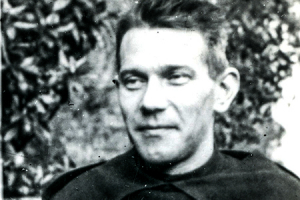
Father Adriaan Staring, O. Carm., as postulator general of the Carmelite Order, was responsible for obtaining reliable and relevant documents to be used in the process of canonization of Titus Brandsma. These historically reliable documents were to be used to prove Fr. Titus’ martyrdom. Better than all testimonies, these documents offer us insight into the Nazi persecutor's and Titus Brandsma's own views on matters of faith and Titus Brandsma's acceptance of martyrdom. Fr. Staring was particularly struck by the 'happy coincidence or providence,' that many important documents survived the war and its aftermath. Here is a summary from his account of the miraculous journey of these documents. It concerns three different files.
1. The File of the Sicherheitspolizei
The file, Kirchliche Presse, contains documents outlining the activities of Titus Brandsma: the letters from Archbishop De Jong and his secretary Mr. Giese to Father Titus; the interrogation of Fr. Titus on January 21, 1942; the verdict of the “judge” of instruction of Hardegen and two reports on the matter. By the end of 1944, the Sicherheitsdienst had built an oven in Glanerbrug in which all documents from their archives in The Hague and other places were burned.
Carmelite Brocardus Meijer testified in the trial: “The deeds of his condemnation were confiscated by the partisans and sent to me and to the archbishop, who kept the originals, while copies were sent by me to the various newspapers.” But how did these documents reach Brocardus Meijer?
The Rev. Lambertus Smeets, rector of the Zenderen Grammar School, wrote to his provincial on June 19, 1945: “Mr Hilbrink in Zenderen, a member of the Dutch Internal Defense Forces, whose house the Krauts blew up, killing his father and brother, is in possession of the file of the S.S. concerning the accusations, etc., against Titus Brandsma. The Krauts left these papers behind when they left.”
Later, another official copy of the same file (however not a complete copy), was obtained from the office of the Sicherheitsdienst in Amsterdam. At the request of the Underground, this office was bombed and destroyed by the English on November 26, 1944, while the Underground themselves, acting as “firemen,” brought the documents out, saving them.
2. Documents about Fr. Titus’ Imprisonment
This file contains the letters of Titus Brandsma, his diary of the first days, his statement of his defense entitled “Why the Dutch People, Especially the Catholic Population, Resist the N.S.B. (the Dutch Nazi party), a meditation on the Stations of the Cross, a life of Saint Teresa, his lecture from Good Friday in Amersfoort, his poem written in Scheveningen, a report on the state of his health, some letters from Archbishop De Jong and from his cousin, the lawyer Brandsma, a doctor's certificate, condolences and witness statements about his imprisonment. These documents shed light on the feelings with which Father Titus accepted his imprisonment.
After the death of Father Titus, his cousin, Mr. Assuerus Brandsma, wrote to the Dachau concentration campe, requesting that Fr. Titus' personal belongings be returned. In fact, they were actually sent back, including the writings from his imprisonment. This happened just in time. A short time later, during a bombing of the S.S. barracks on the night of October 3-4, 1942, a firebomb fell on the prison camp's clothing warehouse. The possessions of 30,000 prisoners stored there were destroyed. The prior of Nijmegen, Father Verhallen, kept this file in his room together with the letters of Father Titus and the witness statements.
3. Saved by the Gestapo
On February 22, 1944 Nijmegen was bombed. The Carmelite house, where Titus had lived, was hit but did not burn down. On July 13, 1944, during a search of the house for something totally unrelated, the Nazi police discovered these documents of Father Titus in the prior’s room. This aroused their interest. Although Father Verhallen told them that these had been sent back tot he Carmelites by the Gestapo, they took everything with them.
On September 17, 1944 the battle for Arnhem started. The City of Nijmegen was deeply involved in this battle. The Germans retreated into Nijmegen and on September 18, the Carmelites were given 20 minutes to evacuate the monastery. It was then set on fire by the Germans and totally destroyed. But the documents of Titus Brandsma had already been confiscated by the police.
A Spirit So Pious, So Holy
A few days after May 5, 1945, the prior in Nijmegen, Fr. Verhallen, heard that a well-known lawyer, Mr. van Velzen, connected to the court of appeal in Den Bosch, was in possession of this file. Van Velzen, by request of the Diocese of Roermond, had worked to aid some of the clergymen who had been arrested. This is how he knew Professoor Nelis, the sucessor to the Nazi intergator, Hardegen. In the critical days of September 1944, van Velzen visited him in his villa at Zeist. During that meeting, Professor Nelis was called to the telephone. He returned a little later, pale and shocked. “We have to leave,” he said. “We now have strict instructions to burn everything.” He brought out a pile of files. “I can burn all this because it is all rubbish, but there is one that is something special. It expresses a spirit so pious, so holy, that I shy away from burning it. I gather from the file that they are trying to have him canonized. I don't know what to do with it, I can't keep it and I'm afraid to destroy it.” Mr. van Velzen offered to take it with him and hid it at his home under the carpet, where it remained until the south was liberated. He handed everything over to Fr. Verhallen.
Although these do not relate to the resistance and martyrdom of Titus Brandsma, they are of great value to our knowledge of who he was, his activities, and his commitment to Dutch mysticism. In the process of canonization, they comprise 136 volumes. They were located in Father Titus' study, which was sealed by the Siecherheitspolizei on January 19, 1942. After the house search on June 13, 1944, these writings were taken to safety. The seals of the room were broken and everything was taken to Boxmeer, where an industrialist, Mr. Hendriks, stored them in the refrigerators of his factory. For most of the winter of 1944-1945, Boxmeer lay on the war front like a “no man’s land:” under the Americans by day, under the Germans by night. The residents were evacuated, their property looted, but the writings of Titus Brandsma remained unharmed and were returned after the war.
All these documents are now in the Dutch Carmelite Institute. Through miraculous ways they have been preserved: happy coincidence or providence?
Titus Brandsma, Saint of Oss, by Fr. Buitendijk, O. Carm
Father Titus lived in Oss from 1909 to 1923. All those years he taught philosophy to the brothers of the Order. But he always kept his eye on the world around him.-- first on the City of Oss. Oss was a town with a growing industry. There was a small upper class of very wealthy manufacturers. But most of the inhabitants were farmers who worked in the factories. For Titus, the serious question arose: how can God's mercy and love be seen in this society?
Today Titus is remembered in Oss, especially as a socially engaged Carmelite. He wanted to elevate the little people and offer them chances for the future. He took initiatives to improve the lot of the poor and involved the well-to-do citizens in this. Above all, Titus wanted a harmonious community in which people could be themselves and build a future. He was a builder of “community spirit.” He was a unifying force in the years of rising industry that brought bitter poverty. In this, he was guided by the Catholic values that he explained in a progressive way. In his progressive thinking and actions, he was a prophetic figure. The lasting fruits of his work are the public library and the Titus Brandsma Lyceum (school). Both institutions are celebrating their 100th anniversary.
In this way, Titus experienced a spirituality suited to the spirit of that time and place. As a religious, a Carmelite, he wanted to understand the times and not place himself outside their influence. In the everyday reality of the social environment, God wants to be sought and found. In this, there is an inspiration that transcends all time: God lives in every person and every person bears God's image that demands reverence and respect. Little people are precious in God's eyes. More than his contempoaries, Titus saw and experienced this. As a contemplative, Titus looked at reality right down to the essentials, including God.
During this period, Titus was deeply involved in the Catholic life of the Netherlands. He had unceasing dedication to all kinds of Catholic organisations. His speech as rector magnificus on the concept of God and his teaching of philosophy and mysticism spoke to many. The modernisation of the Catholic daily press and the advocacy of free and honest journalism ran through his entire life. His fundamental opposition to the ideology of National Socialism on a religious grounds was well known. But strongest of all was his desire to see the image of God in every human being. He was an encouraging pastor for fellow prisoners. He remained respectful to his torturers as people in whom the image of God had been seriously violated.
For me is Titus an appealing and exemplary saint for the universal Church. The traits of Titus' holiness find their origin in the period that Titus in Oss wanted to see God's image in the people for whom he devoted himself. We rightly pray for the intercession of Titus Brandsma as the Saint of Oss.
Father Tom Buitendijk, O. Carm.
Titus Brandsma Parish – Oss, The Netherlands
Lectio Divina June 2022
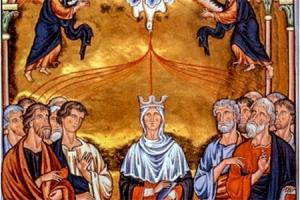
Lord our God, Your Son Jesus gave himself totally to those He loved - that is, to all.
Give us a share of His unselfish love that we too may learn from experience that there is more joy in giving ourselves than in receiving honors or favors.
May the Spirit make us also so much one that we graciously share with one another our God-given riches and gifts as people. We ask You this through Christ our Lord.
- Lectio Divina June 2022 [PDF] Download pdf here (934 KB)
- Lectio Divina June 2022 [ePub] Download default here (239 KB)
- Lectio Divina June 2022 [Mobi] Download default here (848 KB)
Celebrating At Home - Ascension Sunday

Called to be the living presence of God
(Luke 24:46-53)
The feast of the Ascension commemorates the return of Jesus to the Father. Jesus leaves in body but remains with us through the gift of the Spirit.
We will celebrate the gift and presence of the Holy Spirit in next Sunday’s feast of Pentecost.
The true meaning of our feast today is not found in Jesus’ leaving, but in the way he calls his disciples back together, to re-form them as a new community entrusted with the spread of the Gospel. Jesus sends the disciples out to make disciples of all nations and to teach them his way.
But the disciples are not left to do all that on their own. Jesus promises that he is with them always.
Jesus has called the ragged, group of disciples, scattered after his crucifixion, back to himself to form them, fragile and doubtful as they are, into a community for mission in the name of God. The task of the historical Jesus is complete; the task of the church as the living Body of Christ has just begun. It is comforting to recognise that Jesus doesn’t insist on perfection before he calls us and entrusts us with his mission.
This mission is authorised by God and passed on to us through Jesus. It is not about authority over others. It is actually a call to act as God would act, true to God’s heart as Jesus has taught us.
Ever since Easter, we have been proclaiming that Jesus is alive. The feasts of the Ascension and Pentecost help us to realise that we are part of a long tradition of faithful disciples. We have our faults and failings, but our call is to witness to and teach the way of Jesus by the kind of people we are, the values and attitudes we hold, in thought, word and action - to be the living presence of God in the world today.
- Celebrating At Home - pdf Ascension Sunday [PDF] (4.94 MB)
- Celebrating At Home - default Ascension Sunday [ePub] (4.69 MB)
- Celebrando En Familia - pdf Domingo de la Ascensión (333 KB)
- Celebrando In Casa - pdf Domenica dell'Ascensione (413 KB)
- Celebrando em Família - pdf Domingo de Ascensão (333 KB)
Feast of St. Mary Magdalene de’ Pazzi, Virgin

Mary Magdalene bore the surname of the noble family of Pazzi in Florence. Already by the 15th century, the Pazzi family exercised great political power. She was born on 2nd April 1566, given a good education and, from her childhood, she had a deep sense of the presence of God, a great love for the Eucharist and a longing to live a penitential life. Contrary to the usual practice but, with the consent of her confessor, she was allowed to make her first communion at the age of ten years. When she was seventeen years, she was accepted by the Carmelite nuns of Saint Mary of the Angels in Florence, her native city. During her novitiate, she had a serious illness which lasted for two months and brought her close to death. As a result, she was allowed to anticipate her profession. However, she recovered and for three years she was assistant mistress of novices, then sacristan, and, for a further six years, mistress of novices. Also, for a period, she had charge of the junior professed and in 1604 she was elected subprioress. Her continuous physical sufferings and severe spiritual trials were a great burden but she was enriched by God with extraordinary graces. She died on 25th May 1607. She was beatified in 1626 and canonized on 28th April 1669.
Read more here


