


















O.Carm
Dignitaires
From Dignitaries
Cardinal Johannes de Jong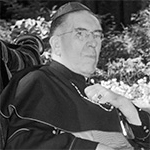
Archbishop of Utrecht
“As long as I shall live, I will always have before my eyes the figure of Father Brandsma, with whom I so often spoken during the war years and whom I always admired for his courage and clear insights. Repeatedly I asked his advice. I regard him as a martyr.
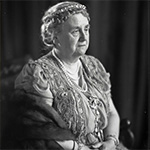 Queen Wilhelmina
In a letter of condolence to the Brandsma family, November 4, 1946
“...this great and sincere patriot who, with those who would ask his advice, never hesitated to present, clearly and right from the start, the religious and patriotic options open to them. The inner, spiritual power of his writings represents a testimony held by many in high esteem, then and still today.”
 Prof. Dr. Christine Mohrmann
Former student. Professor of Catholic University of Nijmegen
“He did everything for the students, but this was just part of his general goodness. He had a genuinely helpful spirit for all.”
Dr. J.P.Chr. De Boer
Inspector Elementary and Secondary Education
“I considered Father Brandsma the soul of educational resistance.”
“If I venerate him, it is because he united in the most perfect harmony one tireless activity to promote good in the world and in the spiritual life through education, upbringing and organization, with a complete inner peace regarding the success of all his work, which he saw to be in God’s hand.”
Dr. P.H. Ronge
Psychologist
“Though being a Lutheran myself, I must say that during my entire life I have met few people who made such an impression on me as Father Titus Brandsma. He knew how to make everyone his friend. Especially impressive was his spiritual unassailability. I felt immediately that I was in the presence of someone who in his ordinary life must have been far above the rest.”
 Godfried Bomans
Dutch Author
“Brandsma gave lectures on the history of mystical experience with the profound insight of a man who lived his material most strongly in his own person.”
Solemnity of St. Joseph, Principal Patron of the Order
How to Participate in the Canonization
Information on How to Participate in the Canonization of Blessed Titus Brandsma in St. Peter's Square
The canonization of Blessed Titus Brandsma will take place on Sunday, May 15 at 10 a.m. in St. Peter's Square.
Bishops, priests (and deacons) who wish to concelebrate will need to register, beginning March 7, 2022, directly on the website: biglietti.liturgiepontificie.va after entering the home page you will be asked to register on the Office of Ceremonies website and only then will you be able to request to participate. The Office of Ceremonies will send the ticket for access to St. Peter's Square via email, along with instructions on the liturgical vestments that will be provided and those to be brought with you.
At the time of registration, you will be asked to attach either the celebret (for priests and deacons) or an identification document (for bishops) to the form.
Registration is not necessary for cardinals.
Lay persons, groups or individuals who wish to participate in the canonization should send their request directly to the Carmelite Order, using the following email address: This email address is being protected from spambots. You need JavaScript enabled to view it.. Wheelchair users with a helper will have access to a separate sector, so please indicate this in your request to participate.
Tickets can be picked up directly at the venues that will be indicated after April 20.
On the day of the canonization, entrance to St. Peter's Square will be allowed from 7:00 a.m.
Download here
Subscribe Now to Carmel in the World for 2022
Providing Carmelite Spirituality for Today, the Carmel in the World magazine has been providing easy access to a variety of Carmelite topics for over 60 years. Distributed twice annually, the magazine provides exposure to a variety of authors from around the world.
The first issue will be mailed shortly so we recommend subscribing soon. Addresses where you can easily send your subscription are listed on the website of Edizioni Carmelitane, the publishing house of the Carmelite Order. (https://carmelitani.com/prodotto/carmel-world)
This issue contains articles by John Welch, Gareth Rowe, Christopher O'Donnell, Richard Copsey, Maria DeGroot, Warren J. Borg Ebejer, and Alexander Vella. There is also a comment on Carmel made by Blessed Titus Brandsma during a retreat.
Annual subscriptions are: 11 euro or AUS$20 or USA$15 or 9.50GBP
Annual subscriptions to Carmel in the World
(including Postage & Packing)
Australia – Aus $20.00.
Payable to: ‘Carmelite Fathers Inc VIC’
Send to: Bernie Howe, 10 Banksia Avenue, Windang 2528 Australia.
North America – US $15.00.
Send to: The Lay Carmelite Office, 8501 Bailey Road, Darien, IL 60561-8418, U.S.A.
Ireland - €11.00.
Payable to: Fr. Simon Nolan, O. Carm.
Send to: Fr. Simon Nolan, O. Carm., Carmelite Priory, 56 Aungier Street, Dublin, 2, D02 R598, Ireland.
Elsewhere in the World – €11.00 or STG£9.50.
Payable to: ‘Edizioni Carmelitane’
Send to: Edizioni Carmelitane, Via Sforza Pallavicini 10, 00193 Roma, Italy.
E-mail: This email address is being protected from spambots. You need JavaScript enabled to view it.
Wire Transfer: Edizioni Carmelitane
IBAN: IT67 Z076 0103 2000 0001 4069 009
BIC/SWIFT: BPPIITRRXXX
Bank: Poste Italiane
"Our Namesake is More Than a Statue in the Garden"

Rector Tom Brocks has been governing the former Carmel Lyceum in Oss, founded in 1922 by Titus Brandsma, since 2007. After WWII the school was renamed Titus Brandsma Lyceum. Titus' ideas are alive and well here, permeating the school culture.
Rector Brocks: ''Titus 's statement about Catholic education, 'knowledge is only half [the goal],' is the name of our school plan.'' Titus is referring to the Carmelite value of humanization as the goal of education, as well as the transfer of knowledge and skills. Today it is called personality formation and socialization of young people: discovery of one's own talents, awareness that one is part of society and co-responsible, and one is able to contribute to that society.
''Teaching from this perspective is a part of every lesson,'' says Brocks. A fellow professor of Titus’ in Nijmegen, Prof. Mohrman who taught classical languages, said that as a professor Titus distinguished himself in this respect. “Before the start of his lectures, he would go up to students and ask how they were doing. In those days such a rapport was quite unusual between professors and students.''
Being Known
Titus Brandsma Lyceum clears out a week three times a year without regular classes. Time is taken for reflective discussions with students and social activities such as meeting ex-prisoners, excursions to the Lower House [of Government] or social institutions, places of art and culture. Brocks says, "Another of Titus’ ideas is also a guiding principle: 'As long as the good things happen.’ It is a statement that contains a lot of meaning. The expectation is that you actively participate in society; that you think about what is good and make moral considerations. It also implies there is room for autonomy. You can choose within the framework of what is good. A core value of our school is that you may be who you want to be. Titus Brandsma Lyceum scores high on social safety. We hear this from the evaluators, and we see this reflected in student surveys. It means a safe climate for one to live respectfully one’s sexual orientation, for example. It means space is available for disabled children. Being 'known' is something adolescents are sensitive to. So especially in this most vulnerable and beautiful period of their lives, we are able to accompany them.''
Legitimate Hangout
School leadership, in the spirit of Titus, must be in agreement with this, says the rector. ''It means keeping an eye out to assist your colleagues. What are you passionate about? How can we, as school leaders, help you develop as a professional?
Before the Christmas lockdown, our mentors spent a week having online conversations with individual students and their parents. The purpose was to hear how things were going, how they see things at the school. The listening was very much appreciated. But the young students also called on us. They said things like, “Please make sure school reopens on January 10.”
The students are under pressure because of the corona pandemic. Delays in learning forced all of us to make up a lot of work in a very short period of time. This evoked some resistance as well as uncomfortable behavior. I understand that. School is also a legitimate hangout, I sometimes say. Being anchored with Titus’s values creates congruence in the school. I try to bring home that message often, at the opening and closing of the school year, at Christmas celebrations, and New Year's speeches, at parent information evenings and so forth. Hearing this gives colleagues and students a good feeling I notice.”
Letter from the Prior Provincial of the Polish Province
March 11, 2022
Dear Brothers
For more than a dozen days the whole world has been directing its eyes to Ukraine, the country which is defending itself after the aggression of the Russian army. We are also tracking, with anxiety, the development of the situation, especially in Sasiadowice and Volodymyr Volynskyj, where the Brothers from our Polish province work. Thank you for your attention to and concern about our Brothers and the people with whom they collaborate. The response has been so great that we are not able to respond immediately to all emails.
At present, the war is mainly confined to the eastern areas of Ukraine. Our convents are situated in the western part of the country near the Polish frontier. These days it is a relatively calm part of the country. Marianna Strepka, one of our parishioners who has been living in Poland for over six years now, describes the situation this way:
“On the morning of the 24th of February the inhabitants of Sasiadowice and the whole Ukraine were woken up by a whistle. From the radio and the television, a terrible message could be heard – the war has just begun! Not everyone immediately believed it. People thought they were merely exercises. However, the reality turned out to be completely different from the usual military exercises. Nobody imagined that in the 21st century they would hear explosions and watch tanks passing on the streets. It was a terrible morning for every inhabitant - disbelief, shock, and fear. Men between 18 and 60 were called up to military service. Only the mothers with their children and the grandparents remained at home. Some people ran away from the war. It is a tragedy for every single family. People do not know if they will see their relatives again. But they pray and believe that God is with them. The situation with supplies is deteriorating and some products are beginning to vanish from some stores.”
We are also very grateful for the financial help which is coming from our whole Order. We realize that Ukraine will require long-term help. That is why we have created a help fund for residents of the Ukraine. A team was also established, which will coordinate and organize the aid under the leadership of the provincial bursar. At this point, the first humanitarian transport is in preparation.
Help is needed not only in Ukraine. There are approximately 1,000,000 refugees on the territory of Poland. The Carmelite Sisters from the Congregation of the Institute of Our Lady of Mount Carmel are also involved in helping the Ukrainians. Sister Agnieszka Skup, the Delegate of the Polish delegation says:
"Our house in Wola Gulowska initially hosted three people from Kharkov and Kiev. They were taken from the border and found a place to rest in our house. They left and went further when they gained strength. A family from the village Brody near Lviv has been staying with us for a week now, six people: a mother with two-year-old daughter, three sons of the age of 5, 11 and 15 and a grandmother. We are trying to find them some home in the town nearby, so that this family could live independently, and the children could attend the school and classes organized by volunteers for them."
All our convents are open and ready to welcome the refugees from the Ukraine.
Wieslaw Strzelecki
Prior Provincial
Polish Province of the Carmelite Order
Download the Letter pdf here (34 KB)
Celebrating At Home - 3rd Sunday in Lent

The patient gardener
(Luke 13:1-9)
If the Gospels of the first two Sundays of Lent (temptation and transfiguration) are a parable about Christian life (a journey out of and away from temptation and into being transfigured by God’s grace), the Gospels of this Sunday and next give us the ‘road map’.
How do we get from temptation to transfiguration? Only with repentance and God’s forgiveness. That’s the road map for our Christian journey.
Oh, how we love a good story about disaster befalling someone else! The strength of Jesus reply to those who told him about the crucified Galileans seems to indicate that they shared this news with some delight.
Jesus reply tells us not to assume that bad things happen only to bad people and not to think that disasters are some kind of punishment for sin; stop thinking about the guilt of others and put your energy into repentance – turning back towards God.
The parable of the Fig Tree which follows answers the question, ‘If we do repent, what sort of reception will we get from God?’ God will work with us like the gardener in the parable. He will treat us with kindness and tenderness and nurture us back to life so that we can produce good fruit.
Quiet time for reflection
- pdf Celebrating At Home - 3rd Sunday in Lent Year C [PDF] (3.24 MB)
- default Celebrating At Home - 3rd Sunday in Lent Year C [ePub] (5.25 MB)
- pdf Celebrando en Familia - Tercer Domingo del Tiempo de Cuaresma (2.77 MB)
- pdf Celebrando in Casa - III Domenica di Quaresima (3.05 MB)
- pdf Celebrando em Familia - Terceiro Domingo da Quaresma [Português] (2.76 MB)
Via Crucis
Way of the Cross
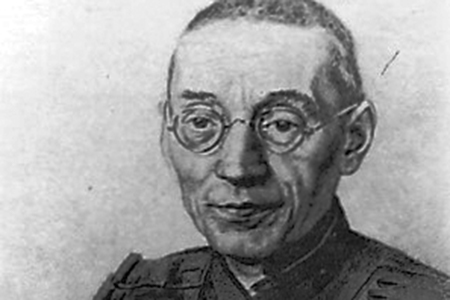
by Titus Brandsma, O. Carm.
I DO NOT KNOW WHAT AWAITS ME, BUT I KNOW MYSELF TO BE ENTIRELY IN GOD'S HANDS
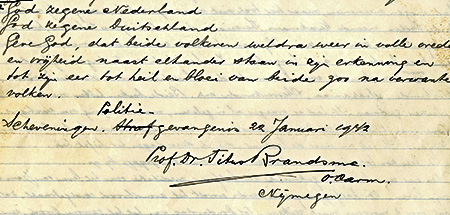
Scheveningen, January 1942
 Station I - 19 January 1942
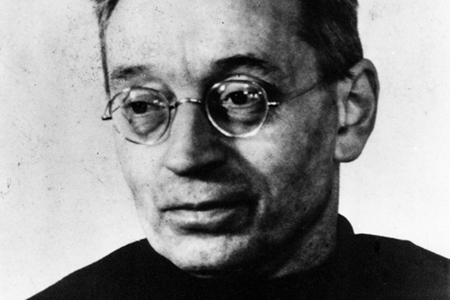
Titus Brandsma arrested by the Gestapo at the Karmelklooster in Nijmegen.
Titus: "Yes, yes, it is something to be in prison at the age of sixty.” Policeman: "Yes, Professor, You're right. But if it's your own fault, then you shouldn't have accepted the Archbishop's commission!" Titus: "I consider that an honor."
Notes: Titus Brandsma, O. Carm.
 Station 2 - 20 January 1942
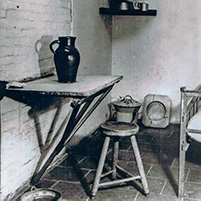
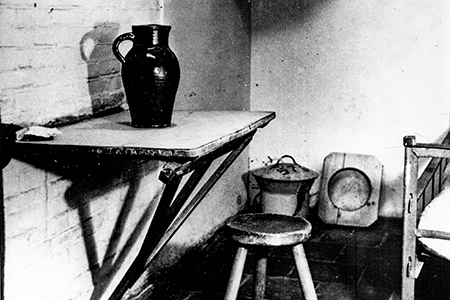
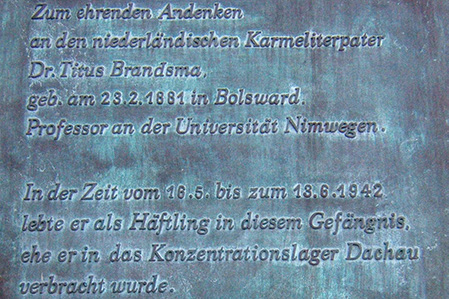
Titus is transferred to the prison of Scheveningen, the 'Oranjehotel', cell 577.
"It was no Inferno, my cell no. 577. And when I entered it, I didn't read above it: 'Let those who enter here now abandon all hope'. It did not look ominous and when the prison officer, who was helping the guard, apparently pointed out to the soldier that the cell was not ready, he said: "It's only for one night."
Notes: Titus Brandsma, O. Carm.
 Station 3 - 21 January 1942
Beginning of the interrogation by SS Hauptscharführer, P. Hardegen.
"The attitude of the Dutch Episcopate, I make it mine as well.”
Notes: Titus Brandsma, O. Carm.
 Station 4 - 12 March 1942
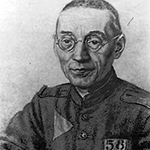
Titus is transferred to the Polizeiliches Durchgangslager Amersfoort.
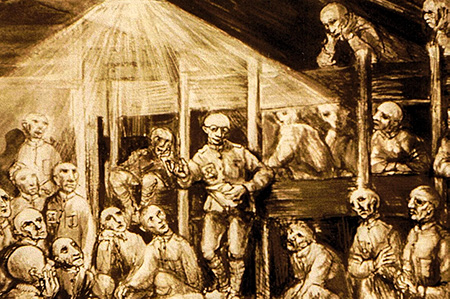
"Between the evening meal and the moment the lights went out, you had half an hour for yourself. But you were not allowed to leave the barracks. That was strictly forbidden. Titus did it anyway. While others were spending those paltry thirty minutes on themselves, he risked his life to see if anyone else needed his spiritual support. In particular, he looked for prisoners of whom it was known would be executed shortly afterwards. That made a big impression on me as well. He was a true shepherd of souls.
Prisoner: Max Kohnstamm
 Station 5 - 3 April 1942
Good Friday. Titus offers an instruction on suffering in Dutch mysticism.
"Titus' words made an enormous impression on all present. That someone in those bizarre circumstances could talk about something like that - not about hunger, not about pain, not about exhaustion, but about mysticism. That was amazing! He taught you that even in inhuman circumstances you could keep “embrace” your humanity.”
Prisoner: E. Wellenstijn
 Station 6 - 28 April 1942
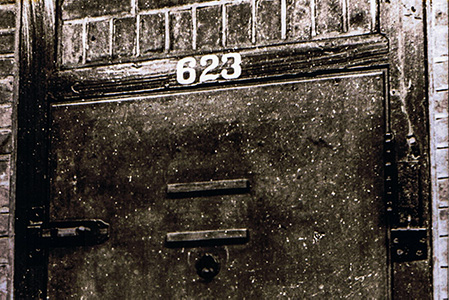
At the prison in Scheveningen, cell 623.
"Late in the evening one day in April, our cell door no. 623 in the barracks is thrown open and with a "Los, Los! (Come on. Come on)
In the evening, after dinner, we would always play cards for an hour. During that time, the professor would pray again, and it was time to forget our worries in our sleep. On Sunday mornings, we had a meditation and prayer. Also, on Ascension Day, the professor held a service. Those were really great moments in our lives."
Prisoner: Cornelis de Graaf
 Station 7 - 6 May 1942
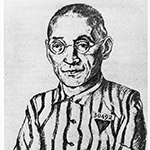
Sentence: deportation to Dachau, Germany, for the duration of the war.
When Titus heard his verdict he was allowed to call his monastery. "Yes, Father Prior ,this really is Father Titus! At the moment I am at the SD-office in The Hague. I've been interrogated again. They have decided to send me to Dachau, one of the biggest concentration camps in Germany. This means that I will be kept there until the end of the war. (...) No, don't worry about me.
Testimony: Prior Verhallen
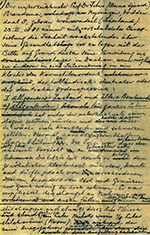 Station 8 - 16 May 1942
Titus is transferred to the prison in Kleve.
"His virtue had nothing striking about it, but seemed to be self-evident. It did not give the impression that he had to make an effort to be equable, patient, content, cheerful and just in his judgement. I am convinced that Father Titus considered heaven as the only goal of his life, that he always had eternity in mind. Otherwise his whole attitude cannot be explained."
Prison Chaplain: L. Deimel
 Station 9 - 13 June 1942
Departure from Kleve to Dachau concentration camp, via Frankfurt and Nüremberg - a five day’s journey.
"On the Friday before his departure for Dacha the following Saturday, I gave him Holy Communion for the last time. I was very impressed to have been able to give the Body of the Lord to such a special person,so full of holiness."
Prison Chaplain: L. Deimel
 Station 10 - 19 June 1942
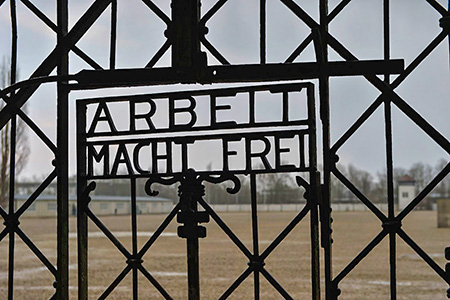
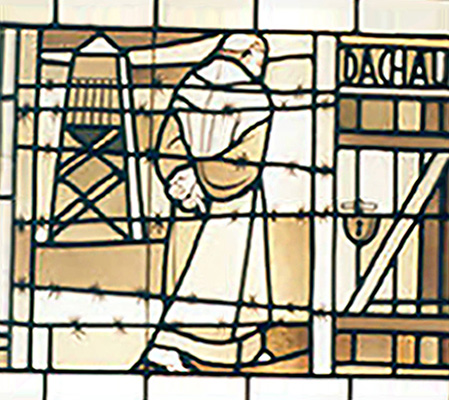
Arrival at the concentration camp, Dachau.
"The anger of the Stubeälteste knew no bounds, he hit and kicked Titus wherever he could, so that he rolled over on the ground and tried to crawl to the threshold of the dormitory. (...) But Titus doesn't want a word of comfort. He looks at me, smiling, and says in a whisper: "Oh brother, I knew who I was carrying. He points to the glasses box, in which a piece of the consecrated host is hidden."
Prisoner: Raphael Tijhuis, O. Carm
 Station 11 - 18 July 1942
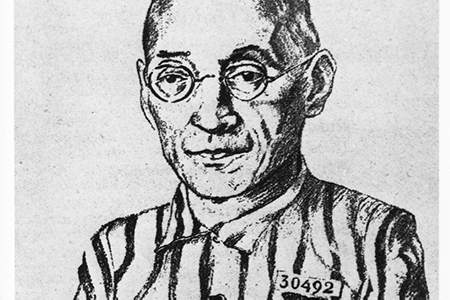
Titus is transferred to the sick barracks due to weakness and total exhaustion.
"I say goodbye to Titus, who thanks me for all the help and gives me greetings for the others on our block. "It's only for a few days," he says. "By the way, brother, by August we'll all be back home," he adds, laughing. This was always his saying. They were the last words I heard out of his mouth. We did not see him again."
Prisoner: Raphael Tijhuis, O. Carm.
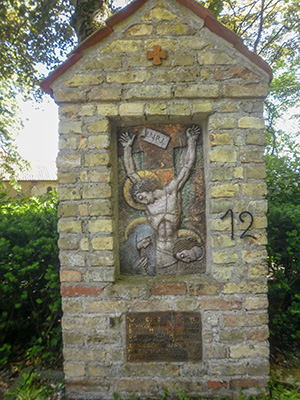
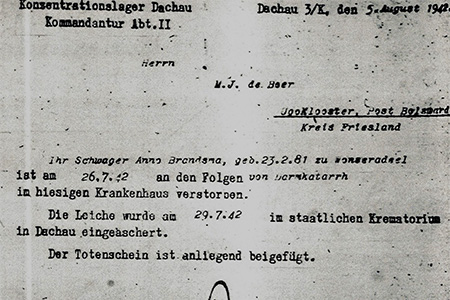
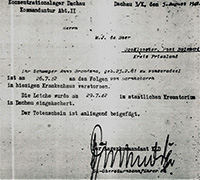 Station 12 - 26 July 1942
Notice of death, signed at 2 p.m.

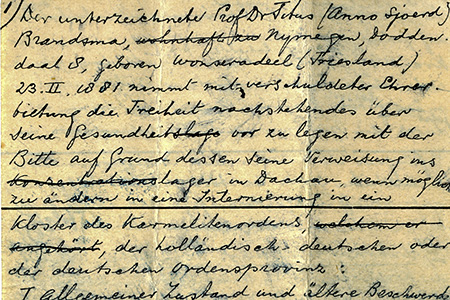
https://ocarm.org/en/itemlist/user/654-marcopellitero?start=1090#sigProIdae90e48823
Via Crucis
 Way of the Cross with Titus Brandsma, O. Carm.
6. Adoro Te - Hidden God
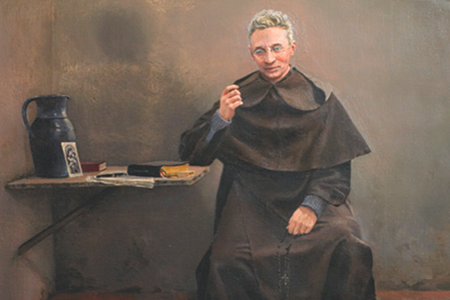 Hidden God
Many of us experience God as hidden. There is nothing new in this. It is not something unique to our time. Already, two and a half thousand years ago, Isaiah sighed in exile: “Truly, You are a hidden God”. (Is 45:15). Throughout the centuries, people of faith have repeated such words to the Lord, up to and including Titus Brandsma. For Titus, the hiddenness of God was a deeply lived reality.
In his prison cell at Scheveningen, Titus prayed the well-known hymn Adoro Te after lunch. In his account of his time in prison, 'My Cell', he tells us about this: “The Adoro Te has become my favourite prayer. Frequently I sing it softly and this helps me to make a spiritual communion”.
Titus knew this song by heart. He prayed it daily and every Saturday evening he sang it with his fellow brothers during the Saturday Station of Our Lady. The hymn touched Titus deeply. He was familiar with it. He carried it with him into prison. There Titus sang it ‘softly’, on his knees, after his lunch of soup and bread. Prayerfully it dawned on him: really, God is hidden. Not now and then. Not here and there. Always and everywhere, God is hidden.
After this moment of worship, Titus lit a pipe, walked to and fro in his small cell, and filed his nails, which by now had become “too long and I could not find the scissors.” God, for Titus, is hidden in the most ordinary things: a pipe of tobacco, walking to and fro, filing his nails.
God’s hidden presence is hopeful for those who have come to know it and to live from it. Seeing his hiddenness can even become so familiar to us that it makes us happy. Our God does not come like a jack-in-the-box. He is not an Easter egg hidden somewhere or a magic trick.
In the Dachau concentration camp, Titus’ hidden relationship with God is severely tested. Adoro Te drags him through it. When the camp guard has beaten him, he prays the Adoro Te together with his fellow brother, Rafaël Tijhuis. Hurt in his frail body, he remained standing in God’s hidden presence.
Adoro Te
Godhead here in hiding whom I do adore
Masked by these bare shadows,
shape and nothing more.
See, Lord, at thy service low lies here a heart
Lost, all lost in wonder at the God thou art.
Seeing, touching, tasting are in thee deceived;
How says trusty hearing? that shall be believed;
What God's Son has told me, take for truth I do;
Truth himself speaks truly or there's nothing true.
On the cross thy godhead made no sign to men;
Here thy very manhood steals from human ken:
Both are my confession, both are my belief,
And I pray the prayer made by the dying thief.
I am not like Thomas, wounds I cannot see,
But I plainly call thee Lord and God as he:
This faith each day deeper be my holding of,
Daily make me harder hope and dearer love.
O thou, our reminder of the Crucified,
Living Bread, the life of us for whom he died,
Lend this life to me, then; feed and feast my mind,
There be thou the sweetness man was meant to find.
Like what tender tales tell of the Pelican,
Bathe me, Jesus Lord, in what thy bosom ran--
Blood that but one drop of has the pow'r to win
All the world forgiveness of its world of sin.
Jesus whom I look at shrouded here below,
I beseech thee, send me what I thirst for so,
Some day to gaze on thee face to face in light
And be blest forever with thy glory's sight.
Attributed to St Thomas Aquinas; translation G.M. Hopkins.
Prayer
We ask you, Lord,
that, in the imitation of Saint Titus Brandsma,
we may know how to be close to you, near to the cross,
and that we may always feel you near to us in our crosses, both large and small,
as our Friend, our Companion on the journey, and our Redeemer.
May the cross always be for us a sign of love,
of generous and total surrender to the cause of life,
of solidarity and compassion for all.
May we always say, in all the circumstances of life,
with joy and full confidence in you…
Ave Crux Spes Unica…
Amen.
Mary, Mother of Carmel, pray for us.
Titus Brandsma, Carmelite martyr, intercede for us.
Download the Leaflet 6. Adoro Te - Hidden God pdf here (4.23 MB)


