

















O.Carm
Lessons from His Life
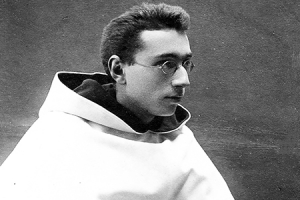

Lessons from Brandsma’s Life:
-
Opening lines of the poem he composed in his prison cell at Scheveningen explains the source of his inner strength: O Jesus, when I see you, I know again that I love you and that also your heart loves me ...
-
The experience of those with him at Dachau was that Brandsma’s serene inner peace came from a deep source: Your nearness makes all things well within me – enabling him to be so serene in the midst of so much activity and so many concerns.
-
Brandsma taught that our orientation towards God comes from within ourselves: The indwelling and inworking of God must not only be the object of intuition but also manifest themselves in our life, come to expression in our words and deeds, and radiate from our whole being and behavior.
-
In his 1932 Foundation Day Rector’s speech at the University of Nijmegen, Brandsma said: The idea of God is not immutable like rock but manifests itself in our lives in ever-shifting images which do not mean an essential change but place our idea of God in a different light. Titus calls for great openness to this variability of the idea of God. We must seek the Eternal One in time.
-
God is the deepest ground of our being
… a person notices that he/she is being moved and shaped by forces that come from the core of his/her being;
… to open oneself up to the inner world is to experience it as mystery. It is not from oneself … it is given to us.
God’s life in us is dynamic – continually coming to power in us: God is an inner power who impacts us in a liberating and clarifying way and causes us to look at the world differently.
This sense of God in/with him enabled Brandsma to be at home anywhere, whether in the midst of people or in the silence of his cell.
-
Brandsma taught that God works in humans in such a hidden way that all that is human remains and is not destroyed and that in the inner life of every human being there are moments of waiting and receiving – alongside a time for decision, action and self-giving.
-
Real life is shaped and led by what we can understand and is rational but also by the accidental.
-
Brandsma taught: Kneel before the image of God in your brother.
-
Brandsma’s respect for people arises from the fact that they are connected with each other in and through God. This respect for others induces a person to give his/her fellow humans the space in which they can be themselves.
-
-
On June 16 1942, Brandsma was dispatched to Dachau, where he was stripped of all dignity, known only as number 30492.
-
He conducted himself as if he lived in freedom. His inner silence was something no one could take from him.
-
Terrible indignities suffered at Dachau. From this time on, Titus died continually: he let go of what he expected from this human existence, and abandoned himself to what became possible in the eyes of God. His deepest base was the certainty of his being beloved … O Jesus, when I look on you My love for you becomes more true. And yours, I know, will never end: You see me as a special friend.
-
Raphael repeatedly mentions the serenity and balance which Brandsma displayed.
-
Brandsma remained totally serene … he displayed the mystic’s spirit of “disinterestedness”.
-
“The man who beat and kicked him could not touch his interior life”.
-
“The Capuchin priest Othmarus comments: An eternal smile full of patience and inner serenity, a smile of mystical resignation in the all suffering he had to bear, marked Titus. He had been maltreated so badly that his teeth literally hung loose in his mouth. He repaid all that with the prayer of Christ: ‘Father, forgive them’. Neither I nor anyone else ever heard him complain. He was a saint.
-
-
“In Scheveningen and Amersfoort he lived and spoke from the riches of his knowledge and experience, as that became evident from his interrogation, his defence, his speech about Geert Grote. In Kleve and Dachau he realized that he had been abandoned by the authorities. This realization shocked him deeply. After a severe inner conflict he surrendered. He no longer expected a rescue. The only thing that was strongly alive in him was the realization that he was in God’s hands and that his dignity was ‘inviolable’”.
-
His reflection in Scheveningen, I know that You love me, sustained him.
-
On 26 July 1942, Brandsma was administered a fatal injection and died.
His Spiritual Journey
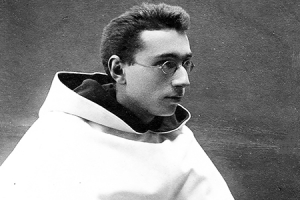
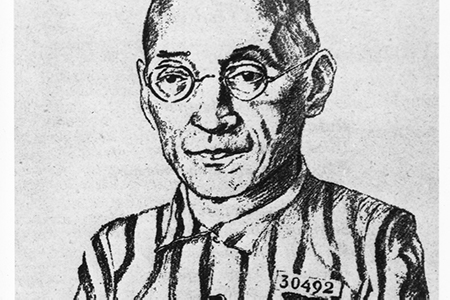
Titus Brandsma’s Spiritual Journey:
-
From Brandsma, others learn to entrust themselves to God in circumstances they do not understand but which shape their spiritual journey.
-
His upbringing was stable; this was the way of life he experienced both in his family and in the Church; stability was a focus and ideal.
-
After minor seminary, Brandsma opted for the Carmelites, having developed a strong interest in Carmelite spirituality. He was powerfully drawn to the mystical side of life in the monastery at Boxmeer, where he undertook his initial formation. He was struck by the sign “Silentium perpetuum,” which he regarded as a personal invitation into a process.
-
“He described his cell in detail; he is obviously at home in it. It is his inner world. He will be at home everywhere. “My cell” can be understood as the key phrase for Titus’ experience of God’s nearness. In the final phase of his life it returns – in a poem which became widely known in the post-war years. In his first letter he wrote about his cell and his fellow brothers; in his last writings what is left is only his cell; but again he writes that his is happy there. His cell is his mighty fortress, the ever-living wellspring of life. There he became familiar with God’s nearness.”
-
As a student, Brandsma began publishing, his first work being a translation of select works of Teresa of Avila.
In Teresa, he recognized something of himself. She could be restlessly at work without losing herself. Instead of feeling overwhelmed by the challenges she faced, she decided to do whatever she was capable of.
-
Brandma’s motto: Take the days as they come. It indicates his being in touch with reality, but wanting to do things that are important. His realism creates balance in his life.
-
During difficult times in his studies, he immersed himself in the experiences of mystical writers with which he could identify. He turned his gaze inwards: he was in “his cell.”
-
Activity alternated with silence throughout his life.
-
He understood Carmelite life as having a two-fold goal:
-
“To meet our obligations”
-
“Already in this life to some extent taste in our heart and experience in our spirit the gracious impact of the divine presence and the sweetness of the heavenly glory”.
-
-
Brandsma’s life coincided with a period of restoration of the Church in Holland. There was a focus on externals and a wariness of the mystical dimension of faith. Titus, however, believed that this was the foundation of the true recovery of the Church and it motivated him, no matter how busy he was.
-
He was very involved in the advancement of Frisian culture and the development of the Frisian people. However, the renewal of the spiritual life of Dutch Catholics was his primary objective. He believed/demonstrated that persons touched by an abundance of grace will also be caught up in an abundance of activity in their life.
-
Brandsma was an eclectic philosopher, but the mystical life was his strong suit. He immersed himself in the experiences of the mystical authors. He was conscious of the inexhaustible mystery of life’s connectedness (past and present). His central idea was that God is inexpressibly near to us in this world: To believe in God is to live in God.
-
The theme of “balance” or “equilibrium” frequently surfaces in his writing.
-
His teaching that the mystical person continually lets go of him/herself was Brandsma’s secret for being able to do so many things.
-
When Brandsma spoke of mysticism, Godfried Bomans, a student of Brandsma’s at Nijmegen, “infallibly sensed that Titus’ words did not proceed from academic theories but had to do with his own experiences”.
-
In spiritual talks, Brandsma used the image of the “enclosed garden,” a metaphor for the ideal world (paradise) at the beginning of creation. He wrote: We must turn our heart into a garden and we must make our hearts into a Carmel.
-
The God about whom Brandsma speaks is a God who wants to be near, uniquely present to people. This same idea is present in Teresa of Avila’s poem:
And if, by chance, you do not know
where you will find Me,
do not wander to and fro,
for if you want to find Me,
you must find Me in you.
Because you are My dwelling place,
you are My house and home,
and so I call out at any time,
whenever in your thoughts
I find the door closed.
-
Brandsma’s refusal to place ads in the Catholic papers as directed by the government in 1941 led to his arrest and detention. He entered a cell in which the hours no longer held sway over the person, where there is a timeless silence and where God’s world totally enveloped him … a mystic’s view.
-
Brandsma detached himself inwardly from the grip the Nazis had on him – and turned a disadvantage into an advantage … I am happy in my cell - “A cell becomes sweeter to the degree it is more faithfully inhabited” (Thomas á Kempis, Imitation of Christ)
-
The way in which Brandsma reacted to his imprisonment is characteristic of people with a strong will to live. He did not allow himself to be overpowered by the space in which he was confined.
-
Like Teresa of Avila (writing about the castle of the soul), Brandsma – both in his 1st letter home after entering the monastery as a boy and in writing about his prison cell, writes about the room at the center of the building.
-
Brandsma could be “in his cell” everywhere. To “stay in one’s cell” means to seek out the silence, to be by yourself.
-
Brandsma lived in his own inner world – not a separate world – but in the world in which he lived.
-
“In the greatest desolation, Titus Brandsma could be happy” – he had joy from within.
-
Brandsma drew on Carmelite spirituality – a bridge between Christianity, Judaism, and Islam, drawing on the inspiration of Elijah. Its deepest ground is the search for the living God.
-
In prison in Scheveningen, Brandsma was realistic about the consequences of his statements and actions; the poem he wrote there expresses his acceptance of the consequences of his behavior:
-
This poem is a form of dialogue, expressing powerlessness and emptiness on the one hand and a deep desire to somehow reach the ears of God who is silent.
-
Brandsma felt himself being absorbed into the sacred.
-
It follows a previous time of emptiness and dread.
-
His call now is to a place of quiet encounter.
-
He returned to himself and to Him who sustained his life: he experiences peace and being loved by God.
-
He is opening to God as one renouncing one’s self-centredness.
-
He expresses an “I – Thou” relationship with God: wonder, emotion, fear, gratitude.
-
His use of “friend” indicates intimacy.
-
He reveals an eye for the person behind every façade.
-
He reveals a challenge for which he draws strength in his inner life.
-
He shows resignation in a time of suffering and disaster.
-
He demonstrates the Mystics belief that suffering has a positive meaning … one becomes transformed in God – a source of power and hope.
-
He is freed from attachment to self-preservation; he worked for the liberation of people.
-
Amid all the violence, he encounters the love of God … his life is rooted in God, not himself.
-
-
Brandsma inhabits the mystical space of solitude in which one experiences freedom
-
Silence and solitude took him into the space of his own heart;
-
Within the clear, plain walls, in the intimate light of his cell, he finds the inner silence and refined attention which makes him sensitive to the friendly presence of God;
-
He is always, wherever he is, in the inner silence of his cell.
-
-
Increasingly, Brandsma became the Carmelite that the Carmelite Rule envisages.
-
A contemplative encounter with God: God is near.
-
-
Brandsma retained a sense of humor in his predicament: the fact that in my old age I ended up in a jail cell, tended more to make me laugh than that the tragedy of it could depress me …
-
Brandsma witnessed that we see God when we allow ourselves to be transformed in his infinite silence.
-
Over many years, Brandsma had practised silence as a way of life.
-
His favourite text from Teresa of Avila: Let nothing disturb you; let nothing alarm you. All things pass, only God never changes. Patience conquers all. Those who hold onto God lack nothing.
-
-
Throughout a month and a half in Sheveningen he wrote seven chapters of a biography on Teresa of Avila for which he had been commissioned. He wrote this text in the margins of another book he had because he had no other writing materials.
-
Brandsma experienced a personally testing time at Amersfoort, as expressed in the poem:
Grief would come and lay me low,
No chance to make it go away,
Nor with any tears allay,
Else had I done it long ago.
Then it came and on me weighed,
Till I lay still and no more wept,
Learned to watch and patience kept;
Thereafter it no longer stayed.
All that is passed and set aside’ from far away I still recall
And cannot understand at all
That ancient grief nor why I cried.
-
“What comes across in this poem is not the language of power. It is the language of a person who has been sidelined, who is no longer a factor to be reckoned with, but who has nevertheless positioned himself in reality in a way that is entirely his own, which, consequently, is still there. He has his memories of past years, memories of a well-ordered life of praying and working, and the security he found there. Now he has found a new security which no one can take from him because they themselves do not know this security”.
-
Brandsma achieved an inner security in which he knew his cries of anguish were being heard; a security embedded in the all-embracing presence of God, a security found in waiting and being patient.
-
“A person who has thus experienced this acceptance as a favor and himself as altogether open and desirous of this favour can say of himself that he is happy in his cell”.
-
“We do not belong to ourselves – both our origin and our destiny is given to us”.
-
On May 16 1942, Brandsma arrived in Kleve, a transit station on the way to Dachau.
-
In this prison, fear destroyed his inner peace; his cell was no longer a place in which he could be alone and find rest. God seemed far away and silent.
-
Brandsma had to go through a “dark night” of solitude and helplessness:
-
No other comfort than inner capacity for listening (cf. John of the Cross: O guiding night! O night more lovely than the dawn.
-
-
Brandsma reached a point of “relinquishment” (leaving events to themselves), meaning he had to relinquish himself. “Those who relinquish themselves to God find themselves again as they have never been before, but do not recognize themselves. They find the most essential nature of their existence that lies deeply concealed in the unknown depths of their life”.
-
He adjusts to “take the days as they come”: in a new and purified way, this gave him rest.
-
For Titus, “relinquishment” meant surrendering everything to him who is greater than we and will not drop us.
-
At the end of his life, Titus relinquished the desire to be at home in his cell. He was at home nowhere. In this respect he was walking in the footsteps of the first Carmelites who relinquished Mount Carmel, not knowing where that might lead.
-
Chronology of His Life
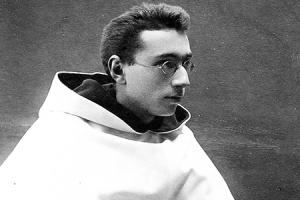
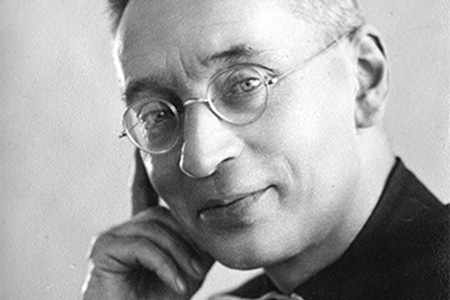 Timeline of Titus Brandsma’s Life:
-
Born: 23 February 1881, named Anno Sjoerd Brandsma
-
Early years: grew up near Bolsward in panoramic Frisian countryside; stable, strongly religious upbringing; 5 of 6 children became Religious.
-
Entered Minor Seminary (Franciscan): September 1892
-
Joined Carmelites: 1898 at Boxmeer – took religious name of “Titus” (his father’s name)
-
1st Profession: 1899
-
Priestly Ordination: 1905
-
Post-grad studies in Rome: 1905-1909 (Ph.D)
-
School teacher: 1909 at Oss; subsequently Head Teacher and active in founding a number of other Catholic schools
-
Professor of Philosophy: 1923 at University of Nijmegen; subsequently Rector for many years; at the same time, he was authorised examiner to supervise final examinations at Catholic secondary schools in Holland; Chair of Board of Association of Roman Catholic High Schools & Gymnasia, 1925-42. (His struggle for the rights of Catholic schools led to increasing attention being paid to him by the German government)
“What the students especially appreciated in their professor was his understanding of everyone’s peculiar bent and ambition”.
-
Ecclesiastical Adviser to Catholic Journalists: 1935
-
His basic objection to Nazism was based on its distorted human image, whereby people are subjected to an all-powerful, strong hero, whilst they are stripped of their creativity and become subservient.
-
Brandsma’s human image was that of a person able to live and think independently and maturely and who has acquired so much respect for life and so much inner freedom that he/she is receptive to the hidden signs of God’s presence in the world.
-
He had great respect for the role of journalists and advocated for their professional training and development and the payment of just wages.
-
He refused to place Nazi advertisements in the Catholic papers.
-
-
Arrest: 19 January 1942 – detained in Scheveningen prison
-
Wrote 7 chapters of biography of Teresa of Avila
-
-
Transferred to Amersfoort prison: 12 March 1942
-
At Amersfoort, he helps sick prisoner Jan Hoffmann, devoid of too much concern for his own suffering:
-
From within a circle of inviolable inner freedom;
-
He was open to all … “impressive by virtue of his spiritual inviolability”;
-
He ministered from a world of inner serenity.
-
-
Under the ruse of giving a lecture on Dutch literary history he gave a meditation on Good Friday on the religious meaning of the mysticism of suffering, addressing the questions:
-
How can you make sense of your life of suffering that is inescapable?
-
How can you keep yourself from being crushed by it?
-
How can you learn to bear it?
-
He spoke from the heart to the heart.
-
-
Brandsma’s fellow prisoners recognised his inner freedom:
-
“Freed from grim self-effort and fear, he was receptive to the power that comes from God”.
-
The most mysterious aspect of this was that he was now more himself than ever before.
-
-
-
Verdict of Deportation to Dachau: 6 May 1942
-
Transferred to Kleve holding prison: 16 May 1942
-
Despatched to Dachau: 16 June 1942
-
Befriended by Br Raphael Tijhuis, a Carmelite from the community in Mainz, who post-war wrote a record of their experiences.[1]
-
In his final days, when his death was a certainty, he was nursed by Tizia. She related: Whenever you came into the infirmary there was a group of sick people, all stooped and bent by fatigue and pain, standing around Titus’ bed. With a lonely death facing them they looked for a last moment of comfort in each other’s company. They found it especially by Titus’ bedside. There was in him something that gave people confidence.
-
-
Died: 26 July 1942, having been administered a fatal injection.
-
Beatified: 3 November 1985
[1] Raphael Tijhuis, O. Carm. Nothing Can Stop God from Reaching Us: A Dachau Diary by a Survivor. Edizioni Carmelitane. ISBN 9788872880944.
Titus Brandsma's Pictures
Gallery of pictures of Blessed Titus Brandsma
Anno Brandsma was born to Tjitsje and Titus Brandsma on February 23rd, 1881, at Wonseradeel in Friesland, a province in the very north of Holland.


https://ocarm.org/en/itemlist/user/654-marcopellitero?start=1110#sigProId81de73c683
Download here the “High Resolution” pictures of Blessed Titus Brandsma
(used with permission of the NCI (Nederlands Carmelitaans Instituut).
Titus Brandsma Speaking
Speech by Titus Brandsma on 22 September 1936 for the Catholic Radio Broadcasting Service
In this nationally broadcast talk, Titus Brandsma emphasizes the importance of having a separate Catholic press to make the Church’s opinion heard, for the Catholic perspective to be heard in the chorus of voices, assuring the Church a place in Dutch society. He encouraged all to take advantage of the great freedoms in the Netherlands. Journalism is not only about telling the news, information, and giving education. But a newspaper must give its opinion— honestly and consistently. Different voices show the contradictions in society. This is of great value, as it protects against dilution and elevates politics above opportunism. Catholics are committed to the consistent application of the Catholic faith, including in the social and political realms. He says that Catholics have long been undervalued in the Netherlands; they were often not taken seriously. With a separate Catholic press, the Church can make its opinions heard. But it is not good to cover only Catholic topics. In all other areas, such as sport, economy, and culture, the reporting must also be of a high standard. The reader wants to be broadly informed. This entails great costs, but it is very important to have a good Catholic press in all areas of the country.
Listen to the audio (in Dutch) here
A Brief Biography

Early Life
Anno Brandsma was born to Tjitsje and Titus Brandsma on February 23rd 1881 at Wonseradeel in Friesland, a province in the very north of Holland. The Brandsma family consisted of four girls and two boys, of which Titus was the second youngest. Five of the siblings would later enter religious life.
The family owned a dairy farm and herd, selling milk and cheese made on the farm itself. At the time, Catholics were a minority in Friesland and protective of their religion and culture. Anno’s father worked to preserve the Friesian culture within his family and the local community. He participated in politics, and at one time served as chairman of the local election board.
When Anno had completed his secondary education at a Franciscan school, he decided to join the Carmelite Order. He began his novitiate at Boxmeer in September 1898 taking his father’s name, Titus, as his religious name. He made his First Profession in October 1899 and was ordained priest on June 17th 1905.
After further studies at the Gregorian University in Rome, he was awarded a PhD in Philosophy in 1909.
Titus also had a keen interest in both Spirituality and Journalism, two areas which, together with his academic pursuits, would make up much of his life’s work.
Ministry and Mission
In 1923, Titus helped found the Catholic University of Nijmegen, and worked there as lecturer, professor and administrator. He served as Rector Magnificus (President) during the academic year 1932-33.
As a Carmelite friar, he also liked to share the Order’s spiritual tradition with people outside of the University.
He travelled widely lecturing on Carmelite Spirituality. In preparation for a lecture tour in the United States in 1935, he spent some time at the Carmelite Priories in Whitefriar Street, Dublin, and Kinsale, Co. Cork, Ireland.
Journalism
Titus also cultivated his interest in journalism and publishing. In late 1935 he became the National Spiritual Adviser to the Union of Catholic Journalists. In this role, he encouraged opposition to the publication of Nazi propaganda in Catholic newspapers and in the Press generally. He was especially critical of its anti-Semitism.
When the Nazis invaded Holland in May 1940, Titus was an adviser to the Archbishop of Utrecht. He encouraged the bishops to speak out against the persecution of the Jews and the infringement of human rights generally by the occupiers. In doing so, he became a marked man by the authorities.
Arrest and Martyrdom
The refusal by Catholic newspapers to print Nazi propaganda sealed the fate of Titus. Titus had agreed to deliver personally to each editor a letter from the Catholic bishops. This letter instructed the editors not to comply with a new law requiring them to print official Nazi advertisements and articles. Titus had visited fourteen editors before being arrested by the Gestapo at Nijmegen on January 19th 1942.
Titus was interned at Scheveningen and Amersfoort in Holland before being transported to Dachau in June.
Under the harsh regime there, his health quickly deteriorated and he was in the camp hospital by the third week of July. He was subjected to biological experimentation before being killed by lethal injection on July 26th, 1942. On the day he died, the Dutch Bishops issued a pastoral letter protesting strongly against the deportation of Jews from Holland.
Before his execution, Titus had prayed that God might help the nurse who would administer the injection to repent of her actions in the camp. He also gave her his rosary beads, although she protested that she was a lapsed Catholic. Some years later, that same woman came to a Carmelite priory seeking forgiveness and was a witness in the process for his beatification, which took place in Rome on November 3rd 1985.
Prayer Before an Image of Christ
O Jesus, when I gaze on You
Once more alive, that I love You
And that your heart loves me too
Moreover as your special friend.
Although that calls me to suffer more
Oh, for me all suffering is good,
For in this way I resemble You
And this is the way to Your Kingdom.
I am blissful in my suffering
For I know it no more as sorrow
But the most ultimate elected lot
That unites me with You, o God.
O, just leave me here silently alone,
The chill and cold around me
And let no people be with me
Here alone I grow not weary.
For Thou, O Jesus, art with me
I have never been so close to You.
Stay with me, with
me, Jesus sweet,
Your presence makes all things good for
me.
Written by Titus Brandsma on February 12th-13th 1942, while a prisoner at Scheveningen.
Translation: Susan Verkerk-Wheatley / Anne-Marie Bos
© Titus Brandsma Instituut 2018
Download the Leaflet 1 A Brief Biography pdf here (4.05 MB)
Celebrating At Home - 1st Sunday in Lent

Temptation to transfiguration (Luke 4:1-13)
Our great Lenten journey has begun. It’s a journey which begins in ash and ends in water. Fire is a profound part of our experience. We know its power to destroy, blacken and reduce to ash.
We know that evil can do the same - destroy our wholeness of spirit, blacken our lives and reduce the beauty of human life to so much dust.
We begin Lent in the ash of acknowledging our own part in harbouring, creating and doing evil - those places in our hearts where the fire of anger, bitterness, selfishness or narrowness of mind and heart has left nothing but cold ash.
The ash is a reminder that our true life is not found in mortal things which eventually turn to dust, but in eternal things. We also know that out of ash new life can bud, grow strong, bloom into fullness - that’s the Easter miracle.
As always, the Gospels of the first two Sundays in Lent provide a road map for our Lenten journey from temptation (this Sunday) to transfiguration (next Sunday).
We allow ourselves to be tempted out of the ash of selfishness and narrowness of heart and into a life of open-hearted goodness. We celebrate God’s graciousness to us by sharing what we have with those in need whether it be food, wealth, time, love, friendship or compassion. That’s what it means to ‘repent and believe the Good News’.
In these days when we are so conscious of the impact of human life on God’s creation, perhaps we could think about some permanent fasting from our excessive consumption of power, food and petrol in order to allow our earth to heal, to breathe and to continue to be a source of nourishment and life for the whole human family.
Quiet time for reflection
Adoro Te - Hidden God
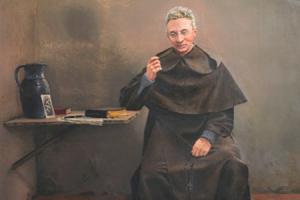
Many of us experience God as hidden. There is nothing new in this is. It is not something unique to our time. Already, two and a half thousand years ago, Isaiah sighed in exile: 'Truly, You are a hidden God' (Is 45:15). Throughout the centuries, people of faith have repeated such words to he Lord, up to and including Titus Brandsma. For Titus, the hiddenness of God was a deeply lived reality.
In his prison cell at Scheveningen, Titus prayed the well-known hymn Adoro Te after lunch. In his account of his time in prison, 'My Cell', he tells us about this: 'The Adoro Te has become my favourite prayer. Frequently I sing it softly and this helps me to make a spiritual commuion'. What does this song sing about? The first and last verses read as follows:
I devoutly worship Thee,
Hidden Godhead,
Who among these signs are
truly hidden.
O may I behold Thee
with unveiled face
and taste the happiness
to see Your glory.
Titus knew this song by heart. He prayed it daily and every Saturday evening he sang it with his fellow brothers during the Saturday Station of Our Lady. The hymn touched Titus deeply. He was familiar with it. He carried it with him into prison. There Titus sang it 'softly', on his knees, after his lunch of soup and bread. Prayerfully it dawned on him: really, God is hidden. Not now and then. Not here and there. Always and everywhere, God is hidden.
After this moment of worship, Titus lit a pipe, walked to and fro in his small cell, and filed his nails, which by now had become ‘too long and I could not find the scissors.’ God, for Titus, is hidden in the most ordinary things: a pipe of tobacco, walking to and fro, filing his nails.
God's hidden presence is hopeful for those who have come to know it and to live from it. Seeing his hiddenness can even become so familiar to us that it makes us happy. Our God does not come like a jack-in-the-box. He is not an Easter egg hidden somewhere or a magic trick.
In the Dachau concentration camp, Titus' hidden relationship with God is severely tested. Adoro Te drags him through it. When the camp guard has beaten him, he prays the Adoro Te together with his fellow brother, Rafaël Tijhuis. Hurt in his frail body, he remained standing in God's hidden presence.
Kees Waaijman
Prayer for the Canonization of Titus Brandsma
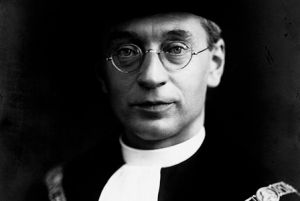
On the occasion of that canonization of Blessed Titus Brandsma, the Carmelite Order offers this new prayer in his memory. In a few short lines, the prayer asks for the grace to be able to see beyond the evil violence of our world in order to encounter our God. The prayer recognizes that violence eliminates the God-given dignity that each person has and the baptismal call that each believer has to be a witness of Christ in the world. This was a value that Fr. Brandsma lived throughout his life— even to his final moments in the horrors of the Dachau concentration camp. What a blessing for our world in 2022 to have faithful men and women pray for the grace to live their faith witnessing in this way.
You will find links to the prayer translated into various languages below.
Prayer for the Canonization of Titus Brandsma
God of peace and justice,
you open our hearts to love
and to the joy of the Gospel
even in the midst of countless forms of violence
that take away the dignity of our brothers and sisters,
fill us with your grace,
so that like Saint Titus Brandsma,
we may in tenderness see beyond the horrors of inhumanity
and contemplate your glory
that shines forth through the martyrs of every age,
and so become your authentic witnesses in the world of today.
Amen.
Download the Prayer in English pdf here (51 KB)
Download the Prayer in Esperanto pdf here (55 KB)
Download the Prayer in Dutch pdf here (51 KB)
Download the Prayer in French pdf here (54 KB)
Download the Prayer in German pdf here (53 KB)
Download the Prayer in Polish pdf here (53 KB)
Download the Prayer in Portuguese pdf here (53 KB)
Titus Brandsma Speaking
Speech by Titus Brandsma on 22 September 1936 for the Catholic Radio Broadcasting Service
In this nationally broadcast talk, Titus Brandsma emphasizes the importance of having a separate Catholic press to make the Church’s opinion heard, for the Catholic perspective to be heard in the chorus of voices, assuring the Church a place in Dutch society.


