












O.Carm
Celebrating At Home - 1st Sunday in Lent
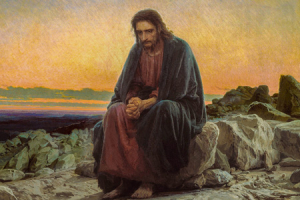
Temptation to Transfiguration
(Matthew 4:1-11)
We know that evil can do the same - destroy our wholeness of spirit, blacken our lives and reduce the beauty of human life to so much dust.
We begin Lent in the ash of acknowledging our own part in harbouring, creating and doing evil - those places in our hearts where the fire of anger, bitterness, selfishness or narrowness of mind and heart has left nothing but cold ash.
The ash is a reminder that our true life is not found in mortal things which eventually turn to dust, but in eternal things. We also know that out of ash new life can bud, grow strong, bloom into fullness - that’s the Easter miracle.
As always, the Gospels of the first two Sundays in Lent provide a road map for our Lenten journey from temptation (this Sunday) to transfiguration (next Sunday). We allow ourselves to be tempted out of the ash of selfishness and narrowness of heart and into a life of open-hearted goodness. We celebrate God’s graciousness to us by sharing what we have with those in need whether it be food, wealth, time, love, friendship or compassion. That’s what it means to ‘repent and believe the Good News’.
In these days when we are so conscious of the impact of human life on God’s creation, perhaps we could think about some permanent fasting from our excessive consumption of power, food and petrol in order to allow our earth to heal, to breathe and to continue to be a source of nourishment and life for the whole human family.
- pdf Celebrating At Home - 1st Sunday in Lent [PDF] (3.36 MB)
- default Celebrating At Home - 1st Sunday in Lent [ePub] (7.06 MB)
- pdf Celebrando en Familia - Primer Domingo del Tiempo de Cuaresma (930 KB)
- pdf Celebrando in Casa - I Domenica di Quaresima (920 KB)
- pdf Celebrando em família - Primeiro Domingo da Quaresma (899 KB)
95th Anniversary of Vatican Radio Celebrated

On February 12, 2026, the Church celebrated the 95th anniversary of the inauguration of Vatican Radio. The following day, UNESCO proclaimed World Radio Day with the theme “Artificial Intelligence As a Tool, Not a Voice.”
The inauguration of this new medium of communications for the Church came 2 years and a day after the signing of the Lateran Pacts between the Holy See and the Kingdom of Italy establishing the Vatican City State. Only four days after the creation of Vatican City, the famous Italian-born radio pioneer, Guglielmo Marconi, was commissioned by Pope Pius XI to build the new country’s radio station.
The first transmission from the Vatican was in morse code to alert radio stations, ships, and anyone with the appropriate radio to prepare for the first ever papal radio message. Marconi introduced the pope and at precisely 4:49 PM on February 12, 1931, much of the world heard the pope’s voice for the first time. The pope had written the text himself in Latin. It was a message to people of all faiths as well as governments, sharing the Church’s message of peace and love. The pope assured all the listeners that his prayers were with the entire people of the world.
There have been many developments in communications in the intervening decades. In 1954, Pope Pius XII inaugurated Eurovision—eight European nations linked via radio and coaxial cable. This marked the beginning of live TV telecasts to Europe of papal celebrations. In 1974 the Vatican transmitted its first worldwide satellite telecast, allowing people around the world to witness the opening of the Holy Door and Christmas Midnight Mass.
Today employees of Vatican Radio come from 69 nations. It has gone beyond just radio transmissions, reaching audiences via satellite, streaming, podcasts, social media, video, and digital platforms as well. It does so in 56 languages.
For the 95th anniversary, Massimiliano Menichetti, of the Vatican News Service, interviewed the daughter of Marconi. The interview took place in Rome in the apartment “steeped in memories” as well as history. From this space, her father pushed a button to light up the statue of Christ the Redeemer located high above Rio de Janeiro, Brazil.
According to his daughter, Marconi went to the Vatican every day to supervise the construction of the powerful Vatican Radio to reach people around the entire globe. “He wanted to present the pope to the world,” Marconi says of her father.
Princess Marconi mentions that the pope at the time, Pius XI, was very interested in inventions and wanted to know the details. She says the pope himself had the mind of a researcher. He would even telephone the Marconi residence to hear about the latest discoveries directly from Marconi.
A newsreel from Instituto Luce exists of the pope coming to receive the radio system from Marconi. This can be viewed at: www.youtube.com/watch?v=4sda27wQqF8
Forty years later the Vatican Radio had outgrown is original center. In 1970 it moved to Palazzo Pio, located across the street from Castel San Angelo. Today this building houses the Dicastery for Communications.
7th Chapter of the St. Thomas Province Held in India
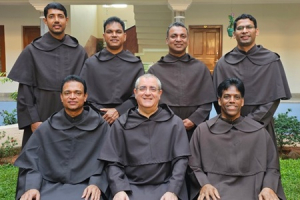
7th Provincial Chapter of the St. Thomas Province Held in Thrissur, Kerala, India on February 8-13, 2026
The 7th Provincial Chapter of the St. Thomas Province, India, was held from February 8-13, 2026, at Carmel Sadan, the provincial house in Thrissur, Kerala. The theme of the gathering was “Radiating Christ, Rooted in Carmel.” The Chapter, celebrated as an open chapter, brought together 62 Carmelites serving the Order both in India and abroad.
The assembly was graced by the presence of the Prior General, Desiderio García Martínez, O. Carm., and Robert Thomas Puthussery, O. Carm., Councilor for Asia–Australia–Oceania. In his opening address, the prior general emphasized the need for the revitalization of consecrated life, the primacy of prayer and evangelical poverty, authentic contemplation, community as a place of reference, integral formation, and a renewed evangelical witness capable of responding to contemporary challenges.
The Chapter was marked by a deep spirit of fraternity and prayerful discernment, joyfully celebrating the call to radiate Christ while remaining firmly rooted in the Carmelite charism.
Further information is available on the province website: ocarmstthomasprovinceindia.com
The following members were elected to lead the province for the next triennium:
1st Councilor | 1er Consejero | 1o Consigliere
Nelson Nedumpurath, O. Carm.
2nd Councilor | 2do Consejero | 2o Consigliere
Gijo Muthanattu, O. Carm.
3rd Councilor | 3er Consejero | 3o Consigliere
Sijo Pavartikaran, O. Carm.
4th Councilor | 4to Consejero | 4o Consigliere
Thomas Mavunkal, O. Carm.
Celebrating At Home - 6th Sunday in Ordinary Time

Excessive Generosity
(Matthew 5:17-37)
In the Jewish tradition, guidance about how to be at rights with God and neighbour is found in the Torah, the teaching contained in the first five books of the Hebrew Scriptures (Old Testament). It is especially important for St Matthew, writing his Gospel for Jewish believers, to show that Jesus is not opposed to Jewish teachings and traditions. He has not come to abolish the Law or the Prophets, but to complete or fulfil them.
But for Jesus it is not enough to follow these teachings only in external actions. The path that Jesus is calling his disciples to is a path of thorough-going transformation from within.
The short version of this Sunday’s Gospel begins with, ‘I tell you, if your virtue goes no deeper than that of the scribes and Pharisees, you will never get into the kingdom of heaven.’ Those listening to Jesus would have been deeply shocked by these words. The scribes and Pharisees were considered the righteous ones – those who stood most chance of getting into heaven. They were expert practitioners of the Law.
But Jesus is calling his disciples to a more abundant righteousness. He takes traditional interpretations of biblical teachings and corrects and extends them in a more generous interpretation.
A number of examples in today’s Gospel reading serve to make the point. As always, Jesus’ words go to the heart and from there address issue. For example: it is not enough to be able to say, ‘I have kept the commandment not to kill’. What about the anger in your heart that gives rise to a whole raft of insults, bitterness and injury against another person?
Virtue and righteousness are about being in right relationship with God and others. It is not about looking good on the outside, fulfilling the ‘letter of the Law’, but about being good on the inside; having the right attitude of heart so as to be in right relationship with God and neighbour. Such an attitude of heart will manifest itself in generous life-giving actions that make the world safe for others.
True Christian virtue always goes beyond merely what is required and always mirrors the excessive generosity of God.
- pdf Celebrating At Home - 6th Sunday in Ordinary Time [PDF] (2.93 MB)
- default Celebrating At Home - 6th Sunday in Ordinary Time [ePub] (4.00 MB)
- pdf Celebrando en Familia - VI Domingo del Tiempo Ordinario (776 KB)
- pdf Celebrando in Casa - VI Domenica del Tempo Ordinario (798 KB)
- pdf Celebrando em família - Sexto Domingo do Tempo Comum (805 KB)
General Councilor's Fraternal Visit to Argentina
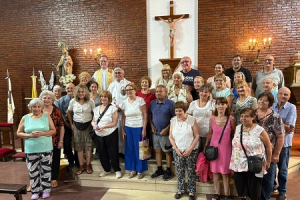
General Councilors Fraternal Visit to the Carmelite Community in Argentina
Following his participation in the Provincial Chapter of the Province Fluminense in Belo Horizonte, Nepi Willemsen, General Councilor for the Americas, undertook a fraternal visit with the Carmelite community in Argentina from January 31 to February 5.
The Carmelite presence in Argentina dates back to 1946 and forms part of the Province of Aragon, Castile, and Valencia, which contunes to have responsibility for the Order’s mission in the country.
At present, the community is made up of six Carmelites, brothers and priests, who reside and minister in the greater Buenos Aires area, specifically in and around Lomas de Zamora. Their pastoral work is centered on two parishes, Our Lady of Mount Carmel (with the Lourdes chapel) and Saint Rose of Lima, both of which were founded by the Carmelites and continue to be entrusted to their pastoral care.
In addition to parish ministry, the Carmelites provide regular pastoral service at the local hospital in Lomas de Zamora, offering spiritual care and accompaniment to the sick, their families, and healthcare staff.
Attached to the parishes are two educational institutions where the Carmelites collaborate in various pastoral services, including chaplaincy, catechesis, and the spiritual accompaniment of students, faculty, and families. These institutions offer educational opportunities from kindergarten through secondary education.
The community lives together at the Saint Elias Priory, the former Carmelite Seminary, located near the parishes. There they share common prayer, fraternal life, and regular reflection on their pastoral experiences, strengthening communion and shared mission.
Amid pastoral and economic challenges in Argentina, the Carmelites continue to offer their service with perseverance and openness, maintaining a living community presence, remaining attentive to the possibility of future vocations, and welcoming visitors who wish to share in their life and ministry.
Nuns Celebrate Consecrated Life Day in Perú
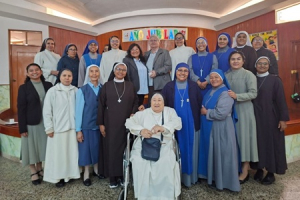
Celebration of World Day of Consecrated Life by the Carmelite Nuns of Camaná, Perú
On February 2, the Church looks to those who have consecrated their lives to God and to the service of men and women throughout the world. On the feast of the Presentation of the Child Jesus in the Temple, the Monastery of Carmelite Nuns of the Ancient Observance in the city of Camaná, in the department of Arequipa, Peru, was chosen. We pray especially for those who most need the message of the Gospel as we celebrate the 30th World Day of Consecrated Life.
For this reason, the Prelature of Chuquibamba joins all forms of CONSECRATED LIFE in praying for new vocations to religious life so that they may follow Christ and be living witnesses of the Lord's disciples.
Under the slogan “Who Are You For?”, all Christian communities were invited to join in prayer for these men and women who are always and at all times a help on the journey and a healing for those wounds that we all carry within us.
Both active and contemplative religious women are an outpouring of the Holy Spirit in all times and places of the world. Our Carmelite nuns are called “Missionaries of Contemplation,” since they, without renouncing their beloved contemplative life, exercise their service in their Carmelite convent, welcoming children from 0 to 10 years of age so that their parents can work, and also providing daily meals to 300 people, thus giving not only food but also evangelizing through the prayerful service of the Carmelites.
This foundation of Carmelite nuns of the Holy Trinity was established by Carmelite nuns from Onteniente, in Valencia, Spain, and inspired by our beloved Father Fray Rafael María Melus, O. Carm., of the Province of Aragon, Castile, and Valencia, Spain.
Cause of Servant of God Moves from Valencia to Rome
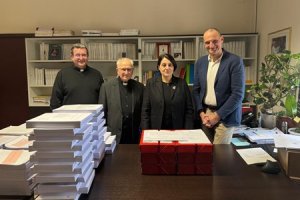
Cause of Servant of God María Carmen Crespo Roig Moves to Rome Following Closure of Process in Valencia, Spain
On February 4, 2026, at the Congregation for the Causes of Saints, the acts of the diocesan inquiry into the Servant of God Mother María Carmen Crespo Roig (born Teresa Encarnación), O. Carm.: thus began the Roman phase of her process of beatification and canonization, which will now continue with the preparation of the Positio super vita, virtutibus et fama sanctitatis.
Present at the opening of the acts, carried out by the chancellor, Cav. Federico Favero, were: Msgr. Ramón Fita Revert, episcopal delegate, Don Antonio Ferrando Marti, appointed by the diocesan tribunal as “bearer” of the acts of the Cause, and the Postulator General of the Order, Giovanna Brizi, who will follow the Roman phase.
Teresa Encarnación Crespo Roig was born in Beniarrés (Alicante, Spain) on March 25, 1912. From childhood, she was an active member of her parish, participating fervently in pastoral and charitable initiatives. During the religious persecution of 1936, she distinguished herself for her courage, even risking her life to assist persecuted priests and religious. In 1941, she entered the Carmelite monastery in Onteniente, receiving the name María Carmen, where she lived until her death on February 4, 2006, at the age of 93, after 65 years of religious profession. Her life was characterized by profound spirituality, constant offering of suffering, and an attitude of serenity and joy even in illness.
Her prudence and ability to give advice made her a spiritual reference point both for religious women from other institutes and for numerous lay people who turned to her for guidance. Despite her poor health from a young age and the serious illnesses that afflicted her in the last years of her life, she always maintained an attitude of acceptance of suffering, repeating until the end: “Yes, Lord, with your grace, let what you desire be done with me.”
In 2008, her sisters took the first steps to initiate her Cause for Beatification and Canonization, which was officially opened on October 15, 2011, five years after her death. After a long process, on December 13, 2025, the diocesan phase of the Cause was closed in Valencia and the relevant documents were sent to Rome for the next phase.
Celebrating At Home - 5th Sunday in Ordinary Time

Vulnerable Risk-Takers
(Matthew 5:13-16)
Last Sunday, in the ‘Beatitudes’, Jesus called his disciples to be vulnerable risk-takers in the way they lived their lives.
Continuing the Sermon on the Mount this week, Jesus goes on to say that if they live this way, they will be like the salt that transforms the flavour of food and the light that transforms the darkness.
Undertaking this path of transformation produces the flavour and light of good works which lift burdens from our fellow human beings, not for the praise of the disciple but for the praise to God. In this way, these good works draw others into the circle of God’s friendship and the experience of the kingdom.
Disciples walk the path of vulnerability and risk in order to help lift burdens from human beings; to make the world safe for their brothers and sisters.
These good, life-giving actions towards our fellow human beings restore life, heal relationships and seek peace and justice.
This non-aggressive, non-grasping, non-competitive stance towards one another would hardly be described by many in today’s world as the way to a successful life. It is a real challenge to live by the Gospel in a world which fawns over and celebrates wealth, power, aggression, status and deceptive and combative behaviour. We, too, can be easily seduced.
We need to be bold and brave in our care for one another, like a light-filled city on a hilltop.
So, can we run the risk of being poor in spirit, gentle, a peacemaker, working for what is right, being merciful, or persecuted in the cause of right? Can we be vulnerable risk-takers?
As always, the first reading (see back page) provides an introduction to the Gospel text. The reading from Isaiah (58:7-10) gives some very practical examples of good works: share your bread with the hungry, clothe the naked, look after your family members. Then ‘your light will shine’. Integrity will be yours and God will walk with you. ‘If you do away with the angry word and the clenched fist, feed the hungry, give relief to the oppressed, your light will rise in the darkness and your shadows become like noon.’
A great ‘setting of the scene’ for the Gospel!
- pdf Celebrating At Home - 5th Sunday in Ordinary Time [PDF] (2.93 MB)
- default Celebrating At Home - 5th Sunday in Ordinary Time [ePub] (4.15 MB)
- pdf Celebrando en Familia - V Domingo del Tiempo Ordinario (451 KB)
- pdf Celebrando in Casa - V Domenica del Tempo Ordinario (455 KB)
- pdf Celebrando em família - Quinto Domingo do Tempo Comum (456 KB)
Celebration of the 30th World Day for Consecrated Life
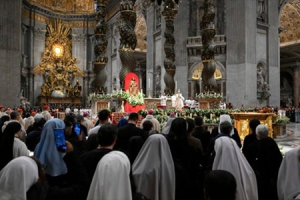
Celebration of the 30th World Day for Consecrated Life on February 2nd, Feast of the Presentation of the Lord
Pope Leo XIV celebrated Mass for World Day for Consecrated Life on February 2, the Feast of the Presentation of the Lord. Preaching on Luke’s Gospel to the people assembled in St. Peter’s Basilica, the pope spoke of Simeon and Anna recognizing and proclaiming Jesus as the Messiah in the Temple. The pope pointed out that this Scripture passage speaks of two movements of love: that of God coming to save his people and that of humanity, awaiting his coming with faith. He stressed that this is the mission of religious men and women in the Church as well as in the world.
The pope, a member of the Augustinian Order, understands well the power that consecrated life can have for teaching about Christ to the whole world. He said those professing the evangelical counsels “are called to bear witness to God’s saving presence in history for all peoples, even within a society in which false and reductive understandings of the human person increasingly widen the gap between faith and life.”
Referring to religious communities as “outposts of the Gospel” he stressed that consecrated individuals “are called to testify that the young, the elderly, the poor, the sick, and the imprisoned hold a sacred place above all else on God’s
The annual observance was started by Pope Saint John Paul II in 1997.
Elective Chapter of the Rio de Janiero Province Held
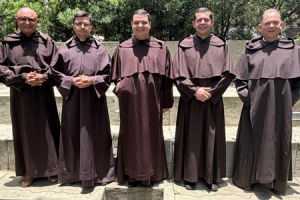
Elective Chapter of the Rio de Janiero Province in Brazil Held January 26-30, 2026
The Carmelite Province of Fluminense gathered for its Provincial Chapter in the city of Belo Horizonte, capital of the state of Minas Gerais, from January 26 through 30, 2026, with the theme “Gratitude that Drives, Co-responsibility that Builds” -- a theme that springs from the concrete experience of those who recognize that God has been faithful to Carmel throughout history and continues to act in our present reality. Christian gratitude does not paralyze us in the past. On the contrary, it drives us forward. Those who give thanks do not settle; they take on the demands of the mission with greater freedom, maturity, and generosity. For this reason, this Chapter was not only about grateful memory, but also about missionary zeal; not about the end of a cycle, but about a confident opening to the future.
We had as our advisor Jesuit Father Jaldemir Vitório, theologian and professor at the Jesuit college in Belo Horizonte, who addressed the theme of the crisis of fraternity in religious life, pointing to Marian spirituality as a model response to the challenges of consecrated life today.
Friar Thiago Borges Isidoro was elected provincial. Friar Thiago is 36 years old, was born in the city of Pouso Alegre, Minas Gerais, and is currently parish priest of the Basilica of Our Lady of Carmel in São Paulo.
The website of the province is https://carmelitas.org.br
The following members were elected to leadership at the Chapter:
Provincial | Prior Provincial | Priore Provinciale
Thiago Borge, O. Carm.
1st Councilor | 1er Consejero | 1o Consigliere
Adailson dos Santos, O. Carm.
2nd Councilor | 2do Consejero | 2o Consigliere
Atanael de Almeida, O. Carm.
3rd Councilor | 3er Consejero | 3o Consigliere
Evaldo Xavier, O. Carm.
4th Councilor | 4to Consejero | 4o Consigliere
Geraldo D'Abadia, O. Carm.


