












O.Carm
Seminar on Spirituality in Loneliness

Seminar on Spirituality in Loneliness
Glen Attard - Michael Zammit
In our post-Covid world that could not go back to being physically connected and socially visible any faster, loneliness emerges as one of the most real and devastating ‘epidemics’ of our time. Indeed, one shudders to think of the real effects of the Covid pandemic when already in January 2018 the British Conservative MP Tracey Crouch was elected Minister for Loneliness, the first ever of her kind in the entire world. Alas, in actual fact, as David Vincent points out, “Current anxieties about the ‘loneliness epidemic’ and the fate of interpersonal relations in the digital culture are reformulations of dilemmas that have surfaced in prose and verse for more than two millennia.”
One such reiteration is by the poet Rainer Maria Rilke (1875-1926) who, in his eighth letter to F.X. Kappus, touches on a kind of transition or transformation that occurs within us when we befriend the fact that we are, really and truly, solitary beings. There is a dangerous insecurity, he says, in accepting this, which is so much more human than being imprisoned in all our other certainties. Only when one is lonely could one be attentive to one’s soul.
Basing ourselves on the fundamental distinction between loneliness and solitude, this seminar will take the form of a reading session during which we will be reflecting on the deep considerations that Rilke shares with the young Kappus on this theme.
Saturday 11 March 2023
10:00 AM - 12:00 PM
Via Zoom
Language: English
How to Register: Send an email to This email address is being protected from spambots. You need JavaScript enabled to view it.
Payment: The seminar is being organized free of charge; however, if you wish to donate, you may do so:
(1) via bank transfer to our account [IBAN] MT 28 VALL 2201 3000 0000 400 1797 9621 [beneficiary "Carmelite Institute"]
(2) by cheque addressed to "Carmelite Institute" for amounts greater than €20 (as per directive n. 19 issued by the Central Bank of Malta)
Chapter of St. Titus Brandsma Province of the Philippines

The members of the St. Titus Brandsma Province of the Philippines held their 4th chapter from March 5-10, 2023 at St. Scholastica’s Spirituality Centre in Tagaytay City, Cavite, Philippines.
It was the first open chapter of the province. Present were the prior general of the Order, Míċeál O'Neill and Robert Thomas Puthussery, the General Councilor for Asia-Australia-Oceania, as well as 64 solemnly professed members of the province working in the Philippines and abroad. Ten friars in simple vows and 14 full-fledged lay associates were also present at the chapter.
The theme of the Chapter was "Moving on as Synodal and Radical Witnesses of Being Disciples of the Risen Lord."
During the Chapter the following were elected to leadership:
Provincial | Provincial | Provinciale
Fr. Rico P. Ponce, O. Carm.
1st Councilor | 1er Consejero | 1o Consigliere
Fr. Esmeraldo A. Reforeal, O. Carm.
2nd Councilor | 2do Consejero | 2o Consigliere
Fr. Joseph Roque, O. Carm.
3rd Councilor | 3er Consejero | 3o Consigliere
Fr. Rhen Caculitan, O. Carm.
4th Councilor | 4to Consejero | 4o Consigliere
Fr. Christopher Labrador, O. Carm.
Other Members | Otros Miembros | Altri Membri
Student Friar | Frate Studente | Fraile Estudiante
Bro. Brandon Bahayanan, O. Carm.
Lay Associate | Collaboratore Laico | Colaborador Laico
Maria Angela Ureta
Celebrating At Home - 4th Sunday in Lent

Journey into the light
(John 9:1-41)
In this Sunday’s Gospel we accompany the man who was born blind on his journey into the light. The first thing we read in the full version of this Gospel is that Jesus announces that the man is sinless – he has been born blind so that God’s glory can be seen at work in him. Then Jesus gives the blind man sight. Notice that the man didn’t ask to be healed – this is Jesus’ initiative, taking the first step and reaching out in love.
That’s how Jesus approaches us, too.
When the man returns home there is no rejoicing or welcome from his neighbours and friends. Instead, he is greeted with many questions and much suspicion. They seem blind to what has happened to the man.
These same neighbours and friends march the man off to the religious authorities to see what they make of the situation. But they, too, greet the man with many questions and great suspicion and finally drive him away. They, too, are blind to the work of God both in the man and in Jesus who cured him.
Jesus seeks the man out and asks if he believes. The man asks in whom he should believe. Jesus answers, ‘in me’. The man, who now sees clearly who Jesus is, believes and worships.
The man’s whole world has been totally transformed from total darkness into light through the loving action of Jesus. Bit by bit throughout the reading the man has gradually come to realise who Jesus is. At first Jesus is simply ‘a man’, then ‘a prophet’, then ‘Son of Man’ and finally, ‘Lord’.
We, too, can be blind to the many ways God is present in our lives and in those around us. It can take some time on our journey of faith to realise just who Jesus is and to allow our lives to be filled with Light.
The candles we use in our churches remind us of the vitality and life of Christ which has been entrusted to us. With our minds lit and our hearts warmed by the Spirit of Christ we, too, develop true insight and as God’s heart begins to beat within our own, we become light and warmth for each other.
May the light of Christ burn strongly within us!
Quiet time for reflection
- pdf Celebrating At Home - 4th Sunday in Lent [PDF] (5.30 MB)
- default Celebrating At Home - 4th Sunday in Lent [ePub] (3.56 MB)
- pdf Celebrando en Familia - Cuarto Domingo del Tiempo de Cuaresma (616 KB)
- pdf Celebrando in Casa - IV Domenica di Quaresima (622 KB)
- pdf Celebrando em familia - Quarto Domingo da Quaresma (621 KB)
Celebrating At Home - 3rd Sunday in Lent

Come and drink
(John 4:5-16, 19-26, 39-42)
Last Sunday the Gospel of the Transfiguration completed the ‘little parable’ which begins Lent. The Gospels of the first two Sundays describe what Lent is about and what Christian life is about: a constant journey from temptation and doubt to transfiguration and faith; a journey away from allowing ourselves to be tempted to evil and towards allowing ourselves to be tempted to good by the action of God’s Holy Spirit within us.
The Gospels of the next three Sunday make clear that the Way from temptation to transfiguration is in and through Jesus Christ who is Living Water, Light and Life for the would-be disciple. They are three great stories from John about responding in faith:
• The Woman at the Well – coming to faith despite barriers, personal history, differences of religious tradition, circumstances of life.
• The Man Born Blind – Faith grows amidst all sorts of trials and the doubt of others.
• The Raising of Lazarus – Faith tested by the ultimate: death.
The first of the three ‘great Gospels’ of Lent is ours this weekend: the encounter between Jesus and the Samaritan woman.
The ground-work for the Gospel is laid in the first reading from Exodus. The people are thirsty, God gives them water even though they grumble against him and ‘put him to the test’.
From the story of Jesus’ encounter with the woman we might gather that faith comes through personal encounter with Jesus who offers us the living water of his Spirit. Jesus offers us his spirit in spite of all kinds of barriers, our personal history or circumstances and our often stubborn reluctance. Faith is a journey – it takes time to understand what is being offered and who is offering it. Some barriers about religion or religious practice need to be transcended to enter fully into faith which does not depend on cultic rituals. Faith makes us into missionaries, evangelists, proclaimers of Good News.
Water is a powerful symbol of life. You can last many days without food, but only a few without water. In our Christian tradition water is a strong symbol of the life of God which sustains us and brings our hearts to life. That is why we use it in Baptism and to bless objects and ourselves. The living water Jesus promises is his Spirit. A spirit which heals and transforms; which revels in the experience of God’s love and mercy; which cannot help but proclaim God’s goodness.
Our fresh encounter with the spirit of Christ this Lent heals and transforms us, and makes us into a “living gospel for all to hear”.
Quiet time for reflection
- pdf Celebrating At Home - 3rd Sunday in Lent [PDF] (5.48 MB)
- default Celebrating At Home - 3rd Sunday in Lent [ePub] (5.41 MB)
- pdf Celebrando en Familia - Tercer Domingo del Tiempo de Cuaresma (672 KB)
- pdf Celebrando in Casa - III Domenica di Quaresima (480 KB)
- pdf Celebrando em familia - Terceiro Domingo da Quaresma (482 KB)
A Family Reflection on St. Titus Brandsma
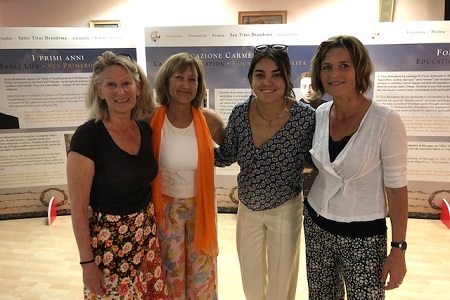
When we were growing up in the 60'd and 70's, we were aware that our grandmother's cousin Titus was a holy man. We knew of his history, as well as the strong Catholic heritage that we have comes from our father's side of the family. Many of our relatives went into Catholic ministry.
Growing up in America with Dutch parents, there was always a standard that was very important for us to live by: that was respect, honesty, helping others, and standing up for what was right. Our father, Jouke, was a strong impetus behind our way of thinking. He was a very kind, helpful man. He was always helping neighbors. He was very active in the Church, looking for ways the Church could better serve people in need. He was not, with his tendency towards activism in social justice, always the favorite of monsignor.
Our father lived what he believed; his life was his teaching for us. In 1954, he was recruited to come to the United States by Zenith Radio Corporation. He was an electrical engineer, living at the time in Eindhoven, Holland. All of his children were born and raised in the Chicago area.
He was very successful in his career, but also worked very hard to support those who were underserved.
He volunteered through Project HOPE, a fair housing not-for-profit organization founded by Bernie Kliena, a former priest. This organization was focused on the western suburbs of Chicago and helped immigrants obtain housing.
Our parents were sponsors (through our Church) of a family of Vietnamese refugees. My parents tutored them, helped them to assimilate into work and schools and supported them for many years. I think because my mother and father were immigrants, they could relate to the difficulties and were empathetic to their needs.
Our parents were also foster parents to two troubled teens. They took them into our family of six children without any hesitancy.
Our father and mother were also involved in religious education through the Catholic Church. Our father taught a high school morality class. I will always remember that my peers found his classes so interesting! I was very proud of my father. I knew what a good man he was and that he often saw things from a different lens. The fact that high school teenagers were excited to come to his class was special!
We traveled back to Holland as a family a few times when we were young children. These trips would always include going to Friesland and visiting relatives. There was often conversation about Titus and his life, as well as the rest of my grandmother's family, Fr. Titus’ sister, that became nuns and priests and the impact each of them made. In later years we would go to Oss, to the priory honoring Father Titus. Our uncle was very involved in overseeing this as he lived in Oss. But I must say, our family did not overemphasize their life stories. It was more like a discussion of someone in the family who had a good life and lived the values that were expected of all of us. It was all seen as "normal.”
In 1985, our cousin Mainse (his father is Joghem and the other little boy with my father Jouke in the family portrait) went to Rome and was present for the beatification of Titus. He described that event as life changing and profoundly spiritual for him. Our family in America discussed it, mostly at dinner, because we were all together then. We honored Father Titus, but again, his life was not glamorized. We all just strove to be better in our daily lives.
For me, I feel very humbled, proud of Saint Titus, and inspired to live my life as Pope Francis said “as a saint.” Daily I think of Saint Titus. I think of the common family roots that he and I share. And I am encouraged that I too can make a positive impact on our world, however small, one day at a time.
∗∗∗
Pictures and captions
A Family Reflection on St. Titus Brandsma
When we were growing up in the 60'd and 70's, we were aware that our grandmother's cousin Titus was a holy man. We knew of his history, as well as the strong Catholic heritage that we have comes from our father's side of the family. Many of our relatives went into Catholic ministry.
Cardinal of Manila Urges Catholics to Imitate St. Titus
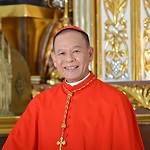
The Cardinal Archbishop of Manila, Philippines, Jose Advincula challenged Catholics, especially the young people, to combat disinformation amid what he called “crisis of truth” in the country.
Cardinal of Manila Urges Catholics to Imitate St. Titus
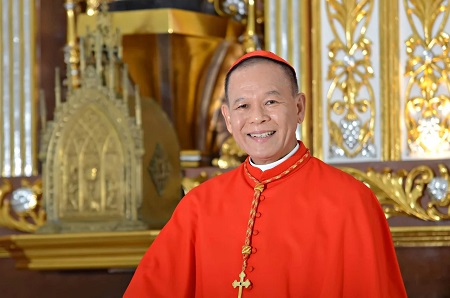
The Cardinal Archbishop of Manila, Philippines, Jose Advincula challenged Catholics, especially the young people, to combat disinformation amid what he called “crisis of truth” in the country. Speaking at the Thanksgiving Mass for the canonization of St. Titus Brandsma on Saturday in the Cubao Cathedral in Quezon City, the archbishop asked the faithful to use social media as a “pulpit” to evangelize and defend the truth.
“If there are forces that use social media to deceive and spread lies, let us combat them by flooding it with the truth of God’s word,” Advincula said. While he acknowledged that the task is not easy, he stressed that when truth is at stake, “remaining apathetic and silent is a sin.”
“When we seem to be experiencing a crisis of truth, especially in social media. St. Titus inspires us to use social media as a pulpit from which we must proclaim, and if need be, defend the truth,” the archbishop added.
Brandsma, whom Pope Francis declared a saint along with nine others on May 15, is being described as a journalist-martyr of the 20th century. Born in 1881, the Dutch Carmelite priest, theologian, journalist, and author wrote and spoke out against the Nazis’ anti-Jewish laws and propaganda. In January 1942, he was arrested after trying to persuade Dutch Catholic newspapers not to print Nazi propaganda. When Brandsma refused, he was transferred to the Dachau concentration camp in February 1942, where he died by lethal injection on July 27 at the age of 61.
The new saint is the titular patron of the Filippino province of the Carmelite Order.
Among those present during the Mass were Archbishop Charles Brown, Apostolic Nuncio to the Philippines, members of the Carmelite Order, and some representatives of the Embassy of the Netherlands in Manila.
Cardinal Advincula also exhorted the faithful to be inspired by the saint’s “unwavering pursuit of truth.” “Let us imitate St. Titus in his unwavering courage to proclaim the truth that can never be changed,” he said.
Journalists Ask Pope to Name Titus as Patron Saint
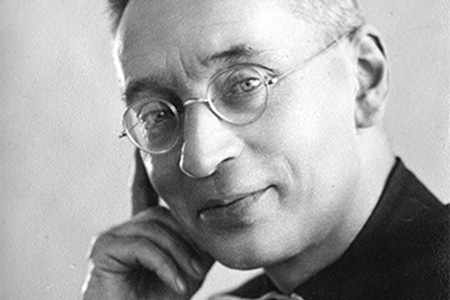 During a press conference organized by the Communications Office of the Carmelite Order for the canonization of Titus Brandsma, a Dutch journalist presented the prior general, Míceál O’Neill, a copy of a letter from Catholic Journalists to Pope Francis. The letter outlines why the newly canonized saint should be designated patron of journalists by the Church.
The four principle signers, from the Netherlands and Belgium, are joined by many others from around Europe and the United States of America.
Here is the copy of the letter from the journalists:
An Open Letter from Catholic Journalists to Pope Francis on the Occasion of the Canonization of Carmelite Titus Brandsma on May 15, 2022
Your Holiness,
In 2018 you asked us, journalists, loud and clear, “to promote a journalism of peace”, a “journalism that is truthful and opposed to falsehoods, rhetorical slogans, and sensational headlines. A journalism created by people for people, one that is at the service of all, (…) a journalism committed to pointing out alternatives to the escalation of shouting matches and verbal violence” (“The truth will set you free” (Jn. 8:32), Fake news and journalism for peace. Message of His Holiness Pope Francis for World Communications Day, 24 January 2018).
We wholeheartedly endorse your call to action and in it we recognize a mission statement for the whole of the journalistic enterprise: for old and new media, for editors of newspapers, magazines, radio and television stations, and internet platforms - and not only for journalists of Catholic origin, but for all journalists of good will.
On 15 May, in Rome, you will canonize a man who embodied these crucial journalistic values until his dying day: the Dutch Carmelite Father Titus Brandsma (1881 - 1942).
Titus Brandsma has meant a lot to the Catholic community in the Low Countries, but his journalistic work stands out among all his other activities. He was editor-in-chief of a newspaper, devoted himself to the modernization and professionalization of the Catholic daily press in the Netherlands, and strove for better working conditions and the establishment of a professional training for journalists.
Father Brandsma did his work in the context of the rise of fascism and Nazism in Europe. In word and deed he opposed the language of hatred and division that was becoming common at the time. In his view, what we now describe as ‘fake news’ was not to be tolerated in the Catholic press; he successfully argued for an episcopal ban on the printing of National Socialist propaganda in Catholic newspapers.
He paid with his life for his courageous actions: in early 1942 Father Titus was arrested by the occupying forces and consequently sent to the Dachau concentration camp. There, on July 26 of the same year, he was killed by an injection, on the Sunday that the Dutch bishops had their courageous protest against the deportations of Jews read out in all the churches.
We, Catholic journalists, recognize in Titus Brandsma a professional peer and fellow believer of considerable standing. Someone who shared the deeper mission that should drive journalism in modern times: a search for truth and veracity, the promotion of peace and dialogue between people.
We therefore see him as a friend and advocate for our entire profession, indeed a patron saint of journalism. We would therefore like to boldly ask you to make this patron saint’s office official.
The current patron saint of journalism is Francis de Sales. He is undoubtedly a holy man of faith and of great merit, but he was not a journalist in the modern sense of the word. Titus Brandsma was.
And as we said, he gave his life for it. In our view, this makes him particularly suitable for this patronage. According to UNESCO, in 2021, no less than 55 journalists died worldwide while carrying out their work. Many more had to deal with violence, threats, repression, censorship and persecution. The commitment to truth and humanity is extremely dangerous in these times of disinformation and polarization. This urgently requires a holy intercessor who has experienced this personally - and passed the ordeal with flying colors.
We thank you for your kindness in considering this request.
Journalists Ask Pope to Name Titus as Patron Saint
During a press conference organized by the Communications Office of the Carmelite Order for the canonization of Titus Brandsma, a Dutch journalist presented the prior general, Míceál O’Neill, a copy of a letter from Catholic Journalists to Pope Francis.


