











O.Carm
Vitam Coelo Reddiderunt

|
13-06-22 |
Ortus
|
P. Temp.
|
P. Soll.
|
Ord.
|
|
17-06-22 |
|
|
|
|
|
22-06-22 |
|
|
|
|
|
23-06-22 |
|
|
|
|
Lectio Divina July 2022

Father, you call your children to walk in the light of Christ.
Free us from darkness and keep us in the radiance of your truth.
We ask this through our Lord Jesus Christ, your Son, who lives and reigns with you and the Holy Spirit, one God, for ever and ever. Amen.
- Lectio Divina July 2022 [PDF] Download pdf here (983 KB)
- Lectio Divina July 2022 [ePub] Download default here (239 KB)
- Lectio Divina July 2022 [Mobi] Download default here (985 KB)
Celebrating At Home - 13th Sunday in Ordinary Time
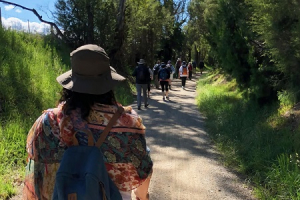
The journey begins
(Luke 9:51-62)
Very often in life we know what the right thing to do is, yet we can find it very difficult to do. There is a sense of that in the Gospel reading for today. The very first lines of today’s Gospel set the tone of what we will read over the next eleven Sundays about the qualities needed by and the costs involved for those who want to follow Jesus.
As the Gospel opens, we are told that Jesus ‘resolutely took the road for Jerusalem’. This long journey from Galilee to Jerusalem will be Jesus’ final journey. There is a sense of determination. Jesus knows what he must do. I think there is also a sense of reluctance. Just knowing it is the right thing to do does not make it easy to do, as we see in Jesus’ encounter with the three would-be disciples in this passage.
And, what happens when we feel we are doing the right thing and get treated badly because of it? Will we act like James and John, wanting to call down fire from heaven to punish the offenders? Or will we follow the way of Jesus and just go ‘to another village’? We can be filled with such a sense of righteousness that we turn ourselves into God’s avengers, but we are really avenging ourselves.
Jesus speaks so often about non-violence and non-resistance. Most of us find that very challenging. Why shouldn’t I strike back against the person who strikes me? Don’t I have a right to defend myself? Yet we know that retaliation simply locks us into a continuing cycle of violence and only forgiveness can break that cycle.
It is also worth contemplating the three would-be disciples in this Gospel passage. All seem to have been touched in some way by Jesus and drawn to him. All seem genuine in their desire to follow him. Jesus reply to the first begs the question: are enthusiasm and desire enough? Jesus’ reminder that he has ‘nowhere to lay his head’ seems to say that there has to be a sense of healthy realism in our decision to follow Jesus. Can we really do it? What does it ask of us? Are we prepared to live with the uncertainties?
The other two would-be disciples are also genuine in their desire and intention, ‘but first’ want to go off and fulfil their family obligations. Again, Jesus’ reply begs the question about what comes first – family obligations or our relationship with him. This is not an either/or question. When our relationship with Jesus comes first, then all our other relationships find their proper place in our lives. We can’t really put our relationship with Jesus ‘on hold’ while we sort out the rest of our lives.
The key to keeping everything in right relationship is our relationship with Jesus as the centre of our lives and who we are.
- Celebrating At Home - pdf 13th Sunday in Ordinary Time [PDF] (4.14 MB)
- Celebrating At Home - default 13th Sunday in Ordinary Time [ePub] (3.02 MB)
- Celebrando en Familia - pdf 13 Domingo del Tiempo Ordinario (489 KB)
- Celebrando in Casa - pdf 13 Domenica del Tempo Ordinario (489 KB)
- Celebrando em Família - pdf 13 Domingo do Tempo Comum (490 KB)
Causa Nostrae Laetitiae - Aprilis/Iunius 2022

INITIUM NOVITIATUS
12-06-22 Derrick Turrentine (PCM) Middletown, New York USA
12-06-22 Salvador Solis Castro (PCM) Middletown, New York USA
12-06-22 Bernardo Soriano Rosales (PCM) Middletown, New York USA
PROFESSIO TEMPORANEA
10-06-22 Adorn Ancel (STSA) Kannur, Kerala, India
13-06-22 Victor Hugo Andrade Aguilar (PCM) Middletown, New York USA
13-06-22 Jose Guadalupe Ayala Garcia (PCM) Middletown, New York USA
13-06-22 Jose Carlos Gordillo Garcia (PCM) Middletown, New York USA
13-06-22 Schafer Knostman (SEL) Middletown, New York USA
ODINATIO DIACONALIS
28-04-22 Fransiskus Febri Putra Dewa (Indo) Malang, Indonesia
28-04-22 Thomas Onggo Sumaryanto (Indo) Malang, Indonesia
28-04-22 Cornelius Danny Septian Pamungkas (Indo) Malang, Indonesia
28-04-22 Julian Antonius Sihotang (Indo) Malang, Indonesia
12-06-22 Wilibaldus Rade (Indo) Flores, Indonesia
12-06-22 Yosep Kua (Indo) Flores, Indonesia
12-06-22 Kristoforus Rawi (Indo) Flores, Indonesia
12-06-22 Yohanes Adrianus Muga (Indo) Flores, Indonesia
12-06-22 Florentinus Kopong Belang (Indo) Flores, Indonesia
12-06-22 Fabianus Masi (Indo) Flores, Indonesia
12-06-22 Adelbertus Nenes (Indo) Flores, Indonesia
12-06-22 Yosep Watun Diaz Alfi (Indo) Flores, Indonesia
12-06-22 Maximus Labut Rao (Indo) Flores, Indonesia
Celebrating At Home - The Most Holy Body and Blood of Christ

The real presence of Jesus in us
(Luke 9:11-17)
Today’s feast celebrates the enduring sign of Christ’s presence with us in the Bread and Wine of the Eucharist.
It also celebrates Christ’s presence with us in the community of the Church. The Eucharist is our sacrament of communion, not only with Christ and God, but also with all those called into the Christian community. Our communion binds us to one another in a sacred union of mind and heart with Jesus.
The word ‘communion’ means to share in common. In Holy Communion what we share in common with God and each other is Jesus Christ present in the Bread and the Wine. Another meaning of ‘communion’ is to be of one mind and heart. It is the Holy Spirit who keeps us in communion of mind and heart with God, with Christ and with each other.
We are very used to thinking about the Real Presence of Jesus being in the Blessed Sacrament. But the real presence of Christ is also in the community when it gathers in his name to feast on the Word of Scripture, to recall what Jesus said and did at the Last Supper (not only the words over bread and wine, but also the washing of the feet), when it shares the food of the Eucharist together, when it goes out and continues to break and pour out that food in acts of loving kindness, in soothing and nourishing words which brings others to life.
The Eucharist is not an object to be looked at, but an action to be done so that the living presence of Jesus continues to touch and heal.
Maybe we need to think more deeply about the real presence of Jesus being in real, living human beings. Bread and Wine have no eyes to gaze with love, no face with which to smile, no mouth to speak soothing words, no arms to hold the grieving and the sick, or to lend a hand, no ears to hear the pain. But we do.
So we are called to become the Eucharist that feeds those around us with the nourishment of breadth of heart and vision, respect, love, compassion, hope and forgiveness.
May we become what we receive. (St Augustine)
- Celebrating At Home - pdf The Most Holy Body and Blood of Christ [PDF] (3.00 MB)
- Celebrating At Home - default The Most Holy Body and Blood of Christ [ePub] (2.70 MB)
- Celebrando En Familia - pdf El Santísimo Cuerpo y Sangre de Cristo (821 KB)
- Celebrando In Casa - pdf Santissimo Corpo e Sangue di Cristo (491 KB)
- Celebrando em Família - pdf Santíssimo Corpo e Sangue de Cristo (465 KB)
Monastery of San Miguel Celebrates 400 years
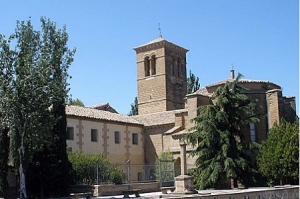
The Carmelite Monastery of the Incarnation - San Miguel is celebrating 400 years (1622-2022) on June 13. The Carmelite General Curia and the whole Carmelite Family join together in asking God's continued blessing upon the sisters and their life in Huesca, Spain.
Several days of activities have been planned. A series of moments of prayer have been held throughout.
Two conferences have already been held. The Origins of the Carmelite Nuns and Their Arrival and Presence in the City of Huesca given by Fr. Matias Tejerina, O. Carm., the assistant to the Federation Mater Unitatis. The second conference was The Carmelite Nuns in Huesca: 400 Years with the "Miguelas" given by Dña M. Jesús Torreblanca, archivist of the Town Hall of Huesca.
Elective Chapter of the Monastery in Machakos, Kenya
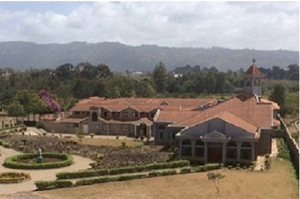
The Elective Chapter of the Carmelite community of the Monastery of Our Lady of Mount Carmel in Machakos, Kenya, took place on June 10, 2022.
The results of the elective chapter were as follows:
Prioress | Priora | Priora:
Sr. Mary Therese Ndinda Mutisya, O. Carm.
1st Councilor | 1ª Consejera | 1ª Consigliera:
Sr. Mary Winifred Katunge Mbui, O. Carm.
2nd Councilor | 2ª Consejera | 2ª Consigliera:
Sr. Mary Lucy Munyiva Mutunga, O. Carm.
Formator | Formadora | Formatrice:
Sr. Mary Winifred Katunge Mbui, O. Carm.
Treasurer | Ecónoma | Economa:
Sr. Mary Winifred Katunge Mbui, O. Carm.
Sacristan| Sacristana | Sacrestana:
Sr. Mary Martina Katunge Ndeto, O. Carm.
Memorial of Bl. Hilary Januszewski, Martyr
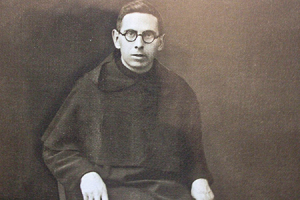
On his return to Poland he was appointed professor of Dogmatic Theology and Church History at the institute of the Polish Province in Cracow. On 1 November 1939, Fr. Eliseus Sánchez-Paredes, Provincial, appointed him prior of the community. At that time, Poland had already been occupied by the Germans a few weeks earlier. One year later, the invaders decreed the arrest of many religious and priests. On 18 September 1940 the gestapo deported four friars from the Carmel in Cracow. In December, when other friars were arrested, Fr. Hilary decided to present himself in exchange for an older and sick friar. From that day his Calvary began. He was sent to the prison of Montelupi (Cracow), then to the concentration camp of Sachsenchausen and in April 1941 to the concentration camp of Dachau. There he was a model of prayer life, encouraging others and giving hope for a better tomorrow. Together with the other Carmelites, among whom was Blessed Titus Brandsma, they often joined in prayer.
Meanwhile in barrack 25 of the concentration camp, typhus was spreading. To help the sick, 32 priests presented themselves to the authorities. A couple of days later, Fr. Hilary Januszewski spontaneously joined the group. His apostolate lasted 21 days because, infected by typhus, he died on 25 March 1945, a few days before the liberation of the concentration camp. His body was cremated in the crematorium of Dachau.
Fr. Hilary Januszewski was beatified by John Paul II on 13 June 1999, during his apostolic visit to Warsaw (Poland). On this occasion the Pope beatified 108 Polish martyrs of the Second World War, victims of Nazi persecution.
A multi-lingual book on Bl. Hilary Januszewski is available from Edizioni Carmelitane. The book, giving the reader insight into this Carmelite's life and ultimate gift of his own life for other prisoners, is written in Polish, English, Italian and Spanish and can be purchased at a special price for his feast day for only 12 EUR (shipping expenses not included).
To place your order please contact Edizioni Carmelitane:
TEL.: +39-0646201807
FAX: +39-0646201808
C.C.P.: 14069009
BIC/SWIFT: BPPIITRRXXX
IBAN: IT67 Z076 0103 2000 0001 4069 009
E-mail: This email address is being protected from spambots. You need JavaScript enabled to view it.
Journalists ask Pope to name Titus as patron saint

During a press conference organized by the Communications Office of the Carmelite Order for the canonization of Titus Brandsma, a Dutch journalist presented the prior general, Míceál O’Neill, a copy of a letter from Catholic Journalists to Pope Francis. The letter outlines why the newly canonized saint should be designated patron of journalists by the Church.
The four principle signers, from the Netherlands and Belgium, are joined by many others from around Europe and the United States of America.
Here is the copy of the letter from the journalists:
An open letter from Catholic journalists to Pope Francis on the occasion of the canonization of Father Titus Brandsma on May 15, 2022
Your Holiness,
In 2018 you asked us, journalists, loud and clear, “to promote a journalism of peace”, a “journalism that is truthful and opposed to falsehoods, rhetorical slogans, and sensational headlines. A journalism created by people for people, one that is at the service of all, (…) a journalism committed to pointing out alternatives to the escalation of shouting matches and verbal violence” (“The truth will set you free” (Jn. 8:32), Fake news and journalism for peace. Message of His Holiness Pope Francis for World Communications Day, 24 January 2018).
We wholeheartedly endorse your call to action and in it we recognize a mission statement for the whole of the journalistic enterprise: for old and new media, for editors of newspapers, magazines, radio and television stations, and internet platforms - and not only for journalists of Catholic origin, but for all journalists of good will.
On 15 May, in Rome, you will canonize a man who embodied these crucial journalistic values until his dying day: the Dutch Carmelite Father Titus Brandsma (1881 - 1942).
Titus Brandsma has meant a lot to the Catholic community in the Low Countries, but his journalistic work stands out among all his other activities. He was editor-in-chief of a newspaper, devoted himself to the modernization and professionalization of the Catholic daily press in the Netherlands, and strove for better working conditions and the establishment of a professional training for journalists.
Father Brandsma did his work in the context of the rise of fascism and Nazism in Europe. In word and deed he opposed the language of hatred and division that was becoming common at the time. In his view, what we now describe as ‘fake news’ was not to be tolerated in the Catholic press; he successfully argued for an episcopal ban on the printing of National Socialist propaganda in Catholic newspapers.
He paid with his life for this courageous actions: in early 1942 Father Titus was arrested by the occupying forces and consequently sent to the Dachau concentration camp. There, on July 26 of the same year, he was killed by an injection, on the Sunday that the Dutch bishops had their courageous protest against the deportations of Jews read out in all the churches.
We, Catholic journalists, recognize in Titus Brandsma a professional peer and fellow believer of considerable standing. Someone who shared the deeper mission that should drive journalism in modern times: a search for truth and veracity, the promotion of peace and dialogue between people.
We therefore see him as a friend and advocate for our entire profession, indeed a patron saint of journalism. We would therefore like to boldly ask you to make this patron saint’s office official.
The current patron saint of journalism is Francis de Sales. He is undoubtedly a holy man of faith and of great merit, but he was not a journalist in the modern sense of the word. Titus Brandsma was.
And as we said, he gave his life for it. In our view, this makes him particularly suitable for this patronage. According to UNESCO, in 2021, no less than 55 journalists died worldwide while carrying out their work. Many more had to deal with violence, threats, repression, censorship and persecution. The commitment to truth and humanity is extremely dangerous in these times of disinformation and polarization. This urgently requires a holy intercessor who has experienced this personally - and passed the ordeal with flying colors.
We thank you for your kindness in considering this request.
Celebrating At Home - The Most Holy Trinity

God enfleshed in us
(John 16:12-15)
The Feast of the Trinity is a day for reflecting on who God is, not for trying to figure out how there can be three persons in one God.
The Church’s focus today is on experience, not theology.
In intellectual terms, God remains a mystery. For people of faith, God is known not by the mind, but by the heart. That is what spirituality and mysticism are about - exploring our experience of God.
Through our public liturgy, private prayer and contemplation we come to experience - to ‘know’ and feel in our hearts - that God loves us, accepts us, forgives us and constantly invites us into an ever deeper experience of love.
When we allow God’s heart to speak to ours in love we begin to absorb more of God’s life into our own.
We are being transformed. Our values and attitudes, our ways of looking at and being in the world start to change. We begin to see with God’s eyes and feel with God’s heart.
We become passionate about the things God is passionate about: speaking truthfully, acting with justice and integrity, looking out for each other and especially for the vulnerable, promoting peace and understanding, ending competition and discrimination, respecting life.
That makes us better people and our lives become a blessing for each other and for the world.
That is what it means to live out of God’s great gift to us, the Spirit of Jesus Christ which God has placed in our hearts. God becomes enfleshed in us and we become stewards of God’s grace and life.
- Celebrating At Home - pdf Trinity Sunday [PDF] (2.93 MB)
- Celebrating At Home - default Trinity Sunday [ePub] (781 KB)
- Celebrando En Familia - pdf Domingo de la Santísima Trinidad (315 KB)
- Celebrando In Casa - pdf Domenica della Santissima Trinità (316 KB)
- Celebrando em Família - pdf O Domingo da Santíssima Trindade (324 KB)


