











O.Carm
Vitam Coelo Reddiderunt

|
04-05-25 |
|
|
|
|
|
09-05-25 |
|
|
|
|
Institutum Carmelitanum Leadership Renewed
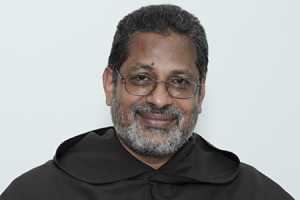
New Leadership of the Institutum Carmelitanum Announced
The Carmelite Order is pleased to announce a new leadership team for their international academic institution, Institutum Carmelitanum, located at St Albert’s International Centre in Rome (Italy).
Boby Sebastian Tharakkunnel, O. Carm., (Province of St Thomas, India), has been appointed as the President of the Institutum Carmelitanum. He will direct, coordinate, and promote the research and the scientific activities of the Institutum Carmelitanum for the next six years.
Father Boby was born in Kerala (India) and made his first profession as a Carmelite in 1993. He worked as Executive Secretary of the Order’s Justice Peace and Integrity of Creation Commission and also as a member of the Order’s Inter-Religious Dialogue Commission. After earning his doctorate in Canon Law from the Pontifical Oriental Institute (Rome) in 2014, he has been a professor of Canon Law, Civil Law and director of retreats and courses of personality development. Currently, he is the prior and rector of our minor seminary “Carmel Nivas” in Kerala (India).
Speaking about his appointment, Father Boby said, “It is with joy and humility that I embrace the role of President of the Institutum Carmelitanum, eager to honor the legacy of distinguished Carmelites before me and to help shape a future of renewal and excellence for this great institution.”
Giovanni Grosso, O. Carm., (Italian Province) has been appointed as the General Archivist. The Order’s General Archive is located at St Albert’s International College (Rome). The General Archivist is responsible for the entire patrimony and takes care of the ordering, custody, restoration, consultation and enhancement of the documentation preserved in the Archive.
Maximilianus Kolbe Agung Wahyudianto, O. Carm., (Indonesian Province), has been appointed as the General Librarian. In addition to a small general section, the Carmelite General Library has a specifically Carmelite section which collects all the publications of Carmelite authors and subjects. As General Librarian, Father Maximilianus will take care of the organization, conservation, updating, consultation, and enhancement of the library.
Mario Loya, O. Carm., (PCM Province) has been announced as the Secretary of the Institutum Carmelitanum. As a member of the secretariat, Father Mario has the task of helping to coordinate the activity of the Institutum Carmelitanum especially with regard to its publications.
Michael Plattig, O. Carm., (German Province), continues in his role as editor of Carmelus, the academic journal of the Institutum Carmelitanum. Carmelus is a multi-lingual journal of scholarly articles along with an annual bibliography of Carmelite spirituality, theology, history, and biography along with other works important to researchers and students in the area of Carmelite studies.
The Institutum Carmelitanum has the task of making known the spiritual heritage of Carmel throughout the Order and throughout the modern world. It was established in 1951 by the then prior general, Kilian Lynch, to promote studies especially in the areas of Carmelite history, Mariology, and spirituality and is now developing into other areas. It produces several publications through the years including an academic journal, Carmelus.
Elective Chapter Held in Machakos, Kenya

Elective Chapter Held in the Monastery of Our Lady of Mt Carmel in Machakos, Kenya on June 10, 2025
On June 10, 2025, the Carmelite nuns of the Monastery of Our Lady of Mount Carmel in Machakos, Kenya held their elective chapter.
The monastery was founded in 1999 by sisters from the Carmelite monasteries in Utrera, Spain and Santo Domingo. It was the first Carmelite monastery in Kenya. Two other enclosed monasteries now exist in the country: Juja Farm and Kitui.
The following nuns were elected to leadership:
Prioress | Priora | Priora:
Sr. Mary Winifred Katunge Mbui
1st Councilor | 1ª Consejera | 1ª Consigliera:
Sr. Mary Therese Ndinda
2nd Councilor | 2ª Consejera | 2ª Consigliera:
Sr. Mary Jacinta Wayua
3rd Councilor | 3ª Consejera | 3ª Consigliera:
Sr. Mary Lucy of St. Joseph
4th Councilor | 4ª Consejera | 4ª Consigliera:
Sr. Mary Dorothee Ndomo
Treasurer | Ecónoma | Economa
Sr. Mary Therese Ndinda
Formator | Formadora | Formatrice
Sr. Mary Therese Ndina Mutisya
Sacristan | Sacristán | Sacrestana:
Sr. Mary Jacinta
Carmel, Pilgrims of Hope, Participate in Jubilee Year 2025

Representatives of the entire Carmelite Family, made up of the two traditions of the Carmelite Order (OCARM and OCD), gathered to celebrate the Jubilee Year in Rome on June 2, 2025.
In the afternoon, the members of both General Councils undertook the pilgrimage way to pass through the Holy Door of St Peter’s Basilica. Starting from the new Piazza Pia, the group moved along Via della Conciliazione chanting the psalms, singing the litany, and listening to Scripture and other reflections until they passed together through the Holy Door.
Inside St Peter’s Basilica, the group was led to the Tomb of St Peter. There, everyone recited the Apostles’ Creed and were blessed by the Preposito General of the Discalced Carmelites, Miguel Márquez Calle, OCD.
After a short break, everyone gathered again for the celebration of the Eucharist in the Church of Our Lady in Traspontina. The church was full to capacity as many members of the Carmelite Family who were present in Rome at that time gathered to celebrate the Jubilee Year together.
The prior general of the Carmelite Order, Míċeál O’Neill, O. Carm., presided at the Eucharist and the preposito general, Miguel Márquez Calle, OCD, preached the homily. Giuseppe Midili, O. Carm., and the other members of the community at Traspontina guided the celebration liturgically and musically. Two members of the Carmelite community at Albano also assisted. After Communion, the choir from the Teresianum sang a hymn that they had composed especially for the Jubilee Year.
Afterwards, Tadeusz Popiela, O. Carm., prior of the community, welcomed both General Curial communities (along with some guests) to a supper in Saint Albert’s International College (CISA) with the rest of the community there.
St. Elisha, prophet

June 14 | Memorial
Elisha, the Disciple Par Excellence
Elisha is not Elijah's only disciple. According to a Jewish tradition found in the Vitae prophetarum, in Jerome's introduction to his Commentary on the Book of Jonah, and in some other patristic writings, Jonah was the son of the widow of Zarephath, brought back to life by the prophet and became Elijah's disciple: “Jonah, after his death, was resurrected by the prophet Elijah: he followed him, suffered with him, and, because of his obedience to him, merited the favor of the gift of prophecy” (Arabic Jacobite Synaxarion of September 22).
G. Baconthorp knew this tradition, which he derived from Jerome. G. de Cheminot, following F. Ribot, makes a disciple of the man whom Elijah sent back when he was fleeing from Jezebel, the first one. It is this man whom Elijah sends to the top of Mount Carmel to watch for the coming of the rain.
According to the Vitae prophetarum, Obadiah, Ahab's steward who hid the hundred prophets, fifty by fifty, sent by Ahaziah, became a disciple of Elijah. Theodore Bar-Koni, an eighth-century Nestorian author, specifies that he was endowed with the gift of prophecy after following Elijah. Medieval Carmelites list Obadiah among the great disciples of Elijah. Philippe Ribot is the only 14th-century Carmelite to also make the prophet Micah a disciple of Elijah.
In this group of disciples, Elisha occupies the first place (Cheminot, Ribot).
Read more ...
Celebrating At Home - Trinity Sunday

God Enfleshed In Us (John 16:12-15)
The Feast of the Trinity is a day for reflecting on who God is, not for trying to figure out how there can be three persons in one God.
The Church’s focus today is on experience, not theology.
In intellectual terms, God remains a mystery. For people of faith, God is known not by the mind, but by the heart. That is what spirituality and mysticism are about - exploring our experience of God.
Through our public liturgy, private prayer and contemplation we come to experience - to ‘know’ and feel in our hearts - that God loves us, accepts us, forgives us and constantly invites us into an ever deeper experience of love.
When we allow God’s heart to speak to ours in love we begin to absorb more of God’s life into our own. We are being transformed. Our values and attitudes, our ways of looking at and being in the world start to change. We begin to see with God’s eyes and feel with God’s heart.
We become passionate about the things God is passionate about: speaking truthfully, acting with justice and integrity, looking out for each other and especially for the vulnerable, promoting peace and understanding, ending competition and discrimination, respecting life.
That makes us better people and our lives become a blessing for each other and for the world.
That is what it means to live out of God’s great gift to us, the Spirit of Jesus Christ which God has placed in our hearts. God becomes enfleshed in us and we become stewards of God’s grace and life.
- pdf Celebrating At Home - Trinity Sunday [PDF](3.00 MB)
- default Celebrating At Home - Trinity Sunday [ePub](2.86 MB)
- pdf Celebrando en Familia - Domingo de la Santísima Trinidad(470 KB)
- pdf Celebrando in Casa - Domenica della Santissima Trinità(469 KB)
- pdf Celebrando em família - O Domingo da Santíssima Trindade(467 KB)
Bl. Hilary Januszewski, Priest and Martyr

12 June Optional Memorial
Hilary Januszewski, born Pawel on June 11, 1907, in Poland, joined the Order of Carmelites in 1927 and was ordained a priest in 1934. During the German occupation of Poland, when other friars were arrested, Fr. Hilary decided to present himself in exchange for an older and sick friar. From that day his Calvary began. He was sent to the prison of Montelupi (Cracow), then to the concentration camp of Sachsenchausen and in April 1941 to the concentration camp of Dachau. There he was a model of prayer life, encouraging others and giving hope for a better tomorrow. Together with the other Carmelites, among whom was Saint Titus Brandsma, they often joined in prayer. He died on March 25, 1945, from typhus, shortly before the camp's liberation. He was beatified by Pope John Paul II on June 13, 1999.
To read more ...
Celebrating At Home - Pentecost Sunday

Let God’s Love Be Seen (John 14:15-16, 23-26)
At Pentecost we celebrate the gift of the Holy Spirit to the first group of Christian believers - the disciples. This gift of the Holy Spirit is the culmination of the life, death and resurrection of Jesus.
It would be wrong to think that this gift happened only once, in one moment of history. In fact, the gifting of the Holy Spirit is a continuing event in the life of every believing person and, therefore, in every age of human history. The Holy Spirit is the presence of God with us - the enduring way in which Jesus remains present in the Church and in the life of each person.
Today we do not pray to receive the Holy Spirit. The presence of the Holy Spirit in us has been affirmed and proclaimed in the sacraments of Baptism and Confirmation. Instead, we pray to grow more aware of the Spirit’s presence in our lives and to allow that Spirit to grow within us, gradually re-shaping our minds and hearts in the image of Jesus.
Pentecost brings to a close the fifty days of the Church’s Easter celebrations. Soon we will begin Ordinary Time again. So, our feast today helps us understand that we take the Holy Spirit with us into the ordinary events and tasks of each day. That is how we allow the sacred to touch, heal and transform us and the world around us.
The spiritual search is for the heart of God within our own. When we enter into relationship with Christ through the Spirit, the gifts begin to flow more abundantly. The Spirit is the source of reconciliation with ourselves and with each other. Reconciliation is essential if we are to ‘hold and guard’ each other in the midst of all that life throws at us, especially at the moment.
The Spirit brings gifts of wisdom, courage, understanding, right judgement, knowledge, reverence, wonder and awe in God’s presence. May we be graced by them all as we discern and decide how we can best work together to build up each other and to let God’s love be seen at work in each of us.
International Liturgical Congress Held in Rome

Liturgical Congress Provides Carmelite Family Week of Discussion on Encountering the Risen Lord
Eighty people attended the Order’s international liturgical congress held in May 2025. The Congress, which had been organised by the Order’s Liturgy & Prayer Commission, was held in the Carmelite centre outside of Rome (Istituto Madonna del Carmine “Il Carmelo”, Sassone) from May 5 to 10, 2025.
The overall theme of the Congress is: “Encountering the Risen Lord: Liturgy and prayer in Carmel today.”
Giuseppe Midili, O. Carm. (Pontificio Ateneo Sant'Anselmo), celebrated the Opening Eucharist and gave the opening presentation entitled: Ars celebrandi: to “contemplate the beauty and truth of the Christian celebration” (Desiderio Desideravi ) in the light of the Carmelite charism. During his presentation, he reminded the participants of the Carmelite Constitutions which call on us to prepare for, love and renew our concern for the liturgy. He noted that the artist in the liturgy is Christ who brings into existence the art of offering himself to the Father. We journey from a liturgy of appearances to a liturgy that opens to the experience of the Paschal Mystery.
Michael Plattig, O. Carm., presented on “Carmel, a school of prayer: personal and liturgical”. He began by exploring the development of prayer based on the New Testament, the Rule of St Albert and the Book of the Institution of the First Monks. Michael noted that Titus Brandsma wrote: “We are not called to do great, remarkable, much-discussed things in public life. That would be inconsistent with the simplicity that we Carmelites wish to practice. However, it is our task to do ordinary things in a great way, that is, with sincere intentions and giving our all.” One of these ordinary things is prayer which is the cultivation of a personal relationship with God in everyday life.
Simon Nolan, O. Carm., reflected on: Carmel and Music, brining the participants on a fascinating journey through early Carmelite Chant to the 1700s. He noted that the medieval Carmelite Choir Book witness to the emergence of a musical tradition. Simon concluded that there is a living tradition within the Carmelite Family today involving many different peoples and different musical and cultural traditions.
Valéry Bitar OCD (Teresianum) presented the topic: "You must assemble every morning to participate in the Eucharistic celebration" (Rule 14). He noted that Carmel needs to meet every day to celebrate the Eucharist in the central oratory, in order to remain faithful to itself and to its mission in the Church. From this, the source of eternal life will also spring up in us.
Anastasia di Gerusalemme, O. Carm., presented the topic: Celebrating the Word of God in the Eucharist and the Liturgy of the Hours. She noted that the Carmelite Rule offers very concrete indications which help us to grow and become aware of what it means to live the encounter and relationship with the Word of God. The Word appears within our everyday experiences especially in the refectory, in the cell and in the oratory.
Professor Donna Orsuto (Gregorianum) presented on the topic: Carmelites celebrating Mary in her feasts. As a guideline, Carmelites in celebrating and preaching about Mary can present Mary in her simplicity, help people grasp that she is approachable and show that she can be imitated.
Giovanni Grosso, O. Carm. (Ita), presented on The Marian Apostolate in its various forms: the Order's extra-liturgical Marian devotion. He began by linking the veneration of the Blessed Virgin Mary to the very origins of the Carmelite hermit community. Giovanni noted many different forms of extra liturgical devotion including the role of confraternities, Marian antiphons, solemn Marian Wednesdays, and the “crowns” of Our Lady which involved the reciting of several Hail Marys.
Fernando Joaquín Millán Romeral, O. Carm. (Comillas), presented on the topic: Celebrating the witness of the Saints of Carmel in our contemporary world. God alone is holy, but in Christ and through Christ, we share in that holiness. Over time, the church clarified the concept of saints and applied it first to martyrs and then to pastors, virgins, hermits and so on who stood out for their holiness. In recent years, the Order has been blessed with the ecclesial recognition of several examples of holiness. Each in their own way emphasise various aspects of Christian and Carmelite life.
Désiré Unen Alimange, O. Carm. (Ita-Congo), presented on the topic: Rites of Carmelite religious profession. Désiré began by noting the first traces of a rite of monastic profession between the fifth and sixth centuries before we get to procession in mendicant orders (professio in manibus). The Rite of religious profession for Carmelites reflects the nature and spirit of the Order.
Shortly after Désiré’s presentation, the participants were overjoyed to see the “white smoke” suddenly start to appear from the chimney of the Sistine Chapel. Together, the participants waited in anticipation to find out who our next pope would be. There was much joy when we learnt of the election of Pope Leo XIV.
On Friday, 9th May, all the participants travelled into the centre of Rome for a pilgrimage day together. Monsignor Enda Murphy (Dicastery for Divine Worship and the Discipline of the Sacraments) celebrated the Eucharist for the participants in S. Maria in Traspontina. As Cardinal Arthur Roche (Prefect, Dicastery for Divine Worship and the Discipline of the Sacraments) had post-Conclave commitments, Monsignor Enda then read Cardinal Roche’s text on his topic: The role of the liturgy within a Synodal Church. Cardinal Roche noted that liturgy and synodality are not distinct yet are linked. Our encounter with the Lord in various ways in the liturgy leads to communion.
The participants then made their pilgrimage through the Holy Door of Saint Peter’s Basilica. After free time, they celebrated Evening Prayer with the community of Saints Silvester & Martin ai Monti before returning to the conference centre for the evening meal.
On the last morning, Míceál O’Neill, O. Carm. (Prior General), presented on his topic: Glorifying the Lord with your lives. During his presentation, the Prior General noted that the Carmelite mystic, Mary Magdalen de’ Pazzi, in time spent in thanksgiving after she received Holy Communion, would often ponder the Gospel of the day. As we move away from the altar and from the church, we move as people who who in some way have been transformed by the encounter and who will bring that gift with them into the rest of their lives. After the participants reviewed together the experience of the week, the Prior General celebrated the Closing Eucharist of the Congress.
The members of the Liturgy & Prayer Commission are: Richard Byrne, O. Carm. (President), Sr. Nerina de Simone, CMSTBG, John Keating, O. Carm, (Ireland), Robert Manik, O. Carm. (Indonesia), Désiré Unen Alimange, O. Carm. (Ita-Congo), Alexander Vella, O. Carm. (Malta)
Prior General's Schedule for June 2025

Fr. Míċeál O'Neill, the prior general, has the following schedule planned for the month of June 2025:
June 2 – 6: General Council plenary session.
June 2: Jubilee pilgrimage and celebration OCARM and OCD together.
June 6: Celebration of the closing of the bicentennial year of the birth of Madre Teresa Scrilli, Montevarchi, Arezzo.
June 9-13: Provincial Chapter in the Province of Germany
June 27 - 30: Convocation of Lay Carmelites in Washington, DC, via zoom.


