











O.Carm
Celebrating At Home - 4th Sunday of Advent

The Promise Fulfilled
(Matthew 1:18-24)
The great Christmas feast is almost here. As always in Advent, what is promised in the first reading is brought to fulfilment in the Gospel reading. We began Advent with the cry, ‘Come, Lord Jesus’. We will end it with the joyful shout, ‘God is with us!’
Our Advent journey has called us to:
stay awake to the coming of God,
prepare ourselves to receive the Lord,
rejoice that he is not afraid to make his home with us, and to
receive him with faith and love.
At Christmas we will hear the call to give birth to him in word and action so that the saving power of God may be seen and experienced through our every thought, word and action.
The promise of the first reading from Isaiah that, “The virgin will conceive and give birth to a son and they will call him Emmanuel, a name which means ‘God-is-with us’,” is fulfilled in the Gospel which tells how Joseph received both Mary and Jesus into his home.
Following Joseph’s example, we joyfully welcome Jesus, and Mary, into our hearts.
The great gift of Jesus to the world cannot be confined only to one moment in history. Through us, the Body of Christ, the Gift is given again and again; born into every moment of human history. The presents we exchange at Christmas are meant to be symbols of our readiness to give and receive Christ, the eternal gift of God’s love.
As, year by year, we travel the liturgical journey of the Church’s feasts and seasons we touch ever more deeply the living presence of Christ in us that we may become ever more deeply the living presence of Christ in the world.
The General Council Names a New Secretary General
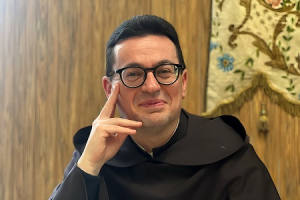
New Secretary General, Fr. Giampiero Molinari, O. Carm.
The General Council has appointed the Rev. Giampiero Molinari of the Italian Province of the Carmelites of St. Elijah the Prophet, St. Albert of Trapani, and St. Andrew Corsini as Secretary General. The Prior General and his Council thank Fr. Giampiero for his willingness to serve the Order and keep him in their prayers.
Fr Giampiero Molinari was born in Jesi (AN), Italy, on August 21, 1973. At the end of his novitiate, he made his temporary profession on September 3, 1995 and his solemn profession on November 8, 1998. He completed his philosophical and theological studies at the Pontifical Gregorian University and obtained a licentiate in Mariology at the Pontifical Marianum Theological Faculty. He also attended a course for formators at the Pontifical Salesian University.
Ordained a priest on April 15, 2000, he was a member of the International Commission for Formation and Secretary General from July 2016 to December 2019. In his Italian Province, he has held the offices of prior, formator, assistant provincial and provincial councilor. On July 31, 2023, he was appointed assistant to the Federation of St. Mary Magdalene de Pazzi of the Italian monasteries.
New Leadership Elected in Vietnam

New Leadership Elected at the 3rd Chapter of the Commissariat in Vietnam
The Commissariat of St. Joseph of the Province of St. Elias in North America announced the election of its new leadership during the 3rd Commissariat Chapter. The meeting was held at the Vinh Phuc Retreat House in Ho Chi Minh City, Vietnam, from November 24–28, 2025.
The Commissariat of St. Joseph was officially established during the Chapter of the Province of St. Elias in 2019. Today, it is home to 60 members across Vietnam and comprises six communities actively serving in three dioceses as well as in the United States.
Its website is https://dongcatminh.org.
The following members were elected to leadership:
Commissary Provincial | Comisario Provincial | Commissario Provinciale
Joseph Diep Dinh, O. Carm.
1st Councilor | 1er Consejero | 1o Consigliere
Joseph Tri Phan, O. Carm.
2nd Councilor | 2o Consejero | 2o Consigliere
Paul Therese Hung Tran, O. Carm.
St. John of the Cross, Doctor of the Church
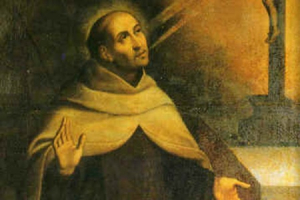
14 December Feast
Saint John was born, probably in 1540, in Fontiveros, near Avila in Spain. His father died when he was very young and he had to move with his mother from one place to another, while he tried as best he could to continue his education and, at the same time, to earn a living. In Medina in 1563 he was clothed in the Carmelite habit and, after a year's novitiate, was given permission to follow the unmitigated Carmelite Rule.
He was ordained priest in 1567, after studying philosophy and theology at Salamanca, and, in the same year, he met Saint Teresa of Jesus who, a little while before, had obtained permission from the Prior General Rossi to found two communities of contemplative Carmelite Friars (later called the Discalced) in order that they might help the communities of nuns that she had established. A year later - during which he travelled with Teresa - on the 28th November 1568, John became part of the first group of Reformed Carmelites at Duruelo, changing his name from John of St. Matthias to John of the Cross.
To read more on the life of St. John of the Cross ...
For more on John of the Cross and His Eucharistic Spirituality ...
To watch the interview from 2022 with Dr. John D. Love, S.T.D., on the relevance of St. John's today, click here ...
Publications by Edizioni Carmelitane available at the Webstore
"Within This Living Bread": Exploring the Eucharistic Spirituality of St. John of the CrossDr. John D. Love, STD, 2022.Celebrating At Home - 3rd Sunday of Advent

Are You the One?
(Matthew 11:2-11)
This Sunday marks the turning point in the Advent Season. Traditionally called Gaudete Sunday it is a day of rejoicing that the Saviour is near. The focus shifts from the final coming of Christ at the end of time to the first coming of Christ at Bethlehem. The note of joy is symbolised by the inclusion of the colour rose among the purple of the Season.
The joyful first reading from the prophet Isaiah proclaims that God is on his way to save his people. This coming brings healing and rejoicing and an end to sorrow and lament.
Using images of farmers and prophets, the letter of St James urges patience in our waiting for God. A kind of patient certainty is the attitude of the disciple.
Perhaps it is actually us who are slow in responding to God; slow in letting the message of the Gospel and the Holy Spirit transform our lives so that we too might have power to bring healing and joy. In the Gospel Jesus fulfils the prophecy of the first reading about the Messiah. John the Baptist asks, “Are you the one who is to come, or have we got to wait for someone else?”
The words of Jesus clarify his identity and that of John the Baptist. Jesus comes, not as the kind of warrior-messiah, slaughtering and slashing, but as ‘the kindness of God’, tending the sheep, healing and liberating the needy - the blind see again, the lame walk, lepers are cleansed, the deaf hear, and the dead are raised to life and the Good News is proclaimed to the poor.
But is Jesus the ‘one’ for us, or are we really waiting for someone or something else to save us?
Our Christmas can’t simply be about Jesus’ birth a long time ago, celebrating an historical anniversary. It has to be more than that - the celebration of a fresh discovery of an ever-deepening presence of Christ in each of us.
Rejoice! God is not only ‘on his way’, he is already here!
- pdf Celebrating At Home - 3rd Sunday of Advent [PDF](1.11 MB)
- default Celebrating At Home - 3rd Sunday of Advent [ePub](4.07 MB)
- pdf Celebrando en Familia - Tercer Domingo de Adviento(391 KB)
- pdf Celebrando in Casa - III Domenica di Avvento(383 KB)
- pdf Celebrando em família - Terceiro Domingo Do Advento(382 KB)
Blessed Bartholomew Fanti, Priest
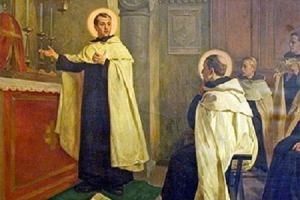
5 December Optional Memorial
A native of Mantua, Italy, he was a Carmelite in the Mantuan Congregation and already ordained priest by 1452. For 35 years in the Carmelite church of his city, he was the spiritual director and rector of the Confraternity of the Blessed Virgin Mary, for whom he wrote a rule and a set of statutes.
Humble and gentle, he gave an example to everyone of a life of prayer, of generosity and of faithful service of the Lord. He was outstanding for his love of the Eucharist which was the centre of his apostolic life and for his devotion to Mary. He died in 1495.
Celebrating At Home - 2nd Sunday of Advent

Prepare A Way For The Lord
(Matthew 3:1-12)
The magnificent first reading from the prophet Isaiah this weekend looks forward to the appearance of one ‘on whom the spirit of the Lord rests – a spirit of wisdom and insight, counsel and power and knowledge of the fear of the Lord’.
He gives judgement in favour of the poor. His judgement is not influenced by appearances or hearsay. He judges with integrity. His word strikes the ruthless and his sentences bring death to wickedness. In his day extraordinary things happen: ‘the wolf lies with the lamb…’ All creation is at peace. Even natural enemies (symbolised by the animals) live together in peace. No hurt or harm is done because the whole country ‘is filled with the knowledge of the Lord’. John the Baptist sits at the centre of this week’s Gospel and next week’s. He is the ‘one who cries in the wilderness: Prepare a way for the Lord; make his paths straight’.
John was preparing the people for the coming of Jesus.
Moved by his preaching many sought baptism in the river Jordan. This ancient water-rite symbolised dying to the old way of life and rising to a new way of life.
That’s what repentance is about: turning away from sin and turning towards God. It is about true conversion of heart. It’s about making straight the pathways of our hearts. The fruit of our repentance and true conversion shows itself in good works.
Our preparation for the coming ‘day of the Lord’ is a continual cycle of dying and rising; of turning away from sin and towards God; of remaking our minds and hearts after the mind and heart of Christ. The good works we do give Christ presence, form and shape in the concrete reality of human life. So, Christian life is a constant act of preparation through repentance and good works.
Christmas is not just about the birth of Jesus long ago.
It’s also about giving birth to him in our lives every day.
- pdf Celebrating At Home - 2nd Sunday of Advent [PDF](1.38 MB)
- default Celebrating At Home - 2nd Sunday of Advent [ePub](1.96 MB)
- pdf Celebrando en Familia - Segundo Domingo de Adviento(393 KB)
- pdf Celebrando in Casa - II Domenica di Avvento(388 KB)
- pdf Celebrando em família - Segundo Domingo Do Advento(409 KB)
New Climate Multilateralism Emerges Post-COP30
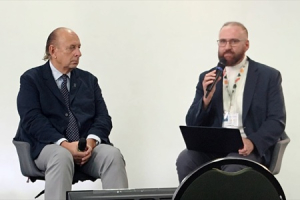
From the Silence of Belém to the Hope of Santa Marta: Reconfiguring Climate Multilateralism
— Eduardo Agosta Scarel, O. Carm.
Director of the Department of Integral Ecology, Spanish Episcopal Conference
COP30, held in Belém do Pará, Brazil, left behind a bittersweet taste. The Brazilian presidency managed to imbue the final document with a humanist narrative that recognized the rights of indigenous peoples, the vital importance of the Amazon, and the ecological debt derived from historical emissions. However, the summit once again stumbled over the usual obstacle: the consensus rule.
The result was a text that, despite its symbolic gestures, failed on two points essential to integral ecology. In terms of mitigation, the explicit reference to the need to abandon fossil fuels disappeared, replaced by vaguer goals of achieving carbon neutrality by mid-century. In terms of financing, although the scientific urgency of mobilizing $1.3 trillion annually was recognized, the political goal was set at a mere $300 billion, thus institutionalizing a financial gap that perpetuates injustice.
Faced with this deadlock in global diplomacy, where a single oil-producing country can veto the ambition of the entire planet, an alternative has emerged: the Santa Marta Conference in Colombia, convened for April 2026 by a bloc of 80 countries led by Colombia, the United Kingdom, Spain, and the Netherlands. Its purpose is clear: to move towards a Fossil Fuel Non-Proliferation Treaty and pave the way for a just transition, beyond the obstacles of the United Nations Framework Convention on Climate Change.
Santa Marta could become the checkmate to the fossil fuel blockade. As Pope Francis reminds us in Laudate Deum, when global institutions fail, it is up to civil society and intermediate countries to act. If these 80 nations agree to halt new exploration and coordinate their exit from fossil fuels, they will cause a massive contraction in demand. Sooner or later, even the large producers that do not join will see their markets shrink. The financial signal will be irreversible: the future will be renewable, not because of ideology, but for pure economic survival.
The strength of this coalition lies in the fact that it does not need the permission of Saudi Arabia or Russia to move forward. By operating as an alliance of will, it breaks the paralysis of consensus and forges its own path. Furthermore, the leadership of Colombia, a coal and oil-producing country, alongside European powers, gives it a unique ethical legitimacy. It dismantles the idea that climate action is a luxury of the North and presents it as a shared, albeit differentiated, responsibility.
One challenge remains, however: financing courage. For the Santa Marta route to be sustainable and fair, it is not enough to sign the end of fossil fuels. It is essential to put resources on the table and ensure that countries like Colombia do not collapse economically when the tap is turned off.
If Belém was the COP of conscience, recognizing the crisis in the heart of the rainforest, Santa Marta promises to be the conference of coherence. It is an opportunity to demonstrate that, even if global diplomacy progresses slowly, the political will of an organized majority can accelerate history and bring us closer, at last, to the comprehensive ecological conversion that the world needs at this immanent level. The key lies in “reconfiguring multilateralism” so that it is born “from below” (cf. Laudate Deum 37-40).
Blessed Denis and Redemptus (OCD), Martyrs
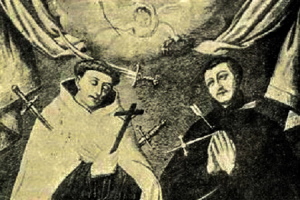
29 November Optional Memorial
Peter Berthelot was born at Honfleur (Calvados, France) on Dec. 12, 1600, and as a young man went to sea, visiting Spain, England and America. In 1619 he went to India, where, as cosmographer and first pilot of the kings of France and of Portugal, he distinguished himself by his valor and genius. Proof of the latter are his Maritime Tables, sketched with great ability and preserved in the British Museum (Ms. Sloan 197). In 1635, while in Goa, he took counsel with his spiritual director, Father Philip of the Most Trinity, and consequently joined the Discalced Carmelites. He made his profession on Dec. 25, 1636, with the name of Dionysius of the Nativity. He was ordained a priest on Aug. 24, 1638. According to the testimony of the same Father Philip, he was an example of virtue to all the religious, both in the novitiate and after his profession. He was graced with the gift of contemplation; and more than once during prayer he appeared surrounded by heavenly splendors.
Read more ...
Prior General's Schedule for December 2025
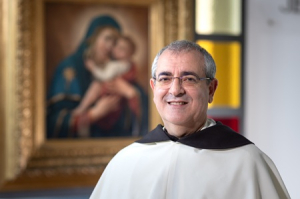
Fr. Desiderio García Martínez, O. Carm., the prior general, has the following schedule planned for the end of November and December 2025:
November 25-28: Meeting of the Union of Superiors General (USG)
November 29: Closing of the Congress on Titus Brandsma
November 30: Online Day of Retreat for Advent for the Youth who participated in the Jubilee Year earlier.
December 3-19: First Plennary Meeting of the General Council | Programming for the Six Year Term
December (TBA): Meeting of the OCD-OCARM General Councils


