












O.Carm
Celebrating At Home - 31st Sunday of Ordinary Time

The Great Commandment
The first reading from the Book of Deuteronomy and the Gospel today are linked by the words of the Shema – the creed which observant Jews pray every morning and evening. These words come from the Book of Deuteronomy: Listen, Israel: The Lord our God is the one Lord. You shall love the Lord your God with all your heart, with all your soul, with all your strength. The title, Shema, comes from the Hebrew word for ‘listen’, the very first word of the prayer.
In a way, Shema is a call to conversion: to listen deeply with the heart and to respond to God’s grace and mercy with love, faithfulness and obedience.
When a scribe asks Jesus, “Which is the first of all the commandments?”, Jesus replies by quoting the Shema and then adds a quotation from the Book of Leviticus (19:18), “You must love your neighbour as yourself ”. According to Jesus, there is no commandment greater than these.
The scribe is impressed by Jesus’ reply. His words to Jesus show he has grasped what Jesus means. In repeating what Jesus has just said in his own words, the scribe also adds, “this is far more important than any holocaust or sacrifice”. Now it is Jesus who is impressed with the scribe’s depth of understanding: that love is the very heart of obedience to God and more important even than ritual worship. The scribe’s correct understanding of the Old Testament Law means he is very close to the Kingdom of God.
It also means that true faith, as Jesus teaches it, is about being in loving relationship with God and other human beings. Religious rituals are meant to be ways of reflecting on, savouring, remembering, celebrating and expressing that love. Sometimes they just end up as ‘empty’ rituals, when love has been replaced by fear, when we are trying to bargain with God, or when we are just ‘going through the motions’.
The Kingdom of God is not some far off place, but the moments when God’s life breaks into the human story. Those moments bring love, wisdom, grace, compassion, generosity, forgiveness and peace. Those practiced in the things of God recognise God’s presence most of all in loving relationships. If our rituals grow out of and express our sincere love for God and neighbour then they have value. We are always at risk of putting ritual above the practise of love, of thinking that we are at rights with God just by attending a liturgy, by ‘paying God off ’, in a sense.
The words of Jesus remind us of the importance of the other part of our religious lives – the liturgy of everyday life in which we make present and visible the love, mercy and compassion of God.
- pdf Celebrating At Home - 31st Sunday in Ordinary Time [PDF] (369 KB)
- default Celebrating At Home - 31st Sunday in Ordinary Time [ePub] (4.71 MB)
- pdf Celebrando En Familia - 31 Domingo del Tiempo Ordinario (230 KB)
- pdf Celebrando In Casa - 31 Domenica del Tempo Ordinario (827 KB)
...
Celebrating at Home is a Liturgy of the Word centred around the Gospel reading for each Sunday. It includes a reflection on the Gospel and prayers.
It can be used personally or with your family. Parts for all to pray are given in bold print and all the other parts can be shared among those present.
We hope that Celebrating at Home will be a source of nourishment and strength for all who use it.
In the room you decide to use for this prayer you could have a lighted candle, a crucifix and the Bible. These symbols help keep us mindful of the sacredness of our time of prayer and can help us feel connected with our local worshipping communities.
Servant of God Sr. Maria Cristina dell’Eucarestia
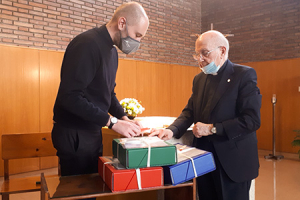
The Closure of the Diocesan Investigation of Servant of God Sr. Maria Cristina dell’Eucarestia Alonso Alonso, O. Carm. was held on October 8, 2021.
The acts of the diocesan investigation, transported to Rome by the Postulator General, nominated Portitrice by the Archbishop of Barcelona (Spain), Cardinal Omella Omella, have been delivered to the Congregation for the Causes of Saints on October 14. This is the beginning of the Roman phase of the cause for beatification and canonization of the Servant of God. Shortly the acts of the diocesan investigation will be placed under the formal control and on behald of the officials of the Congregation for the Causes of Saints. It they are found worthy, a relator will be named who studies the cause and at the end will edit a positio on the life, virtue, reputation for holiness, and the signs of the Servant of God.
The Servant of God Maria Cristina dell’Eucarestia , born on May 16, 1930 in Coó (Los Corrales de Buelna), Spain. This is a small town in Cantabria, province of Santander, the seventh daughter of Eulogio and Maria. On May 26 she was baptized and, at the age of eight years, received her First Communion. Moving to Barcelona for her studies, she attended Azione Catholic, a group of young people. She entrusted her spiritual life to the guidance of the young priest, Narciso Jubany Arnau, a future cardinal archbishop of Barcelona. She felt a strong vocational call to religious life, in particular a call to Carmel. After some initial difficulties, she was welcomed into the Monastery of the Encarnation on April 15, 1955 at the age of 24. She entered the novitiate on October 16, 1955, being vested in the Carmelite habit. On November 1, 1956, she made her first profession, taking the name of Maria Cristiana dell’Eucarestia. Three years later, on November 1, 1959, she took solemn vows.
On April 1, 1963, the first symptoms of the illness appeared: multiple sclerosis, an painful and humiliating illness, which slowly resulted in total immobility. She fully accepted the will of God for her, happy to totally conforming to her crucified Spouse. On May 3, 1979, Sr. Maria Cristina yielded her beautiful soul to God, surrounded by the wide-spread fame of holiness. In 1996 the first steps for her cause of beatification and canonization were taken and on November 27, 2003 the first session of the diocesan investigation were celebrated on the life, virtue, and fame of holiness and signs. Its final face was on October 8, 2021, in the chapel of the Monastery of the Encarnation in Barcelona, the monastery which accepted the Servant of God for the 20 years of her brief life.
Causa Nostrae Laetitia - Iunius/Oct 2021
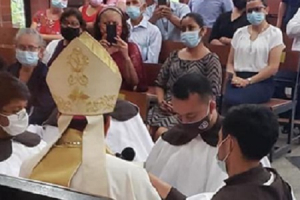
Initium Novitiatus
24-06-21 Adorn Ansel (STSA) Lisieux Bhavan Chala, India
15-08-21 Patrick Mingard (Gal) Nante, France
Professio Temporanea
31-08-21 Giovanna D'Aniello (SAR) Sogliano al Rubicone, Italia
Professio Solemnis
16-07-21 Matteo Antonllini (Ita) Castellina, Italia
04-09-21 Maria Sabrina Fubelli (CAR) Carpineto Romano, Italia
08-09-21 Mary Jackline Bochaberi of the Cross (MAC) Machakos, Kenya
08-09-21 Mary Veronica Muthini of Christ the King (MAC) Machakos, Kenya
11-09-21 Richard Philip Green (Brit) Aylesford, England
Ordinatio Diaconalis
03-07-21 Alfredo Pisana (Ita) Torrespaccata, Italia
17-10-21 Emery Losinu (Ita-Cong) Butempo, Dem Rep Congo
17-10-21 Samuel Ndjate (Ita-Cong) Butempo, Dem Rep Congo
Ordinatio Sacerdotalis
20-08-21 Mário Josué Bernando Alves (Pern) Jaboatão dos Guasarapes, Brasil
21-08-21 Jorge da Costa Silva (Pern) Alagoa Grande, Brasil
25-09-21 Bruno Castro Shoder (Rio) São Paulo, Brasil
17-10-21 Matthias Mukombozi (Ita-Cong) Butempo, Dem Rep Congo
17-10-21 Gilbert Paluku (Ita-Cong) Butempo, Dem Rep Congo
17-10-21 Charles Kambale (Ita-Cong) Butempo, Dem Rep Congo
17-10-21 Innocent Djomby (Ita-Cong) Butempo, Dem Rep Congo
Celebrating At Home - 30th Sunday in Ordinary Time
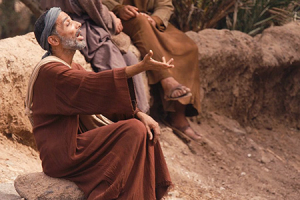
What do you want me to do for you?
There are all kinds of blindness - physical, lack of insight or perception, an unwillingness to see a confronting reality, and so on. For many weeks now we have travelled with Jesus and the disciples as they head towards Jerusalem. Many times, the disciples have seemed almost wilfully blind to understanding the mission of Jesus. Time and again, their own egos seem to get in the way – arguments about which is the greatest, wanting to be people of high status, powerbrokers and princes and rulers in the kingdom.
On this journey Jesus has been instructing the disciples about his mission and their call to be true followers of his. As we have seen, they have largely resisted both.
We are nearing the end of the journey. Today’s Gospel episode, the cure of blind Bartimaeus, is the last before Jesus enters the Holy City.
Bartimaeus may be blind, but he sees more clearly who Jesus is than the sighted disciples. In terms of faith, it is the disciples who are blind, and it is Bartimaeus who sees.
Even in his blindness Bartimaeus recognises who Jesus is. When Jesus calls him, his reaction is full of energy and enthusiasm. He throws off his cloak, jumps up and makes his way to Jesus, in contrast to the rather hesitant attitude of the disciples.
Jesus restores Bartimaeus’ sight with the words, ‘Go, your faith has saved you.’ But Bartimaeus does not go; he stays and follows Jesus.
Not only has Jesus restored Bartimaeus’ sight, he has also removed the taint of sinfulness which surrounded people with disabilities in those days.
This story is a parable about discipleship.
Bartimaeus is an image of the true disciple. He recognises his blindness and asks for healing. He comes to Jesus with great faith and enthusiasm and not much else. With sight restored he becomes a follower of Jesus on the journey to Jerusalem.
The presence of Jesus in our lives heals and restores us to our true calling as the People of God so that we can truly follow Jesus in our lives.
What Jesus asks Bartimaeus, he asks us, too: What do you want me to do for you?
- pdf Celebrating At Home - 30th Sunday in Ordinary Time [PDF] (499 KB)
- default Celebrating At Home - 30th Sunday in Ordinary Time [ePub (2.85 MB) ]
- pdf Celebrando En Familia - 30 Domingo del Tiempo Ordinario (211 KB)
- pdf Celebrando In Casa - 30 Domenica del Tempo Ordinario (303 KB)
...
Celebrating at Home is a Liturgy of the Word centred around the Gospel reading for each Sunday. It includes a reflection on the Gospel and prayers.
It can be used personally or with your family. Parts for all to pray are given in bold print and all the other parts can be shared among those present.
We hope that Celebrating at Home will be a source of nourishment and strength for all who use it.
In the room you decide to use for this prayer you could have a lighted candle, a crucifix and the Bible. These symbols help keep us mindful of the sacredness of our time of prayer and can help us feel connected with our local worshipping communities.
Celebrating At Home - 29th Sunday in Ordinary Time
Servants, not masters
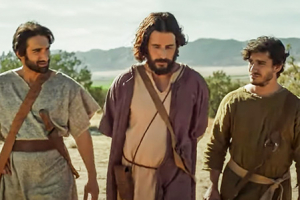
They’re at it again! One might be forgiven for wondering at just how slow the disciples are in getting Jesus’ message. For weeks he has been instructing them about the Kingdom of God and the conversion of heart needed to be his followers.
This Sunday’s Gospel episode shows that, yet again, they just don’t get it. This time it is James and John, who together with Peter form the ‘inner circle’, the group of disciples closest to Jesus. James and John are asking for the highest places of honour when Jesus comes into his ‘glory’.
While they understand that Jesus is the Messiah, they misunderstand what kind of Messiah he is and what kind of Kingdom he is bringing. While Jesus continues to talk about the path his own life will take through suffering, death and resurrection, the disciples are so focussed on themselves that they ignore his words.
Rather than brush aside the brash request of James and John, Jesus attempts to draw them deeper by hinting at the path of true discipleship. Using two biblical motifs, the cup (the fate that lies ahead of a person) and baptism (not the sacrament but the idea that undergoing trials and dangers is like passing through stormy, turbulent waters) Jesus asks if they can really commit to sharing his life and mission. Without hesitating they say, “We can,” and Jesus affirms that they will. But, as for the places of honour, these are for the Father to assign.
The other ten disciples have been standing nearby, eavesdropping on the conversation between Jesus, James and John. They are angry at hearing of their attempt to get in first and claim the seats of honour for themselves – no doubt, they would have liked to do the same!
Jesus takes the opportunity to tell them, yet again, that real greatness in the Kingdom of God lies in self-sacrificing service to humanity. Authority among the people of Christ is not to be exercised by ‘lording it over’ others or by using positions and capacities for self-serving ends. Authority is always to be at the service of and for the benefit of others. Disciples are called to be servants, not masters.
As we follow Jesus through the Gospel we see that his ‘authority’ over demons, illness and death, as well as his teaching, always brings liberation, restores health and wholeness and sets others at rights with God and neighbour. That is the pattern that he asks the disciples follow. The only way to enter into Jesus’ ‘glory’ is to follow him in self-sacrificing service of humanity, as one who gives up their life as a ransom for many.
- pdf Celebrating At Home - 29th Sunday in Ordinary Time [PDF] (1.21 MB)
- default Celebrating At Home - 29th Sunday in Ordinary Time [ePub] (118 KB)
- pdf Celebrando En Familia - 29 Domingo del Tiempo Ordinario (333 KB)
- pdf Celebrando In Casa - 29 Domenica del Tempo Ordinario (356 KB)
...
Celebrating at Home is a Liturgy of the Word centred around the Gospel reading for each Sunday. It includes a reflection on the Gospel and prayers.
It can be used personally or with your family. Parts for all to pray are given in bold print and all the other parts can be shared among those present.
We hope that Celebrating at Home will be a source of nourishment and strength for all who use it.
In the room you decide to use for this prayer you could have a lighted candle, a crucifix and the Bible. These symbols help keep us mindful of the sacredness of our time of prayer and can help us feel connected with our local worshipping communities.
Feast of St. Teresa of Jesus
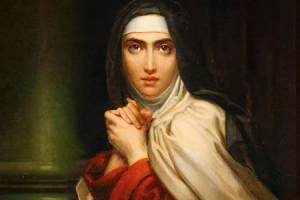
On October 15th we celebrate the feast of St. Teresa of Jesus (or of Avila), Virgin and Doctor of the Church.
Saint Teresa is among the most important figures of all time for Catholic spirituality.
Her works-- especially the four best known (The Life, The Way of Perfection, The Interior Castle and The Book of Foundations)-- together with her more historical works, contain a doctrine which encompasses the whole of the spiritual life, from the first steps right up to intimacy with God at the center of the Interior Castle.
Her Letters show her occupied with a great variety of everyday problems.
Her doctrine on the unity of the soul with God follows the Carmelite tradition which had preceded her and to which she herself contributed in such a notable way, enriching it as well as passing the tradition on, not only to her spiritual sons and daughters, but also to the whole Church which she served so unsparingly.
Too many confuse being loved with love itself. Love is outgoing, unselfish, active. It means giving rather than self-seeking. It strives to please rather than be pleased.
In Saint Teresa's own words:
“Perhaps we do not know what love is. It would not surprise me, for love consists not in the extent of our own happiness, but in the firmness of our determination to please God in everything.”
“Let nothing disturb thee;
Let nothing dismay thee:
All thing pass;
God never changes.
Patience attains
All that it strives for.
He who has God
Finds he lacks nothing:
God alone suffices.”
Read St. Teresa's bio here
Read the Message of Pope Francis to the Bishop of Avila on the occasion of the opening of the Teresian Jubilee year on October 15, 2014, here
Read the words of Pope Benedict XVI on St. Teresa during the General Audience of February 2, 2011, here
To learn more about the life of St. Teresa and her work and legacy, we suggest reading the book The Heirs of St. Teresa of Avila, published by Edizioni Carmelitane.
To access this and many other fine publications at Edizioni Carmelitane, click here.
To place your order please contact:
Libreria Nardecchia
TEL.: (+39) 06-5373901
FAX: (+39) 06-5373902
E-mail: This email address is being protected from spambots. You need JavaScript enabled to view it.
Edizioni Carmelitane
TEL.: +39-0646201807
FAX: +39-0646201808
C.C.P.: 14069009
BIC/SWIFT: BPPIITRRXXX
IBAN: IT67 Z076 0103 2000 0001 4069 009
E-mail: This email address is being protected from spambots. You need JavaScript enabled to view it.

Celebrating At Home - 28th Sunday in Ordinary Time
Nothing is impossible for God
In the Jewish tradition, wealth was seen as a blessing from God and the wealthy person as especially favoured by God. Along with the idea of divine blessing and favour came a divine obligation (often ignored) – the care of God’s poor.
As the conversation between the rich man and Jesus unfolds, we see that he a good and upright man. The commandments which Jesus spells out are those to do with one’s treatment of others.
These, the rich man says, he has always kept.
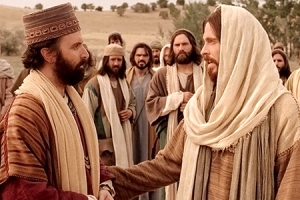
Jesus’ love and affection for the man recognises his very genuine efforts to live according to the commandments. This love ushers in the call to discipleship: ‘There is one thing you lack. Go and sell everything you own and give the money to the poor, and you will have treasure in heaven; then come, follow me.’ Jesus wants this man to be a follower of his. He is inviting him to move from a way of life centred on the Torah (Jewish law) to a way of life centred totally on Jesus.
When the man first approaches Jesus he asks what more he must do to inherit eternal life while still maintaining the present direction of his life. What Jesus is inviting him into is the total transformation of his life – to go in a new direction. Jesus is inviting him to an even more radical fulfilment of his obligations to neighbour by selling all he has, giving the proceeds to the poor, and then becoming a follower of Jesus.
Rather sadly, the rich man cannot take this step. He is trapped and controlled by his possessions and cannot let them go in order to enter into joyful and life-giving companionship with Jesus.
When Jesus talks about how hard it is for a rich person to enter the kingdom of God the disciples are astounded. They, too, think of wealth and possessions as a sign of God’s favour and blessing.
Jesus drives home his point by insisting that, ‘It is easier for a camel to pass through the eye of a needle than for a rich man to enter the kingdom of God.’ The disciples are even more astounded and conclude that if rich people can’t make it into the kingdom, then what hope do the rest of us have?
Jesus’ reply to the disciples tells us clearly that if we rely on human resources and means it is impossible to find salvation. But if we rely on God, then we can be saved - the good and gracious God who gives the Kingdom as pure, unmerited gift.
Sometimes, the very things we love, in which we find our security and in which we place our trust can turn out to be our undoing and stumbling blocks on our journey into the kingdom.
Jesus’ reply about God who can do the impossible is also a reassurance that God stands ready to journey with us, to help us find the way to move our hearts from reliance on ourselves and human resources to rely on God’s love and companionship.
- pdf Celebrating At Home - 28th Sunday in Ordinary Time [PDF] (1.20 MB)
- default Celebrating At Home - 28th Sunday in Ordinary Time [ePub] (130 KB)
- pdf Celebrando En Familia - 28 Domingo del Tiempo Ordinario (358 KB)
- pdf Celebrando In Casa - 28 Domenica del Tempo Ordinario (385 KB)
...
Celebrating at Home is a Liturgy of the Word centred around the Gospel reading for each Sunday. It includes a reflection on the Gospel and prayers.
It can be used personally or with your family. Parts for all to pray are given in bold print and all the other parts can be shared among those present.
We hope that Celebrating at Home will be a source of nourishment and strength for all who use it.
In the room you decide to use for this prayer you could have a lighted candle, a crucifix and the Bible. These symbols help keep us mindful of the sacredness of our time of prayer and can help us feel connected with our local worshipping communities.
Carmelite Studies Program at CISA in Rome
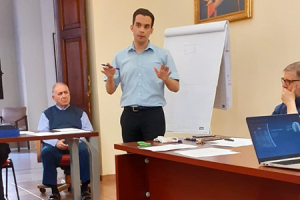
From September 20-30, 2021, the International Center of Saint Albert (CISA), in Rome, hosted an intensive course of Carmelite history and spirituality. The course was organized by Giovanni Grosso and Sandro Vella with about 30 Carmelites participating, including the members of CISA, the students from the Italian Province, and eight Carmelite sisters.
Five presentations of approximately one hour each were given each day in Italian, three in the morning and two in the afternoon. Various Carmelite themes were covered by various lecturers to unearth the first 300 years of the history of the Order.
The resources for research which the Order has today were also presented. Giovanni Grosso began the course by introducing to the Carmelite studies and the materials available in the two libraries of CISA. Mario Alfarano contributed with a presentation on Carmelite studies through the perspective of the archive of the Order.
Alfarano also presented on the origin, development and rubrica prima of the Constitutions and Nicholas the Gaul’s Flaming Arrow (Ignea sagitta). Sandro Vella elaborated on the Rule, Mary of Carmel in the first centuries (of the history of the Order), Elijah in the Scriptures, and the Institution of the First Monks. Two doctoral researchers, Carlito da Silva and Kurt Mizza, each contributed one session, the former on Mary in the Scriptures, and the latter on major figures of Carmel in the 13th and 14th centuries.
 Key speaker, Giovanni Grosso impressed with several other topics, including the origins of the Rule of Saint Albert in the pilgrimage movement of the times, the major events of Carmel in the 13th century before the definitive approval of the Order, images of the Blessed Mary of Mt. Carmel, the liturgical rite proper to the Order, the catalogue of the Carmelite Saints (Catalogus sanctorum), the forefathers of the Order: St. Albert and St. Angelo through texts and iconography, and the evolution of the Order in the 14th century. Giovanni combined his lessons with “field trips”: concretizing the role of the Blessed Virgin with an afternoon visit to the Basilica of Mary the Major, and the Carmelite saints at the Carmelite church of Santa Maria in Traspontina, located on the street leading into the St. Peter’s square.
The entire group also enjoyed a day trip to Sutri, an ancient Roman town one hour north from Rome, where they were hosted by a community of the cloistered Carmelite nuns.
In general, the course refreshed and surprised our participants with a richly lived heritage of Carmel in the first 300 hundred years of its history. The course reminds us that we all have received certain formation of the history and spirituality of the Order but it was either not enough or mostly forgotten. It is interesting that, while many of us come to know the Order by the tradition of the brown Scapular and major Saints such as John of the Cross and Teresa of Jesus, none of these have been touched yet during the two-week course. That says, we have a super-rich tradition, but we know so little about it.
Finally, main coordinator Giovanni Grosso ended the course with the Catalogus sanctorum, in which he listed six categories of Carmelite Saints: 1) Prophets (Elijah & Elisha), 2) Bishops (Pietro di Tommaso & Andrea Corsini), 3) Founders (Bertoldo, Brocardo, Cirillo, Simone), 4) Hermits (Ilarione, Simone), 5) Preachers (Angelo & Albert), and 6) Penitents & Pilgrims (Teodorico, Avertano, Francesco da Siena).
These six categories of saints represent for the values of Carmel which continue to be relevant for our times. The examples given by the lives of these Carmelite saints serve as guides for our choices and encouragement in our journey.
One participant in the courses commented, “While the courses were both very interesting and very intense, because of the number of courses each day. However, they presented us with the opportunity to reflect on our charism and our identity. The possibility to see the changes in the life of the Order after the members fled the Holy Land and came to Europe in the context of the Church at the time was very interesting.”

Annual Lecture in Carmelite Studies
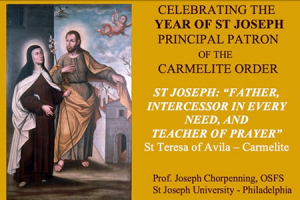
On October 14, the Center for Carmelite Studies at the Catholic University of America will host its Annual Lecture in Carmelite Studies celebrating the Year of St. Joseph, the principal patron of the Carmelite Order. This year’s event will take place at 3:30 PM-4:30 PM (Eastern USA Time - GMT -04:00). The program will be in English.
The presenter will be Prof. Joseph Chorpenning, OSFS, from St. Joseph University in Philadelphia. He will speak on St. Joseph: Father, Intercessor in Every Need and Teacher of Prayer.
Fr. Joseph has written extensively on St. Teresa’s devotion to St. Joseph as being the hallmark of her Carmelite spiritual patrimony. He will include sacred art from both Europe and the Americas in his presentation. Fr. Chorpenning is executive director of Saint Joseph’s University Press and serves as president of the International Commission for Salesian Studies (ICSS). He has authored many publications.
For further information or to register for the course, click here
New Research on St. Angelo at Convention
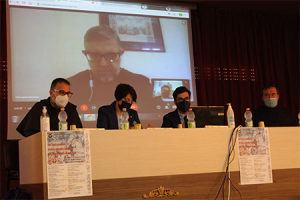
On September 25, the second conference of scholars on St. Angelo, was held. The conference was sponsored by the General Archives and the General Postulation of the Order. This is the 800th anniversary of the death of the saint. The conference was financed by the Banca Sant'Angelo who hosted the first conference in November 2019 at their offices. This conference was held at the school Liceo Clásico Vincenzo Linares with a representation of teachers and students attending.
After the greetings of the director of the school and the prior provincial of the Italian province the morning session, moderated by the postulator general, Giovanna Brizi, heard presentations from Giovanni Grosso, president of the Institutum Carmelitanum on the presence of the Carmelites in Sicily in the 13th and 14th centuries; Mario Alfarano, the general archivist, on the hagiographical interpretation of The Life of Enoc (Vita di Enoc); Marco Papasidero, of the University of Torino, on the miracles of St. Angelo connected to pestilence and storms; and Marco Grassi, of the University of Messina, on the iconography of St. Angelo in Santa Maria in Traspontina in Rome.
The afternoon session, moderated by Marco Papasidero, featured contributions from scholars who responded to the "call for papers" issued in July 2019. They included Michele Lodone, from the University of Venice, on the prophecies in the life of Saint Angelo; Tommaso Maria Rossi, archivist of the Diocesan Archives of Lucca, on the parallelism between Saint Angelo and Saint Avertan; Mateusz Zimny, from the University of Krakow, on the iconography of Albert present in Poland; and Ruggiero Doronzo, from the University of Bari, on the iconography preserved in the General Archives of the Order.
The research presented at the two conferences will be published by Edizioni Carmelitane and made available to those who wish to know new interpretations and further insights into the figure of this early Carmelite saint. In the meantime, a final conference scheduled on the results of the canonical recognition of the relics and the restoration of the urn of the saint, scheduled for next year, has been announced although the exact date is pending.


