














O.Carm
OCARM-OCD Marks 775th Scapular Anniversary

OCARM-OCD Conference on 775 Years of the Scapular
On May 16, 2026, Eduardo Sanz de Miguel, OCD and Fernando Millán Romeral, O. Carm., will speak on the Scapular. This will be followed by a Eucharist celebrated by Juan Antonio Martinez Camino, the auxiliary bishop of Madrid.
Fr. Sanz de Miguel will be speak on "The Carmelite Spirituality: To Live in the Footsteps of Jesus Christ Clothed in the Virtues of the Virgen Mary."
Fr. Millán will speak on "The Carmelite Scapular in Literature: Risks and Values."
The conferences and Mass will take place at the parish of Our Lady of Mount Carmel in Madrid.
Causa Nostrae Laetitiae
PROFESSIO TEMPORANEA
12-12-25 Maria Lorna Joseph Pegenia (BUR) Burgos, Philippines
ORDINATIO DIACONALIS
20-12-25 Francu Laurentiu (Ital-Rom) Jesi, Italia
06-02-26 José Ricardo da Silva Oliveira (Pern) Escada, Brasil
ORDINATIO SACERDOTALIS
04-01-26 Kanyoro Biarukanga Clément (Ital-Cong) Nioka, RDCongo
02-02-26 Candido Augusto Vida (Pern) Petrolina, Brasil
21-02-26 Luiz Otávio Sebastião da Silva (Pern) Escada, Brasil
ORDINATIO EPISCOPALIS
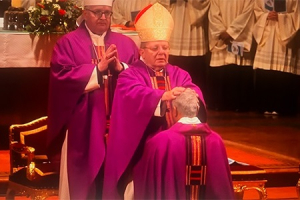
15-03-26 Joshy G. Pottackal (India) Auxilary Bishop of Mainz, Germany
New Publications Revive the Legacy of Mariangela Virgili
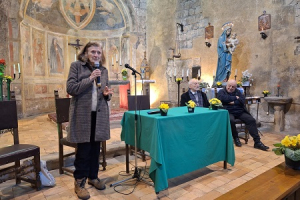
Books on Venerable Mariangela Virgili Presented in Her Hometown, Ronciglione
On March 8, starting at 4:00 p.m., two books titled “Mariangela Virgili, Carmelite Tertiary (1661–1734): Between Devotion and Sanctification” (2025) by Franca Fedeli Bernardini were presented in the Church of Santa Maria della Provvidenza in Ronciglione. The first volume has been published by Edizioni Carmelitane, the publishing house of the General Curia of the Carmelite Order and the Institutum Carmelitanum, and can be purchased on the website https://edizionicarmelitane.org/
The church of the “Borgo di Sotto,” particularly significant for Virgili—who was born and died in this district—was crowded due to the importance of the Venerable, who is still considered today a powerful and moving identity figure for the town, especially because of the miracles she performed during her life and after her death. These are analyzed in the second volume, which illustrates the testimonies and ex-votos still present in her house. Owing to the important extra-liturgical devotion connected with it, the house has become almost a kind of “sanctuary,” now turned into a museum and constantly visited by devoted pilgrims and attentive tourists.
The date of the presentation, particularly meaningful for women, had already been chosen in 2025 by the Municipal Councillor for Culture, Attorney Alessandra Ortenzi, as a moment to commemorate through the most significant female figure of the town, who worked for the well-being of women and who, among other initiatives, invited Rosa Venerini to Ronciglione, where she founded the first girls’ school.
The initiative, in addition to being supported by the Municipality of Ronciglione, was sponsored and promoted by Monsignor Silvio Iacomi, parish priest of Ronciglione; the Mariangela Virgili Cultural Association; the National Association of Social Centers and Senior Committees; the Multipurpose Cultural Center of the City of Ronciglione; and Unicoop Etruria.
Speakers included Maria Cangani, organizer of the initiative together with Daniele Trappolini, President of the Mariangela Virgili Cultural Association. They were followed by interventions from Franca Fedeli Bernardini; Sarina Aletta, who recited passages from the book recalling very moving miraculous events transmitted through oral tradition; Claudio Canonici, university professor and Director of the Diocesan Historical Archive of Civita Castellana; and Don Silvio Iacomi and Alessandra Ortenzi, who recalled particularly intense moments that had involved them respectively as parish priest and teacher, and as a family that experienced the war and is today deeply devoted.
Before the conclusion, entrusted to the Ronciglione Choir, which performed three pieces of sacred music, Alessio De Angelis gave a brief speech recalling how the Red Cross had placed the Blue Shield—the flag for peace and for the protection of cultural heritage—on the places frequented by Maria Mariangela Virgili, starting with her house.
In relation to the project “Ronciglione, a Village of Peace,” carried out in collaboration with the Mariangela Virgili school institute, and in light of current circumstances, the speakers—and later those present who remained for a long discussion—highlighted the figure of Mariangela Virgili as a bearer of peace and a dispenser of salvation to soldiers at war, who expressed their grateful thanks to her.
The importance of her figure as a poor and uneducated woman in promoting equality in a society full of social contradictions and strongly centralized and hierarchical was clearly emphasized. Together with forward-thinking individuals such as Rosa Venerini, whom she invited to Ronciglione to establish a girls’ school, Mariangela Virgili understood that poor, uneducated, widowed, sick, immigrant, and marginalized women needed spiritual and social uplift. This could be achieved through the reduction of need—which generates subjection—starting from education, training, study, and ultimately the social inclusion of the poorest classes, providing them with a body of essential knowledge in which teaching went hand in hand with moral education.
The renewed process of the feminization of “social holiness” and the recomposition of Christian society involved a complex adjustment that led to differentiated but courageous choices by women “outside the cloister,” yet deeply engaged in social reality, or “within the cloister” by conscious choice, yet strongly involved in different local contexts aimed particularly at the education of girls and young women.
Endowed with prodigious gifts and surprising healing abilities—often carried out simply using whatever was at hand—people from all social classes turned to her for help and predictions, including prisoners who were serving what was considered the “necessary retribution for peace in the world.” They surrounded her and crowded into her “hovel,” where she advised, hosted, welcomed, healed, and redistributed goods according to the needs of those who sought her help.
As a religious but lay woman, despite her poverty she externalized her charitable activity through the sharing of donated goods with neighbors, the sick, prisoners, women, and newborns—whose births she helped and whom she carried under her cloak to the city hospitals responsible for their care. Her voluntary activity complemented and strengthened the subsidiary work of the funded institutions.
Her own home became a refuge for those in need. On the ground floor of the same building, she rented an apartment to receive sick people who were not accepted in the city hospitals because of the severity of their conditions (such as those suffering from scabies or leprosy) and for long-term patients who had already been discharged.
Particularly attentive to the social causes of poverty, she affirmed the necessity of commutative and moral justice: giving the seller what is fair and the worker what is rightfully due. This attitude could make her appear naive, yet honesty and charity became a sort of necessity to be practiced through simple and continuous “ordinary acts.”
The importance of the Venerable is such that she is still internalized and felt today as a protector and a saint, regardless of the outcome of the cause for beatification. And if saints are figures who speak to their own times, as Claudio Canonici emphasized, the relevance of this “little woman dressed in black,” as emerged from the discussion and the themes proposed on this occasion, is still capable of speaking to people today, at a time when past models reappear and previously established certainties are once again in crisis.
For a just transition from fossil fuels

Vice President of the Carmelite NGO
Let’s imagine for a moment that the house where you grew up, the one that holds your most sacred memories, is starting to crack. These are not just stains on the wall; the foundations are giving way.
This is the image Pope Francis presented to us in his 2023 apostolic exhortation Laudate Deum (LD), in which he warned: “The world that welcomes us is crumbling and may be approaching a breaking point” (LD 2).
We are no longer talking about distant climate change or cold statistics; we are talking about a system in clear decline that undermines the sustainability of life as we have known it. For decades, our economy has functioned as if the goods of the earth (“resources,” some call them) were infinite, trapped in what the Church calls the technocratic paradigm (Laudato Si' (LS), 101), believing that unlimited power and consumption are the only way forward.
But the Church, enlightened by Laudato Si’, tells us that faith cannot be indifferent to the type of energy that powers our world. Fossil fuels—coal, oil, and gas—which once powered an era, are now the chain that binds us to the destruction of our common home.
Pope Francis was categorical: “Technology based on highly polluting fossil fuels— especially coal, but also oil and, to a lesser extent, gas—needs to be progressively replaced without delay (LS 165).” The phrase is critical: “without delay.” It is not a suggestion for the next century; it is a moral imperative for today. Why? Because every degree of temperature rise is a direct blow to the poorest, those who have no air conditioning for extreme heat, no walls against flooding, and not enough crops to feed themselves.
This is where our response as a Church must become prophetic, like that of the ancient Hebrew prophets, Jeremiah, Joel, or even Jesus himself. We are not simply seeking to replace a barrel of oil with hundreds of solar panels. That would be merely cosmetic. We seek a just transition.
What does this mean? It means a comprehensive transformation that goes beyond mere economic interest and places human dignity, global solidarity, and care for our common home at the center. It means, first of all, demanding the urgent abandonment of fossil fuels and a significant reduction in energy consumption by the richest nations, assuming their historical responsibility through concrete actions, such as the cancellation of the unpayable foreign debt of some countries in the Global South.
However, to ensure that this demand does not remain trapped in empty promises, we need a different international framework. Laudate Deum urges us to shape a “new multilateralism” (LD 37-43) that overcomes the slowness, blockages, and lack of binding mechanisms of the current UN negotiation system.
It is in this context that the upcoming Conference of Santa Marta in Colombia (April 24-29, 2026), the first international conference focused specifically on the transition from fossil fuels, stands out as a hopeful milestone. This meeting of countries marks the starting point for dialogue to draw up a real and effective roadmap towards the elimination of fossil fuels, driven by moral and civil diplomacy that demonstrates that another form of global governance, more agile and committed to the common good, is possible.
Second, it means protecting vulnerable populations and affected workers by guaranteeing, for example, retraining programs and unemployment benefits for those who currently depend on the oil or coal industry. Furthermore, this transition must not fall into a “new extractivism,” rejecting the idea that mining materials for solar panels or batteries will replicate the historical dispossession of lands and communities. Instead, a just energy transition entails an obligation to promote participatory governance in decisions on production, distribution, and consumption, such as the creation of local energy communities in which citizens take ownership of the change process.
Finally, it also means profound ethical and financial coherence, exemplified by the progressive divestment of Catholic institutions and individuals from fossil fuel or megamining companies, accompanied by intensive climate education (rather than “climate denial”) that promotes new sustainable lifestyles and ensures that new production infrastructures zealously protect biodiversity.
In short, it means that the “cry of the earth” and the “cry of the poor” (LS 49) are, in reality, a single cry that calls for a comprehensive approach to ecological transition, a profound transformation that overcomes the technocratic paradigm that tends to rely on false technical solutions and does not question the morality of actions. In Laudate Deum, the Church asks us to make this transition “mandatory and monitorable” (LD 59), because good will is no longer enough; we need just structures that guarantee respect for fundamental human rights and the natural environment that sustains them, through good practices of production, distribution, and consumption, democratic participation, and profound changes in lifestyles of overconsumption and waste.
Ultimately, “there can be no lasting change without cultural change [...] and there can be no cultural change without change in people” (LS 70). Abandoning fossil fuels is not just a technical challenge for engineers; it is a moral challenge for us.
As a Church, our social mission is to proclaim the Gospel and, based on it, to promote human dignity, the common good, and justice in social, economic, and political structures. If we proclaim life as a gift from the Creator, we cannot finance death or be indifferent to the suffering we cause.
In terms of energy, if we preach justice, we must promote the development of new technologies based on clean energy that, at the same time, allow the poorest communities to access them.
Let us move from an economy centered on extraction to one of care, which places human beings at its center. Let us move from carbon to communion. Because, at the end of the day, caring for creation is not a “green option,” but an act of love for the Creator and for every human being who inhabits this common home.
Prior General's Schedule for March 2026
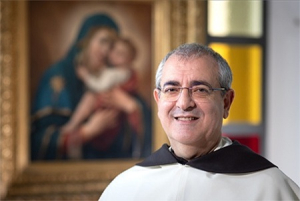
Fr. Desiderio García Martínez, O. Carm., the prior general, has the following schedule planned for the month of March 2026:
March 5-19, 2026: General Council Plenary Sessions, Rome
March 10, 2026: Participation in the Chapter of the Congregazione Suore Carmelitane Missionarie di S. Teresa del Bambino Gesù (Santa Marinella)
March 12, 2026: Meeting of the General Councils of OCARM and OCD (OCD General Curia)
March 14-15, 2026: Episcopal ordination of Fr. Joshy Pottackal, O. Carm. Mainz (Germany)
March 23-26, 2026: Provincial Chapter, Province of Catalonia (Spain)
March 27, 2026: Round table and documentary screening Pablo Mª de la Cruz, O. Carm. CEU San Pablo University (Madrid)
Celebrating At Home - 4th Sunday in Lent

Journey Into the Light
(John 9:1-41)
When the man returns home there is no rejoicing or welcome from his neighbours and friends. Instead, he is greeted with many questions and much suspicion. They seem blind to what has happened to the man. These same neighbours and friends march the man off to the religious authorities to see what they make of the situation. But they, too, greet the man with many questions and great suspicion and finally drive him away. They, too, are blind to the work of God both in the man and in Jesus who cured him.
Jesus seeks the man out and asks if he believes. The man asks in whom he should believe. Jesus answers, ‘in me’. The man, who now sees clearly who Jesus is, believes and worships.
The man’s whole world has been totally transformed from total darkness into light through the loving action of Jesus. Bit by bit throughout the reading the man has gradually come to realise who Jesus is. At first Jesus is simply ‘a man’, then ‘a prophet’, then ‘Son of Man’ and finally, ‘Lord’.
We, too, can be blind to the many ways God is present in our lives and in those around us. It can take some time on our journey of faith to realise just who Jesus is and to allow our lives to be filled with Light.
The candles we use in our churches remind us of the vitality and life of Christ which has been entrusted to us. With our minds lit and our hearts warmed by the Spirit of Christ we, too, develop true insight and as God’s heart begins to beat within our own, we become light and warmth for each other.
May the light of Christ burn strongly within us!
- pdf Celebrating At Home - 4th Sunday in Lent [PDF] (2.79 MB)
- default Celebrating At Home - 4th Sunday in Lent [ePub] (3.57 MB)
- pdf Celebrando en Familia - IV Domingo del Tiempo de Cuaresma (689 KB)
- pdf Celebrando in Casa - IV Domenica di Quaresima (689 KB)
- pdf Celebrando em família - Quarto Domingo da Quaresma (688 KB)
Carmelite NGO Calls for Urgent Action on Poverty at UN
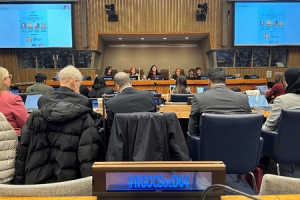
Carmelite NGO Urges Renewed Global Action on Poverty and Inequality at UN Social Development Meeting
I am writing this from the United Nations headquarters in New York just as the 64th annual meeting of the Commission for Social Development (CSocD64) approaches its conclusion. While here, I have attended various plenary sessions and side events.
A recurring theme during this year’s gathering was the importance of the Doha Political Declaration, the document that came out of the Second World Summit for Social Development, held in Doha, Qatar, this past November.
In a nutshell, the Doha Declaration was an agreement among nations to recommit their efforts to the cause of social development, including the eradication of extreme poverty, the enhancement of social protections for all people, and the promotion of universal human rights. The Summit and the Declaration were meant to jump-start a final push toward meeting the Sustainable Development Goals (SDGs, also known as the 2030 Agenda).
The Summit and CSocD64 have been about “leaving no one behind.” Sadly, progress on the SDGs has been mixed. Many people are, in fact, being left behind. A renewed and reenergized commitment and follow-up in the promotion of genuine social development is certainly needed.
The CSocD64 gathering this month saw many worthwhile conversations and expressions of solidarity and commitment to action. We heard about unpaid caregiving, which is mostly done by women across the globe. If this vital labor was paid, it would be one of the largest segments of the economies of many countries. This is something that must be addressed. (Author’s note: it is revealing and disturbing to contemplate all of the destructive work around the world that is generously paid, yet the critical work of caring for others can be unpaid without apology.)
We also heard at CSocD64 laments about the “overlapping global crises,” which includes growing inequality. Pope Francis called inequality “the root of social evil.” As a sociologist, I can attest to its destructive power. We must address the widening gap between the few very wealthy and the many across the globe who have so little.
It was also said—many times—at CSocD64 that taking action to expand access to education and healthcare and to protect the poor and vulnerable should not be looked upon as “costs,” but rather, they are “investments” in the future of individual countries and the world. The return on proper investments in such things is extraordinarily significant.
Finally, at the Civil Society Forum at CSocD64, it was said that civil society (including NGOs, religions, academic institutions and trade unions) have played and will continue to play a critical role in furthering social development. We are close to the people, so we know the struggles, and we are positioned to have real impact if we engage with our governments and demand action on social development in our own nations and in the world. We need to rise to the challenge!
Dennis Kalob, Ph.D.
Chief Administrative Officer of the Carmelite NGO
The True Face of St. John of the Cross Brought to Life
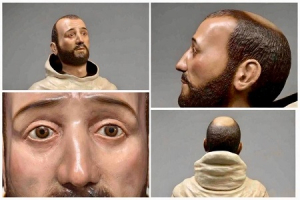
The exhibition San Juan de la Cruz, Esperanza de alto Vuelo, opened to the public in Alba de Tormes as part of the San Juan de la Cruz exhibition. As part of the celebrations for the centenary of the Saint, the displays include one of the most important elements from a historical and scientific point of view: the reconstruction of the face of St. John of the Cross.
The study, entitled Fisonomía original de San Juan de la Cruz (Original Appearance of St. John of the Cross), traces the process that made it possible to approximate the true face of the mystical doctor. This process began in 1992 in Segovia with canonical recognition on the fourth centenary of the saint’s death. Under the direction of Dr. Massimo Benedettucci, the scientific reconstruction of the face was carried out starting from the skull of St. John of the Cross.
The technique used consisted of making a plaster cast, anatomically reconstructing the muscles and soft tissues, and interpreting the features not directly defined by the bone structure based on historical descriptions. In this case, the work of Fr. Jerónimo de San José (Ezquerra de Rozas) was heavily relied upon.
The reconstruction was then used to create a bronze bust by the Fonderia Artistica Cavallari in Rome, using the lost wax technique. This process involves creating a wax sculpture, encasing it in a heat-resistant mold, melting out the wax, and pouring molten metal into the cavity. The artist Alejandro López Araguez has now created a bust in traditional oil polychrome, giving greater realism and expressive depth to the figure.
Used with permission from the Secretary for Information OCD
Two Centenaries
From the Archives and General Library of the Carmelite Order
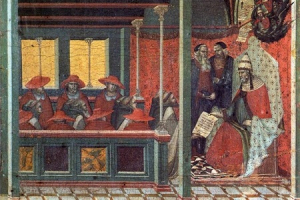
This year marks two important centenaries for the Carmelite Order. On January 30, 1226, Pope Honorius III issued a bull, in the form of a mandatum, or command, which began with the words Ut vivendi normam: with it, the pontiff commanded the hermits on Mt. Carmel to faithfully observe the Formula of Life, given a few years earlier (between 1206 and 1214) by the Patriarch, Albert of Jerusalem. By observing it and living “in holy penance,” the Carmelites would obtain an indulgence. This was not yet the approval of the Rule, which would only take place on October 1, 1247, with Innocent IV, but a first recognition of the community of Carmelite hermits and their Formula of Life.
A century later, on February 3, 1326, John XXII granted all the privileges already enjoyed by the Franciscans and Dominicans with the constitution Super cathedram. Thus was completed the rather bumpy journey of transforming Carmel into a mendicant order.
Vitam Coelo Reddiderunt
|
24-01-26 |
04-11-30 |
08-09-51 |
08-09-54 |
01-07-56 |
|
27-01-26 |
|
|
|
|
|
01-02-26 |
|
|
|
|
|
01-02-26 |
22-10-43 |
22-08-63 |
27-08-66 |
04-07-70 |
|
11-02-26 |
22-03-51 |
08-09-73 |
20-11-77 |
20-05-79 |


