














O.Carm
New Climate Multilateralism Emerges Post-COP30
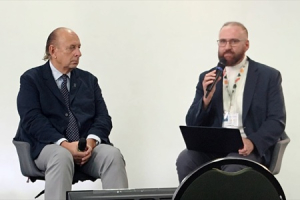
From the Silence of Belém to the Hope of Santa Marta: Reconfiguring Climate Multilateralism
— Eduardo Agosta Scarel, O. Carm.
Director of the Department of Integral Ecology, Spanish Episcopal Conference
COP30, held in Belém do Pará, Brazil, left behind a bittersweet taste. The Brazilian presidency managed to imbue the final document with a humanist narrative that recognized the rights of indigenous peoples, the vital importance of the Amazon, and the ecological debt derived from historical emissions. However, the summit once again stumbled over the usual obstacle: the consensus rule.
The result was a text that, despite its symbolic gestures, failed on two points essential to integral ecology. In terms of mitigation, the explicit reference to the need to abandon fossil fuels disappeared, replaced by vaguer goals of achieving carbon neutrality by mid-century. In terms of financing, although the scientific urgency of mobilizing $1.3 trillion annually was recognized, the political goal was set at a mere $300 billion, thus institutionalizing a financial gap that perpetuates injustice.
Faced with this deadlock in global diplomacy, where a single oil-producing country can veto the ambition of the entire planet, an alternative has emerged: the Santa Marta Conference in Colombia, convened for April 2026 by a bloc of 80 countries led by Colombia, the United Kingdom, Spain, and the Netherlands. Its purpose is clear: to move towards a Fossil Fuel Non-Proliferation Treaty and pave the way for a just transition, beyond the obstacles of the United Nations Framework Convention on Climate Change.
Santa Marta could become the checkmate to the fossil fuel blockade. As Pope Francis reminds us in Laudate Deum, when global institutions fail, it is up to civil society and intermediate countries to act. If these 80 nations agree to halt new exploration and coordinate their exit from fossil fuels, they will cause a massive contraction in demand. Sooner or later, even the large producers that do not join will see their markets shrink. The financial signal will be irreversible: the future will be renewable, not because of ideology, but for pure economic survival.
The strength of this coalition lies in the fact that it does not need the permission of Saudi Arabia or Russia to move forward. By operating as an alliance of will, it breaks the paralysis of consensus and forges its own path. Furthermore, the leadership of Colombia, a coal and oil-producing country, alongside European powers, gives it a unique ethical legitimacy. It dismantles the idea that climate action is a luxury of the North and presents it as a shared, albeit differentiated, responsibility.
One challenge remains, however: financing courage. For the Santa Marta route to be sustainable and fair, it is not enough to sign the end of fossil fuels. It is essential to put resources on the table and ensure that countries like Colombia do not collapse economically when the tap is turned off.
If Belém was the COP of conscience, recognizing the crisis in the heart of the rainforest, Santa Marta promises to be the conference of coherence. It is an opportunity to demonstrate that, even if global diplomacy progresses slowly, the political will of an organized majority can accelerate history and bring us closer, at last, to the comprehensive ecological conversion that the world needs at this immanent level. The key lies in “reconfiguring multilateralism” so that it is born “from below” (cf. Laudate Deum 37-40).
Blessed Denis and Redemptus (OCD), Martyrs
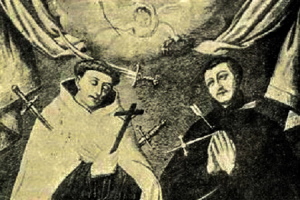
29 November Optional Memorial
Peter Berthelot was born at Honfleur (Calvados, France) on Dec. 12, 1600, and as a young man went to sea, visiting Spain, England and America. In 1619 he went to India, where, as cosmographer and first pilot of the kings of France and of Portugal, he distinguished himself by his valor and genius. Proof of the latter are his Maritime Tables, sketched with great ability and preserved in the British Museum (Ms. Sloan 197). In 1635, while in Goa, he took counsel with his spiritual director, Father Philip of the Most Trinity, and consequently joined the Discalced Carmelites. He made his profession on Dec. 25, 1636, with the name of Dionysius of the Nativity. He was ordained a priest on Aug. 24, 1638. According to the testimony of the same Father Philip, he was an example of virtue to all the religious, both in the novitiate and after his profession. He was graced with the gift of contemplation; and more than once during prayer he appeared surrounded by heavenly splendors.
Read more ...
Prior General's Schedule for December 2025
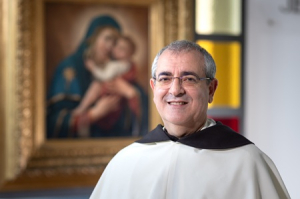
Fr. Desiderio García Martínez, O. Carm., the prior general, has the following schedule planned for the end of November and December 2025:
November 25-28: Meeting of the Union of Superiors General (USG)
November 29: Closing of the Congress on Titus Brandsma
November 30: Online Day of Retreat for Advent for the Youth who participated in the Jubilee Year earlier.
December 3-19: First Plennary Meeting of the General Council | Programming for the Six Year Term
December (TBA): Meeting of the OCD-OCARM General Councils
Joshy Pottackal, O. Carm., Appointed Auxiliary Bishop
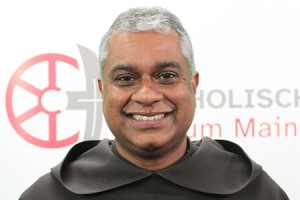
Joshy Pottackal, O. Carm., of the Province of St. Thomas, Has Been Appointed Auxiliary Bishop of the Diocese of Mainz
I am delighted to inform you that this morning, Wednesday, November 26, 2025, the Holy See has informed us that our brother, Fr. Joshy Pottackal, O. Carm., of the Province of St. Thomas in India, has been appointed Auxiliary Bishop of the Diocese of Mainz. This is the first time that a non-European bishop has been appointed in Germany. Fr. Joshy, 48, is a German national.
The Bishop of Mainz, His Excellency Peter Kohlgraf, has stated that the new Auxiliary Bishop is a simple man with a big heart, hard-working, competent, and with good judgment. The fact that our brother Joshy is the first non-European bishop in Germany not only fills us with pride as Carmelites, but is also an important sign of the unity of the Church in diversity. Bishop Kohlgraft said: “We are called to live unity in diversity, with different paths of faith and cultural backgrounds. In this Church there are no foreigners.”
"I am not a theorist with a doctorate. My sermons rarely last more than five minutes," Fr. Joshy said at his first press conference.
The official episcopal consecration is scheduled for March 15 in Mainz Cathedral. Bishop Pottackal succeeds the previous auxiliary bishop, SER Udo Markus Bentz, who was appointed Archbishop of Paderborn in 2023.
Dear brother Joshy, thank you for your dedication and generosity. We will pray for you in your new mission in the Church and in the world. May Our Lady of Mount Carmel, our Mother and Sister, always accompany you.
Desiderio García Martínez, O. Carm.
Prior General
Lectio Divina December, 2025

Opening Prayer
Lord God, Father of all, in Your Son Jesus Christ
you invite everyone and all to know and love You and to live in Your unending peace.
Keep alive in us the zeal to bring the light of Your truth and the riches of Your life and love to all, without any distinction of race, language or culture.
May everyone on earth come to know You as the merciful Father of all through our brother and Savior, Jesus Christ our Lord.
Celebrating At Home - 1st Sunday of Advent
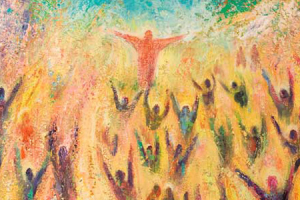
Stay Awake!
(Matthew 24:37-44)
The great Advent journey begins. The Advent readings are a rich tapestry of images centered on the truth that God has come among us. We do not pretend that we are waiting for Jesus to be born in a stable. That happened once, a long time ago, and it will not happen again. We remember that birth as we remember our own birthdays.
The God who came among us is still among us. Advent’s invitation is to become aware of the all-pervading presence of the risen Jesus as Emmanuel – God among us.
In the first reading this Sunday Isaiah captures the sense of God’s presence among his people through the images of the high mountain and the Temple – the dwelling place of God among his people. The people’s response in the reading is to be drawn into God’s presence ‘that he may teach us his ways’ and ‘we may walk in his paths’, and be utterly transformed into a new way of living (making swords into ploughshares, etc). In the second reading St Paul reminds the Romans that they are already living in ‘the time’. They should ‘wake up now’ and ‘live decently as people do in the daytime’.
The early Christians believed that Jesus would return very soon as the Lord of Glory. As time passed, they had to re-think this belief and work out how to live in the meantime, the time in between the first and final comings of Christ. That’s our challenge, too.
This week’s Gospel calls us to “Stay awake”, to be vigilant and attentive to the signs of the times so that we do not miss the moment when God breaks into human history once again. The God who came among us is still among us. In Advent we train our eyes to see the reign of God more clearly so that we may be totally caught up in God’s action in the world as we wait for the final manifestation of God’s glory.
- pdf Celebrating At Home - 1st Sunday of Advent [PDF](3.11 MB)
- default Celebrating At Home - 1st Sunday of Advent [ePub](3.93 MB)
- pdf Celebrando en Familia - Primer Domingo de Adviento(470 KB)
- pdf Celebrando in Casa - Prima Domenica di Avvento(442 KB)
- pdf Celebrando em família - Primeiro Domingo Do Advento(465 KB)
Carmelite NGO Highlights Just Transition at COP30
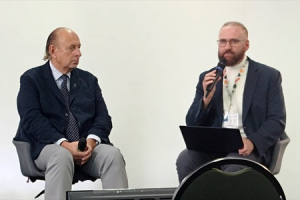
Carmelite NGO Presents at Socio-Environmental Dialogue for Peace: Adaptation and Just Transition
Ten years after Laudato Si’, the encyclical of Pope Francis that inspired a new environmental ethic and shaped the moral vision that accompanied the Paris Agreement, a renewed call emerges: there can be no lasting peace without harmony with nature.
At COP30 the organization Socio-Environmental Dialogue for Peace offered a meeting space to connect peace, climate adaptation, and a just transition, strengthening trust among communities, companies, and institutions. The objective is to move towards cooperation based on integrity and justice, reconciling people with one another and with the planet.
Carmelite NGO vice president, Eduardo Agosta, was one of the featured speakers. Fr. Eduardo is also director of the Department of Integral Ecology at the Spanish Episcopal Conference and senior advisor to the Laudato Si' Movement.
Other presenters were:
- José Luis Manzano, CEO of Integra Capital, physician and entrepreneur with experience in public policy, emerging markets, and strategic sectors such as energy and critical minerals;
- Ana Cabral-Gardner, co-chairperson and CEO of Sigma Lithium Corp, (Nasdaq:SGML), a global reference in sustainability and best practices in the lithium industry.
- Cardinal Leonardo Ulrich Steiner, archbishop of Manaus, who shared his vision from the Amazon on how to connect spirituality, science, and policy in the path towards a just transition.
- Juliano Assunção, professor of Economics at PUC-Rio, who addressed the economic dimension of a just transition and the cost of inaction.
The session was moderated by Emilce Cuda, secretary of the Pontifical Commission for Latin America, and Patricio Lombardi, executive director of the Environmental Markets Fairness Foundation (EMFF).
God’s Merciful Indulgence and the 2025 Jubilee Year
Jesus told Peter, ‘Whatever you bind on earth will be bound in heaven, and whatever you loose on earth will be loosed in heaven’ (Mt. 16:19), the same promise being made to the disciples, collectively, in Matthew 18:18.
The power to bind is the basis of the penance imposed on the penitent by the confessor as part of the Sacrament of Penance and Reconciliation. The power to loose, on the other hand, has often taken the form of a mitigation, in the sense of replacing a very-demanding penance with another, easier one, which was granted when certain conditions were met, as when the Council of Epaone (517) reduced to two years the duration of the penance that apostates were to undergo on their return to the Church.
For the pilgrims who came to Rome for the first ever Holy Year Jubilee, in 1300, and fulfilled the requirements, Pope Boniface VIII granted the complete removal of the temporal punishment due to sin. Quoting 1 Peter 1:19 on our having been ransomed ‘with the precious blood of Christ,’ Pope Clement VI’s Jubilee decree, Unigenitus Dei (1343), described the ‘copious flood, like a stream’ of Christ’s blood as ‘an unfailing treasure for human beings’ which Christ ‘committed to the care of St. Peter, who holds the keys of heaven, and to his successors, who are to distribute it to the faithful for their salvation’, applying it ‘with compassion, for pious and good reasons, in order that it may benefit those who are truly contrite, and who have confessed’.
Among the 95 Theses that drew up in Wittenburg, in 1517, Luther questioned the Pope’s teaching on indulgences and the spiritual treasure of the Church when he claimed that the ‘treasures of the Church whence the Pope grants indulgences are neither sufficiently named nor known among the people of Christ’ (n. 56) and he also questioned the ‘traffic in pardons [indulgences]’ (n. 73) because of the scandalous claims sometimes made concerning ‘the preaching of pardons [indulgences]’ (n. 81).
In its Decree on Indulgences (1563), the Council of Trent recognised that ‘the power of conferring Indulgences was granted to the Church by Christ,’ and that their use was ‘most salutary to the Christian people, and approved by the authority of the holy Councils.’ Recognising the validity of Luther’s criticism of how indulgences had been preached, however, Trent desired that ‘moderation be observed in accordance with the ancient custom approved in the Church,’ and that ‘all evil traffic’ in indulgences should be abolished.
Describing an indulgence as ‘the remission in the sight of God of the temporal punishment due to sins which have already been blotted out as far as guilt is concerned,’ Pope St. Paul VI presented the ‘treasury of the Church,’ not as ‘akin to a hoard of material wealth’, but as ‘the infinite and inexhaustible value which the expiation and merits of Christ have in the sight of God,’ through which ‘the whole of humanity’ can ‘be freed from sin and arrive at fellowship with the Father.’
Recognising that being reconciled with God through the Sacrament of Penance and Reconciliation ‘does not mean that there are no enduring consequences of sin from which we must be purified,’ Pope John Paul II described these ‘temporal consequences as including ‘an unhealthy attachment to creatures’ and everything that ‘impedes full communion’ with God and with our brothers and sisters.’ Recognising that, in the Church, ‘the holiness of one benefits others in a way far exceeding the harm which the sin of one has inflicted upon others,’ and, as a result, the ‘good works of the saints’ are constantly adding to ‘the treasures of the Church,’ he described the Jubilee indulgence for the Holy Year in 2000 as disclosing ‘the fulness of the Father’s mercy, who offers everyone his love,’ because it expressed the ‘total gift of the mercy of God’ by granting repentant sinners ‘a remission of the temporal punishment due for the sins already forgiven as regards the fault.’
In the title of his bull announcing the 2025 Jubilee Year, Spes non confundit, Pope Francis quotes St. Paul, ‘Hope does not disappoint’ (Rom. 5:5), and he points out that, at one time, the terms ‘mercy’ and ‘indulgence’ were interchangeable, because indulgences were ‘expressions of the fullness of God’s forgiveness, which knows no bounds,’ recognising God’s mercy, fully revealed in Christ, the basis of our hope. Describing those coming to Rome for that holy year as ‘pilgrims of hope,’ he prays that, for everyone, the Jubilee may be ‘a moment of genuine, personal encounter with the Lord Jesus,’ who is ‘our hope’ (1 Tim. 1:1).
Patrick Mullins, O.Carm.
Liturgical Resources
Pilgrims of Hope in a Pilgrim Church
Pilgrim, Welcome!
The Catholic Church sees itself as a “pilgrim church” (L.G. VII) It is a church that is on the way, creating its own story. It is the story of people down through the ages finding in its message a challenge to live a fuller life, to discover the seeds of eternal life that are already present in this life. It is a church of companionship that gives us the story of two disciples on the road out of Jerusalem towards Jericho, in conversation,  seeing their lives transformed by the “stranger” who joined them on the journey, (Lk 24, 13-35) or a women going to fetch water, who meets the same “stranger” at the well and begins to talk about her life and finds in him someone who was able to tell her everything about herself. (Jn 4, 1-42) People gather in this pilgrim church as members of a community of pilgrims, journeying together, nourished by the grace that comes in different forms, at different times and in different ways, but always from the one source, the love of God that has been poured into our hearts. (Rm 5,5)
You are a pilgrim, with your heart full of desire and your eyes open. You are open to the things that life will show you. Life shows us the things that God wants to show us and so all around us we can see the signs of God’s love - in creation, in nature, in other people, in faith communities, in events. You will find signs of hope also in the many churches that make up the pilgrim church. Each of these churches is a place where people find peace, because of what they see in the many symbols and features of the church, and also because of the realization that in these places pilgrims have prayed and celebrated, confessed their sins and built community, for generations, all with a sense of hope in the good that will come when the promises that have been given to them will be fulfilled. The pilgrim church announces those promises and lives in hope of their fulfilment.
You may find in all that Carmel represents a particular attention to the knowledge of God’s love as it has been poured into our hearts through the work of the Holy Spirit. This, it might be said, is Carmel’s best gift to the Church that sees itself as a pilgrim church waiting to see the full revelation of God’s love when Christ will be all in all and all of Creation will be one in Him.
This church offers us the companionship of Mary and the Saints for our journey, In particular, Mary as the mother and beacon of hope, holds a special place in the Carmelite tradition as a model of holiness and purity and a sign of hope because she was united to God and obedient to his will in all the circumstances of her life. Mary is recognized as blessed by her cousin Elizabeth, because she believed that all that was promised to her would come true. (Lk 1,45)
 It may be that we don’t think of hope so much when everything seems to be going well. Hope comes much more into play when we are disturbed or even frightened by what is happening in the world and we get a sense of our own powerlessness and the intricacies and unpredictability of humanity. It is then that we begin to think about hope, the assurance that all will be well. St. Paul in his very reassuring way reminds us in the Letter to the Romans that all things work for good for those who love the Lord. (Rm 8,29)
The Carmelite Rule, offers to those who follow it a pattern for their lives, somewhat like an architect’s design. You build the house, and the house is well built, with lots of forethought about how the people will live in it, but without much idea of what might happen when the people begin to live there. The rule suggests that while we live our lives in a well ordered fashion, we always leave space for what is not yet there, but will be because of the hope that they find in the promise of Christ’s return, whenever that might be. (Carmelite Rule 24)
Our hope is fundamentally our belief in Jesus Christ. It is he who offers us the salvation that is built into creation right from the beginning. Jesus is our model, our motivation and reward. Living a life that is similar to his, moved by him, through his Spirit, to do the best we can in this life, we come to the reward of being deeply united with him in this life, in thought, desire and existence. Being united with Jesus Christ, in this life and in the next, is the fulfilment of the Carmelite’s greatest hope.
God’s Merciful Indulgence and the 2025 Jubilee Year
Jesus told Peter, ‘Whatever you bind on earth will be bound in heaven, and whatever you loose on earth will be loosed in heaven’ (Mt. 16:19), the same promise being made to the disciples, collectively, in Matthew 18:18.
The power to bind is the basis of the penance imposed on the penitent by the confessor as part of the Sacrament of Penance and Reconciliation. The power to loose, on the other hand, has often taken the form of a mitigation, in the sense of replacing a very-demanding penance with another, easier one, which was granted when certain conditions were met, as when the Council of Epaone (517) reduced to two years the duration of the penance that apostates were to undergo on their return to the Church.
 For the pilgrims who came to Rome for the first ever Holy Year Jubilee, in 1300, and fulfilled the requirements, Pope Boniface VIII granted the complete removal of the temporal punishment due to sin. Quoting 1 Peter 1:19 on our having been ransomed ‘with the precious blood of Christ,’ Pope Clement VI’s Jubilee decree, Unigenitus Dei (1343), described the ‘copious flood, like a stream’ of Christ’s blood as ‘an unfailing treasure for human beings’ which Christ ‘committed to the care of St. Peter, who holds the keys of heaven, and to his successors, who are to distribute it to the faithful for their salvation’, applying it ‘with compassion, for pious and good reasons, in order that it may benefit those who are truly contrite, and who have confessed’.
Among the 95 Theses that drew up in Wittenburg, in 1517, Luther questioned the Pope’s teaching on indulgences and the spiritual treasure of the Church when he claimed that the ‘treasures of the Church whence the Pope grants indulgences are neither sufficiently named nor known among the people of Christ’ (n. 56) and he also questioned the ‘traffic in pardons [indulgences]’ (n. 73) because of the scandalous claims sometimes made concerning ‘the preaching of pardons [indulgences]’ (n. 81).
In its Decree on Indulgences (1563), the Council of Trent recognised that ‘the power of conferring Indulgences was granted to the Church by Christ,’ and that their use was ‘most salutary to the Christian people, and approved by the authority of the holy Councils.’ Recognising the validity of Luther’s criticism of how indulgences had been preached, however, Trent desired that ‘moderation be observed in accordance with the ancient custom approved in the Church,’ and that ‘all evil traffic’ in indulgences should be abolished.
Describing an indulgence as ‘the remission in the sight of God of the temporal punishment due to sins which have already been blotted out as far as guilt is concerned,’ Pope St. Paul VI presented the ‘treasury of the Church,’ not as ‘akin to a hoard of material wealth’, but as ‘the infinite and inexhaustible value which the expiation and merits of Christ have in the sight of God,’ through which ‘the whole of humanity’ can ‘be freed from sin and arrive at fellowship with the Father.’
Recognising that being reconciled with God through the Sacrament of Penance and Reconciliation ‘does not mean that there are no enduring consequences of sin from which we must be purified,’ Pope John Paul II described these ‘temporal consequences as including ‘an unhealthy attachment to creatures’ and everything that ‘impedes full communion’ with God and with our brothers and sisters.’ Recognising that, in the Church, ‘the holiness of one benefits others in a way far exceeding the harm which the sin of one has inflicted upon others,’ and, as a result, the ‘good works of the saints’ are constantly adding to ‘the treasures of the Church,’ he described the Jubilee indulgence for the Holy Year in 2000 as disclosing ‘the fulness of the Father’s mercy, who offers everyone his love,’ because it expressed the ‘total gift of the mercy of God’ by granting repentant sinners ‘a remission of the temporal punishment due for the sins already forgiven as regards the fault.’
In the title of his bull announcing the 2025 Jubilee Year, Spes non confundit, Pope Francis quotes St. Paul, ‘Hope does not disappoint’ (Rom. 5:5), and he points out that, at one time, the terms ‘mercy’ and ‘indulgence’ were interchangeable, because indulgences were ‘expressions of the fullness of God’s forgiveness, which knows no bounds,’ recognising God’s mercy, fully revealed in Christ, the basis of our hope. Describing those coming to Rome for that holy year as ‘pilgrims of hope,’ he prays that, for everyone, the Jubilee may be ‘a moment of genuine, personal encounter with the Lord Jesus,’ who is ‘our hope’ (1 Tim. 1:1).
Patrick Mullins, O.Carm.
St. Raphael of St. Joseph (OCD), Priest
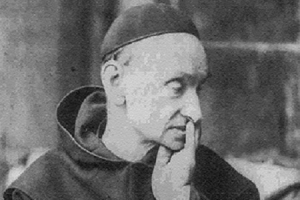
19 November Optional Memorial in the province of Poland
Raphael of St. Joseph (in lay life: Joseph Kalinowski) was born at Vilna to a Polish family on 1st September 1835 and died at Wadowice on 15th November 1907. Graduating in engineering at the Academy of Military Sciences at St. Petersburgh, he was appointed to the fortress at Brest Litowski and later promoted to be Chief of Staff in the Russian Army.
In spite of his desire to leave the military life, he took part in the rising against the Czarist occupying forces in Poland, accepting the position of Minister of War in Vilna. The night of the 24th March 1864, he was arrested and put in prison where he was condemned to death but the sentence was later commuted to ten years forced labour in Siberia. He was freed in 1874 and returned to Poland. Being forbidden to live in any of the main Polish cities, he took up a post as tutor to the young Prince Augusto Czartoryski who spent most of his time in Paris.
In 1877, Raphael joined the Carmelites. He was ordained priest in 1882 and began an apostolate centred on the confessional, in the giving of spiritual direction and being full of enthusiasm for ecumenism, he worked strongly for unity in the Church. A great devotee of Our Lady, he revived the Discalced Carmelite Order in Poland. He was canonized by Pope John Paul II on 17th November 1991.


