

Menu

carmelitecuria logo es

  • image
  • image
  • image
  • image
  • image
  • image
  • image
  • image
  • image
  • image
  • image
  • image
  • image
  • image
  • image
  • image
  • image
  • image
O.Carm

O.Carm

Viernes, 19 Septiembre 2025 07:57

The 2025 General Chapter Elects New Leadership

From the General Chapter | September 9-26, 2025

Prior General, Vice Prior General, Procurator General, and General Bursar Elected by General Chapter

Following the day of retreat and reflection by Bishop Henricus Pidyardo, the members of the Chapter spent some time reflecting on the possible candidates for the Order’s government. This morning, following Morning Prayer and Eucharist, the members of the Grneral Chapter assembled in the Chapter Hall to begin the voting process. 

The 2025 General Chapter has elected four members of the Order's central government on Day 1 of the elections. The positions filled were prior general, vice prior general, procurator general, and general bursar.

Prior General:

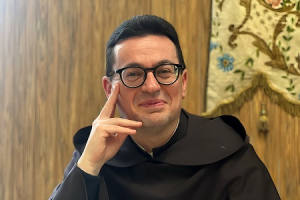
Desiderio García Martinez O

As announced earlier, Desiderio García Martínez of the Arago, Castellae et Valentiae Province was elected Prior General for the next sexennium.

Fr. Desiderio holds a Bachelor's Degree in Ecclesiastical Studies (1989-1994), a Bachelor's Degree in Biblical Theology (1994-96), and a Bachelor's Degree in Hebrew Philology (1996-2000). He has served as prior provincial of the Province of ACV (2017-2023), Novice Master (1997-2009, 2011-2017), Formation Counselor (2002-2017), and Counsellor for Religious Life (2023-25) and parish priest (2009-11, 2023-25).

Vice Prior General:

Rm. Franciscus Xavarius Hariawan Adji

Later in the morning Rm. Franciscus Xavarius Hariawan Adji, the current prior provincial of Indonesia, was selected to serve as Vice Prior General. Fr. Hariawan holds a Bachelor degree in English Linguistics (1992), a Bachelor in Industrial Management (1993), a Bachelor in Christian Philosophy and Theology (2006), a Masters degree in Biostatistics (2000), a Masters degree in Christian Philosophy and Theology (2009), and a doctorate in Inter-religious studies (2017).

He is a lecturer at the Airlangga University Surabaya (1992 - present) and director of Studies at Access English Centre Surabaya (1993-2000). He served as Provincial Secretary (2009-2012), Head of Indonesian Carmelite NGO (2010 - present), Asian Representative of the Carmelite NGO (2006 - 2024), Member of the General Commission of JPIC: 2013 - 2025, Vice Prior Provincial of the Indonesia Province (2015-2018 and 2018–2022), and as Prior Provincial of the  Indonesian Province (2023-present).

Procurator General:

Fr. Michael Farrugia

Fr. Michael Farrugia was postulated for the position of Procurator General which he has held for 12 years (2 terms).      

Michael did studies in Sacred Theology at the Pontifical Gregorian University, in Rome.  In 1986, he was ordained to priesthood by Saint Pope John Paul II.  Fr. Michael continued his studies in Canon Law at the Pontifical Lateran University where he earned his doctorate.

In the Province, Fr. Michael served as Provincial Bursar, Provincial Councillor, Prior, Parish Priest and member of the formation team. In the year 2009 he was elected Prior Provincial and re-elected in 2012. He was president of the Italy-Malta Region.

In the Archdiocese of Malta, Fr. Michael was Defender of the Bond and Justice Promoter in the Ecclesiastical Tribunal and Judge of the Regional Tribunal of Second Instance. In 2006, he was elected member of the Presbyterial Council and was member on various diocesan commissions.  He was councillor and President of the Conference of Religious Major Superiors.

Bursar General:

Fr. Christian Körner

Christian was born in Würzburg (Bavaria), Germany. He entered the Carmelite Order in 1981, following his studies at the school of the Carmelite Theresianum in Bamberg. He completed his studies in Philosophy and Theology in Bamberg and Rome. After he was ordained a priest in 1988, Christian worked in a parish as vice parish priest. He was master of novices from 1992 to 1997 and for the next three years from 1997 to 2000 master of the students. Before his first election as prior provincial of the German Province in 2000 (to 2007) he was prior of the community of Bamberg and provincial counsellor. From 1994 to 2007 he was member of the International Commission for Formation of the Order.

At the General Chapter 2007 Fr. Christian was elected Vice Prior General of the Order to serve for six year term 2007-2013 and at the General Chapter 2013 he was re-elected to serve for the second term 2013-2019. Then at the General Chapter in 2019, he was elected Bursar General of the Order to serve for six year term 2019-2025.

Viernes, 19 Septiembre 2025 06:44

Fr. Desiderio (ACV) Elected as Prior General

From the General Chapter | September 9-26, 2025
 
General Chapter Elects Desiderio García Martínez (ACV) as Prior General

The General Chapter has elected Desiderio García Martínez as Prior General for the next six years. Congratulations to Fr. Desiderio!

More information on the other elections for members of the Council will follow when all the elections have been completed.

Jueves, 18 Septiembre 2025 12:48

Chapter Members Debate on Today's Challenges

Chapter Members Receive and Discuss Input on the Chapter Theme

The Chapter changed its direction from over the last several days of receiving reports. On Tuesday, members began looking at the implications of the theme for the General Chapter and Order. The first of the two inputs was given by Sr. Pat Murray, IBVM. Entitled “Today’s Social and Ecclesial Context” the presentation was followed by synodal style sharing in the small groups following the lunch break. On Wednesday, Carmelite Bishop Wilmar Santin spoke on Carmelite Missions “Ad gentes.” His presentation was followed by a reflection and discussion in language groups. On Thursday, September 18, Bishop Henricus Pidyarto Gunawan, O. Carm., bishop of Malang where the Chapter is taking place, joined the Carmelites for Mass and then gave the Chapter retreat and led the discernment for leadership.

Summaries of the presentations are below, followed by brief biographies of the presenters.

Today’s Social and Ecclesial Context
Sr Pat Murray, IBVM

Sister began her presentation by noting that the theme for the Chapter is challenging both communally and personally: You must have some sort of work to do? Our Contemplative Fraternity Discerns its Mission. In fact, she would repeat “You must have some work to do” at various times throughout the talk.

She observed that life has become increasingly polarized, and it is often hard to find the middle ground. We hear the cries of children separated from their parents along borders or the voices of migrants calling from boats left adrift at sea for days. It is a season of darkness. The winter of despair is in the eyes of the hungry, the homeless, the naked, and the thirsty.

She offered three images to spark the imagination of her listeners as they reflect on their mission today.

1) Leave the Safe House—Go forth to encounter people. “Leave your nests” as Pope Francis said. “Step out from the confines of your respective Institutes and work together at the local and global levels.”

2) Engage in Web-watching and Web-weaving—Sister quoted the Mennonite theologian and peace activist John Paul Lederach. He uses the term “moral imagination” to describe something “which calls people beyond things that are immediately apparent and visible.” For Lederach, moral imagination is “the capacity to give birth to something new” to refuse “to be bound by what the existing views of perceived reality suggest” but to seek to uncover possibilities not yet dreamed of.

3) Widen the Tent of Your Heart— The quote from the prophet Isaiah “to enlarge the place of your tent, stretch your tent curtains wide, do not hold back; lengthen your cords, strengthen your stakes” is a wonderful image for religious life today because it speaks of both flexibility and rootedness, unbounded hospitality and secure identity.

Carmelite Missions “Ad gentes.”
Bishop Wilmar Santin, O. Carm.

Bishop Santin’s first presentation was a review of the history of Carmelite missions around the world, pointing out that from the origin of the Order until the 16th century there was no missionary spirit. All pastoral and evangelizing work was carried out in Western and Eastern Europe. When the so-called New World opened up to Europeans, the Carmelites were not interested, although they did make a few failed attempts.

He presented the history of the Carmelites in Brazil and especially in the Amazon. He pointed out that one of the hallmarks of the Carmelite’ catechesis was their Marian devotion. They seemed have been patient and treated the indigenous people relatively well. Quoting Arthur Reis “The Carmelites thus achieved more results than the military expeditions, marked in blood and negatives in the civilization of the savages.” The Carmelites set up the first school in Amazonia for the indigenous children to be educated. The Carmelite “held music and singling classes, taking advantage of the catechumens’ abilities and inclinations for the arts.” Almost a third of the villages had Our Lady as their patron saint. Among the patron saints of the villages, half are Carmelite saints with an apparent preference for the Prophet Elijah. Martyrdom was a part of life for the Carmelites however, with several being killed by the natives.

Criticisms are leveled at the Carmelite missionary efforts in Brazil. Some are of an economic nature and some of a political nature. The question is asked: what made these men leave the comfort of the cities and [their religious houses] to immerse themselves in the Amazon jungles?

He then reviewed the various provinces of the Order and their contribution to establish new missions around the world.

Bishop Santin’s second presentation reviewed Church teaching on evangelization beginning with Pope Paul VI’s Evangelii nuntiandi and Perfectae caritatis of the Second Vatican Council. The 1965 decree on the missionary activity of the Church, Ad gentes, the Medellin Statement (1968), and that of Puebla (1979) were reviewed with the points that speak about religious and their responsibility for the effectiveness of the Church’s mission being highlighted. Religious are called to be prophetic witnessed in the midst of God’s people.

He then moved to review what the Order’s Constitutions have to say about the Carmelite mission, especially numbers 94-97. They call for us to share in the mission of Jesus and that ministry is an integral part of the charism. The mission ad gentes—the task of announcing the Gospel in places where it is not known—is one of the fundamental activities of the Church. He pointed out the missionary work requires a specific spirituality and a process of inculturation.

Carmelites: A Gift for the Church and the World
Bishop Henricus Pidyarto Gunawan, O. Carm.

The General Chapter has engaged in thoughtful discussion about the current state of the Order and the future Order we envision, one that is responsive to the needs of both the Church and the world. While doing that discernment, the Chapter members will consider who are the suitable candidates to lead the Order in the future, individuals who can effectively implement the decision made by the General Chapter. These are the two areas he addressed. In this first part, Bishop Henricus offered some ideas related to the theme of the Chapter and the summary of discussions on the Instumentum laboris.

The documents make it clear that the Carmelite charism, as a gift from God for the Church and the world, is a reoccurring theme. The letter of convocation underlines the close connection between charism and our apostolic works. As the Constitutions say “Our ministry as Carmelites is, therefore, an integral part of our charism.”

The Magisterium repeatedly teaches that religious life is an extraordinary gift to the Church and the world. Religious men and women become a precious gift to the Church and the world, not only because of their spiritual union with Jesus Christ in the evangelical counsels but due to their embodiment of a specific charism that the Holy Spirit has bestowed upon their respective religious institution.

History shows that most religious orders were born to respond to real needs of the times. Many orders came about as a reaction to specific situations in the Church and society. A charism that is not in line with the needs of the times is less attractive to people. Therefore, our apostolic works must both preserve our charism and to see what the needs of the Church and society are.

The bishop stressed that we must work contemplatively, fraternally, and prophetically in the midst of the people. He then went on to outline what each type of work would involve. He then entered into a presentation on discerning our apostolic work for the future. He encouraged us to maintain works that are in line with the Order’s charism but also to encourage scholarship in Mariology and the Bible. He offered a table indicating that in both the XIV and XV centuries at Paris and Oxford, the Carmelites led in providing commentators on the Scriptures.

Religious Leadership According to the Bible
Bishop Henricus Pidyarto Gunawan, O. Carm.

Bishop Henricus started by reminding us that we believe that through this General Chapter the Holy Spirit will choose some of our brothers to leadership roles in the Order. He then outlined two working definitions of religious leadership: the capacity and will to rally people to a common purpose, and the character which inspires confidence and, secondly, a person with a God-given capacity and with God-given responsibility who is influencing a specific group of God’s people toward God’s purpose for the group.

Christian leadership uniquely blends natural and spiritual leadership, combining human talent with the work of God’s grace. He then went through examples in the Scriptures of God’s “calling” leaders forth—specifically Moses, Jesus, and Paul and the need they each had for self-preparation.

Religious leaders should have a clear vision with a common goal. The ultimate goal for all religious leadership is to lead God’s people to their God and to achieve the purpose God has set for them. Using the example of Jesus, Bishop Henricus stressed that a religious leader must clearly know the shared vision but also be able to convince their followers of its importance. Only those who truly see their shared vision and believe it to be a worthy value will persevere.

A religious leader must also nurture their followers. Citing several authorities on leadership, he concluded that leadership is no longer seen solely as an effort to move subordinates to pursue a common goal or make subordinated carry out orders. A religious leader prioritizes the humanity of their subordinates.

Leadership is about influencing others. So, they need authority. Highlighting the ten leadership models that St. Paul described were used according to the situation and the spiritual maturity of the congregation. If a leader is called by God to represent God, then he must depend on God who sends him. We see this is Moses, Elijah, Queen Esther, Judith John the Baptist, Jeus and the apostles as well as many others. Their strength lies in their prayfulness.

The remainder of the time was spent on Nehemiah as a model leader—as the biblical story contains many of the qualities of a religious leader. Nehemiah faced enemies (repeatedly) but he relied on God’s power and not his own strength. A good leader doesn’t rush but studies the situation. Another of Nehemiah’s leadership skills was involving many groups, including families. He did not listen to those mocking him but stayed on task. As a leader, one must endure criticism, obstacles, and enemies. True leaders are resilient.

Bishop Henricus concluded expressing the hope that his reflection on biblical leadership might contribute to the reflection of the members of the Chapter in their election of the government of the Order for the next six years.

Sr. Patricia Murray, IBVM, is from Dublin, Ireland. Pat was educated by the Loreto Sisters and joined the Institute of the Blessed Virgin Mary with studies completed in Dublin, and Chicago including a Doctor of Ministry.
Sr. Pat was a member of the General Council of her Congregation and became executive director of Solidarity with South Sudan which established a new missionary paradigm of religious life with men and women religious living and working together to help the South Sudanese people. She just completed eleven years of ministry working as executive secretary at the International Union of Superiors General.
Sr Patricia was awarded the Presidential Distinguished Service Award. On February 18th, the late Pope Francis appointed her as a consultant to the Dicastery for Culture and Education.

Bishop Wilmar Santin, O. Carm., is the bishop of Itaituba, Brazil, appointed in December 2010 and installed in April 2011. He is a native of Paranavaí and a member of the German Province of the Order. He served six years as General Councilor of the Order for Latin America and Commissary Provincial of Paranavaí from 1990 to 1995. From 2005 until 2008 he was prior of Centro Internazionale S. Alberto (CISA) in Rome.

Bishop Henricus Pidyarto Gunawan, O. Carm., is a member of the Indonesian Province, having been born in Malang. He is of Chinese Indonesian descent. His brother Antonius, also a Carmelite priest, died in 2015. He studied Scripture at the Pontifical Biblical Institute in Rome and received his doctorate from the Pontifical University of St. Thomas Aquinas, both in Rome. He continues to teach Scripture at the Philosophical and Theological Institute of ‘Widya Sasana’. He was nominated bishop of Malang by Pope Francis in June 2016.

Jueves, 18 Septiembre 2025 12:28

Causa Nostrae Laetitiae

PROFESSIO TEMPORANEA
15-08-25  Jhon Horas Gregorius Rumapea  (Indo) Malang, Indonesia
15-08-25  Rustam Hary Sihotang  (Indo) Malang, Indonesia
15-08-25  Agustinus Herjuno Handhika Pradinta  (Indo) Malang, Indonesia
30-08-25  Renaud de San Tito Brandsma Ouedraogo (Baet-BF) Jerez de la Frontera,
               España
31-08-25  Jesús Manuel Rodríguez Utrera (CAT) Barcelona, España 
31-08-25  Alex Martín Capote Torres (CAT) Barcelona, España

PROFESSIO SOLEMNIS
15-08-25  Krisna Ricardo Sianturi  (Indo) Malang, Indonesia 
15-08-25  Rori Prima Dani  (Indo) Malang, Indonesia
15-08-25  Norbertus Gerry Kurniawan  (Indo) Malang, Indonesi 

ORDINATIO SACERDOTALIS
22-08-25  João Paulo Prata Seixas (Pern) Lagarto, Brasil
23-08-25  Roberto Reyes (PCM) Washington, DC, USA

Miércoles, 17 Septiembre 2025 15:10

Condolence Letter for the Four Carmelite Nuns

Letter of Condolences and Support Sent to Santa Marinella Sisters from General Chapter

Four sisters from the Congregation of Carmelite Missionary Sisters of St. Thérèse of the Child Jesus (Congregazione Suore Carmelitane Missionarie di S. Teresa del Bambino Gesù) and their driver were tragically killed in an automobile accident in Tanzania. A fifth sister remains in very serious condition in the hospital.

More details have become available. The sisters were on their way to the airport for a flight to Dar es Salaam. They had participated in the perpetual profession of three sisters on Saturday and visited the local bishop on Sunday morning. The accident occured around 11PM in Mwanza, Tanzania.

The deceased are Sr. Lilian Gladson Kapongo, general superior of the Congregation; Sr. Maria Nerina De Simone, a general councilor and the general secretary; Sr. Damaris Matheka, provincial councilor for the Province of East Africa; Sr. Stellamaris Muthini; and their driver, Mr. Boniphace Msonola. Sr. Paulina Crisante Mipata is in hospital and is in serious condition.

We remember the sisters, their families, their co-workers and the Sisters of the Congregation in prayer during this time.

pdf Read the letter of the General Chapter to the Congregation(358 KB)

Miércoles, 17 Septiembre 2025 08:57

After Celebrating Culture on Sunday, Work Resumes

Sunday Day Off Becomes a Celebration of Culture. Monday Is Back to Work Completing the Reports to the General Chapter

Sunday was officially a day off, but the members of the Indonesian Province offered a tour of sites around the city and a show by the Carmelite students and representatives of the school. Included in the tour was the Cathedral of Malang. The diocese has had only Carmelite bishops since its establishment as a Apostolic Prefecture in 1927. There was also a visit to Masjid Jamik, the oldest mosque in Malang. It is located in the heart of Malang which is almost 90% Muslim. Not far away is Sacred Heart Catholic church, originally built by the Jesuits but turned over to the Carmelites in 1923. The complex is the site of the original Carmelite provincial office which is being restored to once again house the offices. The group then traveled to Karmel Paranti Jati Prayer Garden and Kolumbarium. This site also contains two residences with one Carmelite community as well as the Padmawlyata Museum, a prayer garden, and the chapel with the tomb of Bishop F.X. Hadisumarta, former bishop of Malang and Sorong and the ashes of many of the Carmelites who served in the province.

The Padmawlyata Museum has displays of items from the early days of the Indonesian missions and a story board explaining the history of the Carmelite in Indonesia.

In the afternoon, students from St. Albert’s Carmelite High School welcomed the Chapter members with a Balinese dance. Later the Carmelite students presented a Balinese meditative dance inspired by the ancient Indian epic of Ramayana. (A separate CITOC article will cover this beautiful welcome.) The day finished with a festive meal at the Batavia Reso, a vintage restaurant which serves traditional Javanese food.

A few Chapter members left the Chapter site early to celebrate Mass at the House of Mercy for abandoned elderly. Afterwards, they visited the hospice for the poor in Gempol operated by the Indonesian NGO before meeting up with the other Chapter members for lunch.

On Monday morning, the Chapter members reunited for Morning Prayer and Mass in the Chapel, followed by four more reports, including that of the International Formation Commission, the General Commission for the Coordination of New Foundations, the Delegate for the Affiliated Congregations, and the General Delegate for the Nuns. The reports were completed by prior of CISA, the student house in the city of Rome.

International Formation Commission

First up to report was the Vice Prior General, Benny Phang Khong Wing, who has responsibility for formation. The International Formation Commission highlighted formation as a lifelong process, “a continual process of conversion of heart and spiritual transformation, love being the driving force.” It should be done within the Carmelite tradition and grounded in the socio-anthropological-cultural context were the persons live.

The report has three parts: an evaluation of the six-year plan, the programs held, and the future and concerns to be addressed. With regards to the six-year plan, the only part not achieved was to introduce the idea of a General Delegate for Formation. Two people were appointed but neither worked out.

As of June 2025, there were 150 pre-novices, 100 novices, 322 simply professed, and 234 solemnly professed with the last five years. While the total number of young Carmelites is 796, Asia-Oceania counts 387 of them. The Order as a whole has 2038 members.

Among the activities of the Formation Commission were: an international program on how to engage Generation Z; a course for new provincials; a course on St. Titus Brandsma in the Netherlands and Germany; a formators gathering dedicated to the revision of the RIVC; and the revision and updating of the RIVC 2013. Benny was also invited to give a talk at FOCAM in 2021 and 2023. He was also invited to speak in Vietnam at the Asia-Oceania student and formator gathering.

The Commission is encouraged by the presence of young Carmelites and good vocations. It is also hopeful that there are dedicated your formators. The Constitutions of 2019 call for community-based formation—so that the formation is based on real life rather than on theory. Those in formation experience and follow the Carmelite lifestyle witnessed by the older, solemnly professed brothers living in community. There is also concern that the life as lived in the formation houses starkly contrasts with how life in lived in the non-formation communities. There is also concern about the family no longer providing strong faith formation, much less the idea of a religious vocation. So there is a tremendous need to evangelize the family as a way of promoting religious vocations to the youth. There is also a call to form the students as being brothers—fratres—brothers who can assume the different roles necessary for a good community life. There is also a need for formation to stress one belongs to the Order and not to a province or country or house. Now it is essential that one learn one of the three official languages of the Order.

International Community of CISA

Saint Albert International Center in Rome “is an expression of the unity of the whole Order.” All Carmelites living there are appointed by the General Council and are under the jurisdiction of the Prior General. In 2021, several changes were made, especially regarding the length of time and conditions for admission to the CISA community.

CISA government is a prior, vice prior, bursar, and regens studiorum. Tadeusz Popiela, of the Polish province, is the current prior and delivered the report to the Chapter. Also residing at CISA are the president and secretary of the Institutum Carmelitanum, the General Archivist, the Archivist of the General Curia, and the Librarian. These members are considered the “stable” community. The community also includes students from different provinces and geographical areas of the Order. Since 2019, the number of students in the community has been between 6 and 16.

Studies completed include theology (4), biblical studies (2), philosophy (1), psychology (1), formation (1). In progress are theology (3), biblical studies (2) and liturgy (1).

Various activities took place between 2019-2025 including the Carmelite School, a formation course in September for new members to the community but open to other members of the Carmelite Family in Rome; members doing formation courses for novices in Salamance; various retreats to religious communities in Rome; pastoral work in the area; and language courses in locations around Europe.

CISA hosts many meetings and provides accommodations for scholars using the Carmelite library or archives. It is estimated that the community has welcomed around 2,000 people during the sexennium.

A number of renovations have taken place or are currently taking place including restoration of bedrooms and bathrooms; new furniture in the kitchen, laudry room, and bursar’s office; renovation of the air conditioning and heating systems as well as an upgrade to the electrical system, separating it and the water and gas from the hotel portion of the building.

General Commission for the Coordination of New Foundations

This International Commission was created by the 2019 General Chapter for the purpose of maintaining a close relationship between the General Council and the superiors responsible for the new foundations. The main objective was to study the new presences (less than twenty-five years old), evaluating the resources and real needs of each.

During the six-year period, four meetings were held, all in early 2021. Luis Maza, the chair of the commission, summarized the Commissions work into four areas. A study project was elaborated to show where areas of collaboration between the Order and the new foundations could take place. However, a survey sent to the new foundations received only three responses. Finally, criteria were drawn up for possible financial aid to the missions.

As addressed in the Bursar General’s report earlier, a fund has been established to assist in the Order’s development and formation.

General Delegate for the Affiliated Congregations

Luis Maza also worked with the Congregations and Institutes affiliated to the Order. Currently there are 15 women’s and 1 men’s congregations present in 46 countries. Their presence contributes significantly to the richness of our family. They work in a variety of ministries including missions, schools, spirituality houses, nursing homes, and vicarages.

Many of these religious men and women belong to Congregations that are in the existential and geographical peripheries, where they are dedicated to evangelization and social justice.

The Delegate General was involved in various activities: the centenary of the Carmelite Sisters of the Sacred Heart, the centenary of the Carmelite Sisters of Mother Candelaria, the bicentenary of the birth of Blessed Maria Teresa Scrilli, as well as some events with the Carmelite Missionary Sisters of St. Teresa of the Child Jesus. During visits to America and India, he also visited some of the sisters. In May 2023, the sexennial meeting of the Superiors General was held in Rome. Twenty religious men and women participated.

The members of the Curia have maintained a friendly relationship with the members of the affiliated congregations. The Order has provided some assistance in the area of Canon Law as well as participation in some General Chapters.

Having completed the reports from the various geographica areas and international commissions of the Order as well as from the directors offices under the General Curia, the General Chapter now moves to another phase. On Monday afternoon, two sessions with members in language groups for one, discussed the Instrumentum laboris.

On Tuesday and Wednesdays, the days were dedicated to outside presenters. On Tuesday was Sr. Patricia Murry, IBVM, speaking on Today’s Social and Eccledial Context. On Wednesday, Carmelite bishop and former member of the General Council, Wilmar Santin, spoke on Carmelite Missions “Ad Gentes.”

Miércoles, 17 Septiembre 2025 07:03

St. Albert of Jerusalem, bishop and lawgiver

September 17 | Feast

In 1205, Albert was appointed Patriarch of Jerusalem and a little later nominated Papal Legate for the ecclesiastical province of Jerusalem. He arrived in Palestine early in 1206 and lived in Acre because, at that time, Jerusalem was occupied by the Saracens. 

At some point between 1206 and 1214, Albert was approached by the hermits gathered on Mount Carmel, "near the font of Elijah," and asked to set down their way of life in the form of a Rule. Albert's formula vitae (way of life), a relatively short document, encouraged the daily practices of the hermits in order to "follow Christ."

During his time in Palestine, Albert was also involved in various peace initiatives, not only among Christians but also between the Christians and non-Christians and he carried out his duties with great energy and dedication. On 14th September 1214, during a relgious procession, he was stabbed to death.

A list of books available from Edizioni Carmelitane on St. Albert and the Carmelite Rule are listed at the bottom of this paragraph. 

Read more about the life of St. Albert ...

Read about the Carmelite Rule  |  Text of the Rule ...

Books Published by Edizioni Carmelitane on St. Albert of Jerusalem:

Patrick Mullins, O. Carm.

Celebrating St. Albert and His Rule. Rules, Devotion, Orthodoxy and Dissent
Edited by Michelle Sauer and Kevin Alban, O. Carm.

The Bollandist Dossier on St. Albert of Jerusalem
Daniel Papenbroeck, SJ | Edited and translated by Patrick Mullins, O. Carm.

St. Albert of Jerusalem and the Roots of Carmelite Spirituality
Patrick Mullins, O. Carm.

The Life of St. Albert of Jerusalem. A Documentary Biography. Part 1
Patrick Mullins, O. Carm.

The Life of St. Albert of Jerusalem. A Documentary Biography. Part 2
Patrick Mullins, O. Carm.

Albert and His Rule
Michael Mulhall, O. Carm.

A Pattern for Life. The Rule of St. Albert and the Carmelite Laity
Patrick Thomas McMahon, O. Carm.

The Carmelite Rule. Proceedings of the Lisieux Conference. 4-7 July 2005
Various Authors

Reports from International Commissions and Curia Offices Become the Focus of the General Chapter

The General Chapter turned its attention to the work of the offices in the General Curia and the International Commissions on Friday and Saturday. This includes reports from the Bursar General, the Procurator General, the International Commission for Safeguarding, the International Justice, Peace and the Integrity of Creation Commission, the International Commission for Liturgy and Prayer, the General Secretariat for Carmelite Laity, the International Commission for Youth. Saturday afternoon saw reports from the Office of the Postulator General, and the Order’s Communications Office, the Institutum Carmelitanum, and the International Commission for Communications.

The Chapter then adjourned to the chapel for Evening Prayer, followed by dinner. Sunday was a free day. An optional trip to various parts of Malang in the afternoon and evening was offered. It will be the subject of a future update.

All of these reports will be published in Analecta (2025) #2 by Edizioni Carmelitane.

Bursar General and Finance Commission

Friday began with a report on the financial condition of the Order. The Bursar General, Christian Körner, outlined the work of the General Finance Commission which meets each year and explained the work of his office. He also spoke about the November 2024 bursars meeting in Fatima and the revisions to the Order’s Economic Directory. Issues regarding the former Domus and CISA, the Institutum and Order’s archives were explained. Grants from the General Curia to the Order’s mission areas were also explained. The Society of the Little Flower (UK and Ireland) no longer accepts donations and is in the process of being completely closed. A central fund was established in September 2022 for development and formation using only the interest earned by the fund. The fund for the nuns, created by the General Council in 2008, has allowed the Order to respond to requests of various monasteries around the world. Fr. Christian concluded by outlining what some of the challenges in the months and years ahead. Members of the General Chapter then had the opportunity to react to the report or raise other issues.

Procurator General

The financial presentation was followed by that of the Procurator General, Michael Farrugia. This was done over two sessions. The first presentation referenced the work of the procurator’s office in general. He highlighted that some changes have been made to adapt Canon Law to new challenges and situations arising in the life of the Church. Consequently, the Order’s Constitutions must be updated as well to reflect these changes.

His final area dealt with liturgical texts and the approval of the Order’s own calendar. However, other requests (such as, the elevation of the celebration of St. Titus Brandsma to feast) and liturgical texts remain in process at the appropriate dicastery. The procurator general also participated in several provincial and general Chapters of the Carmelite sisters and helped revise the texts of the Constitutions.

International Commission of Safeguarding

The next session, also led by the Procurator General, was dedicated to the work of the International Commission of Safeguarding. Since its establishment, the Commission worked to prepare a manual, subsequently approved by the General Council, that each province will be expected to implement. The members of the General Chapter expressed thanks for this important work being finalized.

In recent years, the Order, the General Curia, and the International Commission for Safeguarding have made an effective and targeted commitment to ensure that every abuse or mistreatment of minors or vulnerable persons is prosecuted in accordance with the law.

The reform of the Dicasteries by Pope Francis in 2022 simplified the governing structures but is constantly evolving. Michael then reviewed the documents of the Holy See from October 2019 through September 2025 which are closely related to the life and mission of Order. He also reviewed new canons in the 1983 CIC regarding the life of the Order’s members and topics dealt with within the Order.

International Commission of Justice, Peace, and the Integrity of Creation

Saturday also held a full day of presentations to the Chapter members. The morning started with a report on the International Commission of Justice, Peace, and the Integrity of Creation by Conrad Mutizamhepo, General Councilor for Africa, who heads the commission.

The overarching goals for the six-year period included: promotion fo the personal and communal encounter and relationship with the Lord; promotion of the formation, development, and animation of Carmelite JPIC structures; planning and international Carmelite Family JPIC Conference to share experiences on working in JPIC ministries as well as exploring ways to implement the document From Contemplation to Action. It was hoped that accessibility to the document would help to deepen reflection and discussion of JPIC issues within affiliated congregations, provinces, and regions.

The Commission failed to realize greater collaboration with the Carmelite NGO and setting up a JPIC blog on topical issues as it hoped to do. Technical difficulties stopped an online survey of Carmelites working in JPIC ministry in provinces, commissariats and institutes affiliated to the Order. The JPIC Conference, scheduled to take place in July 2024 in Fatima had to be cancelled because the enrollment fell short of the number necessary for the event to be viable.

However, the Commission was able to offer webinar presentations on four well researched topics with time for questions and discussions.

A weakness is that JPIC ministries in geographical regions are generally not networked or well-coordinated. JPIC ministerial activities are often erroneously associated with political party activism. Conrad concluded, “The ball is in our court as an Order to revive this prophetic dimension (of Elijah) of our charismatic identity by incorporating justice, peace, and integrity of creation according to the ecclesiastical and Carmelite traditions in the formation program.

The Commission’s report ends with four recommendations and the statement that JPIC ministry is not a peripheral ministry for Carmelites. The values of JPIC are constitutive values of the Kingdom of God as well as part and parcel of the Carmelite prophetic heritage and charismatic heritage.

The time following the report was short, but a number of observations were made by the members regarding the work of JPIC throughout the Order.

International Commission of Liturgy and Prayer

The report of the International Commission of Liturgy and Prayer followed, presented by its chair, Richard Byrne. The General Council approved to continue updating the liturgical rites and books of the Order. The Council also approved preparing additional materials from Carmelite authors for the Carmelite Office of Readings for the BVM on Saturday and other days with particular devotion to Our Lady of Mount Carmel. There was also to be a collaborative project with the Formation Commission regarding the liturgical preparation of students in formation, liturgical studies as part of ongoing formation, and the promotion of good preaching. There was to be promotion of ways of celebrating the liturgy from a Carmelite perspective, to foster the shrines of the Order at an Order level, and congresses and meetings organized that foster the liturgical and prayer life of the members of the Carmelite Family.

Noting low numbers of young Carmelites studying liturgy, it was decided one scholar from each of the four geographical areas would be selected to earn a doctorate in liturgy. Liturgy is now one of four areas of postgraduate study the Curia will fund.

A document on the ministry of Carmelite shrines was developed. The document offered some ideas as a way of giving guidance to the renewal of shrines within the Order.

A liturgical conference was held in May 2025 with an emphasis on the pastoral and lived dimension of our liturgical and prayer lives. The overall theme was Encountering the Risen Lord: Liturgy and Prayer in Carmel Today. Eighty people attended the Congress.

Richard then reviewed the status of the various liturgical texts, including the Rite of Profession, the Third Order Ritual, the Office of Readings/Saturday Memoria of Our Lady, and the texts for the Spanish martyrs, Blesseds Angelus and Luke, and the celebration of St. Titus Brandsma being raised to a Memorial for the whole Order. It will be a Feast in those provinces where Titus is the patron. There continue to be difficulties in getting the Proprium Missarum and Liturgia Horarum to completion.

International Secretariat for Carmelite Laity

Following a break, Luis Maza, a member of the General Council, presented on the work of the General Secretariat for Carmelite Laity. At the beginning of the six-year period, an International Secretariat for the Laity was set up. All meetings were held online. Two training meetings were organized over zoom in Spanish and Portuguese for the TOC leaders.

The Secretariat prepared the 4th International Congress of the Carmelite Laity in September 2024. The Congress was based on four fundamental areas: formation, service, fraternity, and prayer. These themes were developed in lectures and workshops that encourages reflection and dialogue. Two hundred Carmelites from 30 countries participated.

A General Assembly of Carmelite Tertiaries was held in Fatima from February 25-March 2, 2025. The assembly aimed to enhance the identity and unity of the Carmelite Family through better communications, collaboration, and formation. The Assembly recognized the vital role of lay people witnessing as inspiring the transformation of secular society.

Because of references in the TOC rule to parts of the Constitutions that no longer exist, the rule needs to be revised. Among the areas suggested for further regulation are tertiary priests, use of the traditional habit or scapular, formation, admission, discernment time, and profession.

A key outcome of the Assembly was the creation of a provisional (2025-2027) International Council (Task Force) charged with drafting rules of procedures for governance of the TOC and preparing future assemblies.

Partial statistics indicate that there are 16,482 Solemn Tertiaries; 3,003 Temporary Tertiaries; 1463 in formation; and 542 communities.

International Commission for Youth

General Councilor Robert Puthussery reviewed the work of the Carmelite Youth during the last six-year period. Recognizing the significance of youth engagement, the 2019 General Chapter mandated the creation of an International Commission for Youth to explore new methods and contemporary approaches for involving young people in the life of the Church and the Order. Seven key action areas were identified by the Commission to be worked on: an in-depth study of Christus vivat; assistance with organizing Carmelite events at World Youth Day; strengthening geographical area youth ministry through regional commissions; developing and delivering online formation content; organizing Carmelite Youth Days within geographical areas; promoting communication between regional youth commissions; and establishing and supporting a network of Carmelite schools.

Robert then reported on the activities of the Asia-Australia-Oceania Youth Commission. He later gave a random overview of youth ministry across the Order. He also spoke about the Carmelite Day during the World Youth Day 2023 in Lisbon. He concluded with some thoughts on challenges of the commission including personnel, structural integration, financial, and transitioning from occasional to integrated ministry.

Postulator General

Following lunch and a pause, the Postulator General, Giovanna Brizi, gave updates on the various current and future causes her office is dealing with as well as other activities her office participated in during the last six years. She made her report via zoom from Rome.

She began with the 70-year process that culminated on May 15, 2022, with the canonization of St. Titus Brandsma by Pope Francis. There are currently seven causes for individual Blesseds to be canonized, as well as groups of martyrs of the Spanish Civil War. Four causes, all women, are at the Venerable stage. Fifteen cases are at the Servant of God level. The postulator then reported eight cases in the diocesan phase. There are three cases to be opened soon and eight cases under study. Three cases have been suspended.

Communications Office of the Order

This was followed immediately by a report from William J. Harry, the director of the Order’s Communications Office. He made an appeal that the Order take seriously its responsibility to create the most effective communications program throughout the Order to make the Carmelite charism, its spirituality and history, available not only to the Carmelite Family but to other seekers of ways to holiness. He reminded the Chapter members that the Order has made significant contributions to the life of the Church over the last 800 years in writings, art, and the model lives that many of the members live.

His report included a review of the work of the Task Force which established a single office of communications and redesigned the website. He highlighted the popularity of Lectio divina and the weekly reflection on the Sunday Gospel reading, originating from the Australia-Timor Leste province. Both are emailed to over 20,000 email addresses. CITOC-online emails average 186 messages per year although the CITOC-online Updates include 3-5 news items per mailing. Twitter and Facebook are also utilized for CITOC messages.

A considerable percentage of the work in Communications is actually spent working with the authors and printing houses on publishing new books. Because of the business model for Edizioni Carmelitane established at an earlier Chapter, considerable time and expense is spent mailing the books to the communities. The value in investing this amount of time and expense is that all members of the Order will have these resources available to them in their own communities. Various proposals to improve this model will be proposed to this Chapter by the International Communications Commission.

Since the change from the previous Edizioni Carmelitane website to a Shopify store, book sales have increase significantly. Between July 1, 2024 and January 2025, there was a 183% increase in customers. As of July 1, 2025, the clients increased to 594 or a 225% increase. No longer is a company other than Edizioni receiving 50% of the profit. All profit comes directly to Edizioni. In addition, we now know who our customers are and their purchasing patterns. We can direct market them. In 2015, Edizioni sold €12.799,90 worth of books to non-Carmelite communities. In the year July 1, 2024 – June 30, 2025, gross sales was €50.848,63.

William outlined a number of other initiatives that have been undertaken during the last six years to improve Edizioni’s name recognition and presence in various markets. Some have been sucessful. Some have not.

The director also reported on the three-part meeting held in January 2025 with communications directors from around the Order. This included a professional development component of three days at Santa Croce University in Rome, a celebration of journalism as part of the 2025 Jubilee, and a zoom call with those around the world who could not be present in Rome to discuss steps the Order as a whole should take to make its communications program more effective. A follow-up online meeting was held by request of those attending.

Reform of the Institutum Carmelitanum

In 2019 the General Chapter voted to reform the Institutum Carmelitanum, A committee was appointed and two years later they presented the text of the revised Norms to the General Council for review and approval. As a result, the Carmelite Library and the General Library of CISA were merged to become the Carmelite General Library. The reform makes explicit the type of interdisciplinary research, collaboration with other research bodies and scholars, the link between research and pastoral activity and between research and formation. A dozen areas were emphasized.

During the presentation, the new leadership of the Institutum Carmelitanum, the archives, and the library were introduced, although one is not a member of the Chapter and was absent.

International Communications Commission

The report from the International Communications Commission was given by its chair, Richard Byrne. He stated that the objective of the Order’s communications program is to communicate Christ’s Word through our Carmelite charism. It does this through both internal and external aspects. The General Council first established a Communications Task Force which functioned from 2019-2022. Twenty-five meetings were held online.

The Task Force proposed a single office of communication (which was accepted), that the online presence would extend beyond the news of the General Curia, the website would be reconfigured to enable people to learn about Carmelite spirituality and tradition as well as finding out about the Order. A single director was appointed and a lay man, Marco Pellitero was hired as Communications Assistant. Technical assistance for the website is outsourced. Bookkeeping for Edizioni is part of the General Bursar’s office.

A Communications Commission was appointed and has functioned until the current day. It has met 11 times, 7 times online. Primary among its work was the development of a communications plan with professional input from José Maria La Porte from Santa Croce University’s Department of Communications. During the Commission’s final meeting, a meeting was held with the Vatican Dicastery for Communications, including the prefect, Dr. Paolo Ruffini and Dr. Nataša Govekar, director for the Theological-Pastoral Department.

Finally, the Commission made some recommendations to change the current business model for Edizioni Carmelitane. That model, approved of by a previous chapter, calls for each house to receive a copy of each of its publications. This makes the resources available to all members of the Order where they live and helps pay for the expenses of the Communications Office. Four different models for distribution and four financing models were proposed for the Chapter’s consideration.

The report concluded that while much work had been done in the previous six years, challenges remain. Members of the General Chapter were reminded that we hold a precious treasure that is to be passed on, a treasure that brings light and hope.

The chapter members then celebrated Vespers in the chapel, followed by dinner.

On Monday, the Chapter finished listening to the reports of the various offices and commissions.

Investing in the Future
(Luke 16:1-13)

When bad things happen to us we are apt to spend a great deal of time being angry at what has taken place – especially if we feel that what has happened is unjust, unfair or unreasonable.
Today’s Gospel episode is often called the ‘Parable of the Unjust Steward’. But perhaps he is the one who is being treated unjustly. After all, the Master hears a rumour that the steward has been ‘wasteful with his property’. Without conducting an investigation to find out if the rumour is true, the Master decides to dismiss the steward.
The steward spends only a little time trying to decide what he will do once he loses his job. Knowing he is too weak to dig and too ashamed to beg, he sets about altering the contracts of sale for his masters’ debtors.
Is the steward stealing from the Master? No. In the ancient world such stewards were not directly paid by the master. Their ‘wage’ came from the commissions they added to bills of sale. So the steward is giving up his commission for the sake of his long-term future; to build goodwill among the debtors that they might return the favour in the steward’s coming hour of need.
For astutely investing in his future the steward is praised by the Master. Jesus uses this allusion to advise the disciples that they, too, should invest in their future through the sharing of all that they have. The term mammon refers not only to money, but to all that a person has. The disciples, says Jesus, should be prepared to give away all that they have to the poor so that when the kingdom comes, in which the poor have the privileged places, the disciples will be welcomed into the ‘tents of eternity’.
The final sayings of this Gospel presuppose that Christian life is a stewardship in which the wealth that one handles is wealth God wishes the whole world to share, not one’s personal possession. Disciples must choose wisely and act decisively. When it comes to wealth, they must choose between the interests of God and their own self-interest.
If disciples do not share possessions, they will not be entrusted with the true riches of the kingdom. If they do share possessions, which are on loan from God, they will be given the treasure of heaven as their own. The disciples must give exclusive loyalty to God or succumb to the enslavement of mammon.

Martes, 16 Septiembre 2025 07:09

Tragic Automobile Accident in Tanzania

Tragic Automobile Accident in Tanzania. Four Carmelite Sisters of Santa Marinella Killed

Four sisters from the Congregation of Carmelite Missionary Sisters of St. Thérèse of the Child Jesus (Congregazione Suore Carmelitane Missionarie di S. Teresa del Bambino Gesù) and their driver were tragically killed in an automobile accident in Tanzania. A fifth sister remains in very serious condition in the hospital.

The deceased are Sr. Lilian Gladson Kapongo, general superior of the Congregation; Sr. Maria Nerina De Simone, a general councilor and the general secretary; Sr. Damaris Matheka, provincial councilor for the Province of East Africa; Sr. Stellamaris Muthini; and their driver, Mr. Bonifasi. Sr. Paulina Crisante Mipata is in hospital and is in serious condition.

The members of the Carmelite General Chapter being held in Malang, Indonesia, received the news in the early morning hours of September 16th by email from Sr. Zelia da Conceiçao, vicar general. The sisters and the members of the Congregation, and the family of Mr. Bonifasi were remembered at the morning Eucharist.

As further information becomes available, we will let you know.

Página 21 de 129

Aviso sobre el tratamiento de datos digitales (Cookies)

Este sitio web utiliza cookies para realizar algunas funciones necesarias y analizar el tráfico de nuestro sitio web. Solo recopilaremos su información si rellena nuestros formularios de contacto o de solicitud de oración para responder a su correo electrónico o incluir sus intenciones y solicitudes de oración. No utilizamos cookies para personalizar contenidos y anuncios. No compartiremos ningún dato con terceros enviados a través de nuestros formularios de correo electrónico. Su información debería ser su información personal.