
O.Carm
II Biennial Titus Brandsma Congress - Call for Papers
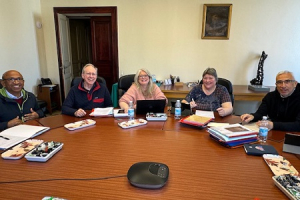
The Titus Brandsma Circle in collaboration with scholars at various universities in Rome is organizing the second Biennial Titus Brandsma Congress. This will take place:
- November 27-29, 2025 (arrival November 26 and departure November 30)
- Rome, Istituto Maria Bambina (right outside St. Peter's Square)
The Dutch Carmelite and professor of philosophy Titus Brandsma (1881-1942) did groundbreaking work in the field of Dutch mysticism. He was one of the prominent thinkers regarding the social teaching of the Catholic Church in the Netherlands and promoted the improvement of education in Catholic schools and the professionalization of Catholic journalism. He criticized National Socialism and dedicated himself to the promotion of peace.
We welcome papers dealing with various aspects of his intense life, his different activities, and his astonishing number of writings.
Please send your abstract (300 words) in English, Spanish, or Italian to
Questo indirizzo email è protetto dagli spambots. È necessario abilitare JavaScript per vederlo.
The organization committee for the 2025 congress consists of four members:
- Prof. Fernando Millán, Comillas University Madrid, Spain, president of the Titus Brandsma Circle
- Prof. Giovanna Brizi, general postulator of the Carmelite Order and other orders, invited professor at the Pontifical Gregorian University
- Prof. Giovanni Grosso, chair of the Institutum Carmelitanum Rome, invited professor at the Teresianum
- Prof. Michael Plattig, member of the German Carmelite Institute and the Institutum Carmelitanum, invited professor at the Pontifical Gregorian University
Deadline for abstracts is: March 31, 2025
Celebrating At Home - Good Friday
Love revealed in the passion
(John 18:1 - 19:42)
Jesus left with his disciples and crossed the Kedron valley. There was a garden there, and he went into it with his disciples. Judas the traitor knew the place well, since Jesus had often met his disciples there, and he brought the cohort to this place together with a detachment of guards sent by the chief priests and the Pharisees, all with lanterns and torches and weapons. Knowing everything that was going to happen to him, Jesus then came forward and said, ‘Who are you looking for?’ They answered, ‘Jesus the Nazarene.’ He said, ‘I am he.’ Now Judas the traitor was standing among them. When Jesus said, ‘I am he’, they moved back and fell to the ground. He asked them a second time, ‘Who are you looking for?’ They said, ‘Jesus the Nazarene.’ Jesus replied, ‘I have told you that I am he. If I am the one you are looking for, let these others go.’ This was to fulfil the words he had spoken: ‘Not one of those you gave me have I lost’.
Simon Peter, who carried a sword, drew it and wounded the high priest’s servant, cutting off his right ear. The servant’s name was Malchus. Jesus said to Peter, ‘Put your sword back in its scabbard; am I not to drink the cup that the Father has given me?’
Pause for quiet reflection
The cohort and its captain and the Jewish guards seized Jesus and bound him. They took him first to Annas, because Annas was the father-in-law of Caiaphas, who was high priest that year. It was Caiaphas who had suggested to the Jews, ‘It is better for one man to die for the people’.
Simon Peter, with another disciple, followed Jesus. This disciple, who was known to the high priest, went with Jesus into the high priest’s palace, but Peter stayed outside the door. So the other disciple, the one known to the high priest, went out, spoke to the woman who was keeping the door and brought Peter in. The maid on duty at the door said to Peter, ‘Aren’t you another of that man’s disciples?’ He answered, ‘I am not.’ Now it was cold, and the servants and guards had lit a charcoal fire and were standing there warming themselves; so Peter stood there too, warming himself with the others.
The high priest questioned Jesus about his disciples and his teaching. Jesus answered, ‘I have spoken openly for all the world to hear; I have always taught in the synagogue and in the Temple where all the Jews meet together: I have said nothing in secret.
But why ask me? Ask my hearers what I taught: they know what I said.’ At these words, one of the guards standing by gave Jesus a slap in the face, saying, ‘Is that the way to answer the high priest?’ Jesus replied, ‘If there is something wrong in what I said, point it out; but if there is no offense in it, why do you strike me?’ Then Annas sent him, still bound, to Caiaphas, the high priest.
As Simon Peter stood there warming himself, someone said to him, ‘Aren’t you another of his disciples?’ He denied it saying, ‘I am not.’ One of the high priest’s servants, a relation of the man whose ear Peter had cut off, said, ‘Didn’t I see you in the garden with him?’ Again Peter denied it; and at once a cock crew.
Pause for quiet reflection
They then led Jesus from the house of Caiaphas to the Praetorium. It was now morning. They did not go into the Praetorium themselves or they would be defiled and unable to eat the Passover. So Pilate came outside to them and said, ‘What charge do you bring against this man?’ They replied, ‘If he were not a criminal, we should not be handing him over to you.’ Pilate said, ‘Take him yourselves, and try him by your own Law.’ The Jews answered, ‘We are not allowed to put a man to death.’ This was to fulfil the words Jesus had spoken indicating the way he was going to die. So Pilate went back into the Praetorium and called Jesus to him, and asked, ‘Are you the king of the Jews?’ Jesus replied, ‘Do you ask this of your own accord, or have others spoken to you about me?’ Pilate answered, ‘Am I a Jew? It is your own people and the chief priests who have handed you over to me: what have you done?’ Jesus replied, ‘Mine is not a kingdom of this world; if my kingdom were of this world, my men would have fought to prevent me being surrendered to the Jews.
But my kingdom is not of this kind.’ Pilate said, ‘So you are a king then?’ Jesus answered, ‘It is you who say it. Yes, I am a king. I was born for this, I came into the world for this; to bear witness to the truth, and all who are on the side of truth listen to my voice.’ Pilate said, ‘Truth? What is that?’ And with that he went out again to the Jews and said, ‘I find no case against him.
But according to a custom of yours I should release one prisoner at the Passover; would you like me, then, to release the king of the Jews?’ At this they shouted, ‘Not this man, but Barabbas.’ Barabbas was a brigand.
Pilate then had Jesus taken away and scourged; and after this, the soldiers twisted some thorns into a crown and put it on his head, and dressed him in a purple robe. They kept coming up to him and saying, ‘Hail, king of the Jews!’ and they slapped him in the face.
Pause for quiet reflection
Pilate came outside and said to them, ‘Look, I am going to bring him out to you to let you see that I find no case.’ Jesus then came out wearing the crown of thorns and the purple robe. Pilate said, ‘Here is the man.’ When they saw him the chief priests and the guards shouted, ‘Crucify him! Crucify him!’ Pilate said, ‘Take him yourselves and crucify him: I can find no case against him.’ The Jews replied, ‘We have a Law, and according to the Law he ought to die, because he has claimed to be the son of God.’ When Pilate heard them say this his fears increased. Re-entering the Praetorium, he said to Jesus, ‘Where do you come from?’ But Jesus made no answer. Pilate then said to him, ‘Are you refusing to speak to me? Surely you know I have power to release you and I have power to crucify you?’ Jesus replied, ‘You would have no power over me if it had not been given you from above; that is why the one who handed me over to you has the greater guilt.’ From that moment Pilate was anxious to set him free, but the Jews shouted, ‘If you set him free you are no friend of Caesar’s; anyone who makes himself king is defying Caesar.’ Hearing these words, Pilate had Jesus brought out, and seated himself on the chair of judgement at a place called the Pavement, in Hebrew Gabbatha. It was Passover Preparation Day, about the sixth hour. Pilate said to the Jews, ‘Here is your king.’ They said, ‘Take him away, take him away. Crucify him!’ Pilate said, ‘Do you want me to crucify your king?’ The chief priests answered, ‘We have no king except Caesar.’ So in the end Pilate handed him over to them to be crucified.
Pause for quiet reflection
They then took charge of Jesus, and carrying his own cross he went out of the city to the place of the skull, or, as it was called in Hebrew, Golgotha, where they crucified him with two others, one on either side with Jesus in the middle. Pilate wrote out a notice and had it fixed to the cross; it ran: ‘Jesus the Nazarene, King of the Jews’. This notice was read by many of the Jews, because the place where Jesus was crucified was not far from the city, and the writing was in Hebrew, Latin and Greek. So the Jewish chief priests said to Pilate, ‘You should not write ‘King of the Jews’, but ‘This man said: I am King of the Jews’. Pilate answered, ‘What I have written, I have written.’ When the soldiers had finished crucifying Jesus they took his clothing and divided it into four shares, one for each soldier. His undergarment was seamless, woven in one piece from neck to hem; so they said to one another, ‘Instead of tearing it, let’s throw dice to decide who is to have it.’ In this way the words of scripture were fulfilled: They shared out my clothing among them. They cast lots for my clothes. This is exactly what the soldiers did.
Near the cross of Jesus stood his mother and his mother’s sister, Mary the wife of Clopas, and Mary of Magdala. Seeing his mother and the disciple he loved standing near her, Jesus said to his mother, ‘Woman, this is your son.’ Then to the disciple he said, ‘This is your mother.’ And from that moment the disciple made a place for her in his home.
After this, Jesus knew that everything had now been completed, and to fulfil the scripture perfectly he said, ‘I am thirsty.’ A jar full of vinegar stood there, so putting a sponge soaked in vinegar on a hyssop stick they held it up to his mouth. After Jesus had taken the vinegar he said, ‘It is accomplished’; and bowing his head he gave up the spirit.
Pause for quiet reflection
It was Preparation Day, and to prevent the bodies remaining on the cross during the Sabbath - since the Sabbath was a day of special solemnity - the Jews asked Pilate to have the legs broken and the bodies taken away. Consequently the soldiers came and broke the legs of the first man who had been crucified with him and then the other. When they came to Jesus, they found that he was already dead, and so instead of breaking his legs one of the soldiers pierced his side with a lance; and immediately there came out blood and water. This is the evidence of one who saw it - trustworthy evidence, and he knows he speaks the truth - and he gives it so that you may believe as well. Because all this happened to fulfil the words of scripture: Not one bone of his will be broken, and again, in another place scripture says: They will look on the one whom they have pierced.
After this, Joseph of Arimathaea, who was a disciple of Jesus though a secret one because he was afraid of the Jews asked Pilate to let him remove the body of Jesus. Pilate gave permission, so they came and took it away. Nicodemus came as well - the same one who had first come to Jesus at night-time and he brought a mixture of myrrh and aloes, weighing about a hundred pounds. They took the body of Jesus and wrapped it with the spices in linen cloths, following the Jewish burial custom. At the place where he had been crucified there was a garden, and in the garden a new tomb in which no one had yet been buried. Since it was the Jewish Day of Preparation and the tomb was near at hand, they laid Jesus there.
Pause for quiet reflection
Celebrating At Home - Holy Thursday
Washing feet, sharing bread and wine:
Love poured out in service
On this night we recall Jesus’ commandment to love one another, his washing of the disciples’ feet and the breaking of the bread of his own life, not just at table, but also on the altar of the Cross, for the healing and nourishment of the world.
The liturgy on Holy Thursday is a meditation on the essential connection between the Eucharist and Christian love expressed in serving one another. Christ is not only present in the Eucharist but also in the deeds of loving kindness offered to others through us.
We are the ones who make ‘real’ the presence of Jesus in every smile, kind word and loving action.
Carmelite Chocolate
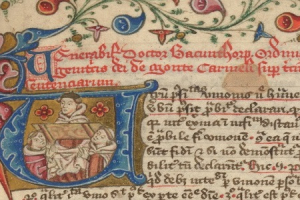
Among the papers of Santa Maria in Traspontina, recently inventoried by Jacopo De Santis in the book "Santa Maria in Traspontina, La vita di una comunità carmelitana attraverso le carte d'archivio", several documents attest that during the 18th century at the same Roman convent, at that time the seat of the general curia of the Carmelites, chocolate bars were produced: this is evidenced by the correspondence preserved in our archives, with which the friars of other convents and various personalities of the time requested that this delicacy be sent to them.
In particular, in a correspondence of seventeen letters dated to the year 1758, the former prior general of the Carmelites, Luigi Laghi, of the Romagnola Province, requested that an order of chocolate, of which he must have been rather gluttonous, be delivered to him in the convent of Forli, reporting - in a funny way - that he made habitual use of it, because, according to him, it helped him to counteract shortness of breath . ... and other ailments: "I continue to suffer every morning the usual tightness of the chest and difficulty in breathing, but having taken chocolate, which causes me some flati, I remain free" (April 13, 1758).
Father Laghi had a large supply of this portentous remedy, as we read in another of his letters, "For chocolate there is time until you make ours, for I still have it for six and more months" (Sept. 7, 1758).
(This article first appeared in ABIGOC – November 21, 2023)
The book can be purchased at the online bookstore of the publisher Edizioni Carmelitane.
Jacopo De SantisSanta Maria in Traspontina La vita di una comunità carmelitana attraverso le carte d'archivio
Carmelites in Vietnam Officially Established
After many years of waiting and work the Ministry of Home Affairs in Vietnam agreed to the establishment of the Order of the Brothers of the Blessed Virgin Mary of Mount Carmel in Vietnam on December 25, 2023. The official seat of the Order will be at Our Lady of Mount Carmel Priory in Thu Duc City. The government of Vietnam directed the Union of Major Superiors in Vietnam to guide the Order according to the civil law so that the Order can conduct religious activities in accordance with the Catholic religion and the purpose of the Order throughout the country.
This changes in that previously the Carmelites were only permitted in Ho Chi Minh City. This change in status will facilitate the establishment of additional houses in other provinces of the country.
“This is a tremendous moment, something we have worked for since 1996, and it came as a Christmas gift. We thank God, Our Lady of Mount Carmel and Saint Joseph for this government recognition which further opens the door legally for the Carmelite Friars in our life and ministry in the country. Blessings to the leadership and members of the Commissariat and Province for all their work to bring this about,” wrote Mario Esposito, the prior provincial of the North American Province of St. Elias.
There are currently six houses of the commissariat: two in Ho Chi Minh City, one in Dong Nai Province, two in Binh Duong Province, and one in Dak Lak Province. There are 14 pre-novices, three novices, and 36 solemnly professed members.
Nuns in Peru Celebrate Their Elective Chapter
The Carmelite Nuns in Camaná (Arequipa), Peru, Celebrate Their Triennial Elective Chapter
On March 17th, the enclosed nuns of the Carmelite monastery in Camaná, Peru, celebrated their triennial chapter.
The monastery was founded in 1966 from the cloistered Carmelite monastery in Onteniente, Spain.
The results of the elective chapter were as follows:
Prioress | Priora | Priora:
Madre María Elena Alccacondori Turpo, O. Carm.
1st Councilor | 1ª Consejera | 1ª Consigliera:
Madre María Eucaristía Gravel, O. Carm.
2nd Councilor | 2ª Consejera | 2ª Consigliera:
Madre María Máxima Ranilla Huamaní, O. Carm.
3rd Councilor | 3ª Consejera | 3ª Consigliera:
Madre María Hilda Condori Marca, O. Carm.
4th Councilor | 4ª Consejera | 4ª Consigliera:
Madre María Trinidad Huamaní Condo, O. Carm.
Treasurer | Ecónoma | Economa
Madre Ana María de Jesús Quispe Castro, O. Carm.
Formator | Formadora | Formatrice
Madre Gabriela de Jesús Ramos Mamani, O. Carm.
Sacristan | Sacristana | Sacrestana
Madre Carmen Teresa de la Cruz Cruces Montoya, O. Carm.
Nuns in Ostuni Celebrate Their Elective Chapter
The Carmelite Nuns in Ostuni, Italy, Celebrate Their Elective Chapter
From March 11-13th, the Carmelite community of the monastery of St. Mary Maddalena de’ Pazzi celebrated its triennial elections. The monastery is located in Ostuni (Brindisi) Italy.
In 1730 the Carmelite nuns from the town of Fasano made the foundation in Ostuni. The community survived the suppressions of the last century; two other Pugliese monasteries (Putignano which was founded in 1552 and Fasano, founded in 1631, was the founding monastery of Ostuni) were closed. In 1975 the community left their monastery in the city center and moved to a new monastery.
The monastery belongs to the St. Mary Maddalena de’ Pazzi Federation. More information can be obtained by visiting the community's webpage.
The results of the elective chapter were as follows:
Prioress | Priora | Priora:
Suor M. Anna della Divina Misericordia , O. Carm.
1st Councilor | 1ª Consejera | 1ª Consigliera:
Suor M. Daniela della SS.ma Trinità, O. Carm.
2nd Councilor | 2ª Consejera | 2ª Consigliera:
Suor M. Agnese di San Giuseppe , O. Carm.
Treasurer | Ecónoma | Economa
Suor M. Agnese di San Giuseppe , O. Carm.
Formator | Formadora | Formatrice
Suor Maria di Gesù , O. Carm.
Sacristan | Sacristana | Sacrestana
Suor M. Angela di Sant' Elia , O. Carm.
St. Joseph, A Saint For Our Time
In a lovely little booklet on St Joseph, Cardinal Suenens wrote:
“It has been said that the worst thing we can do to the saints is to put them on pedestals. In Joseph’s case, we might criticise not only the pedestal, but also the image of him with which we are all too often presented.”[1]
Another contemporary French writer A. Doze speaks of “misinformation” about him, and says that to misinform is to spread false rumours the better to lead people astray.[2]
Yet Saint Joseph is in some ways a shadowy figure. There is little about him in the New Testament, indeed one might wonder who his father was, since there is some discrepancy in the genealogies of Matthew and Luke: Matthew appears to think his father’s name was Jacob (see Matt 1:16); Luke seems to have him as the son of Heli (see Luke 3:23). At times Joseph appears to be airbrushed out of history. One finds pictures of the Adoration of the Magi with three or four eastern figures, but no Joseph. Yet one cannot deny the aptness of the title of a book popular in the middle of the last century, The Man Closest to Christ.[3] He has always had a secure place in the hearts of Catholic Christians throughout the second millennium.
In recent decades there has been renewed attention to him on the part of theologians and spiritual writers. There are two academic journals devoted to studies concerning the saint: Cahiers de joséphologie, published in Montreal since 1953 and Estudios josefinos from Valladolid since 1947. Pope John Paul II gave the Church a letter on the saint, “Guardian of the Redeemer: On the Person and Mission of Saint Joseph in the Life of Christ and of the Church.”[4]
There has been interest in Saint Joseph throughout the centuries. At times these have been a direct reflection of what is happening in society; at other times we see devotion to St Joseph almost as parallel or even in denial of the reality of the Church’s difficulties. Again, writing about him has had various aims. Some writers have given us truths about Joseph. Others have suggested that he is a model to be imitated. Many have spoken about his intercession. Two are particularly significant. The French School’s concerns invite us not so much to imagine for ourselves details of the hidden life, as to enter into it intuitively and with empathy. Teresa of Avila would seem to go further: she has a dynamic living relationship with the saint.
Contemporary Insights
The 20th century has given us some important developments in the theology and devotion of St Joseph. There are some theological insights of quality in this period, often from surprising sources. We could note two. The great Calvinist theologian, K. Barth, who saw Mariology as the arch-heresy of Rome, had a special place for Joseph. He famously said:
“If I were a Roman Catholic theologian, I would lift Joseph up. He took care of the Child; he takes care of the Church.”[5]
Another is the Reformed Church theologian, J.J. von Allmen, who criticises the Vatican II Constitution on the Church for failing even to mention St Joseph in its eighth chapter on “The Blessed Virgin Mary, Mother of God, in the Mystery of Christ and the Church,” even though the Council referred to Elizabeth, the shepherds, the Magi, Simeon. He went on to say that Joseph is essential for a grasp of the Jewishness and the Messianism of Jesus.[6] One can readily agree that people may have a genuine devotion to Joseph, but may not advert sufficiently to him in considering the mystery of the Incarnation.
In this section we shall consider two sources for our understanding of Joseph for our time: the liturgy, and papal teaching in the 20th century, especially the apostolic exhortation of John Paul II, “Guardian of the Redeemer: On the Person and Mission of Saint Joseph in the Life of Christ and of the Church.”[7]
Liturgy
Modern theology strongly affirms an ancient truth, that the liturgy is a major source of theology. The aphorism frequently transposed and variously translated, lex credendi...lex orandi,[8] shows as a minimum the interpenetration of faith and worship. The facts of liturgical evolution concerning St Joseph can be briefly outlined.
Liturgical celebrations in honour of Joseph were at first diocesan or confined to religious orders or congregations. With the liturgical reforms after Trent the feast of St Joseph became universal, and was given a higher rank when Pius IX proclaimed Joseph “Patron of the Church” during the First Vatican Council (8 December 1870). The 1917 Code of Canon Law laid it down as a holiday of obligation.[9] A problem arose from its celebration in Lent, and thus without full solemnity or an octave. There was another feast found as early as the 17th century called the Patronage of St Joseph, later called the Solemnity of St Joseph. This was celebrated on the Wednesday in the second week after Easter. Pius XII, who was very much concerned with the menace of communism, changed this to a feast of Joseph the Worker, and assigned it to 1 May, the Marxist Mayday. Like so many liturgical innovations that are imposed by authority rather than arising from the grassroots, this feast never really took hold and in the 1969 liturgical reform it was reduced to an optional memorial.
Though it is not a liturgical text, one could note the approval of the Litany to St Joseph in 1909. The Church has been quite wary about litanies in recent centuries, as they can be so exuberant or far-fetched that contact is lost with truth. Local bishops could no longer approve them for public recitation after the 1917 Code of Canon Law.[10] At first the litany of St Joseph was for private use only, later the restriction was lifted.[11]
The texts of the Masses for the feasts of St Joseph before Vatican II stressed the powerful intercession of the saint. They called him the spouse (sponsus) of the Mother of the Son. Thus for the feast the main prayer was:
“Let the merits of thy all-holy Mother’s husband assist us, Lord, we pray; through his intercession may we be granted that which no effort of our own could win for us.”
The revised liturgy has “Father, you entrusted our Saviour to the care of St Joseph. By the help of his prayers may your Church continue to serve its Lord Jesus Christ.”[12]
And for Joseph the Worker we have:
“God our Father, creator and ruler of the universe, in every age you call on people to use their gifts for the good of others. With St Joseph as our example and guide, help us to do the work you have asked and come to the reward you have promised.”
More interesting is the preface, especially when we remember that the preface in any Mass is a statement why we today should give God thanks in the Eucharist we are now celebrating. They key section reads:
“Father, all-powerful and ever-living God, we do well always and everywhere to give you thanks as we honour St Joseph. He is that just man that wise and loyal servant, whom you placed at the head of your family. With a husband’s love he cherished Mary, the virgin Mother of God (A te Deiparae Virgini Sponsus est datus). With fatherly care he watched over Jesus Christ your Son, conceived by the power of the Holy Spirit. Through Christ the choirs of angels praise and worship...”
We should not forget that John XXIII inserted the name of St Joseph into the Roman Canon [now First Eucharist Prayer] before the names of the apostles.
In our modern liturgy we see the main themes of devotion highlighted: Joseph is husband of Mary, Guardian of Holy Family, foster father of Jesus and model of the Church which relies on his intercession. To find further developments we have to turn to papal teaching in the 20th century.
Papal teaching
Except for John Paul I who died very soon after becoming pope, all the popes of the 20th century have spoken about St Joseph. They generally encourage the Church to see him as a model for workers, married people and protector of the Church. As in previous centuries considerations of the state of the Church and the world determine the particular points that are made by the popes. Thus Benedict XV sees him as an antidote to denials of what is sacred,[13] Pius XI makes him a patron of the Church’s fight against Communism,[14] John XXIII summarised the teaching of his predecessors and proclaimed him protector of Vatican II.[15]
In minor documents two of the popes made daring suggestions which have not been widely taken up by theologians. Pius XI suggested that Joseph belonged in some way to the Hypostatic Union, at least in so far as he received revelation about it.[16] The trouble with Hypostatic Union language used about St Joseph, and even about the Blessed Virgin, is that it is easily open to misunderstanding. By the time one has explained what it might mean, one might be better off using alternative language. John XXIII, a great devotee of Joseph, mentioned in a canonisation homily the pious belief, occasionally found in earlier centuries, that Joseph, like John the Baptist, were assumed into heaven on the day of the Ascension.[17]
The papal exhortation, “Guardian of the Redeemer”
By far the most important papal teaching on St Joseph to date is the already mentioned apostolic exhortation of John Paul II Redemptoris custos (RC).[18] The occasion was the
centenary of the first encyclical on St Joseph by Leo XIII, Quam pluries (1889). The pope gives also a deepened ecclesiology, or theology of the Church, as a reason for writing:
“I am convinced that by reflection upon the way in which Mary’s spouse shared in the divine mystery, the Church—on the road towards the future with all humanity—will be enabled to discover ever anew her own identity within this redemptive plan, which is founded on the mystery of the incarnation.” (RC 1)
The apostolic exhortation takes up many of the points traditionally made in writings about St Joseph, in the liturgy and in previous teaching. He repeats the papal teaching for the last hundred years to the effect that Joseph is the greatest of the saints after Mary, but not of course her equal (RC 4, 7). The pope is not very well served by the official Vatican translation, which unfortunately carries over into English the dense and rather turgid style of the original Latin. We need not repeat the constant refrain about Joseph being a ”just man” (see Matt 1:19), except to note that the pope gives a very careful reading of the scriptural passages that concern Joseph. We concentrate rather on which is new and would seem to be more significant for our time.
Joseph in the divine plan
It is worth noting that the pope gives a particular order in the role of Joseph:
“He took loving care of Mary and gladly dedicated himself to Jesus Christ’s upbringing; he likewise watches over and protects Christ’s Mystical Body.” (RC 1)
A key to the exhortation is the fact that Joseph entered into and shared the mystery of redemption.
“The [Incarnation is] the mystery in which Joseph of Nazareth “shared” (commuicavit) like no other human being except Mary...he shared in it with her; he was involved in the same salvific event; he was the guardian of the same love, through the power of which the eternal Father ‘destined us to be his sons through Jesus Christ (Eph 1:5).’” (RC 1)
One of the most important ideas of the pope is that of the faith of Joseph. Indeed he refers to two annunciations: the angel’s appearance to Mary at Nazareth (see Luke 1:26-38) and the angel’s appearance in a dream to Joseph (see Matt 1:18-25). The response of both is obedience: Mary said yes to the angel’s message; Joseph did what the angel commanded him (RC 2-3, 17). At the beginning of her “pilgrimage of faith... the faith of Mary meets the faith of Joseph” (RC 4): both are displaying the obedience of faith to the same mystery.(RC 4) In this way together with Mary Joseph became the guardian of the divine mystery of the Incarnation (RC 5).
Husband and father
The papal exhortation deals at some length with the double role of Joseph described in the gospel: he is husband of Mary and father of Jesus:
“And while it is important for the Church to profess the virginal conception of Jesus, it is no less important to uphold Mary’s marriage to Joseph, because juridically Joseph’s fatherhood depends on it.” (R 7)
Mary and Joseph are husband and wife (RC 7, 17-21). The pope repeats the teaching of Sts Augustine and Thomas Aquinas about this marriage: “an indivisible union of souls, a union of hearts and consent” (RC 7). Since the second century the image of Mary as the New Eve has been taught—Christ being the New Adam (see Rom 5:14-19). But the pope looks again at the Genesis text and states:
“But whereas Adam and Eve were the source of evil, which was unleashed on the world, Joseph and Mary are the summit from which holiness spreads over the earth. The Saviour began the work of salvation out of this virginal and sacred union” (ex virginali et sacra coniunctione incohavit RC 7).
He immediately makes an application to family life, for it “has the mission to guard, reveal and communicate love” and has so much to learn from the Holy Family, which was truly “the original domestic Church that every Christian family” must reflect (RC 7). Indeed, “The Church deeply venerates this Family and proposes it as the model of all families” (RC 21). A Catholic theology that focuses too exclusively on Mary can forget the deep human love between her and her husband, a point drawn out by the pope:
“‘Joseph took his wife, but he knew her not until she had borne a son’ (Matt 1:24-25). These words indicate another kind of closeness in marriage. The deep spiritual closeness arising from marital union and the interpersonal contact between man and woman have their definite origins in the Spirit, the Giver of Life (see John 6:63). Joseph in obedience to the Spirit, found in the Spirit, the source of love, the conjugal love which he experienced as man. And this love proved to be greater that this “just man” could ever have expected within the limits of his human heart.” (RC19)
John Paul quotes from the encyclical of Leo XIII who noted that marriage is a sharing. So Joseph was not just Mary’s protector, but God “gave Joseph to Mary in order that he might share, through the marriage pact, in her own sublime greatness” (RC 20). We are familiar with the bridal symbolism of Christ and the Church,[19] but Pope John Paul notes that the two kinds of love between Mary and Joseph, marital and virginal, together represent the mystery of the Church (RC 20). Some modern authors use the term “complementary missions” of Mary and Joseph.[20]
The exhortation sums up scriptural, liturgical and papal traditions in speaking of the fatherhood of Joseph: he made his life a service of the Incarnation; he had legal authority over the Holy Family; he watched over the Son of God with fatherly care; he showed Jesus all the affectionate solicitude that a father’s heart could know; he is entrusted with all the so-called “private” or “hidden” life of Jesus. Jesus in turn “obeyed him and rendered to him that honour and reverence that children owe to their father” (RC 8). It is a genuine, not substitute fatherhood: it is fatherhood “that fully shares in authentic human fatherhood and the mission of a father in the family” (RC 21). Both Luke and Mathew note that Joseph takes on the role of father by naming the child, Jesus (RC 7, 12). The words of Mary confirm the Nazareth reality, “your father and I have been searching for you” (Luke 2:48, see RC 15), which Luke elsewhere attests speaking of Jesus’ parents (Luke 2:33, 41—RC 21).
We find a summary of Joseph’s role with regard to be Jesus and Mary in the pope’s comment about the stay in Egypt: “Joseph, guardian and co-operator in the providential mystery of God...watched over the one who brings about the New Covenant” (RC 14).
The hidden life in Nazareth is carefully described
“The growth of Jesus “in wisdom and stature” (Luke 2:52) took place within the Holy Family under the eyes of Joseph, who had the important task of “raising” Jesus, that is, feeding, clothing and educating him in the Law and in a trade, in keeping with the duties of a father.”
And this passage ends with the picture of Jesus at work at the side of Joseph (RC 16, see 22 23).
Nazareth: work and the interior life
Pope John Paul II, as one might expect, presents Joseph as a worker and thus a model for all Christians. There is a new development in that work is said to be “the daily expression of love in the life of the Family of Nazareth” (RC 22). Following Paul VI the pope shows that holiness is open to all:
“St Joseph is the model of those humble ones that Christianity raises up to great destinies...he is the proof that in order to be a good and genuine follower of Christ, there is no need to do great things it is enough to have the common, simple and human virtues, but they need to be true and authentic” (RC 24).
The encyclical focuses on the interior life, “Daily Joseph went about in companionship with the mystery hidden from all ages, which dwelt under his roof” (RC 25).[21] The pope looks draws consequences for spirituality and the inner life from the intimacy of the Nazareth home. Since love and healing came from Jesus in his ministry, we like Mary and Joseph must come deeply into the mystery of the Incarnation. In Joseph the two lives contemplative and active are ideally harmonised: in him we see the Augustinian love of the truth (caritas veritatis) joined to the demands of love (necessitas caritatis).
Patron of the Church
Every age, it seems, finds the Church threatened, especially the past hundred years since Joseph was made its Patron. The papal document points up various situations in which the example and the intercession of Joseph are needed: evangelisation and re-evangelisation, marriage, evangelical virtues, the sin and darkness that surround us, the need to serve Christ’s saving mission and to enter fully into the mystery of the Incarnation (RC 28-32).
Conclusion
The liturgy of the Church today and the papal teaching that we have been tracing give some important indicators for us today. We can no longer neglect a consideration of Joseph when we are studying Mariology. Though silent, Joseph is no peripheral figure in the plan of salvation. For our time his very silence is a strong challenge to values current in our society, the glorification of success, of achievement and of self-fulfilment. Joseph points to the supreme value of the interior life; he lives in total commitment to Jesus and to Mary. Joseph points to love and sacrifice as key standards in Christian marriage. In Mary and Joseph men and women find their truest identity. Likewise the Church.
I would like to emphasise the urgent need for further studies on Joseph in two areas, and from two sources. The Church needs to hear and learn from those who have marriages in which for one reason or another (health, social situations, free choice, etc.) there is no sexual intercourse. Their views on marriage could help us to understand much more about that husband and wife, who were Joseph and Mary. These have something to tell the Church which celibate theologians, male or female, cannot even begin to guess. Equally, we need to hear from fathers who have adopted children: what is their experience of bonding with their child? Men who have married women with children from a previous marriage may also have something to teach us in this regard. These two areas of study and sharing are just another example of how the Church’s life may be gravely deficient in not having an authentic lay to help articulate its spirituality and the humanity involved in its deepest truths.
[1] L.J. Suenens, Dear Saint Joseph (Ertvelde, Belgium: Edition F.I.A.T, 1994) 9.
[2] A. Doze, Saint Joseph: Shadow of the Father (New York: Alba House, 1992) 9. This book is also published as Discovering Saint Joseph (London: St Paul’s, 1991).
[3] F.L. Filas, The Man Closest to Christ: Nature and Historic Development of the Devotion to St Joseph (Milwaukee, 1944).
[4] Redemptoris custos (1989).
[5] An interview cited F.L. Filas, Joseph: The Man Closest to Jesus (Boston: St Paul, 1962) 462; see also Documentation catholique 60(1963) 403.
[6] “Remarques sur la Constitution dogmatique sur l’Église ‘Lumen gentium’,” Irénikon 1(1966) 5-45 at 22-24.
[7] Redemptoris custos, 15 August 1989.
[8] See Prosper of Aquitaine, Legem credendi statuit lex supplicandi (public prayer establishes the law of belief).
[9] 19 March, see canon 1247 § 1. There was a dispensation given later for those countries that celebrated the feast of St Patrick (17 March) as a holiday of obligation.
[10] Canon 1259 § 2.
[11] Raccolta n. 489, p. 413-415.
[12] The Latin is a good deal richer: Praesta, quaesumus, omnipotens Deus, at humane salutes mysteries, cuius primordial beati Ioseph fideli costodiae commisisti, Ecclesia tua, ipso intercedente, iugiter servet implenda.
[13] Mp. Bonum sane 25 July 1920—AAS 12(1920) 313-317.
[14] Encyclical, Divini Redemptoris, 19 March 1937—AAS 29(1937) 106.
[15] Apost. Letter Le voci, 19 March 1961—AAS 53(1961) 205-213.
[16] References in Dictionnaire de spiritualité 8:1320.
[17] AAS 52(1960) 455-456 cited Dictionnaire de spiritualité 8:1320; see A. Doze, Joseph: Shadow of the Father 55-56.
[18] Translation: Guardian of the Redeemer (Boston: Pauline Books and Media, 1989 = Vatican translation); see also important commentary J.J. Davis, “Mary and Joseph in the Apostolic Exhortation Redemptoris custos,” Marian Studies 42(1991) 133-171.
[19] See Eph 5:25-32 and Vatican II, Constitution on the Church, LG 5 and 7.
[20] E.g. P. Molinari and A. Hennessy, Giuseppe e Maria: Vocazione e missione di una coppia di sposi (Milan: San Paolo, 1993) 66-76 from English original The Vocation and Mission of Joseph and Mary (Dublin: Veritas, 1992).
[21] The official translation inexplicably omits the key word “daily” (cotidiano).
Author: Christopher O’Donnell, O.Carm
Causa Nostrae Laetitiae
NITIUM NOVITIATUS
01-02-24 Aquinas Sumant (STSA) Kannur, Kerala, India
01-02-24. Lawrence Lazar (STSA) Kannur, Kerala, India
01-02-24 Simon Sameer (STSA) Kannur, Kerala, India
01-02-24 James Naik (STSA) Kannur, Kerala, India
PROFESSIO TEMPORANEA
17-12-23 Lyon Mendonça Costa (Flum) São Paulo, Brazil
07-01-23 Douglas Newton (Flum) São Paulo, Brazil
07-01-23 Helbert Muniz (Flum) São Paulo, Brazil
07-01-23 Higor Fernandes (Flum) São Paulo, Brazil
07-01-23 Fabiano Guimarães (Flum) São Paulo, Brazil
07-01-23 Wellington Durate (Flum) São Paulo, Brazil
02-02-24 Peter Lima (STSA) Paravur, Kerala, India
02-02-24 Brandsma Bonty Paricha (STSA) Paravur, Kerala, India
02-02-24 Norbert Rohan Paltasingh (STSA) Paravur, Kerala, India
02-02-24 Ambrose Philmon Sabasundar (STSA) Paravur, Kerala, India
02-02-24 Jerard Joel Thottakath (STSA) Paravur, Kerala, India
02-02-24 Brocard Bibek Soreng (STSA) Paravur, Kerala, India
02-02-24 Savio Arbin Jatarma (STSA) Paravur, Kerala, India
ORDINATIO DIACONALIS
14-03-24 Anthony Thanh Nguyen (SEL-Viet) Saigon, Vietnam
14-03-24. John Baptist the Hoang (SEL-Viet) Saigon, Vietnam
14-03-24 Paul Tuan Dang (SEL-Viet) Saigon, Vietnam
ORDINATIO SACERDOTALIS
06-01-24 Francis Ajith Aloysius (STSA) Kattaakada, Kerala, India
14-03-24 Peter Trong Pham (SEL-Viet) Saigon, Vietnam
Palm Sunday of the Passion of the Lord
Love revealed
(Mark 15:1-39)
The Passion of Jesus according to Mark
First thing in the morning, the chief priests together with the elders and scribes, in short the whole Sanhedrin, had their plan ready. They had Jesus bound and took him away and handed him over to Pilate.
Pilate questioned him, “Are you the king of the Jews?” “It is you who say it” he answered. And the chief priests brought many accusations against him.
Pilate questioned him again. “Have you no reply at all? See how many accusations they are bringing against you!” But, to Pilate’s amazement, Jesus made no further reply.
At festival time Pilate used to release a prisoner for them, anyone they asked for. Now a man called Barabbas was then in prison with the rioters who had committed murder during the uprising. When the crowd went up and began to ask Pilate for the customary favour, Pilate answered them: “Do you want me to release for you the king of the Jews?” For he realised it was out of jealousy that the chief priests had handed Jesus over.
The chief priests, however, had incited the crowd to demand that he should release Barabbas for them instead. “But in that case, what am I to do with the man you call king of the Jews?” They shouted back, “Crucify him!” “Why? What harm has he done?” But they shouted all the louder, “Crucify him!” So Pilate, anxious to placate the crowd, released Barabbas for them and, having ordered Jesus to be scourged, handed him over to be crucified.
The soldiers led him away to the inner part of the palace, that is, the Praetorium, and called the whole cohort together. They dressed him in purple, twisted some thorns into a crown and put it on him. And they began saluting him, “Hail, king of the Jews!”
They struck his head with a reed and spat on him; and they went down on their knees to do him homage. And when they had finished making fun of him, they took off the purple and dressed him in his own clothes. They led him out to crucify him. They enlisted a passer-by, Simon of Cyrene, father of Alexander and Rufus, who was coming in from the country, to carry his cross. They brought Jesus to the place called Golgotha, which means the place of the skull.
They offered him wine mixed with myrrh, but he refused it. Then they crucified him, and shared out his clothing, casting lots to decide what each should get. It was the third hour when they crucified him. The inscription giving the charge against him read: “The King of the Jews.” And they crucified two robbers with him, one on his right and one on his left.
The passers-by jeered at him; they shook their heads and said, “Aha! So you would destroy the temple and rebuild it in three days! Then save yourself: come down from the cross!” The chief priests and the scribes mocked him among themselves in the same way: “He saved others, he cannot save himself. Let the Christ, the king of Israel, come down from the cross now, for us to see it and believe.” Even those who were crucified with him taunted him.
When the sixth hour came there was darkness over the whole land until the ninth hour. And at the ninth hour Jesus cried out in a loud voice, “Eloi, Eloi, lama sabachthani!” which means “My God, My God, why have you deserted me?” When some of those who stood by heard this, they said “Listen, he is calling on Elijah.” Someone ran and soaked a sponge in vinegar and putting it on a reed, gave it to him to drink, “Wait and see if Elijah will come to take him down.” But Jesus gave a loud cry and breathed his last.
And the veil of the Temple was torn in two from top to bottom. The centurion, who was standing in front of him, had seen how he had died, and he said, “In truth this man was a son of God.”
There were some women watching from a distance. Among them were Mary of Magdala, Mary who was the mother of James the younger, and Joset, and Salome. These used to follow him and look after him when he was in Galilee. And there were many other women there who had come up to Jerusalem with him.
It was now evening, and since it was Preparation Day, that is the vigil of the sabbath, there came Joseph of Arimathaea, a prominent member of the Council, who himself lived in the hope of seeing the kingdom of God, and he boldly went to Pilate and asked for the body of Jesus. Pilate, astonished that he should have died so soon, summoned the centurion and enquired if he was already dead. Having been assured of this by the centurion, he granted the corpse to Joseph who brought a shroud, took Jesus down from the cross, wrapped him in the shroud and laid him in a tomb which had been hewn out of the rock. He then rolled a stone against the entrance to the tomb. Mary of Magdala and Mary the mother of Jesus were watching and took note of where he was laid.
Quiet time for reflection
- pdf Celebrating At Home - Palm Sunday of the Passion of the Lord [PDF](1.50 MB)
- default Celebrating At Home - Palm Sunday of the Passion of the Lord [ePub](2.71 MB)
- pdf Celebrando en Familia - Domingo de Ramos en la Pasión del Señor(216 KB)
- pdf Celebrando in Casa - Domenica delle Palme e della Passione del Signore(219 KB)
- pdf Celebrando em familia - Domingo da Ramos - Paixâo de Nosso Senhor Jesus Cristo(220 KB)