














O.Carm
Pope Leo XIV: “Aerial Bombings Must Be Banned”
Church and UN Call for Peace—Leo XIV says “Aerial Bombings Should Have Been Banned Forever”
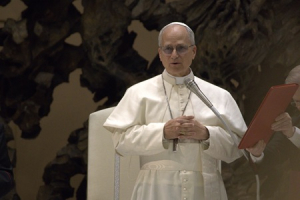
During a meeting with Italian airline executives, Pope Leo XIV called for the permanent abolition of aerial bombing. “After the tragic experiences of the 20th century, aerial bombings should have been banned forever … This is not progress; it is regression!” He later said, “No one should have to fear that threats of death and destruction might come from the sky.”
The US-Israeli war against Iran is in its fourth week. Strikes began on February 28 with attacks on Iran. Iran has retaliated by attacking American and Israeli bases as well as installations in nearby countries. One attack by the US resulted in the bombing of an Iranian school and the deaths of approximately150 children and the wounding of 100 more.
UNESCO, the UN agency promoting cooperation in education, science, culture, and communication to foster peace worldwide, called the bombing of the Iranian primary school “a grave violation of humanitarian law.” A number of other UN organizations and senior officials, including Secretary-General António Guterres, condemned the military attacks as well as the retaliatory strikes by Iran.
It was not the first time the pope has called for the end of war. On March 1, during the Sunday Angelus, he called for the “thunderous sound of bombs” to stop and for guns to “fall silent.” The past Sunday, he called the war “a scandal to the whole human family” and urged leaders to “seek solutions without weapons.”
During his weekly break at Casel Gandolfo on Tuesday, Pope Leo XIV released a statement renewing his call for an unconditional ceasefire, saying that “death and pain caused by these wars is a scandal for the entire human family”.
Asked about the pope’s calls for a ceasefire, the American president responded, “We can talk, but I don’t want a ceasefire.”
The Vatican Secretary of State, Cardinal Pietro Parolin, has reaffirmed the Church’s stance, referring to “the foolishness of war.” The cardinal expressed hope that “at least within the holy sites the rituals may still be celebrated [for Easter]. But due to the Israel-American war celebrations of Easter will be limited in the Holy Land this year.
The Cardinal pointed out the irony that Easter is the victim of war. “Easter is the feast of peace, the peace of the Risen Lord …”
Catholic teaching on war holds a theory of “just war.” Such a war is characterized as proportional with a distinction between combatants and civilians, and a reasonable chance of success in pursuit of a just cause. Cardinal McElroy of the Archdiocese of Washington, DC, has spoken on this point, stating that intervention in Iran fails to meet several conditions required by the Church’s teaching on just war, including that benefits of this war will not “outweigh the harm which will be done.”
General Chapter of the Carmelite Sisters Held
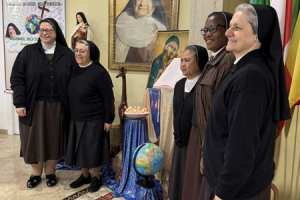
General Chapter of the Carmelite Missionary Sisters of St. Thérèse of the Child Jesus (SCMTBG) Held in March
The Carmelite Missionary Sisters of St. Thérèse of the Child Jesus met in Chapter at their motherhouse in Santa Marinella, a short distance from Rome along the Mediterranean Sea. Elections for the superior general took place on March 14. The General Council was elected the following day.
On March 10, the General Council of the Order travelled to Santa Marinella to spend time with the Chapter members. Desiderio Garcia Martinez spoke on the tragic loss of the sisters in Tanzania in September, including the head of the Institute and that tragic moments, in light of the Gospel and our Carmelite charism can be a time where hope quietly takes root and grows. The General Councilors took part in a later discussion with the sisters on the questions of leadership, charism, and life in the Carmelite Family. A meal together followed evening prayer in the chapel.
The Institute was founded on July 3, 1925, in the city of Santa Marinella (Rome, Italy) by Blessed Maria Crocifissa Curcio. The Carmelite Father Lawrence van den Eerenbeemt (1866-1977), was a close collaborator of Mother Crocifissa.
On July 16, 1925, the Institute was incorporated into the Carmelite Order by the prior general, Elias Magennis. Today, the Institute seeks to live a missionary spirit; for this reason, it carries out its work in mission lands, especially with young people, families, and women. The sisters are active in Italy, Malta, Romania, Canada, Brazil, the Philippine Islands, and Tanzania.
The website of the Institute is: www.madrecrocifissa.org
The General Chapter elected the sisters who will form the general government of the Institute during the next six-year period. They are:
General Prioress | Priora General | Priora generale:
Sr. M. Ivana Calvo
1st Councilor | 1ª Consejera | 1ª Consigliera:
Vicar General | Vicario General | Vicario Generale:
Sr. M. José de Oliveira
2nd Councilor | 2ª Consejera | 2ª Consigliera:
Sr. M. Flora Francis Mashughuli
3rd Councilor | 3ª Consejera | 3ª Consigliera:
Sr. M. Corazon Lao
4th Councilor | 4ª Consejera | 4ª Consigliera:
Sr. M. Grazia D'Angelo
Lectio Divina -- April 2026
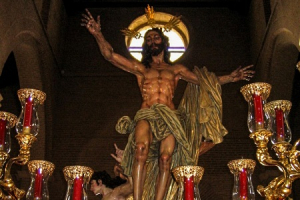
Opening Prayer
God our Father,
when the hour of Your Son Jesus had come to accept suffering and death out of love of You and His saving love for us, He did not refuse that suffering and deep pain.
In the hour of trial that we may have to pass through, do not let us become rebellious but keep us trusting in You, for You save us through Jesus Christ our Lord.
Carmelite Sisters Facility Wins Long-Term Care Award
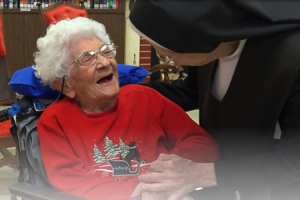
Skilled Nursing Facility of the Carmelite Sisters for the Aged and Infirm in Colombus, Ohio (USA), Receives National “Best Long-Term Care” Award
Mother Angeline McCrory Manor, operated by the Carmelite Sisters for the Aged and Infirm in Columbus, Ohio, received national recognition, receiving “best long-term care” facility in the annual Best Nursing Homes list published by U.S. News & World Report. The award categorized McCrory Manor as “high-performing,” the highest possible rating, for staffing and health outcomes, and above average in the “process” category. The list has been published annually since 2009 and is recognized nationally as a leading authority concerning health care information.
It is based on a rigorous analysis of data published by the Centers for Medicare & Medical Services, a branch of the U.S. Department of Health and Human Services. The online magazine analyzed 14,750 facilities in all 50 states on 17 quality measures related to staffing, patient outcomes and patient safety, with the goal of helping families identify options that best meet their needs.
Each category has specific criteria. “Staffing” covers the amount of nurse staffing per resident daily. “Health outcomes” involve patients’ ability to self-care, hospitalizations, emergency room visits and signs of depression. The “process” category is related to health inspections and the prescribing of antipsychotic drugs.
In an interview, Sister Ann Elizabeth Brown, O. Carm., said, “This ranking is quite an honor and came as a total surprise!” Sister is in her 12th year as the chief executive officer of the Manor and the adjacent Villas of St. Thérèse. “I know the ratings are based on strict methodology and arrived at with great care and are nationally known, so it’s impressive to know our work here is held in such high regard,” she said.
The Manor has 84 units for people who need 24-hour assistance and medical supervision for all aspects of their lives and 42 units used in short-term rehabilitation for those recovering from heart attacks, hip or knee replacements and other major procedures. It offers three daily meals, daily Mass and other religious activities, exercise classes, visits by speakers and school groups, and social activities including bingo, cards, crafts and movies.
“The compassionate care provided to the residents at Mother Angeline McCroy Manor is outstanding,” said Father Michael Lumpe, former chaplain at the facility. “The sisters and the entire staff provide an incredible level of care to Mother Angeline residents. Every day is award-winning from what I have experienced.”
Fr. Lumpe continued, “The care at Mother Angeline goes beyond just providing medications and skilled nursing support to the residents. There is a lot of one-on-one care, handholding with the residents, conversing with them, letting them know that they are truly cared for and that their life, and their residing at Mother Angeline matters.”
McCrory Manor’s public space is designed in “streetscape” style to encourage people to gather. It includes a living room, library, café, gift shop, beauty and barber shop, clinics and the Buckeye Lounge, decorated with Ohio State memorabilia and with a big-screen television. The lounge serves as a gathering place for residents to watch football games or other events.
There are currently four Carmelite sisters who are part of the Manor’s staff of 137 full-time and about 85 part-time employees. There are also three members of the Sisters of Our Lady of Kilimanjaro, on staff. That congregation is based in Tanzania and ministering in the Diocese of Columbus since 2020.
The Carmelite Sisters of the Aged and Infirm were founded in 1929 by Mother Mary Angeline Teresa McCrory in the Archdiocese of New York. The institute’s mission is to care for the needs of elderly people and to care for the sick, in the spirit of the Carmelite tradition. The institute has facilities in the United States and Ireland. It was aggregated to the Order on August 24, 1931, by Elias Magennis, the prior general. The Sisters of been ministering in the Diocese of Columbus since 1947.
The institutes’ website is carmelitesisters.com.
Celebrating At Home - Palm Sunday

Love Revealed
(Matthew 27:11-54)
Jesus was brought before Pontius Pilate, the governor, who asked him: ‘Are you the king of the Jews?’ ‘It is you who say it’. But when he was accused by the chief priests and the elders he refused to answer them. So Pilate said to him: ‘Do you hear how many charges they have brought against you?’ But to the governor’s amazement Jesus offered no reply to any of the charges.
At festival time it was the governor’s practice to release a prisoner for the people, anyone they chose. Now there was at that time a notorious prisoner whose name was Barabbas. So when the crowd had gathered, Pilate said to them: ‘Which do you want me to release for you: Barabbas, or Jesus who is called Christ?’
The chief priests and the elders had persuaded the crowd to demand the release of Barabbas and the execution of Jesus. So when Pilate asked them, ‘Which of the two do you want me to release for you?’, they said, ‘Barabbas’. ‘In that case what am I to do with Jesus who is called Christ?’ They all shouted, ‘Let him be crucified!’ ‘But why? What harm has he done?’ But they shouted all the louder, ‘Let him be crucified!’
Then Pilate saw that he was making no impression. In fact a riot was imminent. So he took some water, washed his hands in front of the crowd, saying, ‘I am innocent of this man’s blood.’ And the people shouted, ‘His blood be on us and on our children!’ Then Pilate released Barabbas and ordered Jesus to be scourged and then handed over to be crucified.
The Governor’s soldiers took Jesus with them into the Praetorium and collected the whole cohort round him. They stripped him and made him wear a scarlet cloak, and having twisted some thorns into a crown they put this on his head and placed a reed in his right hand. To make fun of him, they knelt to him saying, ‘Hail, king of the Jews!’ And they spat on him and took the reed and struck him on the head with it. And when they had finished making fun of him, they took off the cloak and dressed him in his own clothes and led him away to crucify him.
On their way out, they came across a man from Cyrene, Simon by name, and enlisted him to carry his cross. When they had reached a place called Golgotha, that is, the place of the skull, they gave him wine to drink mixed with gall, which he tasted but refused to drink. When they had finished crucifying him, they shared out his clothing by casting lots, and then sat down and stayed there keeping guard over him.
Above his head was placed the charge against him: it read ‘This is Jesus, the King of the Jews’. At the same time, two robbers were crucified with him, one on the right and one on the left.
The passers-by jeered at him; they shook their heads and said, ‘So you would destroy the Temple and rebuild it in three days! Then save yourself! If you are God’s son, come down from the cross!’
The chief priests with the scribes and elders mocked him in the same way. ‘He saved others, he cannot save himself. He is the king of Israel; let him come down from the cross now, and we will believe him. He put his trust in God; now let God rescue him if he wants to. For he did say, “I am the son of God”.’
Even the robbers who were crucified with him taunted him in the same way.
From the sixth hour there was darkness over all the land until the ninth hour. And about the ninth hour, Jesus cried out in a loud voice, ‘Eli, Eli, lama sabachthani!’ that is, ‘My God, my God, why have you deserted me!’
When some of those who stood there heard this, they said, ‘The man is calling on Elijah,’ and one of them quickly ran to get a sponge which he dipped in vinegar and putting it on a reed, gave it to him to drink. ‘Wait!’ said the rest of them ‘and see if Elijah will come to save him’. But Jesus again crying out in a loud voice, yielded up his spirit.
Meanwhile the centurion, together with the others guarding Jesus, had seen the earthquake and all that was taking place, and they were terrified and said, ‘In truth this was a son of God’.
St. Joseph, Principal Protector of the Order
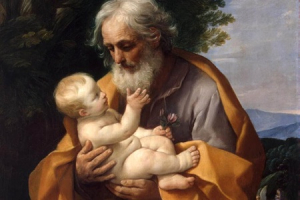
19 March Solemnity
The Carmelites' Promotion of Devotion to St. Joseph
From the 17th century to the present day, there have been countless Carmelite churches and monasteries dedicated to St. Joseph. The credit for this widespread devotion is due above all to St. Teresa of Jesus, whose fervent words are well known:
“I took the glorious St. Joseph as my advocate and patron ... I saw clearly that his help was always greater than what I could have hoped for ... If my word could carry weight, I would gladly dwell at length on recounting in detail the graces that this glorious Saint has bestowed upon me and others... People of prayer must be especially devoted to him, for I do not know how one can think of the Queen of Angels and all she suffered with the Child Jesus, without thanking St. Joseph, who was such a great help to them. Whoever has no teacher from whom to learn how to pray should take this glorious Saint as a guide and will not go wrong. May it please the Lord that I have not erred in venturing to speak of him” (Life, VI, 6,7,8).
St. Teresa identified with this typically Carmelite devotion, living it both through word and example. Feeling so moved by such an exalted love of predilection, she did everything possible to spread his veneration, and of the 17 houses she founded as many as 12 were dedicated to Saint Joseph.
Among her writings, she left the following: “Although you have many holy intercessors, be especially devoted to St. Joseph, who has great influence with God.”
Consequently, in the Teresian Carmel, a profound orientation towards Joseph developed.
The teachings of St. Teresa are reflected in the work on St. Joseph by Jerónimo Gracián and, after him, many other authors of the Reform as well. The preachers of the 17th century, following in the footsteps of Teresa of Avila, were often apostles and promoters of devotion to St. Joseph. Subsequently, there was a vast output of writings intended to illustrate the life and “glories” of Saint Joseph, and to develop a theological framework for them.
St. Joseph as father, protector, patron, and guardian of our Lord Jesus is the subject of the spiritual experiences of numerous glorious and luminous figures, of whom it is practically impossible to provide a list here in CITOC. But we select one: Thérèse of Lisieux who was also a devotee of the Holy Patriarch, fully understood Teresa’s spirit:
“I prayed also to St. Joseph to watch over me; ever since my childhood I had a devotion to him that blended with my love for Our Lady ... I was so well protected that it seemed impossible to me to be afraid” (Ms. A, 158).
In the OCARM branch of the Order, there are already 15th-century writings focusing on the figure of St. Joseph, such as those by the theologian Andrea Horuken in 1451 and the magnificent poems by Mantovano in Fastorum libri XII and in Parthenice I. In the 16th–18th centuries, there was no shortage of notable preachers and writers with a Josephine orientation. Raffaele “the Bavarian,” who published a History of St. Joseph in Naples in 1723, had a significant influence on devotion to the saint in the modern era within the convents and monasteries of the OCARMs.
Read more ...
Elective Chapter of the Carmelite Nuns in Huesca, Spain
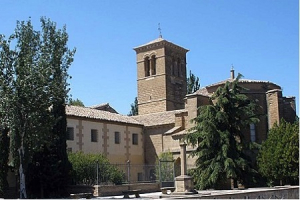
Elective Chapter Held in Carmelite Monastery "San Miguel" in Huesca, Spain
On the morning of March 17, 2026, the Carmelite monastery of San Miguel in Huesca, Spain held its triennial elective chapter. The nuns prayed for a renewed leadership and spiritual life through the conversion of their hearts to the love of God. After celebrating the votive Mass of the Holy Spirit, the nuns began the elective chapter with the election of the prioress.
The monastery was founded by the Carmelite Peter Sobrino in the year 1622. The monastery of the Assumption of Our Lady into Heaven, in the same city of Huesca, was founded from San Miguel in 1656.
The monastery is part of the "Mater Unitatis" Federation and is located in the Diocese of Huesca.
The nuns elected to leadership are:
Prioress | Priora | Priora:
Sor Ma. Gloria de Dios Caballero, O. Carm.
1st Councilor | 1ª Consejera | 1ª Consigliera:
Sor Ma. Blanca de la Eucaristía Barril, O. Carm.
2nd Councilor | 2ª Consejera | 2ª Consigliera:
Sor Ma. Pilar Borau, O. Carm.
Treasurer | Ecónoma | Economa:
Sor Ma. Blanca de la Eucaristía Barril, O. Carm.
Formator | Formadora | Formatrice:
Sor Ma. Gloria de Dios Caballero, O. Carm.
Sacristan | Sacristana | Sacrestana:
Sor Ma. Pilar Borau, O. Carm.
OCARM-OCD General Councils Meet in Rome
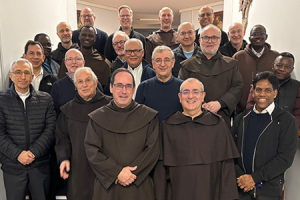
OCARM-OCD General Councils Meet in Rome to Discuss a Variety of Mutual Interests
On March 12, 2026, the two General Councils, OCARM and OCD, met at the General House of the Discalced Carmelites. It was a relaxed occasion marked by fraternal dialogue. After praying the Third Hour, each member of the Council was introduced. The General Secretaries, Fr. Giampiero Molinari, O. Carm., and Angelo Lanfranchi, OCD, prepared the agenda:
1. Report on the OCARM General Chapter. (Malang, Indonesia, September 9–26, 2025). Fr. Desiderio García, O. Carm., Prior General, reported that they had just begun their six-year term and explained the title chosen to guide it: ‘You Must Do Some Work’ (R 20). Our Contemplative Fraternity DiscernsIits Mission.” Next, Fr. Rolf Nepomuk, O.Carm., General Councilor for the Americas, presented the main points of the Chapter’s final message.
2. Fr. Miguel Márquez, OCD, Prior General, outlined the themes they are working on during this six-year term: restructuring of our presences, growth and decline in certain geographic areas, collaboration and internationality, the most urgent challenges, and a review of the Constitutions of the friars and the Discalced Carmelites.
3. This year we celebrate the centenary of the proclamation of St. John of the Cross as a Doctor of the Church (1926) and the tercentenary of his canonization (1726). To mark these occasions, the Teresianum (Rome) and CITES (Ávila) are organizing an International Congress on June 22–26, 2026, titled: “Mysticism: Paradise Lost or Promised Land.” It will be available to follow online. Worksheets have also been prepared, which can be downloaded from www.carmelitaniscalzi.com for reflection and community meetings.
4. This year we celebrate the anniversary of the bull Ut vivendi normam (January 30, 1226), which allowed the Carmelites to live according to the Formula vitae. A series of materials for community reflection is currently being developed. Fr. Richard Byrne, O.Carm., General Councilor for Europe, reported on possible initiatives that could be prepared: a joint letter from the Prior General and the General Superior, a Mass at St. Peter’s in Rome, an audience and message from the Pope, the Schola Carmelitanaat the CISA in September 2026, a special edition of Carmelus, etc.
5. Fr. Marco Chiesa, OCD, General Postulator of the OCD, presented the Latin texts (Proprium Missarum OCD – Lectionarium OCD) approved by the Dicastery for Divine Worship and the Discipline of the Sacraments. The OCARM will gratefully adopt these common texts to prepare the Proprium Missarum OCARM – Lectionarium OCARM. It was noted that the changes the Holy See is currently making to the Rite of Professions must be taken into account for the subsequent revision of the Rites of Professions specific to the OCARM and OCD Orders.
6. Work continues on a historical guide titled “Carmelite Rome.” This is a map (also available in digital format) designed to facilitate a pilgrimage to the most emblematic sites associated with Carmelite history and spirituality (Basilica of San Martino ai Monti, Church of Santa Maria Traspontina, Church of Santa Maria delle Vittorie, International Center of St. Albert, etc.).
Elective Chapter of the Carmelite Nuns in Palangkaraya
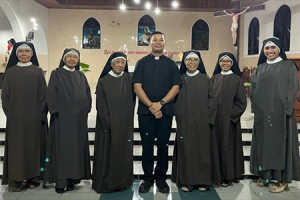
Elective Chapter Held in Carmelite Monastery "St. Joseph" in Palangkaraya, Indonesia
The Carmelite Monastery of St. Joseph in Palangkaraya, Indonesia, celebrated its elective chapter on March 12, 2026. During the Chapter only the prioress and two councilors were elected.
The monastery was founded by five nuns from the Carmelite monastery in Batu (Jawa-Timur) on July 16, 1993. It is part of the Diocese of Palangkaraya which itself was established in April 1993.
The nuns elected to leadership are:
Prioress | Priora | Priora:
Sr M. Bernadetta Nurhadiyati, O. Carm.
1st Councilor | 1ª Consejera | 1ª Consigliera:
Sr M. Joseph Tinawati, O. Carm.
2nd Councilor | 2ª Consejera | 2ª Consigliera:
Sr M. Xaveria Mulyanti Sri Mahanani, O. Carm.
Celebrating At Home - 5th Sunday in Lent

Let Him Go Free
(John 11:1-45)
There are three different groups of believers in the story: those who believe that Jesus could have prevented Lazarus’ death (Jesus is already known to be a healer); those who came to believe in him because they see Lazarus rise, and those, like Martha, who believe in Jesus even though Lazarus died.
In this Gospel Jesus proclaims himself ‘the resurrection and the life’. We see him deeply moved by the death of his friend. We find him in earnest prayer with God. We see him full of strength as he commands Lazarus to come out of the tomb.
One thing that is rarely commented on about this story is the image of love that pervades it. Jesus has treated the Samaritan woman with dignity, respect, gentleness and love, and reached out in love to heal the blind man without being asked. In this story his love for Martha, Mary and Lazarus, and the grief he feels because of that love, are very clearly seen.
For me, it brings together once again the connection between faith and love. If John intended this story to reassure his community (those who have faith in Jesus) then he makes clear that they are also loved by Jesus, and suggests in a certain manner Jesus, too, weeps when harm (illness and death) come to his friends (believers). The ultimate reassurance is that this loving, faith-filled relationship we have with Jesus not only sustains us in life but also sees us through the dark moments of suffering and death – ultimately to life beyond the restrictions (binding cloths) we find in this world. Finally, we will be free.
For me, the most powerful words in the Gospel are: Unbind him, let him go free.
Freedom is one of the deepest aspirations of the human heart. We long to be free – from illness, worry, fear, (especially at the moment) the expectations of others, guilt, our faults and so on. The ultimate freedom is freedom from eternal death.
We know we can be physically alive and spiritually dead through envy, greed, fear, hatred. We know we can bring death to others through lies, gossip, meanness, cruelty, withholding forgiveness and so on.
By living the life of Christ we bring life, love and freedom to ourselves and each other.
- pdf Celebrating At Home - 5th Sunday in Lent [PDF] (3.03 MB)
- default Celebrating At Home - 5th Sunday in Lent [ePub] (4.25 MB)
- pdf Celebrando en Familia - V Domingo del Tiempo de Cuaresma (792 KB)
- pdf Celebrando in Casa - V Domenica di Quaresima (787 KB)
- pdf Celebrando em família - Quinto Domingo da Quaresma (752 KB)


