












O.Carm
Recent Appointments of the General Council
During the plenary session of the General Council held from May 30 to June 9, 2023, the General Council appointed:
Editorial Members of Carmel in the World Magazine
Editor: Patrick J. Breen
Members: Charlò Camilleri, O. Carm (Mel); Conrad Mutizamhepo, O. Carm.; Johan Bergstrom Allen, T.O. Carm. (Brit); Marc Jozsef Lester G. Hallig, O. Carm (Phil); Sanny Bruijns, O. Carm (Neer); Simon Nolan, O. Carm (Hib)
General Commission for Safeguarding Minors and Vulnerable Adults
Chair: Michael Farrugia, O. Carm.
Members: Ms. Julie McCullough (Hib); Ms. Julie Courtney (Brit); Quinn Conners, O. Carm (PCM); Babu Payikattu, O. Carm (Ind)
Well Attended May Recital Series at Whitefriars Street
The Carmelite Church at Whitefriar Street, Dublin ran a very successful recital series on the Sunday evenings of May, featuring the church’s famous Kenneth Jones pipe organ, one of the very best in Ireland.
According to the Prior of Whitefriar Street, Fr Simon Nolan, O. Carm., attendance was extremely good, well up on numbers attending before the pandemic. Organists from both the Catholic and Anglican cathedrals were among those who played. Being the month of May, recitals featured organ music and plainchant (sung by members of Dublin’s Palestrina Choir) in honor of the Blessed Virgin Mary.
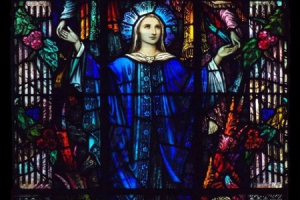
The final recital of the series included one fairly unique element, combining as it did music and the visual arts. Of Russian, French, and German background, Aleksandr Nisse is organist of Dublin’s Catholic cathedral and the leading practitioner in Ireland of the art of organ extemporization in the French School. During his recital, on May 28, he improvised a set of meditations on Whitefriar Street Church's four windows, depicting the Life of the Blessed Virgin Mary, by the renowned Irish stained glass artist, William Earley (1872-1956). The windows, in turn, depict: The Annunciation, The Visitation, The Nativity, and The Assumption.
Call for research grant in memory of Fr. Emanuele Boaga

Research grant in memory of Fr. Emanuele Boaga, O. Carm. - Seventh Edition (2023)
As it does every year, the General Archives of the Carmelite Order has announced a selection for the award of a research grant, named in memory of Fr. Emanuele Boaga, O. Carm., who was the general archivist of the Order for about thirty years.
Projects should focus on historical, religious, philological or archival research, starting with an analysis of the documentary heritage preserved in our Archives. The goal is to produce a scientific paper on the basis of the studies carried out (article, monograph, edition of sources, inventory, etc.), which will be considered for publication with Carmelite Editions.
The deadline for submission of applications is August 3, 2023.
For more information, please refer to the Archives' website: https://archivioocarm.com/assegno-di-ricerca-alla-memoria-di-p-emanuele-boaga-o-carm-settima-edizione-2023/
St. Titus memorial approved as obligatory

The Order’s petition to have the celebration of St. Titus Brandsma changed from an optional memorial to an obligatory memorial for the whole Order. The Dicastery for Divine Worship and the Discipline of the Sacraments notified the Order by letter on May 25, 2023. The liturgical celebration is July 27.
The Provinces of Germany and the Philippines as well as the General Delegation in Columbia who have St. Titus as their patron will celebrate the day as a feast.
St. Titus Brandsma was canonized by Pope Francis on May 15, 2022, in St. Peter’s Square along with nine other blessed. He was killed by lethal injection in the “hospital” of the Dachau concentration camp on July 26, 1942.
Celebrating At Home - Body and Blood of Christ

The real presence of Jesus in us
(John 6:51-58)
- pdf Celebrating At Home - Body and Blood of Christ [PDF](2.84 MB)
- default Celebrating At Home - Body and Blood of Christ [ePub](2.73 MB)
- pdf Celebrando en Familia - El Santísimo Cuerpo y Sangre de Cristo(279 KB)
- pdf Celebrando in Casa - Santissimo Corpo e Sangue di Cristo(282 KB)
- pdf Celebrando em familia - O Santíssimo Corpo e Sangue de Cristo(290 KB)
Activities of the Prior General in June

JUNE 2023
Activities of the Prior General
May 28 – June 9: General Council Plenary Meeting
June 6: Meeting with the Council of the Italian Federation of
June 7: Attend reception at the French embassy to the Holy See to
June 9: Attend Carmelite Archive’s event: Travelogues of the 17th
June 10: Bi-annual meeting of OCarm. and OCD. General Councils at
June 12-16: Chapter of the Neapolitan province in Bari
June 20-23: The Chapter of the PCM Province in Darien
Affiliated Congregations Meeting Evaluation

The leadership of the Congregations and Institutes affiliated to the Carmelite Order met at the Passionist Retreat Center in Rome from May 22-26, 2023. The meeting, which is held every six years, was focused on the theme "Carmelite Identity and Experience." Some 20 members participated this year.
At the end of the meeting, the participants returned to their communities of origin enriched by the intense days of prayer, reflection, and sharing in which they strengthened their spiritual closeness to the Carmelite Family.
The General Delegate for Congregations and Affiliated Institutes, Luis Maza Subero, who is also General Councilor for the Americas, invited the sisters and brothers from the various groups they represent to share their evaluation of the meeting held in Rome.
Among the questions asked of the participants were:
1. What is the value of this gathering for your congregation?
2. How can we move forward as members of the Carmelite Family?
3. Were you satisfied with the organization of this gathering?
4. What are your suggestions for the next gathering?
In the answers given by the sisters and brothers, we can appreciate the importance given to the meeting which served to "cultivate the sense of belonging to the Carmelite Family in the spirituality of communion." They also highlighted the centrality of the theme of Carmelite identity and experience and the themes of the conferences, which were "good and enriching." The various days of the meeting were an excellent occasion to, in their own words, "cultivate cooperation and dialogue among us" and "work together in vocation ministry, evangelization, and in formation."
The participants highlighted that to move forward as members of the Carmelite Family, the key is to "stress communion and participation, each one from his or her reality, with our gifts and limits, as St. Paul tells us."
Likewise, proposals were received to "organize meetings of the Carmelite family more frequently" at the geographical area and international level and to "implement the practical proposals for collaboration that emerge from the study groups during these conferences."
In particular, it was proposed to move forward as a Carmelite Family. “As a bigger family likes to gather, [we would like gatherings] not only of the affiliated congregations, but also with the Friars. [Then we will be more] ready to collaborate as one family."
The sisters and brothers agreed in highlighting the excellent organization of the conferences, the fraternal climate, and the wonderful hospitality provided by the Passionist Retreat Center in Rome, the venue of the meeting. Among the evaluations received, it was stressed that "the ambience was very conducive to reflection and prayer" and that "the fraternal and serene atmosphere was an excellent ‘glue’ for all of us." They also remarked that the conferences "were all interesting" and pointed out the usefulness of "having the texts of the conferences translated into the different languages."
A special thanks was given to the translators for their excellent work and patience.
Finally, the participants reaffirmed the need to "continue with the periodic meetings, deepening the Carmelite charism and the themes related to evangelization and pastoral work." They also commented that "the liturgical resources were well prepared," but they lacked "a multilingual hymn booklet and a guitar to animate the Eucharistic celebration."
Conference on Disability, Edith Stein at Aylesford
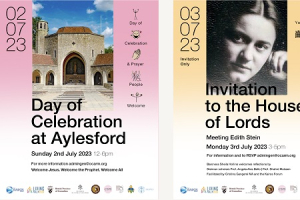
From July 2-6, 2023 The Carmelites at Aylesford Priory in England will host a series of events to celebrate the gifts of creative people experiencing disability and the wisdom of St. Edith Stein.
This a one of the first international events of its kind, introducing new areas of study, including issue around disabilities.
Event 1 (July 2, 2023)
A Day of Celebration – the perfect opportunity for a parish pilgrimage, discovering the gifts of symbolic catechesis and liturgy – Please do join us!
Event 2 (July 4-6, 2023)
Three-day Conference – Dignitas Personas et Amor Dei: The Value of the Human Person and Divine Love. Meeting with Edith Stein
- Day 1: The Value of the Human Person
- Day 2: The Person in Community
- Day 3: The Human and Divine
You are invited to sponsor a member of your parish by inviting them. In return, they can give a short report or talk to your parish following the summer break. In this way, the value of the human person, Edith Stein, and ways to enable belonging can be shared throughout all that we do as Church.
Participation in the conference includes: BSL interpreters, symbols, creative student theater, and physical access to all events. Cost per person: including lodging (July 4 and 5) and conference fees: FB: £259; HB: £209. Conference only: £100.
For more information about events, contact: Cristina Gangemi: Esta dirección de correo electrónico está siendo protegida contra los robots de spam. Necesita tener JavaScript habilitado para poder verlo.
For reservations and cost information, contact: Manuela Montagner: Esta dirección de correo electrónico está siendo protegida contra los robots de spam. Necesita tener JavaScript habilitado para poder verlo.
This event is sponsored by The Kairos Forum, the Pontifical Dicastery for Culture and Education and the Carmelite Order-British Province
Vitam Coelo Reddiderunt

|
09-05-23 |
|
|
|
|
|
23-05-23 |
|
|
|
|
|
23-05-23 |
|
|
|
|
Celebrating At Home - The Most Holy Trinity

God enfleshed in us
(John 3:16-18)
A quick look at the readings for today shows very clearly that the Feast of the Trinity is a celebration of God's love for humankind. It is a day for reflecting on who God is, not for trying to figure out how there can be three persons in one God.
The Church’s focus today is on experience, not theology.
In intellectual terms, God remains a mystery. For people of faith, God is known not by the mind, but by the heart. That is what spirituality and mysticism are about - exploring our experience of God.
In the first reading God is proclaimed as a God of tenderness and compassion, slow to anger and rich in mercy; a God who walks with his people.
Paul’s words in the second reading are born out of his belief that, having been made in the image and likeness of God, Christians must always act in the image and likeness of God.
Through our public liturgy, private prayer and contemplation we come to experience - to ‘know’ and feel in our hearts - that God loves us, accepts us, forgives us and constantly invites us into an ever deeper experience of love.
When we allow God’s heart to speak to ours in love we begin to absorb more of God’s life into our own.
We are being transformed. Our values and attitudes, our ways of looking at and being in the world start to change. We begin to see with God’s eyes and feel with God’s heart.
We become passionate about the things God is passionate about: speaking truthfully, acting with justice and integrity, looking out for each other and especially for the vulnerable, promoting peace and understanding, ending competition and discrimination, respecting life.
That makes us better people and our lives become a blessing for each other and for the world.
That is what it means to live out of God’s great gift to us, the Spirit of Jesus Christ which God has placed in our hearts. God becomes enfleshed in us and we become stewards of God’s grace and life.
- pdf Celebrating At Home - The Most Holy Trinity [PDF](5.53 MB)
- default Celebrating At Home - The Most Holy Trinity [ePub](2.81 MB)
- pdf Celebrando en Familia - Domingo de la Santísima Trinidad(486 KB)
- pdf Celebrando in Casa - Santissima Trinità(484 KB)
- pdf Celebrando em familia - O Domingo da Santíssima Trindade(579 KB)


